

State Supreme Court dismisses challenge to 6 oil and gas ballot initiatives

The Colorado Supreme Court has upheld the ballot titles of six initiatives seeking to regulate the oil and gas industry, putting them back on track for placement on the November ballot.
John Justman, a Mesa County commissioner, challenged the Title Board’s approval of Initiatives 173-177, which would establish minimum setbacks of 2,000 or 2,500 feet between oil and gas operations and occupied structures or “vulnerable areas,” while also permitting localities to go further. Justman, represented in his brief by attorney Suzanne Staiert, also objected to Initiative 178, which would mandate that oil and gas operators provide at least $270,000 of financial assurance per well for cleanup costs.
During the Title Board’s initial consideration of Justman’s objection, board Chair Theresa Conley refused to consider his request that she recuse herself from participating in the deliberation. Conley, the representative of Secretary of State Jena Griswold on the three-member panel, made what Justman considered to be prejudicial statements against the extraction industry during her previous job at Conservation Colorado.
“The Petitioner is legitimately entitled to a fair and unbiased decision maker,” Justman argued to the Supreme Court.
The Title Board must consider whether an initiative pertains to a single subject and, if so, set a ballot title to appear before voters that is brief, yet also encompasses the central features of the measure. Justman claimed that the initiatives contained subjects other than increased setbacks. He identified the extraneous topics as “the shuttering of new oil and gas development” and “stripping away the ability of home-rule municipalities to govern themselves” by potentially overriding localities’ existing setback regulations.
Justman added that the measures effectively ban new oil and gas development and create an unallowable coalition between people who favor uniform setback standards and those who favor local control of oil and gas operations.
Michael Kotlarczyk, the attorney for the Title Board, responded in a brief that the various features Justman had identified were necessarily connected to the subject of increasing setbacks. The speculation from Justman that the measures would bring about a de facto ban on extraction was not something the board is allowed to consider in its decision.
“The powers of home rule municipalities changed only with respect to how they affect oil and gas setback provisions, the measure’s single-subject,” he argued.
As to the attempted disqualification of Conley, Kotlarczyk said that the Title Board does not allow such challenges, and that there is a presumption of impartiality in the absence of any evidence that the decision-maker has a personal or financial stake in the decision.
“This Court has rejected that such statements” – those made by an official before they took office – “demonstrate a biased decision maker,” he wrote.
Justman advanced similar arguments for Initiative 178, and added that the measure “misleads voters into believing that actual costs to close and remediate a well is $270,000,” despite testimony at the Title Board that this number was excessive. Kotlarczyk reiterated that this was not a single-subject matter for the board’s consideration.
The court affirmed the Title Board’s actions in all six cases without elaboration.



Gazette family of papers rakes in 64 awards at 2025 Colorado Press Association Better News Contest
Elizabeth Pond
elizabeth.pond@denvergazette.com
Updated 15 hours ago
The Gazette family of newspapers won 64 awards in the Colorado Press Association’s annual Better News Contest — a whopping 36 more than the three papers collectively won last year. Colorado Politics raked in 27, The Colorado Springs Gazette took...

What courageous citizenship really looks like | Vince Bzdek
Vince Bzdek
vince.bzdek@gazette.com
Updated 2 days ago
By Vince Bzdek What exactly is courage? Ernest Hemingway famously called it grace under pressure. Mark Twain wrote that “courage is resistance to fear, mastery of fear — not absence of fear.” C.S. Lewis refined that even more: “Courage is...
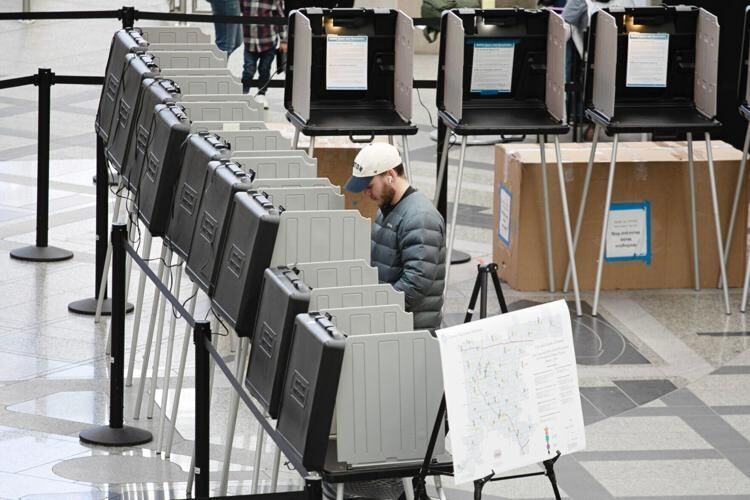
The coming election and mischief in the making | SONDERMANN
Eric Sondermann
eric-sondermann@coloradopolitics.com
Updated 5 days ago
America’s tribalism is such these days that we struggle to even agree on the basic rules. Elections have always been hotly contested. As the saying goes, “Politics ain’t beanbag.” The process has long involved elements of nastiness and underhanded conduct....

Colorado Politics Calendar Aug. 31-Sept. 6
Rachael Wright, Special to Colorado Politics
rachael.wright@coloradopolitics.com
Updated 5 days ago
CoPo’s weekly political calendar will help you find political and public-policy events throughout Colorado. It includes candidate and issue campaign events, public policy meetings, court hearings, state and local party conventions, assemblies, debates, rallies, parades, speaking engagements, traveling dignitary appearances,...
Tancredo in Running for Dept. of Ed. Position | A LOOK BACK
Rachael Wright, Special to Colorado Politics
rachael.wright@coloradopolitics.com
Updated 5 days ago
Forty-five years ago this week: “I know that my name has been placed before the Secretary of Education, and I know that I’m one of three or four being considered for the Department of Education’s Region 8,” said state Rep....
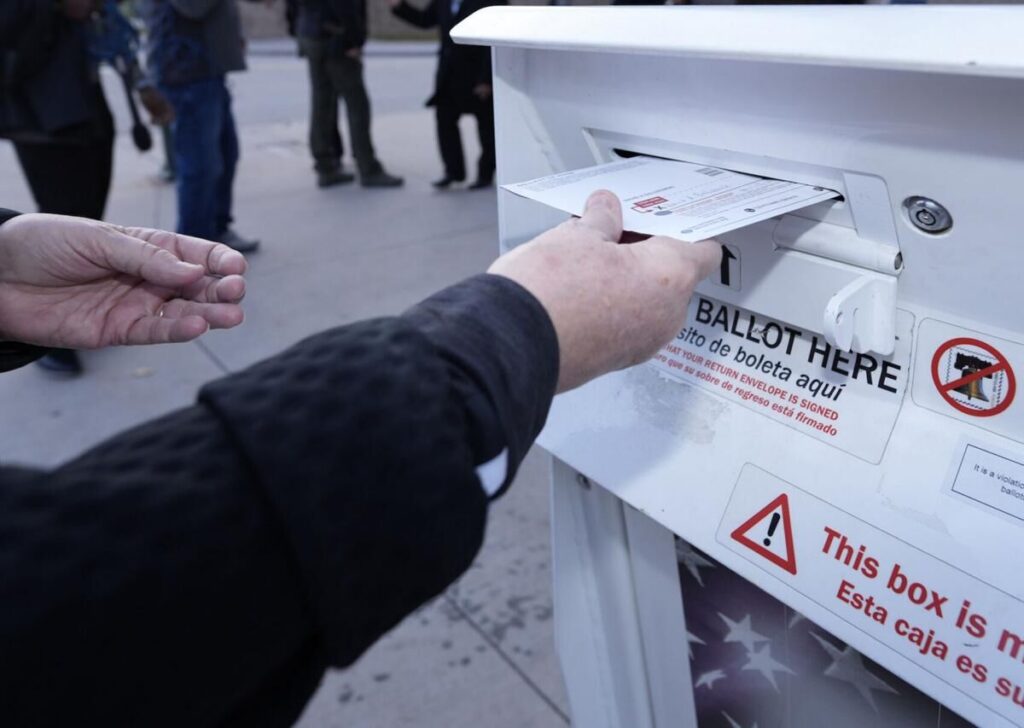
Colorado measure adding ID checks to mail-in voting qualifies for ballot
Marissa Ventrelli
marissa.ventrelli@coloradopolitics.com
Updated 2 days ago
A ballot initiative that would require voters to include additional information on mail-in ballots has qualified for the November election, according to the Secretary of State’s Office. Backed by El Paso County Treasurer Chuck Broerman and former Deputy Secretary of...
Colorado election website error exposes personal data of confidential voters
Marissa Ventrelli
marissa.ventrelli@coloradopolitics.com
Updated 3 days ago
A system update accidentally lifted protections on confidential records in Colorado, exposing dozens of voters’ personal information, according to the Secretary of State’s Office. The limit that normally blocks access to confidential voter profiles was inadvertently disabled during an update...

PUC adds weekly comment after killing private talks
Scott Weiser
scott.weiser@gazette.com
Updated 3 days ago
The Colorado Public Utilities Commission will take public comment at the start of every commissioner’s weekly meeting beginning Sept. 9 as part of its new transparency mandate, the commission announced, expanding a slot previously limited to the second Wednesday of...
10th Circuit overturns framework for sentencing probation violators by 11-1
Michael Karlik
michael.karlik@coloradopolitics.com
Updated 2 days ago
In a rare decision by all 12 of its full-time judges, the Denver-based federal appeals court ruled in a lopsided vote on Friday that one of its members created a sentencing process for probation violators that was out of step...

Federal judge dismisses excessive force lawsuit against Colorado Springs, officer
Michael Karlik
michael.karlik@coloradopolitics.com
Updated 2 days ago
A federal judge concluded last week that a Colorado Springs police officer could not be held liable for shooting a suspect three times after the man menaced two victims with a gun and fled the scene. Al’morion Germany was involved...
PREV
PREVIOUS

On first day of service reductions, RTD experiences dispatching delays as union receives criticism
Shortly after noon on Sunday, a message went out to Regional Transportation District operators notifying them of a 40-minute delay in reaching dispatchers on the first day of COVID-19-induced service levels. “They really did botch it,” said Lance Longenbohn, president of the Amalgamated Transit Union Local 1001, which represents approximately 2,300 transit workers in the […]

Denver city leaders make social media videos calling for input on climate action recommendations
Denver city leaders are seeking public input for a newly released draft of climate action recommendations that could impact local environmental policies for generations to come. The recommendations were made by the Denver Climate Action Task Force, which planned to gather community input through a series of public meetings but has since had to move […]