

Colorado’s Democrats and Republicans seek options for assemblies amid coronavirus outbreak
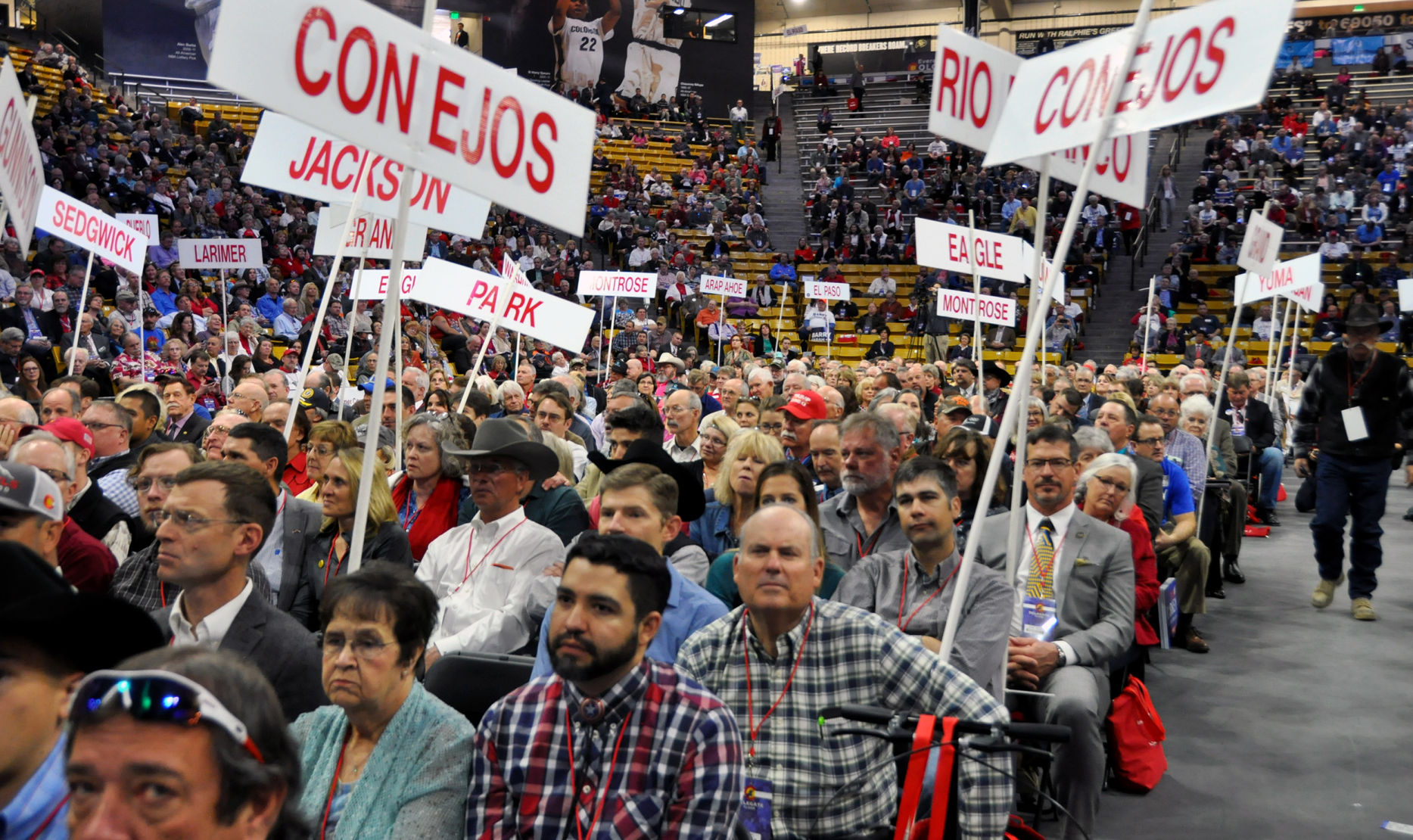
Officials with Colorado’s Democratic and Republican state parties are working with legislators to enable the parties to hold assemblies and conventions using alternative methods as a rapidly moving viral outbreak forces cancellation of large gatherings, Colorado Politics has learned.
“The facts might change tomorrow,” said Morgan Carroll, chair of the Colorado Democratic Party. “The bottom line I would say is that we are pursuing every option that we possibly can through the legislature to make sure that we have all of our options.”
As it stands, state law and party rules don’t allow the parties to convene nominating assemblies online or let delegates cast ballots remotely, raising concerns among party officials that they could be unable to nominate candidates if delegates stay home or authorities ban crowded events, as has happened amid a growing novel coronavirus outbreak.
Following Saturday’s precinct caucuses, the two major parties are embarking on a heavy six-week schedule of assemblies and conventions at the county, district and state level to vote candidates onto the June primary ballot and nominate delegates to this summer’s national conventions.
On Tuesday, Gov. Jared Polis declared a state of emergency in Colorado to respond to the spread of the virus as health officials reported the number of active cases in the state rose to 17.
The number of events canceled due to concern about spreading the virus increased Tuesday, as Denver announced it won’t hold its iconic St. Patrick’s Day Parade and Democratic presidential candidates Bernie Sanders and Joe Biden scrapped plans to hold campaign rallies, and numerous universities said they would move to online instruction for the remainder of the spring semester. In Ohio, Gov. Mike DeWine called for limiting large gatherings, including a request that sporting events take place without spectators.
“How do we make sure people have a voice and we can put people on the ballot without public health concerns?” Carroll said. “But we also need to keep the wheels of democracy going forward as much as we can.”
State law offers candidates two paths to the ballot – gathering a sufficient number of signatures on nominating petitions or winning the support of enough delegates at assemblies. The deadline to turn in petitions is March 17, limiting the ability of candidates to switch to that route if parties are forced to cancel assemblies or enough delegates don’t attend to achieve a quorum necessary to conduct business.
“We need to first figure out what’s possible and then decide what we want to do,” Carroll said. “We lack the full slate of options that we would like to have.”
Those options could include allowing for extensive use of proxy votes, or even postponing or canceling in-person assemblies and instead conducting party business by mail, online or using other methods, she said.
“There’s such a thing as under-reacting and such a thing as over-reacting, and we want to be surgically reacting,” she said.”It is a worst-case scenario to say we have cancellation, but when we say we want to have all options, that is an option.”
The executive director of the state GOP told party members Tuesday in an email that officials have been in contact with the Secretary of State’s Office and legislative leaders to determine what the unfolding crisis could mean for the assembly process.
“We, along with our Democrat counterparts, have requested a meeting with the (secretary of state) and governor to discuss further how we can best conduct our duty under state law to designate candidates to the primary election ballot,” said Lx Fangonilo. “Our duty to place our Republican candidates on the ballot is vitally important. For the time being – we are asking that you continue to proceed as normal with your local assembly planning and gathering.”
He added: “This said, every precaution, in accordance with the bylaws, should be made during these meetings to accommodate those who are unable to attend and protect the health of those who are in attendance.”
Party bylaws are governed by a mix of state statutes and national party rules, complicating efforts to change them quickly in reaction to something like a global pandemic.
The two parties’ bylaws differ in some particulars. The Democrats let each assembly delegate carry one proxy vote, for instance, potentially allowing ill or at-risk individuals to stay home, while the Republicans don’t currently permit proxy voting at assemblies.
“We want to remind everybody that if you are immunocompromised or are in a category at risk, if you have symptoms or have been around people with symptoms, you can send a proxy,” Carroll said. “Keep yourself safe, keep everybody safe.”
“We want (the legislature) to give us an ability to extend or waive deadlines and to explicitly authorize the parties to do electronic voting, remote voting or mail balloting. I want all three, because there are some logistics,” Carroll said, noting that smaller, rural counties might want to let delegates vote by mail, while other counties could conduct their assemblies using videoconferencing or other technology.
“This isn’t going to be a one size fits all – it could be Zoom, Webinar or Google Forms,” she said. “We might need to meet people partly where they’re at and help people.”
Carroll said the state Democrats will provide technological assistance to county party officials but acknowledged that clearing the way to change the rules doesn’t mean it’ll be easy to implement non-traditional assemblies in what could amount to a matter of days.


Colorado measure adding ID checks to mail-in voting qualifies for ballot
Marissa Ventrelli
marissa.ventrelli@coloradopolitics.com
Updated 1 day ago
A ballot initiative that would require voters to include additional information on mail-in ballots has qualified for the November election, according to the Secretary of State’s Office. Backed by El Paso County Treasurer Chuck Broerman and former Deputy Secretary of...
Colorado election website error exposes personal data of confidential voters
Marissa Ventrelli
marissa.ventrelli@coloradopolitics.com
Updated 1 day ago
A system update accidentally lifted protections on confidential records in Colorado, exposing dozens of voters’ personal information, according to the Secretary of State’s Office. The limit that normally blocks access to confidential voter profiles was inadvertently disabled during an update...

Gubernatorial candidates Phil Weiser, Greg Lopez spar, as Marx skips debate
Deborah Grigsby
deborah.smith@denvergazette.com
Updated 2 days ago
Two of the candidates for Colorado governor squared off in a televised debate on Thursday night, when Attorney General Phil Weiser, the Democratic nominee, and former U.S. Rep. Greg Lopez, an unaffiliated candidate, delved into issues of affordability, data center...
Troops, taxes, war dominate Colorado’s 5th CD debate between Jeff Crank, Jessica Killin
Deborah Grigsby
deborah.smith@denvergazette.com
Updated 2 days ago
Republican U.S. Rep. Jeff Crank and Democratic challenger Jessica Killin on Thursday night clashed over the war in Iran, the federal budget and healthcare when they took the stage in Colorado Springs for a sold-out debate in the race to...

WATCH: Republican US Rep. Jeff Crank, Democratic challenger Jessica Killin debate in Colorado’s 5th CD
Ernest Luning
ernest.luning@coloradopolitics.com
Updated 2 days ago
Republican U.S. Rep. Jeff Crank and Jessica Killin, his Democratic challenger, are scheduled to meet for a televised debate in the race to represent Colorado’s 5th Congressional District on Thursday night. The candidates are set to take the stage at...

Colorado gubernatorial candidates Phil Weiser, Greg Lopez to face off Thursday in televised debate
Ernest Luning
ernest.luning@coloradopolitics.com
Updated 2 days ago
Two of the candidates for governor of Colorado are set to square off in a televised debate for the first time Thursday night, when Attorney General Phil Weiser, the Democratic nominee, and former U.S. Rep. Greg Lopez, an unaffiliated candidate,...

Democratic-aligned poll shows big majority of swing-seat voters support routine childhood vaccines
Ernest Luning
ernest.luning@coloradopolitics.com
Updated 3 days ago
A new poll conducted by Democratic-aligned groups found that voters in competitive U.S. House districts — including a battleground seat in Colorado — support routine childhood vaccinations by a wide margin and oppose a recent order by President Donald Trump...

Coalition drops Colorado transportation ballot measure after securing deal
Marissa Ventrelli
marissa.ventrelli@coloradopolitics.com
Updated 2 days ago
The proposed constitutional amendment seeking to dedicate all transportation-related revenue to Colorado’s roads and bridges will no longer appear in this November’s ballot after its proponents reached an agreement with lawmakers following months of negotiations. Initiative No. 175, backed by...
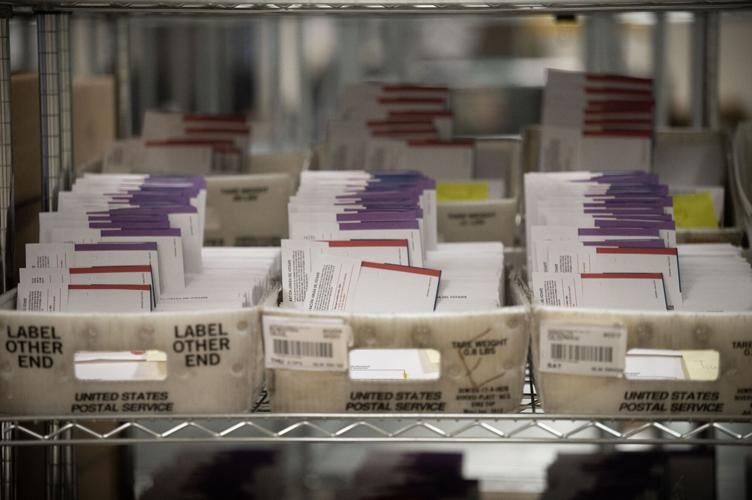
USPS ballot rule faces lawsuit from Colorado, other states
Thelma Grimes
thelma.grimes@coloradopolitics.com
Updated 3 days ago
Colorado, along with 25 other states, filed a lawsuit against the U.S. Postal Service to challenge a new rule that seeks to restrict the mailing of ballots to American citizens on an eligible voters list. Colorado relies heavily on the...
Colorado lawmaker, House leaders named in workplace-retaliation lawsuit
Marianne Goodland
marianne.goodland@coloradopolitics.com
Updated 4 days ago
A former legislative aide has filed a lawsuit alleging she was mistreated, illegally directed to perform campaign work and harmed by a House leadership structure she charged was fragmented, politicized and ineffective at protecting employees. The lawsuit, filed by Jennifer...
PREV
PREVIOUS
Denver Mayor Hancock expands measures to prevent spread of coronavirus
In support of Gov. Jared Polis declaring a state of emergency on Tuesday due to the novel coronavirus, Denver Mayor Michael Hancock is widening the city’s efforts to “ensure public health resources and authority are aligned.” Hancock is directing that all non-essential, work-related travel by city employees be suspended and calling for the postponement of […]

Report: Coloradans have one of lowest tax burdens in nation
Colorado has on average the ninth-lowest tax burden in the nation, according to a new survey from the personal finance company WalletHub. Alaska ranked as the least tax-burdened state, while Illinois had the highest average tax payments. In Colorado, annual state and local taxes for the median household amounted to $6,289, a 20% difference between […]