

OUT WEST ROUNDUP | Tribes seek ban on grizzly hunting; Utah prosecutor won’t enforce abortion law

WESTERN STATES
Tribes seek ban on public hunting of grizzly bears
BILLINGS, Montana- Native American leaders are pressing lawmakers in Congress to adopt permanent protections for grizzly bears, a species widely revered by tribes but that has been proposed for hunting in Wyoming and Idaho.
Proposed legislation would block grizzly hunting in the Lower 48 states, regardless of the species’ population size, and allow for the reintroduction of the bruins to tribal lands.
Grizzlies play a central role in the traditions and ceremonies of many tribes, said former Hopi Tribe chairman Benjamin Nuvamsa. Some Native Americans refer to them as “Uncle” or “Grandfather” and consider the animals to be healers.
But the push for permanent protections elicited sharp criticism from some Republicans as a House subcommittee took up the legislation. The backlash stems from growing pressure by state officials in the Northern Rockies to allow hunting because of grizzly attacks on livestock and occasionally people.
The House panel’s ranking Republican, California Rep. Tom McClintock, said the proposal runs counter to the conclusions of government scientists. They say grizzlies have made significant strides toward recovery, particularly in and around Yellowstone National Park.
Grizzly bears were nearly exterminated across much of the U.S. by hunting and trapping early last century. They received federal protections in 1975, and they have since slowly rebounded in portions of Montana, Wyoming and Idaho. Grizzly hunting is allowed in Alaska.
The move to make protections permanent is sponsored by Rep. Raul Grijalva, chairman of the House Natural Resources Committee. The Arizona Democrat said the intent was to recognize and honor the bear’s unique place in Native American tradition, by giving them protections beyond what’s offered under the Endangered Species Act.
WESTERN STATES
Survey: Region’s bankers losing confidence in farm economy
OMAHA – A monthly survey of rural bankers in parts of 10 Plains and Western states shows they’re rapidly losing confidence in the region’s farm economy.
The Rural Mainstreet survey for May shows the survey’s overall index dropping from 50 in April to 48.5 this month. Any score above 50 suggests a growing economy, while a score below 50 indicates a shrinking economy.
Creighton University economist Ernie Goss, who oversees the survey, blames trade tensions and tariffs, saying they’re contributing to losses suffered by grain farmers – although livestock producers are faring better. Still, Goss says, bankers believe “the negatives far outweighed the positives.”
The survey’s confidence index, which gauges bankers’ expectations for the economy six months out, plummeted from 50 to 38.2 – its lowest level in almost two years.
Bankers from Colorado, Illinois, Iowa, Kansas, Minnesota, Missouri, Nebraska, North Dakota, South Dakota and Wyoming were surveyed.
UTAH
Prosecutor says he won’t enforce state’s strict abortion law
SALT LAKE CITY – As Utah defends its strict new abortion ban against a court challenge, the chief prosecutor overseeing the county with the state’s only two clinics has said he won’t enforce the measure.
Democratic Salt Lake County District Attorney Sim Gill’s decision marks the latest example of an official resisting such laws passed by states around the country.
Gill said the Utah ban on abortions after 18 weeks appears unconstitutional, so filing felony charges against doctors who perform them as the court challenge plays out could violate their rights.
Gill’s position and a similar stance by the attorney general of Michigan came as more GOP-leaning states around the U.S. pass increasingly restrictive abortion laws, including an Alabama measure that would outlaw almost all abortions in the state.
Prosecutors have a lot of discretion about how laws are enforced because they decide who to charge and what cases to file.
Most laws have exceptions. The measure in Utah has allowances for cases of rape, fatal fetal deformity and serious detriment to a mother’s health.
Gill secured a federal order on confirming his office won’t have to enforce the measure as the court challenge plays out.
However, if the law is eventually upheld by the U.S. Supreme Court, Gill said, he likely would have to enforce it.
KANSAS
Nonprofit agencies again keeping foster kids in offices
TOPEKA – Abused and neglected children are again sleeping overnight in the offices of Kansas foster care contractors because homes cannot be found for them quickly enough.
Since January, when Democratic Gov. Laura Kelly took office, more than 70 children have been kept overnight in the offices of the two nonprofit agencies providing foster care services. Her Republican predecessor’s administration kept children from sleeping in offices during its final months after threatening publicly to fine contractors – a threat Kelly’s administration has dropped.
The state Department for Children and Families provided statistics in response to questions from The Associated Press after it received a tip that the practice had returned.
Kelly, a state senator before being elected governor last year, was a vocal critic of fiscal and social services policies under former Republican Govs. Sam Brownback and Jeff Colyer. She said during her campaign last year that fixing the troubled child welfare system was a top priority.
The department’s statistics showed that four children were kept overnight in the offices of its two foster care contractors, KVC Health Systems and Saint Francis Ministries, in January and February. The figure jumped to 12 in March and 35 in April and was 16 for the first 11 days of May.
DCF officials said children began staying overnight in offices again partly because bad winter weather made it less safe to move them.
Keys said the department is working to recruit new foster parents to add to the state’s 2,000 or so licensed foster homes and to find relatives for children more quickly. The state had about 7,600 children in its foster care system in April – 46 percent more than 10 years ago.
NEW MEXICO
Padilla seeks dismissal of charges over coffeepot recording
SANTA FE – New Mexico’s former tax chief contends her due process rights were violated when investigators with the state attorney general’s office used a coffeepot outfitted with a recording device to secretly record a conversation with her attorney.
The allegation is outlined in a recent court filing that seeks the dismissal of public corruption charges against Demesia Padilla, who resigned in 2016 after investigators raided tax department offices.
Padilla pleaded not guilty to several charges last year that she embezzled money from a former client of her accounting firm and had advocated as tax secretary for abatement of a penalty against that same client. The case that is scheduled to go to trial this summer.
The attorney general’s office denies surreptitiously listening in, saying the coffeepot recording device – which was on loan from the Albuquerque Police Department – stopped recording while Padilla was talking with her attorney.
When Padilla asked to speak privately with her attorney, they were not informed of the secret coffeepot recorder and camera, according to the court filing.
The attorney general’s office said in its response that Padilla was told her interview with investigators was being recorded – although apparently the coffeepot recording device was not disclosed.


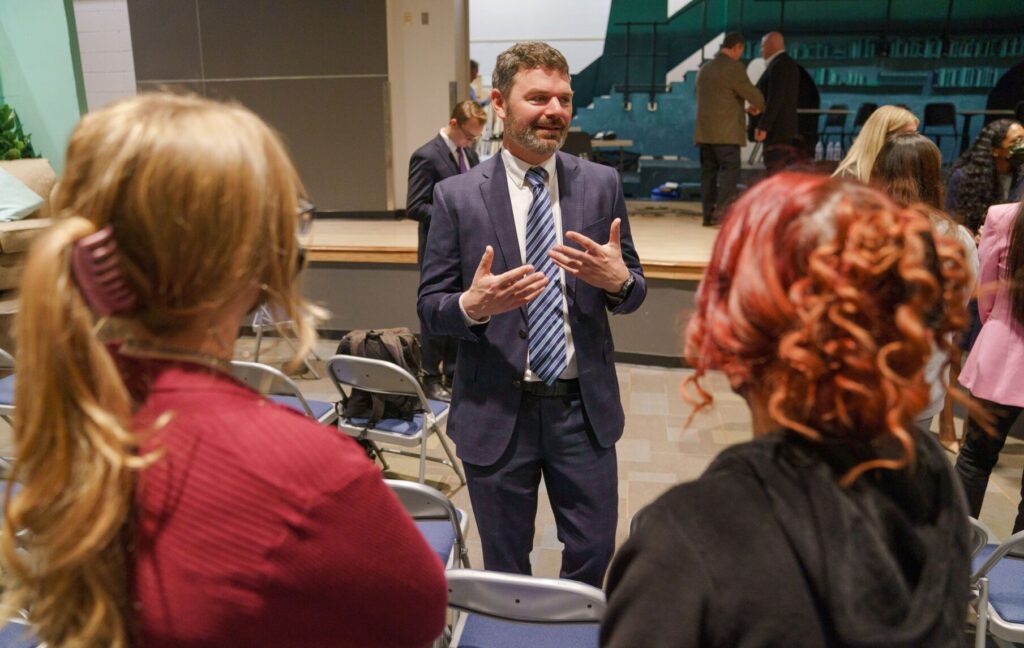
Divided appeals court finds no prosecutorial misconduct in prison assault case
Michael Karlik
michael.karlik@coloradopolitics.com
Updated 17 hours ago
Colorado’s second-highest court concluded last week that a Lincoln County prosecutor did not misstate the law to a degree that undermined a jury’s assault verdict against the defendant. During closing arguments in Phillip Archuleta’s 2023 trial, the prosecutor suggested to...
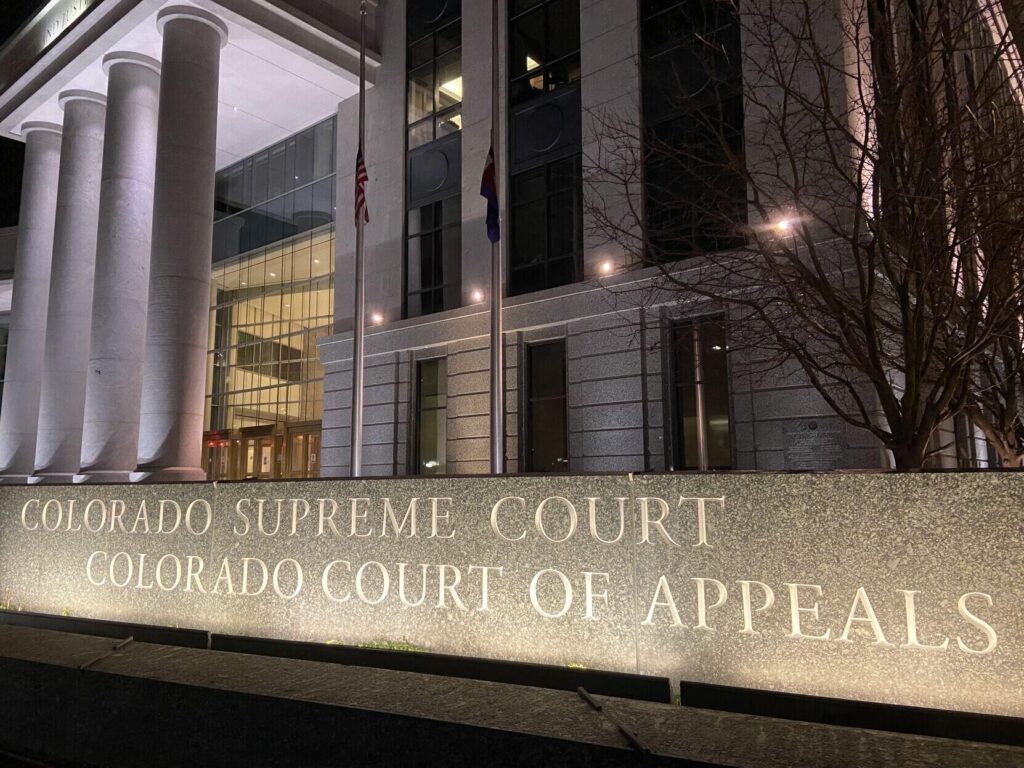
Boulder County prosecutor improperly used defendant’s silence as guilt, appeals court finds
Michael Karlik
michael.karlik@coloradopolitics.com
Updated 11 hours ago
Colorado’s second-highest court reversed a Boulder County defendant’s sexual assault conviction last week after concluding that a trial judge should have intervened to stop the prosecutor from inappropriately using the man’s constitutional right to silence to suggest he was guilty....
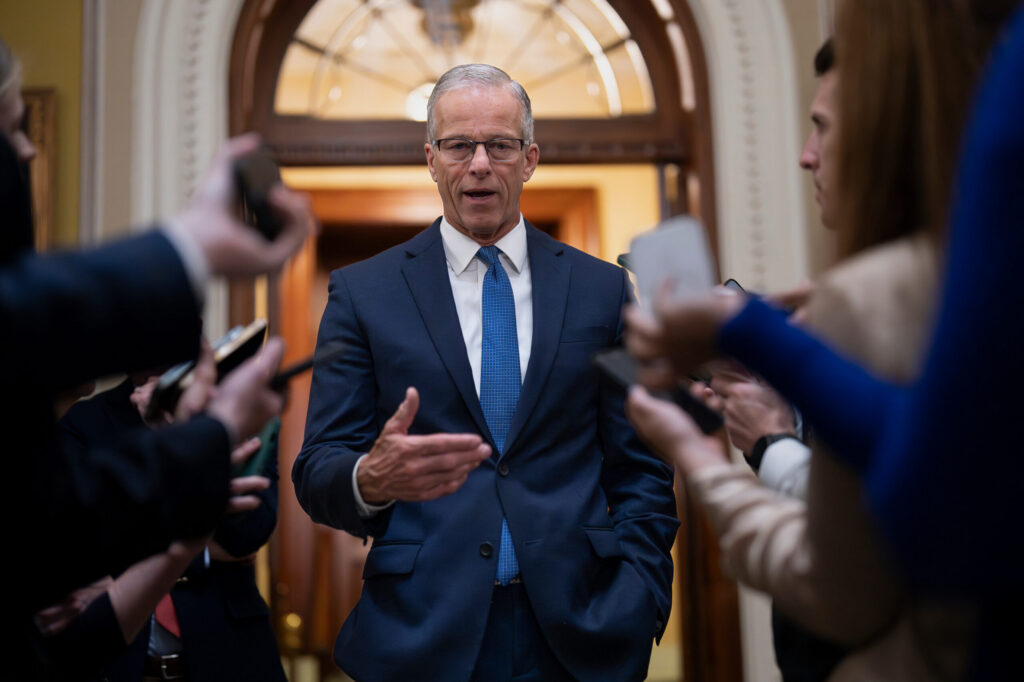
Trump ‘disappointed’ with Thune for inaction on filibuster and SAVE America Act
Christian Datoc, Washington Examiner
christian.datoc.washington.examiner@gazetteedit.wpenginepowered.com
Updated 16 hours ago
President Donald Trump voiced displeasure with Senate Majority Leader John Thune (R-SD) on Tuesday for refusing to eliminate the 60-vote filibuster threshold and pass the SAVE America Act. Trump was asked by the press about Thune and the voter ID...
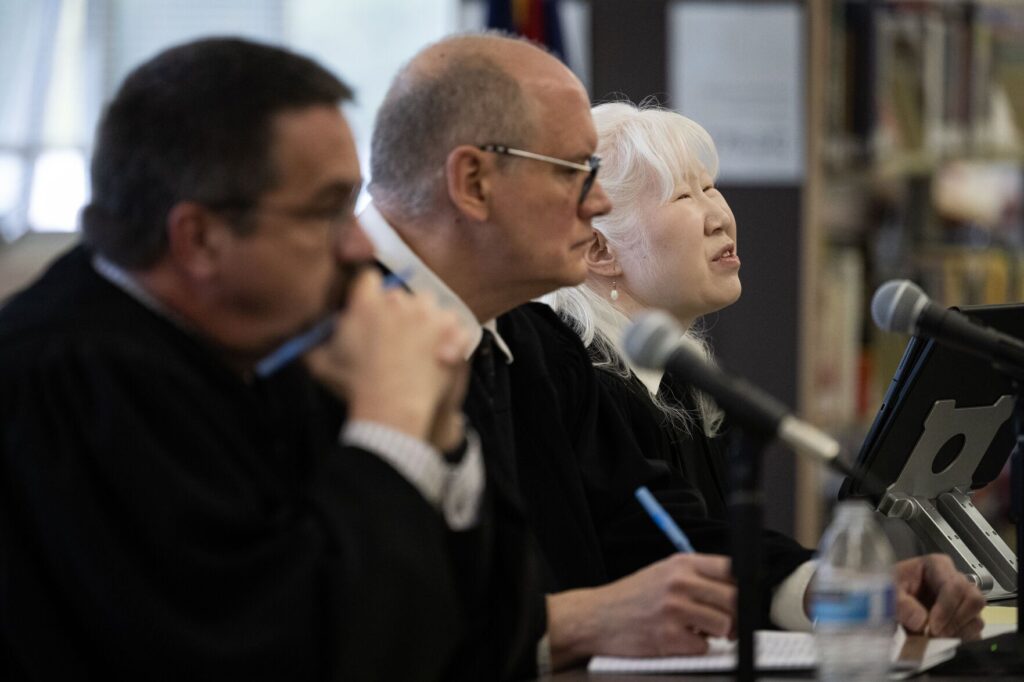
Appeals court upholds discipline for Denver officers’ inadequate domestic violence investigation
Michael Karlik
michael.karlik@coloradopolitics.com
Updated 11 hours ago
Colorado’s second-highest court last week upheld Denver’s discipline of two officers whose investigation of a domestic violence report was brief, failed to separate the victim from her abuser, and overlooked the victim’s severe injuries. Officers Cory Stuper and Brian Finneran...

Overtime for farms, school safety, public office rules: What’s new in Colorado law
Marianne Goodland
marianne.goodland@coloradopolitics.com
Updated 14 hours ago
Gov. Jared Polis signed 25 bills into law Monday, bringing changes that will affect workers, families, schools, and local governments across Colorado. The new laws deal with a range of issues – from overtime rules for farmworkers to limits on...

First Circuit could intensify judicial divisions over Trump’s mandatory detention policy
Jack Birle, Washington Examiner
jack.birle.washington.examiner@gazetteedit.wpenginepowered.com
Updated 17 hours ago
A panel on the U.S. Court of Appeals for the 1st Circuit sharply questioned the Trump administration on Monday over its mandatory detention policy for undocumented immigrants, as the problem races toward the Supreme Court amid nationwide divisions in the...

From social media trusts to 3D-gun restrictions: How Colorado’s latest laws affect residents
Marissa Ventrelli
marissa.ventrelli@coloradopolitics.com
Updated 14 hours ago
Gov. Jared Polis on Monday signed two new laws — one requiring parents to set up trusts for children who appear on social media and another banning the production of firearms using 3D‑printing technology. Under House Bill 1058, parents must create...

Democrat Jena Griswold holds wide lead in Colorado attorney general primary, her internal poll shows
Ernest Luning
ernest.luning@coloradopolitics.com
Updated 15 hours ago
Democratic attorney general candidate Jena Griswold, Colorado’s term-limited secretary of state, holds a wide lead over her three primary opponents just weeks before ballots are set to go out to voters, a new internal poll released by her campaign on...
Colorado Supreme Court rebuffs DA’s office over evidentiary appeal
Michael Karlik
michael.karlik@coloradopolitics.com
Updated 1 day ago
The Colorado Supreme Court rebuffed a district attorney’s office on Monday for immediately pursuing an appeal of a trial judge’s evidentiary decision that the court had no authority to hear. State law authorizes prosecutors to file a mid-case, or “interlocutory,”...

Crank challenger Jessica Killin named to House Democrats’ ‘Red to Blue’ program in Colorado’s 5th CD
Ernest Luning
ernest.luning@coloradopolitics.com
Updated 14 hours ago
The House Democrats’ campaign arm on Monday added Jessica Killin to its nationwide “Red to Blue” program in Colorado’s Republican-leaning 5th Congressional District, calling the first-time candidate a “top-tier” challenger in a seat the party is aiming to flip in...
PREV
PREVIOUS

Colorado changed its laws around sex ed; here’s what you need to know
Colorado law will soon require students who receive sexual education to learn about consent in school. But the road to passing that bill was bumpy. The final legislation was heavily amended and passed in the last two days of the legislative session. The bill is still awaiting the governor’s signature. In response to parent questions, […]

New Mexico candidates diverge on oversight of White House
SANTA FE, N.M. – New Mexico Secretary of State and U.S. Senate candidate Maggie Toulouse Oliver says it’s time for Congress to start impeachment proceedings against President Trump over concerns about obstruction of justice. Toulouse Oliver said Wednesday in a statement that it’s time to hold the president accountable for possible obstruction of justice and […]