

Colorado Senate gives preliminary pass to PERA fix

DENVER – The Colorado Senate gave an initial OK to a bill that seeks to shore up the state’s ailing public pension plan Monday morning.
Senate Bill 200 still has to pass a formal vote in the upper chamber, where Republicans have a one-seat majority, before the Democratic majority in the House has its chance to write amendments, which they are certain to do, given the ideological battles over how to fix the state pension.
Senate Democrats tried and failed to amend the bill for over 90 minutes Monday, seeking to put in more money from state employees, less from employers and take out a private retirement plan option favored by Republicans.
They did, however, remove a provision that would make it harder for workers to qualify for early retirement with full benefits.
The bill is sponsored in the House by two powerful lawmakers, Majority Leader KC Becker of Boulder and House Finance Committee chairman Dan Pabon of Denver.
Ultimately a conference committee made up of members from both chambers could work out a compromise for both chambers to vote on before session ends on May 9.
The gap between what the Public Employees’ Retirement Association has and what it needs is somewhere between $32 billion and $50 billion over the next three decades, and people on both side of the question on how to fix it agree that another economic downtown could unravel the retirement fund for more than 650,000 state, local and school employees.
Through two Senate committee votes so far, the legislation is yet to pick up a Democratic vote. In the Senate Finance Committee on March 15. former Democratic Sen. Cheri Jahn, now an independent, voted in favor of the bill with reservations, so it could continued to be worked on, she said then.
The bipartisan bill was stripped of a key provision favored by some Democrats – more money from taxpayers to help fill the budget hole.
As it’s currently written, state, local and school employers – taxpayers, that is – would not have to put in an additional 2 percent above the current 20.15 percent contribution.
Most people who use the pension will be paying 3 percent more in deductions and retirees will be receiving less in cost-of-living allowances – from 2 percent to 1.25 percent, after a two-year timeout with no increases.
The bipartisan Joint Budget Committee, however, has earmarked $225 million for PERA, which could become a political volleyball when lawmakers start hammering out the next year’s spending plan this week.
Democrats also aren’t crazy about including a 401(k)-type investment option for future state employees. The bill’s Republican sponsors, Sens. Jack Tate of Centennial and Kevin Priola of Henderson, said people who don’t intend to spend their careers in government service shouldn’t be locked into the pension plan, while only adding more liabilities and risk to the fund.
Opponents of the move says it will do nothing to solve the shortfall, doing more to undermine the pension in the future than rescue it now.
Republicans built in a taxpayer supplement that would make up the difference to the pension, when employees opt out.
“It would do away with the plan to lure people away from direct benefit to direct contribution, to seduce them into going into a plan that all the studies degree give them less for their money, yet will cost taxpayers far, far more,” said Sen. Sen. Daniel Kagan, D-Cherry Hills Village.
Sen. Jim Smallwood, R-Parker, said it shouldn’t be up to the state to decide that for individuals.
“There are plenty of millennials who would like to be in control of their investments,” he said. “In some cases that might mean being more conservative with how they invest their money – compared to the efficient frontier that’s built by the PERA board – in other cases, it might be more aggressive.”


Colorado Senate reworks key programs, gives preliminary nod to $46B budget
Marianne Goodland
marianne.goodland@coloradopolitics.com
Updated 13 hours ago
With the Senate’s traditional Budget Day barbecue setting a lighter tone, lawmakers worked through the $46.8 billion state budget Wednesday, navigating a long list of amendments but avoiding the partisan clashes that defined the House debate last week. The Senate...
Colorado budget plan seeks to keep $306M by canceling TABOR refunds
Marianne Goodland
marianne.goodland@coloradopolitics.com
Updated 13 hours ago
Tucked deep within the hundreds of pages of the proposed $46.8 billion 2026–27 state budget is a line item showing $306.1 million in savings — achieved by canceling TABOR refunds. Gov. Jared Polis has recommended withholding TABOR refunds in both...
Colorado Supreme Court concerned about police overreach in interrogations
Michael Karlik
michael.karlik@coloradopolitics.com
Updated 16 hours ago
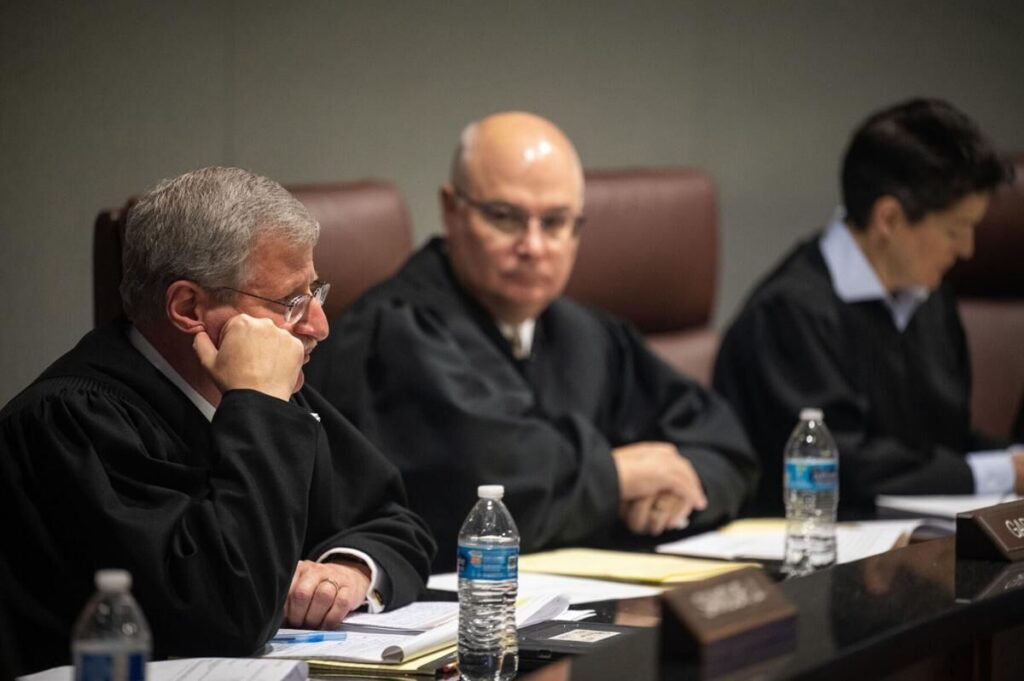
Some members of the Colorado Supreme Court appeared hesitant on Tuesday to endorse the ability of police to interrogate a suspect after they have obtained a court order authorizing only the collection of physical evidence. Under Colorado’s criminal rules, law...

Colorado House committee advances Democratic bill to reduce penalties for ‘extreme indifference’ murder
Marissa Ventrelli
marissa.ventrelli@coloradopolitics.com
Updated 15 hours ago
Lawmakers on the Colorado House Judiciary Committee narrowly passed a bill proposing changes to the state’s sentencing guidelines for murders facilitated with “extreme indifference to the value of human life.” Colorado is one of several states with this type of...

Boebert working on bill to strip Swalwell of $22,000 annual taxpayer-funded pension
Haris Alic and Lauren Green, Washington Examiner
haris.alic.and.lauren.green.washington.examiner@gazetteedit.wpenginepowered.com
Updated 18 hours ago
EXCLUSIVE — Rep. Lauren Boebert (R-CO) is working on legislation to strip disgraced former Rep. Eric Swalwell of his $22,000 annual taxpayer-funded congressional pension. Swalwell resigned from the House on Tuesday after allegations of sexual assault by multiple women, including...

Trump AI framework puts ball in Congress’s court. Time to act is running out
Liz O'Bagy, Washington Examiner
liz.o'bagy.washington.examiner@gazetteedit.wpenginepowered.com
Updated 18 hours ago
Artificial intelligence is no longer a future policy debate. It is already compressing years of drug discovery into months, helping doctors detect cancer earlier through advanced diagnostic imaging, improving aviation and traffic systems that make travel safer, and giving small...
Colorado Supreme Court considers new requirement for leaving-the-scene convictions
Michael Karlik
michael.karlik@coloradopolitics.com
Updated 18 hours ago
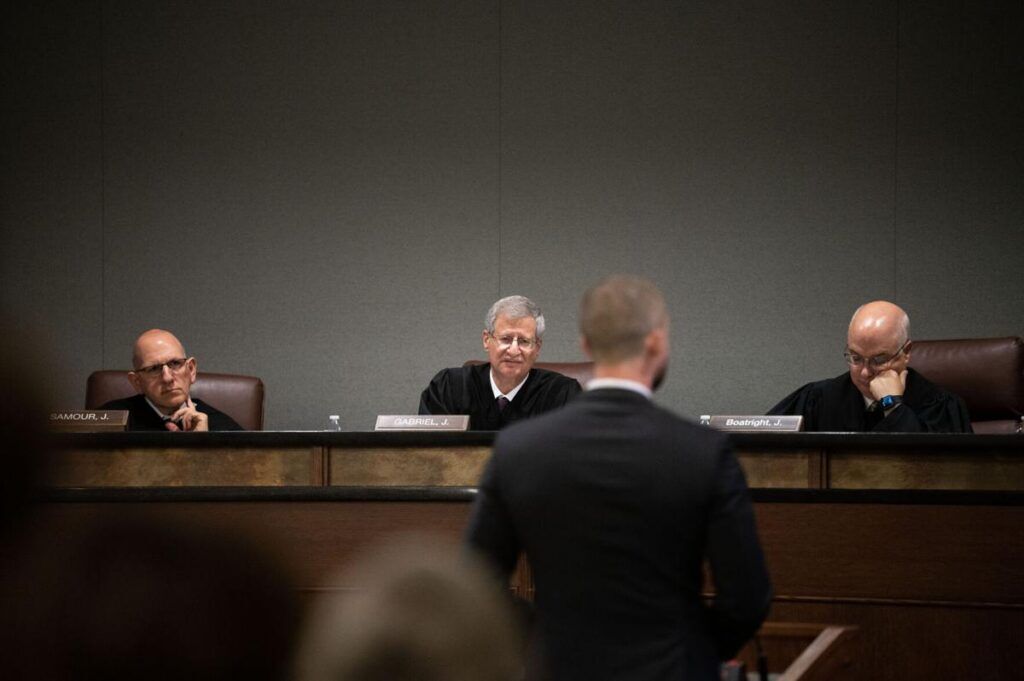
In 2006, the Colorado Supreme Court ruled that leaving the scene of an accident resulting in serious injury is a “strict liability” offense, meaning a person is guilty solely through their conduct, without the need for prosecutors to prove the...

Democratic lawmakers seek fix to Colorado’s stalled prison population plan
Marissa Ventrelli
marissa.ventrelli@coloradopolitics.com
Updated 12 hours ago
Colorado’s prison population plan was designed to prevent overcrowding. Instead, eight months after it was triggered, the system remains strained and largely ineffective, prompting two Democratic lawmakers to push for changes through new legislation. According to its sponsors, Senate Bill...
After internal strategy sessions, Colorado Senate to take up $46B budget debate
Marianne Goodland
marianne.goodland@coloradopolitics.com
Updated 20 hours ago
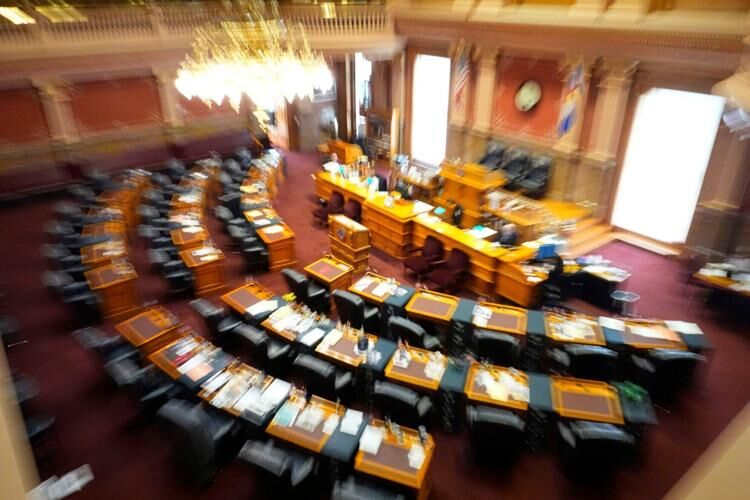
Tax Day carries added weight at the state Capitol this year, as the Senate prepares to take up the 2026‑27 budget on Wednesday following a day of preparations by both Republican and Democratic caucuses. Senators are expected to raise some...

Douglas County approves AI system for sheriff’s investigations
Nicholas Fogleman
nicholas.fogleman@denvergazette.com
Updated 13 hours ago
Douglas County commissioners unanimously approved the purchase of an artificial intelligence system to assist the Sheriff’s Office with investigative analysis. The system is designed to help investigators process large volumes of data more efficiently and turn it into usable investigative...
PREV
PREVIOUS

Report on sexual harassment allegations against Baumgardner raises questions of credibility
DENVER – The Jan. 18 report on a series of sexual harassment allegations against Colorado state Sen. Randy Baumgardner of Hot Sulphur Springs shows an investigator conflicted over the “he said, she said” nature of the allegations and a lack of witnesses to back up the complainant’s side of the events. As a result, the […]

Fort Carson confirms 3,300-acre fire sparked by live-fire training
COLORADO SPRINGS – A Fort Carson investigation confirmed that live-fire training sparked a fire that burned 3,300 acres and two homes in the rural Midway Ranch community this month, the base announced Monday. The decision to hold training on March 16, the day the fire started, has been criticized by many residents because the National […]