

Ethics complaint against Colorado lawmaker may hinge on committee’s view of university’s funding
An ethics complaint filed against Colorado state Rep. Kim Ransom, a Lone Tree Republican, may hinge on just how the Independent Ethics Commission views the funding for Colorado Christian University.
On Monday the commission discussed several issues that could decide whether Ransom violated the state’s limits on gifts to lawmakers.
Ransom was one of 10 lawmakers who attended the 2016 Western Conservative Summit and received an award from the group Principles of Liberty. The summit is hosted by the Centennial Institute, which is part of Colorado Christian University. Ransom was the only lawmaker of the 10 to be the subject of an ethics complaint.
A constituent in Ransom’s district, Charles Bucknam, filed the complaint in August 2016, about a month after the summit. In his complaint, Bucknam alleged that Ransom was given a “Gold Pass,” valued at $600, to attend the summit. The pass was given to cover the cost of meals and for attending the event, according to a preliminary investigation conducted by Dino Ioannides, the commission’s executive director.
But is that pass really worth $600? That’s the question Commissioner Bill Leone raised at Monday’s meeting, noting that the cost of meals was estimated at about $60. Leone, acting as the hearing officer on the complaint, asked Ioannides to find out what the other $540 was for, suggesting it could be “excess fundraising.”
There’s an exception to the gift limit when lawmakers are acting in their official capacity and speaking at an event. However, according to a video of the event, posted by CCU to YouTube, Ransom only accepted her award; she did not speak during the presentation. Leone asked Ioannides to talk with independent witnesses to the event.
Then there’s the question of CCU’s funding. According to IEC rules and state law, non-profit groups that received less than 5 percent of their funding from for-profit sources are exempted from the limit, which is valued at $59. The question becomes whether tuition should be counted under those sources. Tuition payments are the primary source of funding for CCU, Ioannides said. Leone said the commission is “leaning toward not counting tuition payments as private contributions,” which would mean that for-profit sources of funds might be a bigger factor.
Ioannides also suggested he might want to obtain subpoenas for information. A formal hearing on the complaint is tentatively scheduled for the end of November.


Federal judge rejects constitutional claims, ‘expressions of hatred’ by Club Q defendant
Michael Karlik
michael.karlik@coloradopolitics.com
Updated 2 hours ago
A federal judge rejected a defendant’s claims that he received constitutionally ineffective assistance of counsel while facing federal hate crime and firearms charges for murdering five people at a Colorado Springs LGBTQ nightclub in 2022. Anderson Lee Aldrich is serving...

Space Force should measure workforce needs as it prepares to double in size, GAO report says
Mary Shinn
mary-shinn@coloradopolitics.com
Updated 2 hours ago
The Space Force needs more people. It’s just not precisely sure how many more. A Government Accountability Office report released earlier this month found that the youngest and smallest military branch does not have a process to consistently or accurately...

Colorado schools receive $24 million to fully implement Healthy School Meals for All
Marissa Ventrelli
marissa.ventrelli@coloradopolitics.com
Updated 3 hours ago
The Colorado Department of Education is providing Colorado schools with nearly $24 million in grant funding to fully implement the Healthy School Meals for All program. Approved by voters in 2022, the Healthy School Meals for All provides free breakfast...

Secret Service agent placed on administrative leave after arrest for near-deadly hazing ritual
Claire Carter
claire.carter@washingtonexaminer.com
Updated 4 hours ago
A Miami Secret Service agent in Florida was placed on administrative leave following his arrest on Sunday in connection with a near-deadly hazing incident at a University of Miami fraternity. Marquez Christopher Pinder, 29, was arrested alongside two other individuals...

Forest fire west of Sedalia prompts evacuations in Douglas County
Nicholas Fogleman
nicholas.fogleman@denvergazette.com
Updated 6 hours ago
Emergency crews are responding to a forest fire burning west of Sedalia, prompting evacuation orders for nearby residents Sunday afternoon. At about 5 p.m. Sunday, the Douglas County Sheriff’s Office issued an evacuation order for residents within a 2-mile radius...

Airstrikes have paused and talks are pressing forward. But can the US and Iran take the off-ramp?
The Associated Press
the-associated-press@coloradopolitics.com
Updated 6 hours ago
WASHINGTON (AP) — The U.S. military has paused its airstrikes on Iran after nearly two weeks of intensifying bombing, while diplomatic efforts have pushed forward to try to avert a return to all-out war. But it remains to be seen...
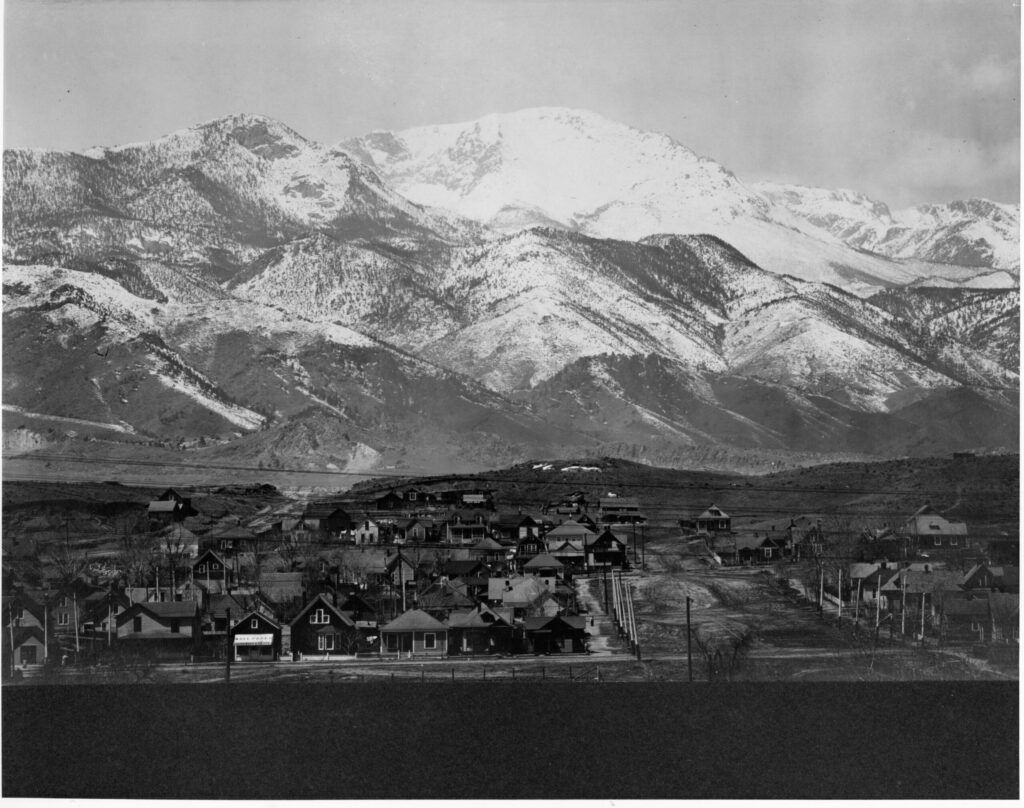
Penrose fortune paved the way for Colorado Springs to be a military, space and sports town
Mary Shinn
mary-shinn@coloradopolitics.com
Updated 6 hours ago
Colorado Springs is always working to catch the next big economic wave. “We’re always trying to figure out what the next thing is going to be,” explained Matt Mayberry, director of the Colorado Springs Pioneers Museum. In the early days,...

Colorado Politics Calendar July 27-Aug. 2
Rachael Wright, Special to Colorado Politics
rachael.wright@coloradopolitics.com
Updated 5 days ago
CoPo’s weekly political calendar will help you find political and public-policy events throughout Colorado. It includes candidate and issue campaign events, public policy meetings, court hearings, state and local party conventions, assemblies, debates, rallies, parades, speaking engagements, traveling dignitary appearances,...

The through line from Donald Trump to Victor Marx | SONDERMANN
By Eric Sondermann
by-eric-sondermann@coloradopolitics.com
Updated 5 days ago
Over 10 years ago, before Donald Trump could ever defeat Hillary Rodham Clinton, he had to first engineer a hostile takeover of the Republican Party. Prior to his descent of that golden escalator, the previous seven Republican presidential nominees had...

Colorado districts prepare for school year amid mental health cuts. But will less cellphone distractions help?
Marissa Ventrelli
marissa.ventrelli@coloradopolitics.com
Updated 3 days ago
The signs of a new school year are everywhere — buses in the shop, teachers unpacking boxes, families ticking through supply lists — but behind the familiar rituals, Colorado districts are preparing for a year defined less by routine than...