

Gardner questions whether U.S. military use of force law needs update
WASHINGTON – Both the U.S. secretary of state and secretary of defense agreed Monday that North Korea represents the most urgent military threat to the United States during questioning by Colorado’s U.S. Sen. Cory Gardner.
Gardner is a member of the Senate Foreign Relations Committee, which held a hearing Monday to determine whether changes are needed to a law authorizing use of U.S. military force against its enemies.
Committee members said political threats have changed in the 16 years since the original law was enacted after the Sept. 11, 2001, terrorist attacks. They now include risks of nuclear war with North Korea.
North Korea has threatened the United States several times in recent months with nuclear missiles it is developing. President Donald Trump responded with threats of massive retaliation.
Gardner and other senators proposed legislation to ban organizations that deal with North Korea from doing business in the United States.
The sanctions approved by Congress this month and an executive order from Trump last month are supposed to punish North Korea and cut off supply lines for its military.
China is North Korea’s biggest trading partner. Some of its largest corporations are now blocked from trade with the United States.
“Are there more Chinese entities coming in the sanctions as it relates to North Korea?” Gardner, a Republican, asked Secretary of State Rex Tillerson.
Tillerson said the list developed by the U.S. Treasury Department is growing.
The Authorization for Use of Military Force approved by Congress in 2001 granted the U.S. military a right to attack conspirators in the Sept. 11, 2001, terrorist attacks and any “associated forces.”
The law granted the president authority to use “necessary and appropriate force” against al Qaeda, ISIS and their supporters, which led to a U.S. military presence in Afghanistan, Iraq and later Syria that has lasted 16 years so far.
Some members of the Senate Foreign Relations Committee said evolving strategies for regrouping by ISIS and growing North Korean hostility mean the law authorizing military force needs to be updated.
“What is the most significant rule of engagement change we’ve seen in our fight against ISIS?” Gardner asked.
Secretary of Defense James Mattis said the military is no longer restricted to engaging ISIS fighters within specific territorial limits.
“Wherever we see them, we can attack them,” Mattis said. “There is no need for [the U.S. military] to be in self-defense mode to call in air support.”
He credited the new strategy with much of the progress in suppressing ISIS military moves.
Congress has tried previously to replace the Authorization for Use of Military Force but failed over infighting between Democrats and Republicans on procedures for the law to take effect.
Tillerson and Mattis warned that any replacement law should not give an indication the United States was weakening in its military resolve.
“It would create significant new opportunities for our enemies to seize the initiative,” Tillerson said.
Political pressure for Congress to update its military force authorization heightened after four American soldiers were ambushed and killed this month in Niger by Islamic extremists. The U.S. has sent hundreds of military personnel to Africa as ISIS moves to other countries after recent defeats in Syria.
About 800 American soldiers are deployed in Niger as part of a French-led effort to combat extremists in West Africa.
The leading legislative proposal to revise the Authorization for Use of Military Force was sponsored by Sen. Tim Kaine, D-Va., and Sen. Jeff Flake, R-Ariz.
Flake expressed concern the current authorization could grant the president too much discretion to decide who and where to attack.
“We have to have a situation where Congress is more involved here,” Flake said.
Kaine said the military authorization for the Middle East is likely to face unforeseen challenges without updates.
“I think it’s a forever war,” Kaine said.


Group submits signatures for proposed Colorado graduated income tax
Marianne Goodland
marianne.goodland@coloradopolitics.com
Updated 9 hours ago
The measure, which eliminates Colorado’s flat tax, is expected to raise $2 billion in new revenue The proposal to amend the Colorado constitution to change the state’s flat rate into a graduated income tax came in under the wire Monday,...
10th Circuit weighs Gross Reservoir expansion, judge’s ‘punishment’ of Denver Water
Michael Karlik
michael.karlik@coloradopolitics.com
Updated 7 hours ago
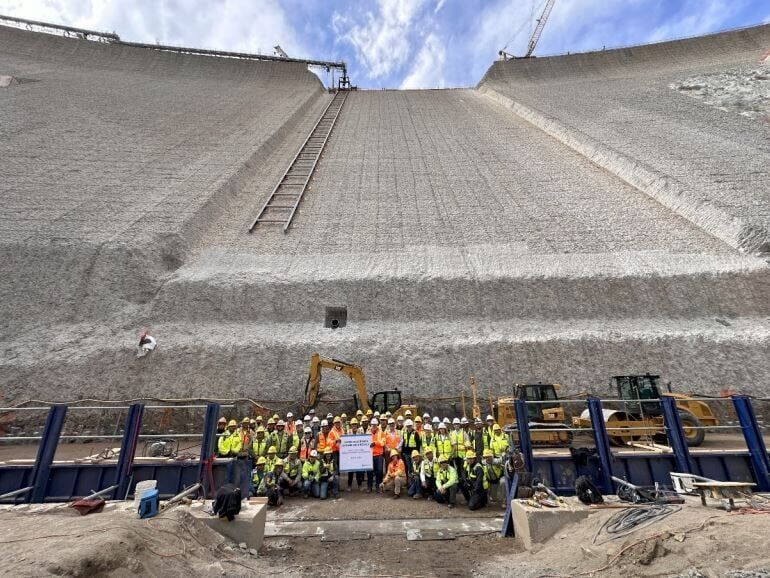
Members of the Denver-based federal appeals court considered on Friday whether they could intervene in an ongoing infrastructure project to enlarge a Boulder County dam after a trial judge deemed the underlying permit unlawful nearly two years ago. Denver Water...

Democratic group maps out path to Colorado House and Senate supermajorities
Marissa Ventrelli
marissa.ventrelli@coloradopolitics.com
Updated 11 hours ago
A national organization that works to elect Democrats to state legislatures has its sights on Colorado, unveiling a road map to establish a supermajority in both the House and Senate. Democrats have held a majority in the House since 2013...

10th Circuit upholds federal prohibition on juvenile handgun possession
Michael Karlik
michael.karlik@coloradopolitics.com
Updated 12 hours ago
The Denver-based federal appeals court concluded on Monday that Congress acted within its constitutional powers to make it a crime for juveniles to possess handguns in most instances. The decision from the U.S. Court of Appeals for the 10th Circuit...

Board of Peace demands Netanyahu cease Gaza airstrikes
The Washington Examiner
the-washington-examiner@coloradopolitics.com
Updated 14 hours ago
The Board of Peace is struggling to get Israel on board with its peace plan for Gaza as Israeli militia airstrikes continue to bombard the war-torn strip despite expectations for a ceasefire and de-escalation. Gaza City was hit repeatedly by...

Trump wants to give Iran ‘last chance’ to strike a deal before ‘decapitation’
Christian Datoc
christian-datoc@coloradopolitics.com
Updated 14 hours ago
President Donald Trump said this week’s talks with Iran will be the “last chance” for the Middle Eastern country to avoid a severe escalation in the war. Trump called off plans to strike Iran’s energy infrastructure over the weekend after...
Fauci told Congress higher COVID-19 fatality rate than he calculated in diary: ‘More like 0.2-0.3%’
Mia Cathell
mia-cathell@coloradopolitics.com
Updated 14 hours ago
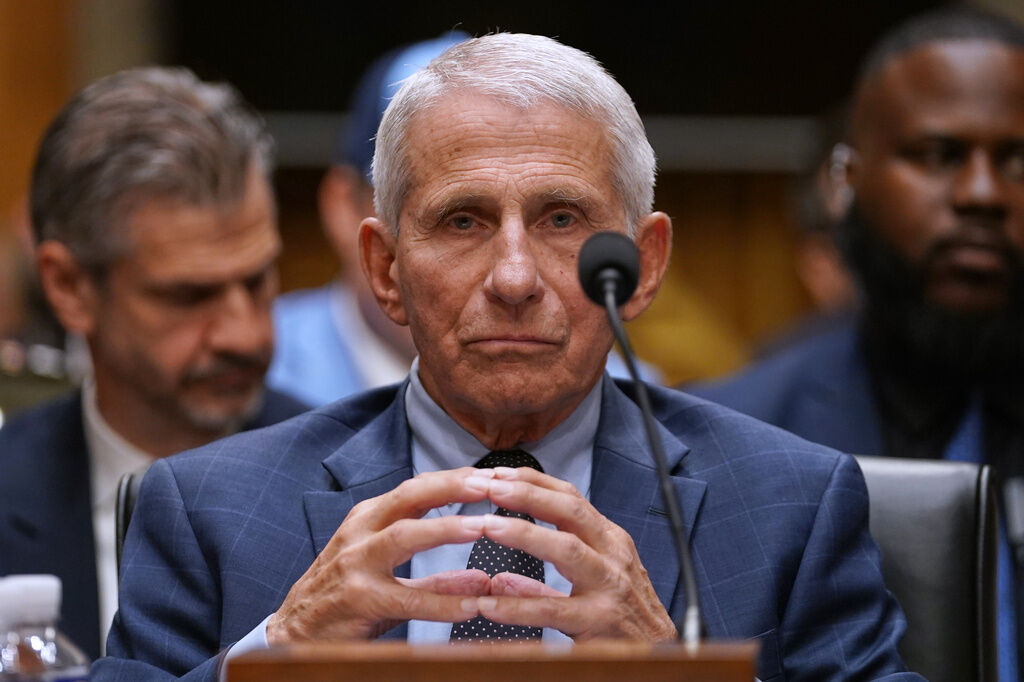
Dr. Anthony Fauci privately calculated that COVID-19 had a significantly lower fatality rate than what he told Congress a month later at the outset of the pandemic. On March 11, 2020, the day that the World Health Organization declared COVID-19...

Senate advances judicial nominee, Montezuma County judge agrees to discipline | COURT CRAWL
Michael Karlik
michael.karlik@coloradopolitics.com
Updated 16 hours ago
Welcome to Court Crawl, Colorado Politics’ roundup of news from the third branch of government. A U.S. Senate committee advanced a judicial nominee from Colorado, plus a Montezuma County judge agreed to receive discipline for his misconduct that stops short...

Tunnel to Towers brings 9/11 steel to Denver
Nicholas Fogleman
nicholas.fogleman@denvergazette.com
Updated 19 hours ago
A nationwide tour commemorating the 25th anniversary of 9/11 brought a piece of the World Trade Center to Denver on Saturday as the Tunnel to Towers Foundation hosted a ceremony at the Wings Over the Rockies Air & Space Museum....
Top officials in Arizona’s Maricopa County agree on how to oversee elections | OUT WEST ROUNDUP
The Associated Press
the-associated-press@coloradopolitics.com
Updated 6 days ago
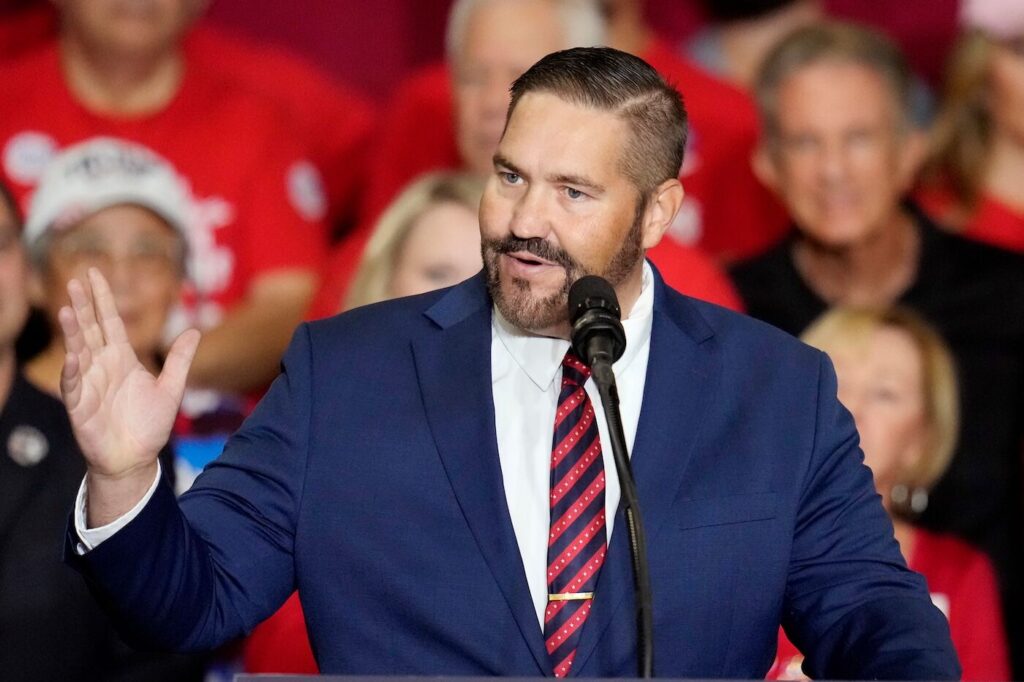
ARIZONA Officials agree on election oversight PHOENIX — Election officials in Arizona’s most populous county reached an agreement a week before the state’s July 21 primary on how to jointly oversee the vote, ending a prolonged legal battle. Republican Maricopa...
PREV
PREVIOUS

State ethics commission issuing subpoenas on ethics complaint against state Sen. Vicki Marble
The Colorado Independent Ethics Commission Monday voted unanimously to issue subpoenas to state Sen. Vicki Marble, a Fort Collins Republican; her legislative aide; and an oil and gas company that paid for a Marble town hall last February. The complaint against Marble alleged that Extraction Oil and Gas paid for the February 15 town hall, […]
Ethics complaint against Colorado lawmaker may hinge on committee's view of university's funding
An ethics complaint filed against Colorado state Rep. Kim Ransom, a Lone Tree Republican, may hinge on just how the Independent Ethics Commission views the funding for Colorado Christian University. On Monday the commission discussed several issues that could decide whether Ransom violated the state’s limits on gifts to lawmakers. Ransom was one of 10 […]