

The Colorado Springs Gazette: City should collect what’s owed and hire more cops
The police chief gutted the gang task force because of tight finances. We are down more than 100 officers needed to properly protect a city this size.
Meanwhile, gang members are charged with viciously murdering two local teenagers. Two young children were stabbed to death Tuesday. A teen fought for his life Wednesday after getting shot near downtown.
The public is numbing to volent crimes as the murder rate ticks up.
We wonder why city officials, given our law enforcement dilemma, would not urgently maximize collection of revenues rightly owed to city government.
Mayor John Suthers has complained since June about $17 million the city should have received over the past six years as payments in lieu of taxes from Colorado Springs Utilities. That is a lot of money and could pay for most of the cops we need.
The utility, a quasi-governmental enterprise, makes payments in lieu of taxes (known as a PILT), to cover what a private utility would pay in property, sales and use taxes. The formula that determines the payment hasn’t been adjusted since 2010. If it had been adjusted to reflect the utility’s increasing revenues, annual payments of $31 million would have increased to produce the estimated $17 million Suthers believes the city forfeited.
Readjusting the PILT calculation could quickly fund the hiring of cops and upgrade police and other outdated city fleet vehicles without raising taxes.
For rationale no one will explain, the Colorado Springs Utilities finance committee recommended recently to indefinitely postpone further talks about updating the PILT calculation.
Colorado Springs Utilities Board Vice Chairman Andres Pico said “he was unsure who requested discussions about the payments be put on hold or why. City spokeswoman Jamie Fabos said Suthers did not request the postponement and that the city will continue to ‘deal with it’ if the formula remains unchanged,” explained an Oct. 13 article by Gazette reporter Conrad Swanson.
The finance committee’s decision to ignore the issue will go to the utility’s board of directors in November for approval or rejection.
The board should reject the recommendation and move immediately to adjust the PILT formula.
The utility’s board of directors is the City Council. The council convenes as the board, and pretends it is an entirely separate entity with concerns and responsibilities unique to the utility and unrelated to City Hall. The makeshift system represents one of the more colossal examples of institutionalized conflict of interest anyone can find.
Despite the pretense of convening as something other than City Council, the utilities board members are nine people elected to legislate in the best interest of the public. Few would argue against treating public safety as the highest priority for city government. The utility’s board (aka City Council) cannot give Colorado Springs Utilities a friendly deal on the PILT without neglecting its responsibility to provide an adequate number of cops.
We can only imagine how quickly City Council would demand the community’s fair share of taxes from a private, for-profit utility like Xcel or Black Hills, which serve our neighbors to the north and south.
Colorado Springs benefits by owning a utility enterprise regulated by local officials. Those benefits are partly negated if other city services suffer as a result of special deals on PILT collections.
The City Council should immediately adjust the utility’s payments to address a cop shortage that fosters a looming public safety crisis.


Trump to meet with Middle Eastern leaders at G7 summit overshadowed by Iran and Ukraine wars
Colorado Politics
chris.brubaker+copo@gazette.com
Updated 50 minutes ago
President Donald Trump will meet with Middle Eastern leaders in Evian, France, early Monday morning, where his efforts to finally end the Iran and Ukraine wars are likely to cloud all other topics of conversation at the G7 summit. In...

Littleton commits loan, incentives for Manning-linked development
Nicholas Fogleman
nicholas.fogleman@denvergazette.com
Updated 43 minutes ago
The Littleton City Council voted 4–3 to approve a public-private partnership for the First Street Farms development, a hospitality development linked to former Denver Broncos quarterback Peyton Manning. The vote finalizes an agreement between the city and developer Gastamo Group...

Flesh-eating cattle parasite spreads beyond Texas as new screwworm cases found | OUT WEST ROUNDUP
The Associated Press
the-associated-press@coloradopolitics.com
Updated 4 days ago
NEW MEXICO Screwworm spreads beyond Texas Three more cases of the New World screwworm have been confirmed, including one found in a dog in New Mexico, outside the main cluster in Texas, demonstrating the difficulty of stopping a resurgent pest...

Denver City Council eyes lobbying regulations, restriction
Deborah Grigsby
deborah.smith@denvergazette.com
Updated 42 minutes ago
Topping the agenda for the Denver City Council’s Monday’s regular meeting is a proposal that, if adopted, would amend the Denver Revised Municipal Code to increase regulation of lobbyists. This will be the second reading for Council Bill 26-0686. High-profile...
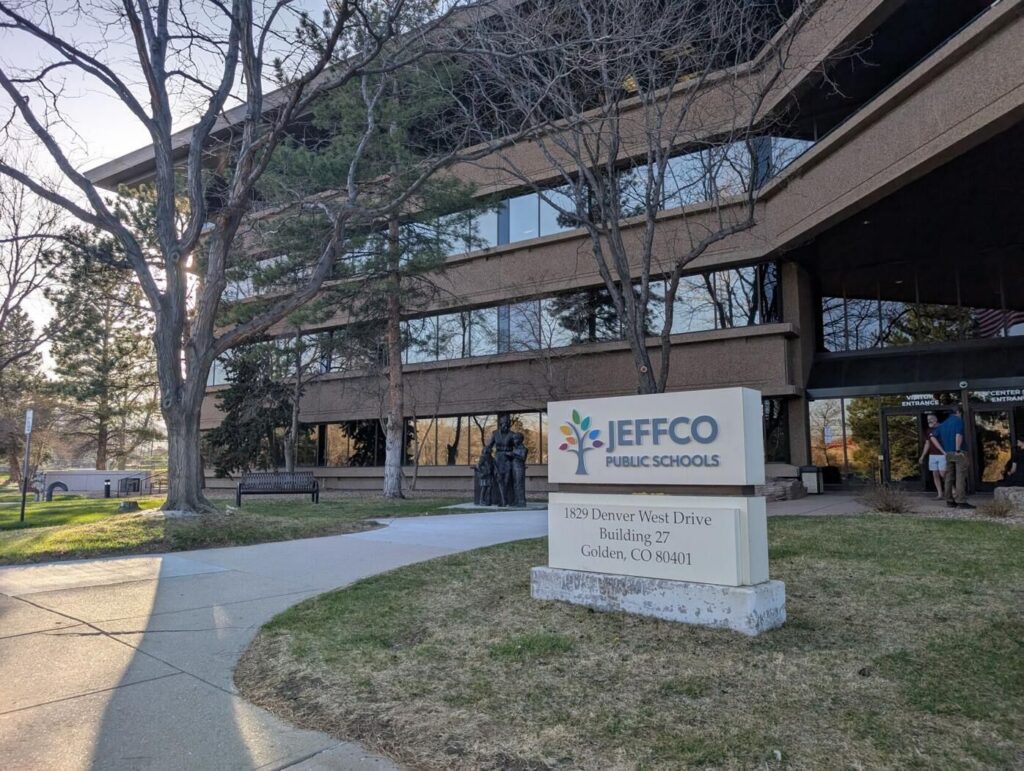
Jeffco Public Schools: Boys on girls’ sports rosters were mascots, not athletes
Matt Kyle
matt.kyle@denvergazette.com
Updated 38 minutes ago
Jeffco Public Schools this week said the boys the Trump administration claimed to have found on girls’ sports rosters were trainers, mascots and managers, not student-athletes. The U.S. Department of Education’s Office of Civil Rights announced in March that a...

Michael Dougherty is literally running for attorney general in Colorado Democrat’s 1st TV ad
Ernest Luning
ernest.luning@coloradopolitics.com
Updated 2 days ago
Democratic attorney general candidate Michael Dougherty, the Boulder County district attorney, runs laps around the judicial complex in Denver that houses the office he’s seeking in a TV ad released Friday that includes a subtle dig at one of his...

Group aims to add right to hunt and fish to Colorado Constitution
Marissa Ventrelli
marissa.ventrelli@coloradopolitics.com
Updated 2 days ago
A group is seeking to make Colorado the 25th state in the nation with an established constitutional right to hunting and fishing through a proposed ballot initiative. Backed by the International Order of T. Roosevelt, a group dedicated to preserving...

Colorado Politics Calendar June 15-21
Rachael Wright, Special to Colorado Politics
rachael.wright@coloradopolitics.com
Updated 5 days ago
CoPo’s weekly political calendar helps you find political and public policy events throughout Colorado. It includes candidate and issue campaign events, public policy meetings, court hearings, state and local party conventions, assemblies, debates, rallies, parades, speaking engagements, traveling dignitary appearances,...

A primary brings out primal instincts | SONDERMANN
Eric Sondermann
eric-sondermann@coloradopolitics.com
Updated 4 days ago
There are no Stanley Cup finals or NBA title showdowns involving local teams this June. In their place, we are inundated with primary election campaign ads. Coloradans can be excused for missing the diversion and alternate programming. But life can...

Dem-GOP tension dominates 1,000-bill legislative session | A LOOK BACK
Rachael Wright, Special to Colorado Politics
rachael.wright@coloradopolitics.com
Updated 4 days ago
Forty-Five Years Ago This Week: “I can honestly say that until now, we got along well with the governor’s office,” said House Minority Leader Federico Peña, D-Denver. “We visited frequently with the staff. And you didn’t see certain legislators speaking...