

Colorado legislature’s special session ends with angst and little else
Two bills intended to fix an inadvertent error made in a law passed by the Colorado General Assembly in the 2017 regular session were both killed by the Senate Transportation Committee, with a 3-2 Republican majority citing constitutional concerns over what Democrats said was a quick, easy fix.
On Monday the Senate Transportation Committee, on a 3-2 party line vote, dispatched a Senate bill that would have restored the right of certain special districts to collect marijuana tax revenue.
On Tuesday the same committee did the same thing with the same vote to the identical House version – and with that, the special session called by Gov. John Hickenlooper came to an end. It’s only the second time in the past 20 years that a special session had nothing to show for work by lawmakers.
This year’s special session is expected to cost taxpayers about $50,000.
Tuesday began with the House wrapping up its work for the special session, with a vote on House Bill 17B-1001, which would provide an exemption to at least nine special districts that have been collecting marijuana sales taxes for the past several years.
The special districts, with the eight-county Denver area Regional Transportation District as the largest, are on par to lose about $7 million in 2017-18 because of a mistake in a 2017 omnibus bill intended to help rural Colorado. Known as “Sustainability of Rural Colorado,” Senate Bill 17-267 changed the state’s hospital provider fee program into an enterprise – a government owned business – as well as put $30 million from marijuana taxes into a one-time boost to rural schools.
It’s that change in marijuana taxes that has caused headaches for the governor, lobbyists, lawmakers and the special districts.
Under SB 267, the state sales tax of 2.9 percent was eliminated, and the special sales tax on recreational marijuana was hiked from 10 percent to 15 percent, the maximum allowed by voters. But in eliminating the state sales tax, everyone failed to notice that certain special districts had been allowed to collect marijuana taxes out of that state sales tax.
For RTD, it’s a hit of a half-million dollars per month. The Denver area Scientific and Cultural Facilities District stands to lose almost $600,000 in 2017-18. Small regional transportation authorities, a district that helps provide affordable housing in Summit County, and a hospital district in Montezuma County also are losing money because of the error.
On September 14, Hickenlooper issued an executive order that would bring lawmakers back to the Capitol to fix the problem. The order was narrowly tailored to deal only with fixing that problem.
And that’s when things started going south.
Republicans, especially those in the Republican-controlled state Senate, called the special session a waste of time, and that the issue could wait until the legislature returns in January. Even the original Republican sponsors of SB 267, Senate President Pro-Tem Jerry Sonnenberg of Sterling and Rep. Jon Becker of Fort Morgan, steered clear of the fix on their bill. Sonnenberg had even drafted a bill for the January session, but he said Tuesday that draft bill is history and that he intends to leave the issue of the fix to others.
Monday afternoon, the Senate Transportation Committee killed the Senate version of the fix on a party-line vote. The House Finance Committee on Monday voted 8-4, picking up one Republican vote, to approve their measure.
Tuesday morning, House members spent more than an hour on final debate about the fix.
House Minority Leader Patrick Neville, R-Castle Rock, said the glitch the legislature seeks to fix reflects Colorado’s “Washington-style budgets.” He noted RTD will get $36 million more in sales tax revenue this year than it got last year, and even with the loss of $6 million from the error the agency will still gain $28 million more than in 2016.
“If there’s a mistake we need to fix it’s that we need to stop these doomsday predictions of what’s going on,” Neville said.
He said he would gladly wear the accusation of being a strict interpreter of the state Constitution. “The Constitution does not have a price tag,” Neville said.
Rep.Tim Leonard, R-Evergreen, was among the few Republicans who didn’t call the two-day session a waste of time.
“I believe it was an excellent use of time and money, because what the debate does on this important issue is clarify the issues,” he said. “… It got to show our taxpayers, our citizens and our constituents exactly what the issue was. We’ve been getting soundbites from the media for quite awhile, and this helped frame the issue a lot more clearly.”
Leonard said the session yielded an debate on the state Constitution and tax increases, while showing the eagerness of special interests and Democrats to defend taxes, even relatively small ones. “They got to see and here special interests come down to the Capitol like pigeons coming to crumbs,” Leonard said.
Rep. Leslie Herod, D-Denver, listed cultural facilities that are losing money. She pointed to statements from RTD’s general manager, Dave Genova, who stated the agency’s loss of revenue equates to a loss of services to up to 5,000 rides. RTD, however, has not moved to cut services yet, though it has lost the pot tax money since July 1.
“We have the ability to fix our mistake today, right now,” Herod said. “We have already cost the taxpayers dollars by being here today, and to not act because we don’t feel like we should, because we don’t feel it’s the right time, is completely irresponsible.”
The House then voted 37 to 25 with three members excused to send their version to the Senate and a an expected hearing with the Senate Transportation Committee. Rep. Dan Thurlow, R-Grand Junction, who voted in favor of the bill in committee, also voted for it on the final passage and was the only House Republican to back the fix.
Tuesday afternoon, the transportation committee heard from many of the same people who testified in favor of the Senate bill. Notable was that there were more people than on Monday opposed to the fix, including Natalie Menten, a member of the RTD board of directors who is also a frequent critic of the agency.
“I don’t know that we’ve seen all the surprises,” Menten told the transportation committee, asking the lawmakers to hold off on the fix until January. “We will find ways to get around this,” she said, pointing to the million dollars per year the agency spends to operate the free mall shuttle on Denver’s 16th Street Mall. “The money is there. This isn’t an urgent problem.”
Former state Rep. Penn Pfiffner, a Lakewood Republican who chairs the TABOR Foundation, said passing the bill would give special districts a taxing authority they do not currently have. “You must go back to a vote of the people,” Pfiffner said.
There are ways to fix the problem, he said. “Go back to the ballot,” he said, or go to the Joint Budget Committee for a supplemental appropriation. Out of a $28 billion state budget, “you should be able to find $6 million,” he said. However, Rep. Dave Young, D-Greeley, a JBC member, said that he did not think the state could send general fund dollars to a non-state agency.
Pfiffner also pointed out that the Constitution doesn’t limit the number of times voters could be asked to approve a tax.
But a special district election can be an expensive proposition – just ask SCFD, which spent one million dollars for a 2016 campaign to reauthorize its one penny tax on $10 in sales.
“I’m pleased to be a part of this bill and this effort,” said sponsor Sen. Kerry Donovan, D-Vail, who pointed to the impact the error has on rural communities. “This would solve a problem for all of Colorado,” and without a solution the problem will continue for years to come, she warned.
The error hits multiple communities in her district, including Aspen, Gunnison, El Jebel, Basalt, Carbondale, Leadville, and Eagle County as well as any new districts that could be formed, she told the transportation committee. “This is a statewide issue.”
But Donovan also hinted at the future, suggesting a working group between now and January that could figure out a solution and give the special districts confidence the General Assembly would try to fix the problem.
“We’re not being our best selves in this special session,” Donovan said. “At the very least we owe some sort of direction and guidance to the many different entities that have been impacted by this…At least give them some answers,” she asked.
The House version died on the same 3-2 vote that ended the Senate bill, and the session officially concluded just after 2 p.m.

Fauci’s private COVID-19 diaries: Six takeaways on fame, prize money and the lab leak debate
The Washington Examiner
the-washington-examiner@coloradopolitics.com
Updated 1 hour ago
Anthony Fauci’s private writings from 2020 and beyond portray a public health official who was fixated on his growing celebrity while privately grappling with a pandemic response he believed was chaotic, leaderless and consumed by internal rivalries. The writings of...

Denver City Council sends Xcel franchise deal to voters
Deborah Grigsby
deborah.smith@denvergazette.com
Updated 57 minutes ago
This November, Denver voters will decide whether to renew the city’s longstanding franchise agreement with Xcel Energy. Members of the Denver City Council approved on Monday sending a proposed 20-year franchise agreement with Xcel that would deliver more than $180...

Denver weighs permanent restriction on low-level traffic stops
Deborah Grigsby
deborah.smith@denvergazette.com
Updated 56 minutes ago
A Denver City Council committee is considering permanently limiting certain types of low-level traffic stops used to investigate unrelated crimes and requiring better public reporting about why such stops happen. Members of the Budget and Policy Committee on Monday were...
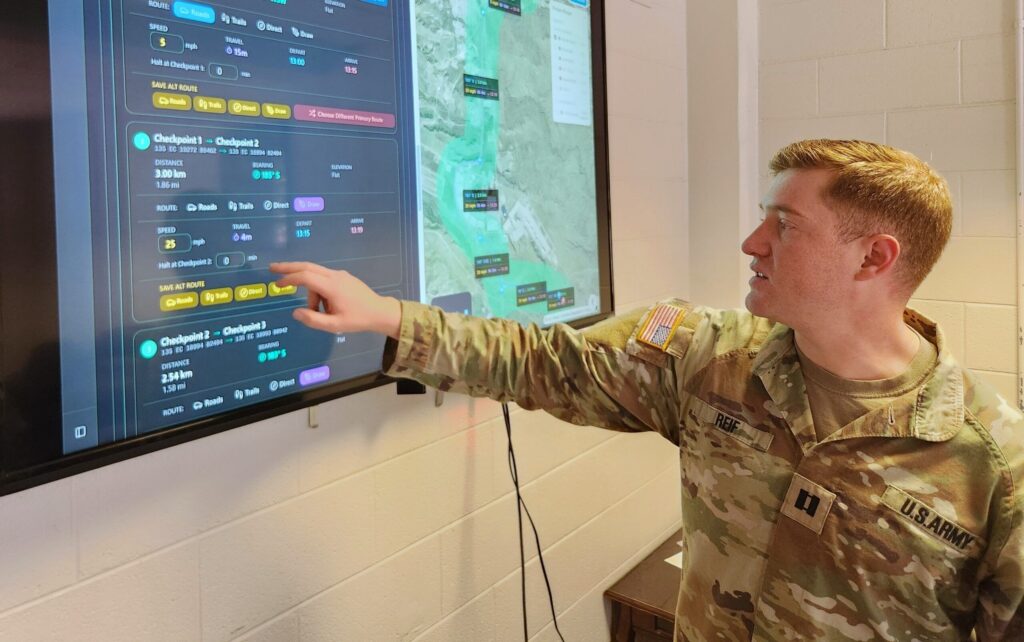
Fort Carson soldiers develop app to plan convoys as part of Next Generation Command and Control
Mary Shinn
mary-shinn@coloradopolitics.com
Updated 47 minutes ago
Planning the details of a military convoy with numerous vehicles, personnel, weapons, radios and other details can take a platoon leader three days. In addition to plotting a safe route, leaders need to map out checkpoints to track the convoy’s...
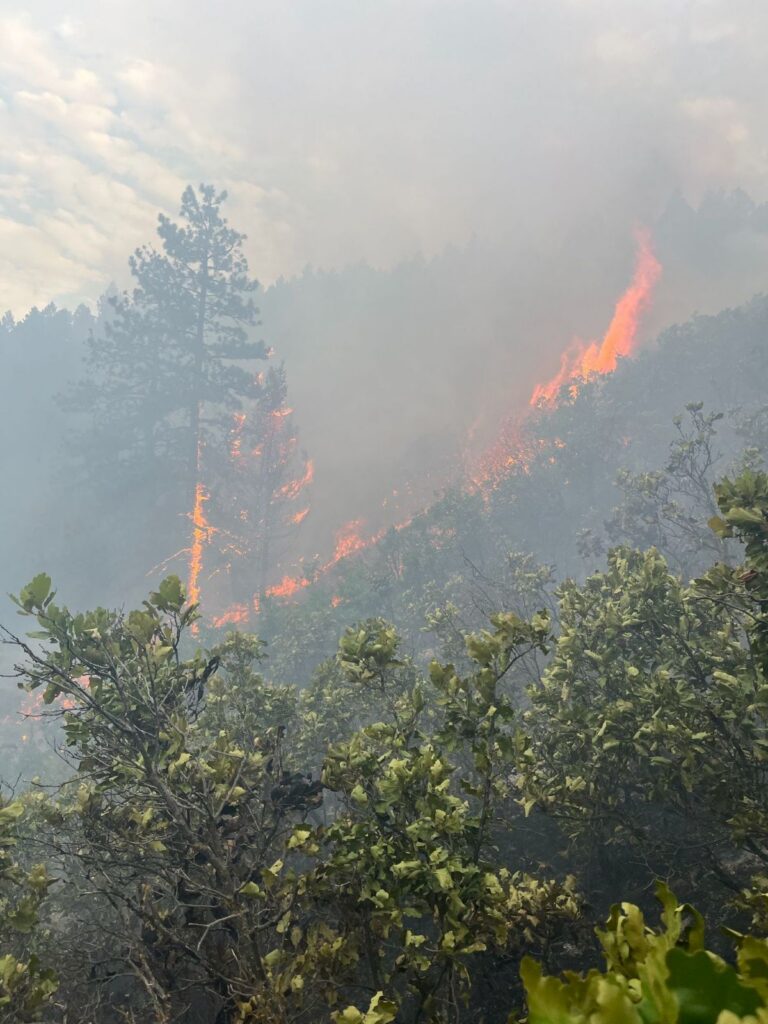
Penley fire near Sedalia reaches 75% containment
Nicholas Fogleman
nicholas.fogleman@denvergazette.com
Updated 52 minutes ago
Fire crews battling the Penley fire west of Sedalia made significant progress overnight, holding the wildfire at about 3 acres and reaching 75% containment Monday, according to Douglas County officials. The fire, which sparked Sunday west of Sedalia, prompted evacuation...
Colorado board permits state to appeal injunction against arthritis drug price cap
Marissa Ventrelli
marissa.ventrelli@coloradopolitics.com
Updated 31 minutes ago
A Colorado board voted Friday to allow the Attorney General’s Office to fight an injunction against a price cap on a drug that treats arthritis. A U.S. district court judge had granted the company Amgen a preliminary injunction, temporarily blocking...

Federal judge rejects constitutional claims, ‘expressions of hatred’ by Club Q defendant
Michael Karlik
michael.karlik@coloradopolitics.com
Updated 16 hours ago
A federal judge rejected a defendant’s claims that he received constitutionally ineffective assistance of counsel while facing federal hate crime and firearms charges for murdering five people at a Colorado Springs LGBTQ nightclub in 2022. Anderson Lee Aldrich is serving...
Divided 10th Circuit upholds Colorado congestion fee on car rentals
Michael Karlik
michael.karlik@coloradopolitics.com
Updated 13 hours ago
The Denver-based federal appeals court concluded on Monday that a 2024 “congestion impact fee” that lawmakers imposed on short-term vehicle rentals did not conflict with a federal prohibition on certain airport-related charges. Beginning in the 1970s, Congress began limiting the...

Space Force should measure workforce needs as it prepares to double in size, GAO report says
Mary Shinn
mary-shinn@coloradopolitics.com
Updated 22 hours ago
The Space Force needs more people. It’s just not precisely sure how many more. A Government Accountability Office report released earlier this month found that the youngest and smallest military branch does not have a process to consistently or accurately...

Colorado schools receive $24 million for free meals program
Marissa Ventrelli
marissa.ventrelli@coloradopolitics.com
Updated 16 hours ago
The Colorado Department of Education is providing Colorado schools with nearly $24 million in grant funding to implement a free lunch program. Approved by voters in 2022, the Healthy School Meals for All provides free breakfast and lunch to all...