

Interim committee tasks Maryland company with Colorado school finance work
A legislative committee looking at the school finance act Wednesday announced they’ve picked the company that will help take the deep dive into how the state pays for public schools.
Cross and Joftus, based in Maryland, will take on the heavy lifting over the next year to figure out the solutions to Colorado’s strange mix of finance and school funding policy. The company will handle data and analysis, research, and taking input from a variety of stakeholders. The General Assembly set aside $383,000 in 2017-18 and 2018-19 to pay for the consultant as well as other expenses.
The current school finance act dates back to 1994, just two years after voters adopted the Taxpayer’s Bill of Rights (TABOR), with some tweaks along the way since. Around the time TABOR passed, school districts received slightly more than half of their operating funds from the state and slightly less than half from local property taxes.
But by 2015, according to a Legislative Council report, the small divide had grown to a chasm, with state funding double that of local property taxes, 67 percent to 33 percent. The Legislative Council report attributed the growing gap to recessions as well as to stagnation in property tax revenues.
That stagnation is tied to the Gallagher amendment, a 1982-voter approved constitutional measure that in effect capped residential property taxes statewide. Under Gallagher, 45 percent of the total property tax collected must be from residential properties; the other 55 percent collected must come from business or commercial properties.
In the ensuing years after Gallagher, rising home values have outpaced the value of commercial buildings, and today, residential properties, assessed in 1982 at 21 percent of value are now assessed at around 7.96 percent, to maintain that 45/55 ratio. That’s great for homeowners but not so good for commercial buildings, which must bear a greater share of the burden, but not enough to overcome the drop in residential property taxes.
For example, a million-dollar commercial building in 2010 would theoretically be levied property taxes of $290,000. A million-dollar home, however, would pay $79,600 in property taxes.
What that means is that residential property taxes are far below what they could be, and the burden to pay for schools has shifted away from property taxes to state general funds. The state put $6.6 billion into public schools for 2017-18, out of a total budget of $26.8 billion.
Another problem: Colorado’s ranking among states nationally on school funding also dropped down into the forties out of 50 states. In 2016, Great Education Colorado reported the state ranked dead last on competitive pay for teachers and 42nd on per-pupil funding, based on 2013 data.
The interim committee has before it a list of 15 issues to consider, should it decide to rewrite the school finance act, which wouldn’t happen before the 2019 legislative session. The issues include enrollment and how it’s calculated, school consolidation, capital construction, geographic location of school districts, transportation; whether to separately fund categorical programs, such as English language, gifted and talented education or special education; and to look at the cost of living in each school district.
The most touchy of those issues is likely to be school consolidation. Richard Seder of Cross and Joftus cautioned lawmakers to tread lightly on school consolidation, noting that with 178 school districts each one is unique.
It’s also a topic that immediately raises the hackles of rural lawmakers, like Senate President Pro Tem Jerry Sonnenberg, a Sterling Republican who asked to be on the committee in order to look out for rural schools. Sonnenberg’s 11-county district includes a quarter of the school districts in Colorado, including the state’s smallest, the Agate school district, which has one elementary school with 10 students. Middle and high school students attend schools outside the district.
Sonnenberg told Colorado Politics that school consolidation is an issue best left to the local school districts. The key issue for students in small rural schools, Sonnenberg believes, is the amount of time they spend on the bus to get to and from school, which for some students is an hour to 90 minutes. Consolidation could add as much as another hour each way. “That’s unacceptable,” he said, adding that it concerns him “that the state will tell school districts who goes to school and where.” The needs in one school are much different than in other schools, and consolidation is “us looking down on them. We unfortunately often try to say we know better, you can save money if you consolidate” and that may not always be the case.
But it isn’t only rural school districts that could come under the microscope when school consolidation is the topic. Denver Public Schools and Jefferson County, the state’s two largest districts, both have enrollments around 90,000 students. El Paso County has more than 120,000 students in K-12 schools, spread among 15 school districts, ranging from the smallest, the Edison district in Yoder, at 242 students, to three school districts with 20,000 students or more.
The committee also looked for some quick wins and positives on Colorado’s school situation Wednesday. Seder pointed to three strengths: innovation, how Colorado has reworked its teacher compensation model to better reflect performance, and the relationships between school districts and charter schools. “There’s a general receptivity on the part of school districts to work with partners, such as charter schools. In so many other places this is a contentious and oppositional battle,” he added. That drew a short laugh from Rep. Millie Hamner, a Dillon Democrat who sits on the Joint Budget Committee and is a former school district superintendent.
The committee will meet again in early November, and is scheduled to continue working on the school finance issue through 2018.
The state’s annual enrollment counting day is next Monday, October 2.


Colorado Politics Calendar Aug. 3-9
Rachael Wright, Special to Colorado Politics
rachael.wright@coloradopolitics.com
Updated 4 days ago
CoPo’s weekly political calendar will help you find political and public-policy events throughout Colorado. It includes candidate and issue campaign events, public policy meetings, court hearings, state and local party conventions, assemblies, debates, rallies, parades, speaking engagements, traveling dignitary appearances,...

The primary political reform and precondition for all others | SONDERMANN
Eric Sondermann
eric-sondermann@coloradopolitics.com
Updated 4 days ago
In its current state, the American political system has no end of ailments. Far too many factors accelerate polarization and work against moderation and narrowing the differences. Media, and the way so many citizens limit themselves to agreeable, reinforcing sources,...
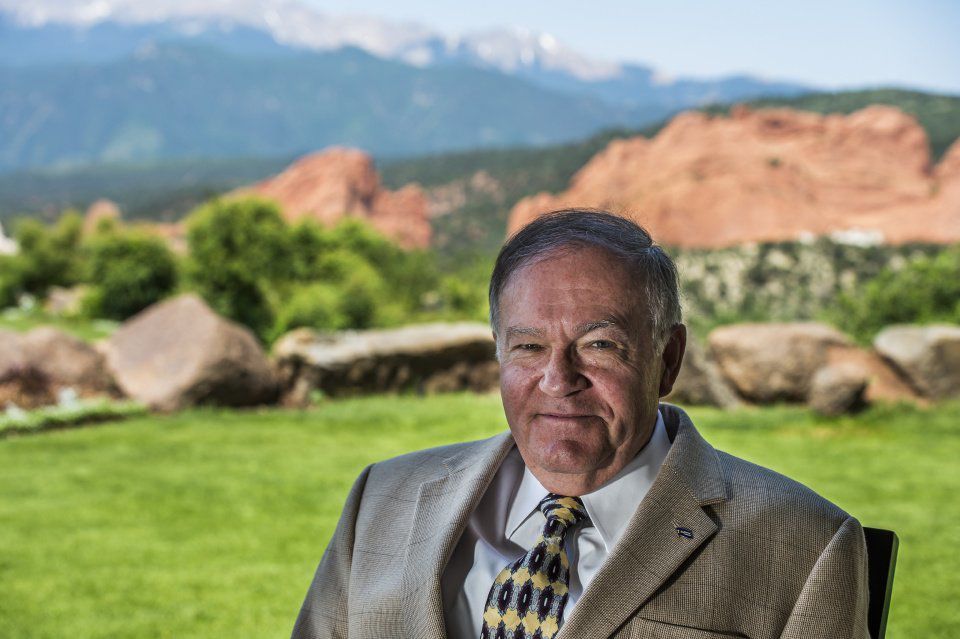
Susemihl wins surprise victory to replace Steve Durham as Colorado Springs state senator | A LOOK BACK
Rachael Wright, Special to Colorado Politics
rachael.wright@coloradopolitics.com
Updated 4 days ago
Forty-five years ago this week: In a closed session, the vacancy committee for Colorado’s Senate District 12 selected attorney Peter Susemihl to complete Sen. Steve Durham’s, R-Colorado Springs, term. Durham resigned his seat to become Region 8 Director of the...

10th Circuit partially revives lawsuit over 2020 Denver protest injuries
Michael Karlik
michael.karlik@coloradopolitics.com
Updated 2 days ago
The Colorado-based federal appeals court revived a man’s claims against Denver on Friday after concluding a trial judge resolved the case in the city’s favor without analyzing two of the three instances of alleged excessive force and other constitutional violations....

At conservative summit, Colorado Republican leaders concede Democrats’ election edge
Marissa Ventrelli
marissa.ventrelli@coloradopolitics.com
Updated 17 hours ago
Four Republican state lawmakers told attendees at a gathering of conservative leaders on Friday they doubt their party can win statewide races, noting that Colorado’s electorate has been shifting toward Democrats but adding they see an opening in several pockets....

Federal judges find Colorado immigration judge violated several orders
Michael Karlik
michael.karlik@coloradopolitics.com
Updated 11 hours ago
Multiple federal judges in Colorado have freed people from immigration custody after determining that one immigration judge violated their directives for properly conducting bond hearings. For nearly a year, Colorado’s U.S. District Court has faced a flood of habeas corpus petitions...
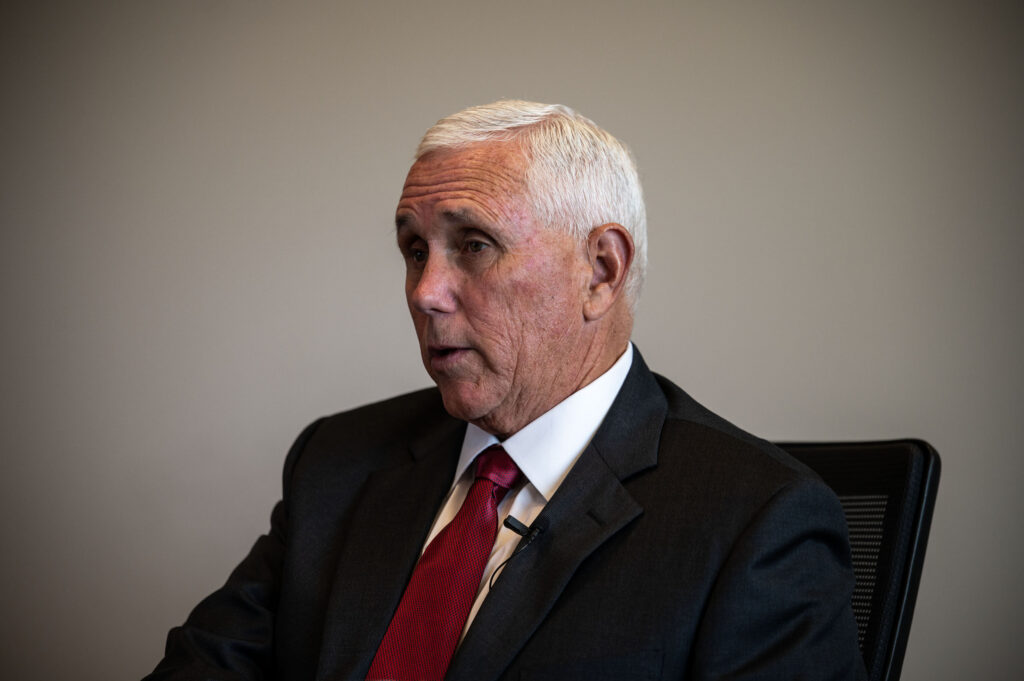
Q&A with Mike Pence | Former vice president says GOP’s populist turn from conservatism isn’t permanent
Ernest Luning
ernest.luning@coloradopolitics.com
Updated 15 hours ago
Former Vice President Mike Pence says he’s concerned that the Republican Party has taken a populist turn away from bedrock conservative principles during President Donald Trump’s second term, but he believes the party will return to its roots when Trump...
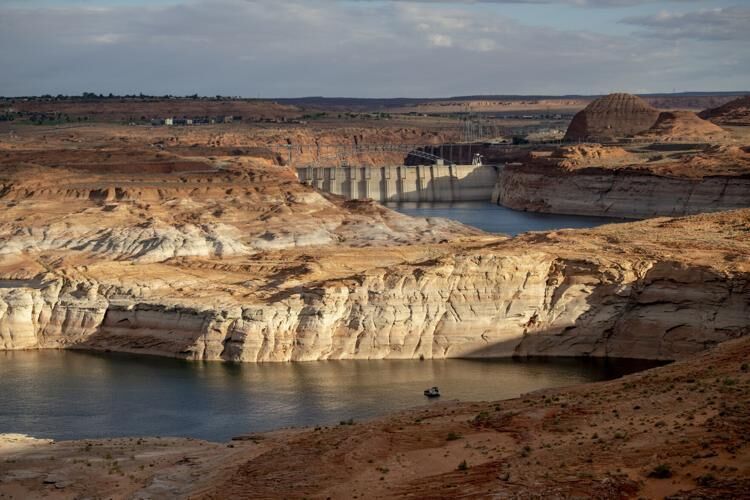
New federal plan sets short-term rules for Colorado River management
Marianne Goodland
marianne.goodland@coloradopolitics.com
Updated 2 days ago
Interior Department’s plan spares Colorado from mandatory cuts for now After years of stalled negotiations among the seven states that rely on the Colorado River, the federal government on Friday released its own plan for managing the drought-strained system. Calling...
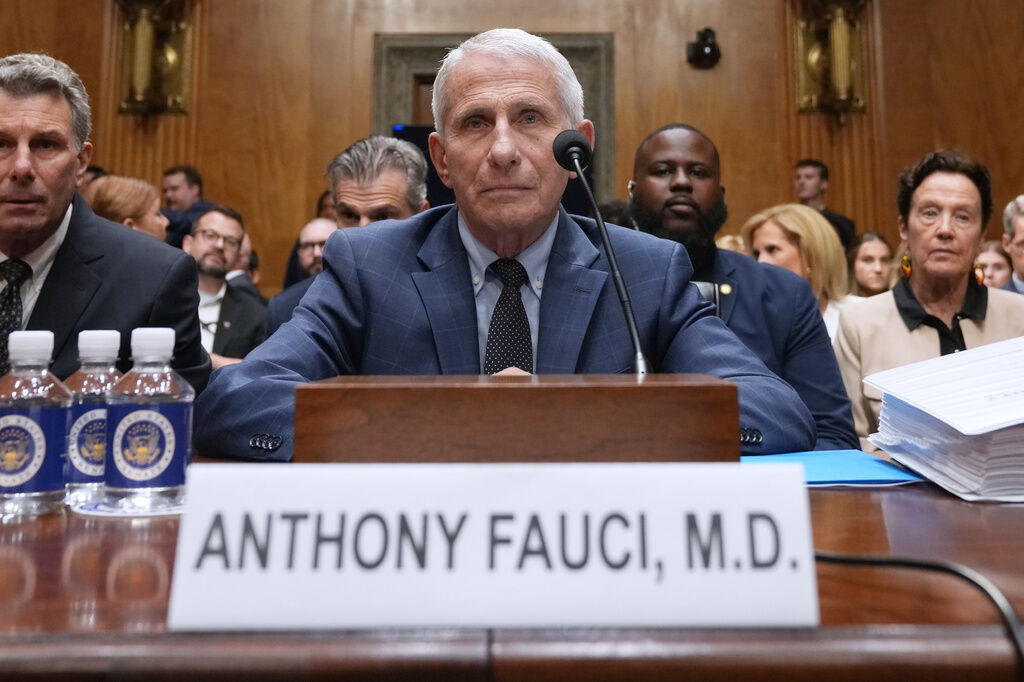
Fauci’s diary details blooming outrage toward ‘far right,’ softness toward Biden and China
Hudson Crozier
hudson.crozier@washingtonexaminer.com
Updated 2 days ago
Dr. Anthony Fauci increasingly railed against “far right” critics of his approach to COVID-19 issues while describing strong support from the Biden White House in his pandemic-era diary, which was recently released by Congress. The former National Institute of Allergy...
Colorado is spared mandatory cuts under federal Colorado River proposal
The Associated Press
the-associated-press@coloradopolitics.com
Updated 2 days ago
California, Arizona and Nevada to take less water under plan While Colorado has been spared from mandatory reductions, Arizona, California and Nevada would take less water from the Colorado River under a proposal announced Friday by the federal government to...