

Al Gore, disaster responders weigh impact of climate crisis: ‘We’ve never seen this before’
Although he might be better groomed and more sharply dressed, close your eyes and former Vice President Al Gore sounds for all the world like an Old Testament prophet, ringing the alarm over impending floods, fires and pestilence. Only instead of wielding stone tablets and a staff, Gore conveys his warnings with handouts and a slide show. And while his detractors likely hear only wailing and raving, when Gore talks about his mission to reverse a looming climate crisis, he sounds curious and amused as often as he does urgent and worried.
“Every night on the TV news is like a major hype for the Book of Revelations,” Gore says with a shake of his head and a fleeting smile, kicking off a panel discussion about the impacts of climate change in Colorado. “And it increases our admiration for and gratitude to people who are on the front lines.”
Gore is preaching to the choir, quite literally. The Thursday afternoon panel falls midway through the first day of his Climate Reality Leadership Corps training program at the Colorado Convention Center in Denver. For the 34th time since 2006, he’s gathering climate activists for three days to convert them to climate evangelists.
The training programs have taught an estimated 11,000 activists from nearly every country in the world to present their own customized and updated versions of Gore’s “Inconvenient Truth” film. After the Denver sessions were set to conclude on Saturday, March 3, there would be nearly 1,000 more added to their ranks.
It’s the first training session Gore’s Climate Reality Project has conducted since President Donald Trump’s administration came to power on a platform of ending federal policy to reduce greenhouse gas emissions. Some 2,600 applicants vied for spots at the training, and 972 from around the world – 40 countries are represented – won slots.
Gore introduces the three panelists, each with a story to tell about accelerating disasters besetting Colorado as the earth’s average temperature has ticked up in recent years.
“I understand you’re in charge of everything bad,” Gore says to Kevin Klein, the director of the Colorado Division of Homeland Security and Emergency Management, who nods. Klein started his job in the summer of 2013, right as a string of fires and floods hit, and by the time fall had arrived, Colorado had logged what officials still call the worst natural disasters in state history.
Don Whittemore, the former incident commander of the Rocky Mountain Interagency Incident Management Team – essentially the first responders to the region’s natural disasters – earned a similarly grim welcome from Gore. “Don has seen some terrible things and had to do some hard work,” he said.
Gore introduced the third panelist, Hilda Nucete, director of the “Protégete” Our Air, Our Health joint program sponsored by Conservation Colorado and League of Conservation Voters, asking why Latinos appear to be significantly more vulnerable to asthma in the United States – suffering the malady at three times the rate of any other ethnic group. It could be because Latinos live closer to some of the more corrosive results of climate change – increased pollen counts, air pollution – but she agreed with Gore that the community also appears to be more acutely aware about the effects of climate change, possibly for similar reasons.
“Fires, floods, hurricanes, tornadoes – we tend to think of these as natural disasters, but they’re also social events,” said Whittemore, adding that the social disruption they create is an enormous problem. “The social impacts are only going to increase.”
After nearly an hour discussing the mounting challenges coming fast and furious at disaster responders and emergency managers – “We’ve never seen this before” was a recurrent theme – Whittemore returned to the social impacts as he pondered a way forward.
“It’s not getting alarmist or saying the sky is falling, but how do you think creatively about the threats to your community, and where are those vulnerabilities you need to take a hard look at and assess how you’re going to deal with them,” he said. It’s crucial to determine how increasingly common disasters are going to affect different people across communities. “Everyone’s affected. How do you make that personal connection? It’s going to be key,” he said.
Noting that he started work just in time for 2013’s floods and fires across Colorado – damaging 20,000 homes, erasing 1,800 of them, leaving a total $3.9 billion in damage – Klein said, “That event really helped drive home my concern with what’s happening with extreme weather events.”
It’s happening all over the world, he added, as drought and famine drive strife in Yemen and other places where extremists have taken hold. “We’re taking an all-hands approach on everything that can happen,” he said.
That includes rapidly accelerating and expanding fire threats in the American West, everyone on stage pointed out from different perspectives.
“If you look at the fire season, it used to be summer, and now it starts in February,” Klein said, noting that sick forests – ravaged by drought, disease and insects – find themselves more susceptible to massive fires.
“We’ve seen more fires,” he said. “It’s safe for me to say that our fire season is longer and our fires are more intense. That’s just something we can’t deny.”
There’s a new term in the disaster-response lexicon, Whittemore said – “megafires,” wildfires that top 100,000 acres, something that didn’t exist 20 years ago. “In Colorado, look back to the 1970s, when you had less than 100,000 acres burning a year,” he said. “Now we’re seeing close to 1 million acres.”
“The scale is increasing, the destruction is increasing,” he said, and there it was: “The recurring theme is, ‘We’ve never seen this before.'”
In addition, the order of magnitude is catching responders by surprise, Whittemore said, making it even harder to combat the blazes. “They don’t have the training, they haven’t thought to deal with that level of enormity and complexity.”
As disasters turn more unpredictable and complex – not just larger and more frequent – that can overwhelm even the best preparation and training, he noted.
“We’re seeing extraordinary events that outstrip the resources of training and experience,” he said, adding, “That requires a shift in your mindset as an incident manager, as a leader on the ground. So, rather than simply trying to plan our way out of it, we have to realize we’re going to be confronted with these novel, unimaginable events more routinely.”
Klein stressed an approach Colorado takes to its disaster response – working to build in resiliency, “everything from engineered resiliency to social resiliency.” The state coordinates this through the Colorado Resiliency and Recovery Office, established in the wake of the 2013 disasters, and the Colorado Resiliency Framework, adopted by Gov. John Hickenlooper in 2015.
“Each one of our disasters we recover from, we’re trying to build resiliency into it,” Klein said.
Responding to the disasters could add a couple hundred million dollars to the state budget before long, Whittemore suggested, and that’s on top of response and reconstruction help the state gets from federal agencies such as FEMA, HUD and the highway administration.
Some of that money goes toward trying to mitigate and prevent the events, Whittemore said. “Because of the level of events we’re having, we’re having to build our flood system, our drainage system and our fire mitigation systems bigger, taller, more robust, and that’s more money. But with all we’re spending on the response side, it’s difficult to find more money for the prevention side.” He added, “It’s sometimes difficult to communicate the importance of prevention.”
That’s partly a result of the “paradox of prevention,” Gore pointed out. “It’s hard to prove something that you stopped from happening.”
For instance, Gore recalled, he was in charge of organizing the nation’s response to the Y2K crisis, and the paradox was in full effect after all the clocks turned over.
“I don’t know if you remember that,” he said with a grin. “Everybody put their shoulder to the wheel and prevented it from happening, so people were, ‘See, there was nothing happening there.'”
Klein brought up other unusual recent events, including something that’s been happening in the past month in Colorado.
“We’ve been issuing red flag warnings for fire danger and winter storm warnings,” he said, looking like he never thought he’d see the day. “The weather conditions were so extreme in one corner of the state and another corner of the state.” Later, he made a similar point: “Anybody here this last month in Colorado, the weather’s on our minds, because it’s like springtime.”
“Climate change is happening,” Nucete said, “but there are politicians out there who believe climate change is not happening. How do we change that?” she wondered.
It should be simple and straightforward, Klein said. “Look at the numbers. Look at the frequency, look at the size of the events, look at the dollars lost, look at what we’re spending to recover, to mitigate.”
Speaking to the activists filling the ballroom, he said, however, that it was key to learn how to communicate the facts about climate change to people who might be more than reluctant to listen.
“That’s something we need more of, to understand where the other person’s ideas are coming from,” Klein said. “That makes for better dialogue than if it’s, ‘You go to your corner, and I’ll go to my corner, and we’ll start shouting at each other.'”
It’s possible, he said. “I’ve got to deal with Boulder County and El Paso County. The politics there are different, but there are certain things they have in common. When we start talking about things we need to do, when we talk about mitigation, we have some common ground.”
All the preparation and rebuilding and resiliency in the world, though, won’t be as effective, Gore maintained, as cutting greenhouse emissions and allowing the atmosphere to shed the extra carbon, which could take a couple of decades.
“The key way to prevent this is to stop making the causes worse. We’re still putting a million tons of this stuff up there every day,” Gore said, looking toward the heavens. “We’re not going to stop it right away, but we could begin to slow it down and then, eventually, make the full shift.”
Bringing the discussion to a close, Gore pulled out an adage.
“A wise person,” he recalled, “said we have to adapt to what we can’t prevent, and we have to prevent what we can’t adapt to.”

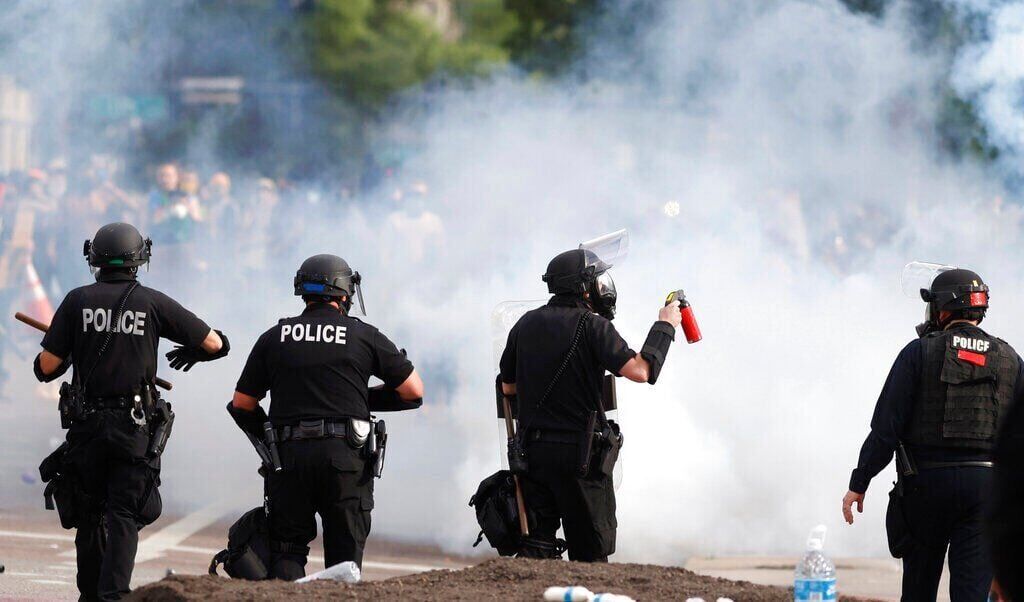
10th Circuit partially revives lawsuit over 2020 Denver protest injuries
Michael Karlik
michael.karlik@coloradopolitics.com
Updated 4 hours ago
The Colorado-based federal appeals court revived a man’s claims against Denver on Friday after concluding a trial judge resolved the case in the city’s favor without analyzing two of the three instances of alleged excessive force and other constitutional violations....
Federal judges find Colorado immigration judge violated several orders
Michael Karlik
michael.karlik@coloradopolitics.com
Updated 4 hours ago
Multiple federal judges in Colorado have freed people from immigration custody after determining that one immigration judge violated their directives for properly conducting bond hearings. For nearly a year, Colorado’s U.S. District Court has faced a flood of “habeas corpus” petitions...
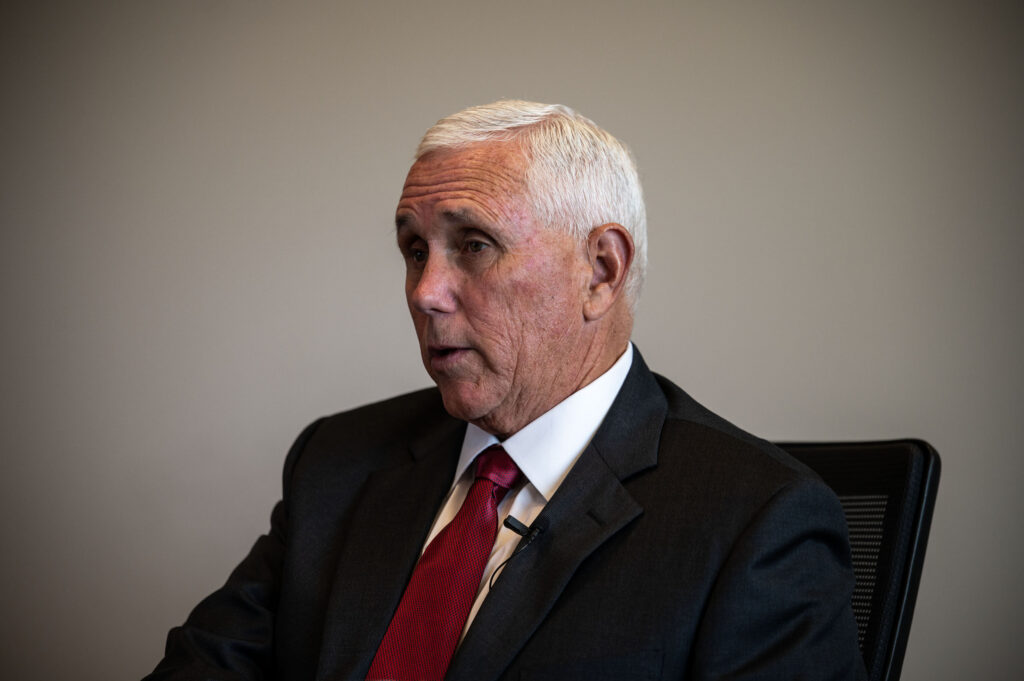
Q&A with Mike Pence | Former vice president says GOP’s populist turn from conservatism isn’t permanent
Ernest Luning
ernest.luning@coloradopolitics.com
Updated 4 hours ago
Former Vice President Mike Pence says he’s concerned that the Republican Party has taken a populist turn away from bedrock conservative principles during President Donald Trump’s second term, but he believes the party will return to its roots when Trump...
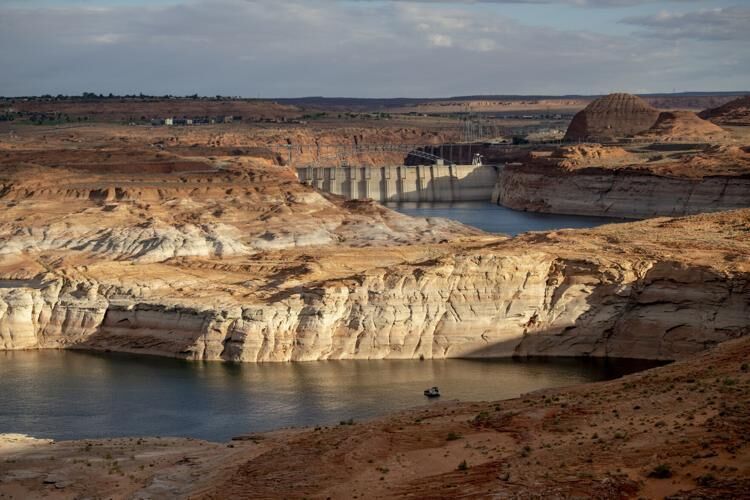
New federal plan sets short-term rules for Colorado River management
Marianne Goodland
marianne.goodland@coloradopolitics.com
Updated 3 hours ago
Interior Department’s plan spares Colorado from mandatory cuts for now After years of stalled negotiations among the seven states that rely on the Colorado River, the federal government on Friday released its own plan for managing the drought-strained system. Calling...
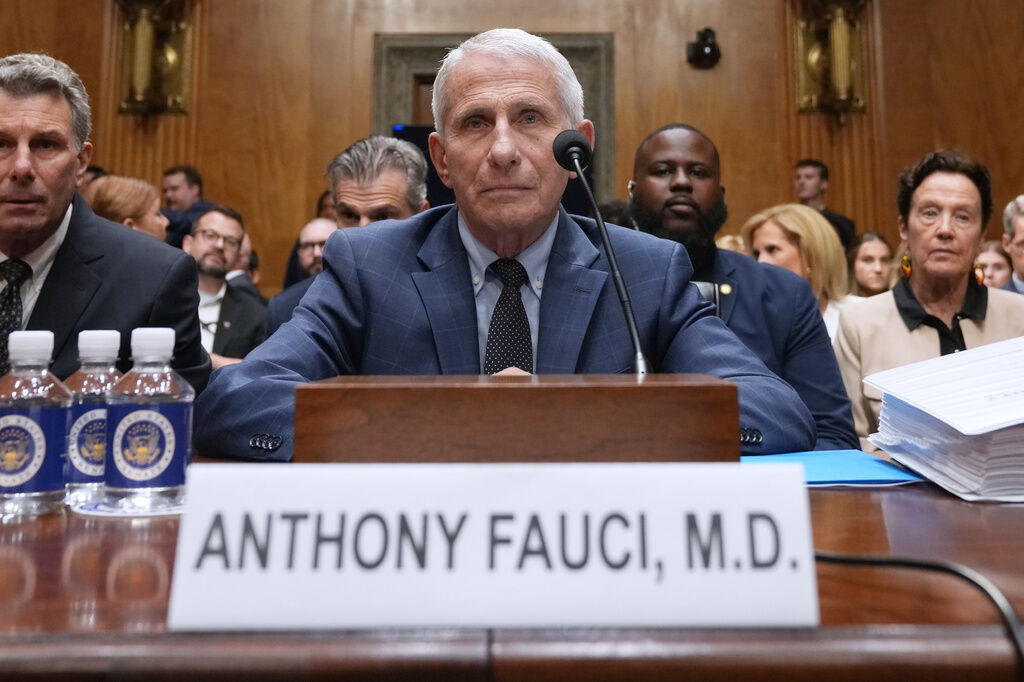
Fauci’s diary details blooming outrage toward ‘far right,’ softness toward Biden and China
Hudson Crozier
hudson.crozier@washingtonexaminer.com
Updated 8 hours ago
Dr. Anthony Fauci increasingly railed against “far right” critics of his approach to COVID-19 issues while describing strong support from the Biden White House in his pandemic-era diary, which was recently released by Congress. The former National Institute of Allergy...
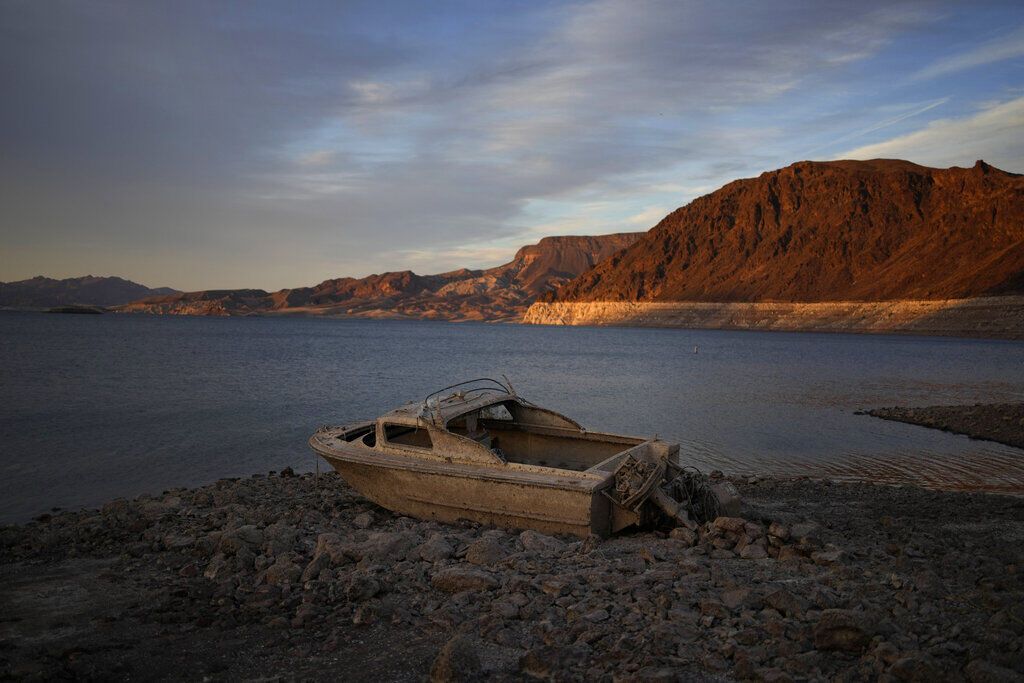
Colorado is spared mandatory cuts under federal Colorado River proposal
The Associated Press
the-associated-press@coloradopolitics.com
Updated 9 hours ago
California, Arizona and Nevada to take less water under plan While Colorado has been spared from mandatory reductions, Arizona, California and Nevada would take less water from the Colorado River under a proposal announced Friday by the federal government to...
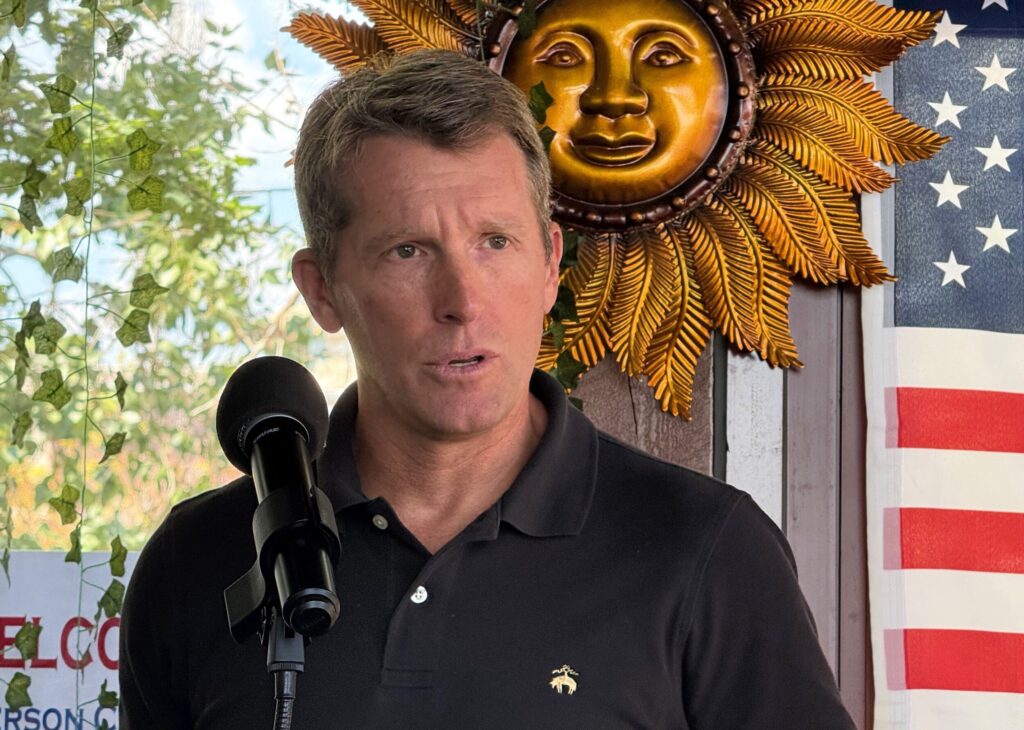
Republican Victor Marx taps George Markert as his lieutenant governor pick in Colorado’s gubernatorial race
Ernest Luning
ernest.luning@coloradopolitics.com
Updated 2 hours ago
Colorado Republican gubernatorial nominee Victor Marx named George Markert, a retired Marine colonel, as his running mate for lieutenant governor Friday morning, saying the former U.S. Senate candidate will bring “exceptional character, proven leadership and a lifetime of serving others”...
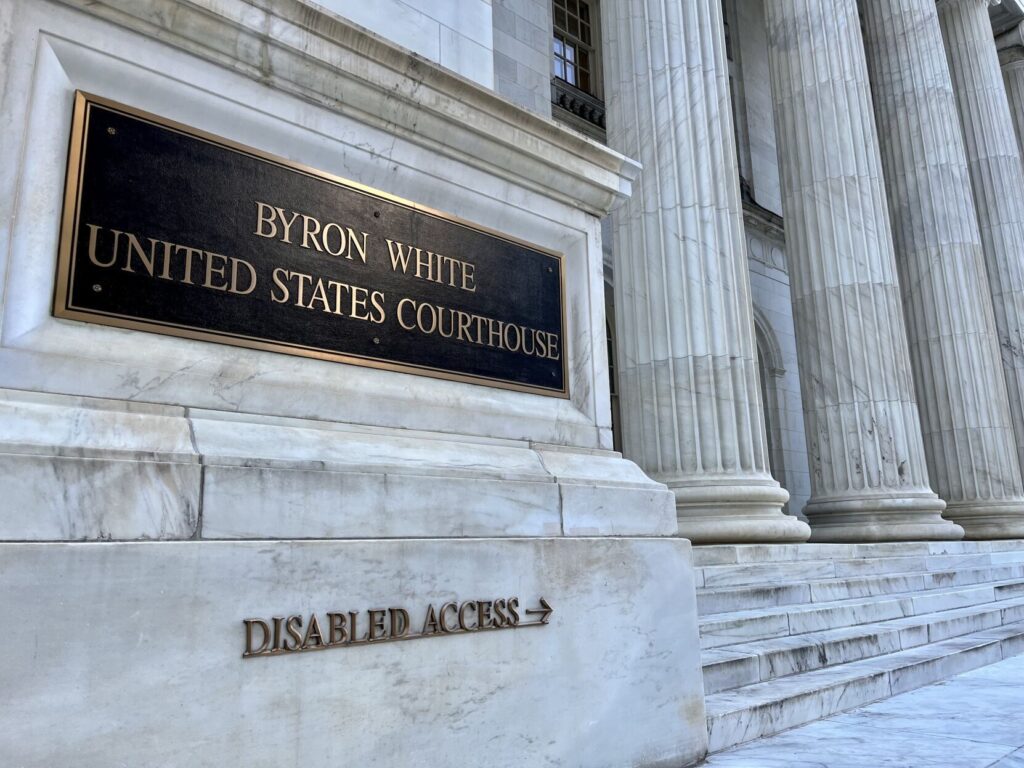
Misconduct complaints from ex-Colorado judicial discipline director dismissed against federal judges
Michael Karlik
michael.karlik@coloradopolitics.com
Updated 24 hours ago
The administrative body for the Denver-based federal appeals court upheld a finding last week that misconduct complaints against Colorado’s chief federal trial judge and the chief appeals judge warranted dismissal and appeared to be a “litigation tactic” by the complaining...
Boulder County coroner IDs body found over 50 years ago
Matt Kyle
matt.kyle@denvergazette.com
Updated 9 hours ago
After nearly 55 years, a body found in Boulder County has been identified. The Boulder County Coroner’s office on Thursday announced it has identified a set of remains found in Bluebell Canyon in August 1971 as Douglas Sumner, 22. The...

First-ever Red Rocks naturalization ceremony draws most diverse group of new citizens
Michael Karlik
michael.karlik@coloradopolitics.com
Updated 5 hours ago
Colorado’s federal trial court held its first-ever naturalization ceremony for nearly 300 new citizens on Thursday at Red Rocks Park and Amphitheatre. “We’re doing it to commemorate the 250th anniversary of the Declaration of Independence and the United States. Red...