

Denver sheriff reviews 2016
Avoiding the use of force by Denver sheriff’s deputies, recognizing and knowing how to treat mental problems among people deputies contact, and handling a growing jail inmate population are among issues Sheriff Patrick Firman highlighted in an end-of-year letter to Denver City Council.
Dated Monday, Dec. 12, the letter also noted the hiring of 200 new deputies this year, an administrative restructuring and newly required training, among other areas:
Dear City Council Member,
USE OF FORCE
DSD’s new use of force policy emphasizes the need for deputies to deescalate situations as an alternative to using force, when reasonably possible. That is, the policy describes what deputies should do in a potential use of force situation, not just what they can do legally.
While force is sometimes necessary in a custodial setting, excessive force is never justified and DSD takes accusations of excessive or unwarranted force very seriously.
MENTAL HEALTH
Approximately 25 percent of DSD’s inmate population is receiving services from mental health professionals and/or taking psychotropic medication. All inmates are screened for mental illness. Denver Health psychiatrists, psychologists, nurse practitioners and psych nurses provide extensive mental health services to inmates in Denver’s jails. In addition, DSD’s transition unit at the County Jail provides intense wraparound services to mentally ill inmates.
Our new use of force policy emphasizes the need for deputies to deescalate situations as an alternative to using force. All DSD deputies are now required to go through deescalation Crisis Intervention Training (CIT). We are on track to have 100 percent of our deputies hired before 2016 certified in CIT by the end of 2016. All deputies hired during 2016 will go through the certification in 2017 before the end of their probation. We will continue training in deescalation and mental health awareness in 2017 through the use of mental health first aid as a refresher to CIT.
INMATE POPULATION
As you know, we have had a challenging year as it relates to managing a high inmate population. Inmate population numbers vary greatly for a variety of different reasons. Denver has experienced significant population growth, and we’ve seen an increase in felony arrests as a result.
While the Denver Sheriff’s Department can’t control who is arrested and brought into our custody, I believe that we play a significant role in providing facts to stakeholders to help understand who is in custody and why they are in custody. This is critical as we engage with others to ensure that only those that absolutely need to be incarcerated remain in custody. To divert those who don’t need to remain incarcerated away from jail, the Denver Sheriff’s Department is working collaboratively with the courts and other city agencies to find alternatives for people facing less serious charges and people battling drug addiction.
The DSD has worked with Denver County Court to increase the use of personal recognizance bonds for people charged with low-level offenses who don’t have a history of missing court dates. The DSD no longer holds persons for other jurisdictions for any longer than needed, and does not hold people on civil immigration matters for ICE.
The department is also working to expand jail diversion programs, such as sheriff home detention, which monitors people serving sentences at home, and the new MAT program, which starts drug addicted inmates on methadone in jail and then releases them to treatment.
Denver is also home to initiatives such as sobriety court, drug court, recovery court and the SMART pre-trials demonstration initiative, which are all designed to divert people from jail. With these programs, the courts have helped us avoid critical overcrowding and we continue to work toward expanding their impact.
For those who need to be incarcerated, we want to provide quality programming to cut recidivism including the RISE (Recovery In a Secure Environment), the alternative sentencing program, the life skills program, GED courses and even GED testing, provided at DSD’s new computer lab.The Denver Sheriff’s Department is in the process of completing the build out of a new women’s housing area in the county jail which will not only add beds for female inmates, but will be state of the art as it relates to gender specific and trauma informed treatment.
STAFFING
Along with a new use of force policy and training in de-escalation, staffing has been one of the most critical areas of focus for the Denver Sheriff’s Department this past year. We have worked hard to substantially increase the number of deputies working the floors, cutting down on officer fatigue.
Earlier this year some 80 recruits – the biggest class in DSD’s history – graduated from the training academy. Since then, another class of 66 has graduated the academy and a class of 52 is currently being trained. In total this year, we have hired just over 200 new deputies, seven civilians and six security specialists.
Following feedback about perceived favoritism and as part of the reform process, we have introduced a new way to promote deputies to the ranks of sergeant and captain, ensuring the process is transparent and impartial. Testing is conducted by an outside organization and concentrates on leadership skills, rather than memorization of departmental policy.
We have also developed and implemented a new “certification” program for newly promoted sergeants, which gives them the training and tools they need to be successful. This is in addition to two weeks of leadership training they get at the academy.
OPERATIONS AND SECURITY
In January, I announced a major restructure of the department, which is now organized around two divisions, operations and administration, reflecting the two main functions of the department, headed by Chief Paul Oliva (operations) and Chief Connie Coyle (administration.)
As part of the restructure, the DSD created a new inmate management unit which oversees policy and procedure regarding inmate grievances, inmate programming and inmate classification. Classification of inmates has been centralized to cover both jails with gang affiliation now factored in.
DSD has created the new position of chief of staff and hired Andrea Albo, who served at the city’s Department of Human Services as the deputy executive director of assistance, providing leadership to the department’s division directors, managing 600 staff and multiple programs and budgets.
The DSD has actively moved to transfer positions which were staffed by deputies, including positions in the records unit, accreditation, fleet management and investigators in internal affairs, to civilian positions.
The DSD increased its K-9 unit from three to six dogs, purchasing three new drug detection dogs. The dogs – two Malinois and one German Shepherd – recently arrived from Europe and are also being trained to detect cell phones. The dogs are part of a security crackdown, new contraband signage and appointment of a dedicated security captain.
WELLNESS AND EARLY OUTREACH
The DSD hired a new wellness coordinator tasked with designing, promoting and implementing wellness programs for staff, which will cover diet, fitness, understanding correctional fatigue and emotional and financial well-being.
The wellness coordinator has promoted staff well-being by presenting to all deputies at in-service training, providing them with information about services, conducting rounds of the DSD facilities, offering personal training and diet plans, administering fitness tests, arranging for social workers and physical therapists to attend DSD facilities and encouraging staff to take part in wellness incentive programs through their health insurers.
The DSD has created an early outreach program to proactively reach out to staff who might be experiencing personal problems. Staff are referred by supervisors and peers and offered services including, but not limited to, counseling and financial planning. The program, commanded by a captain and staffed by an analyst, is collecting data and refining its practices to offer the best help to staff possible.
TECHNOLOGY
Modernizing the DSD’s computer systems, improving the collection and analysis of data, will make the DSD more efficient and allow for evidence-based decision-making. A new data science unit has been established and will be responsible for collecting and analyzing data on jail trends.
Telestaff, an electronic roster scheduling system already being used by (Denver Police Department and Denver Fire Department), was implemented this year and replaces the old paper-based system. The new system has freed up sergeants from having to constantly be looking for people to fill posts, allowing them to spend more time on the floor.
PowerDMS, a computerized document management system that catalogs DSD’s policies and procedures, is now working and promotes greater accountability among staff. Every time a policy is written or updated, staff are electronically prompted to sign off that they have read and understood the policy change.
REFORM UPDATES
We’ve received feedback from community groups about how we can better provide updates regarding our progress on specific reform items. Currently, reform recommendations are posted on the mayor’s website. We are in the process of developing additional information to post which will help the public better understand where we are in implementing all the reform recommendations. We hope to have this ready for publication just after the New Year.
Thank you again for all of your support throughout this process. We’ve gotten a lot of critical work completed this year and have laid the necessary groundwork to continue moving in a positive direction in 2017.

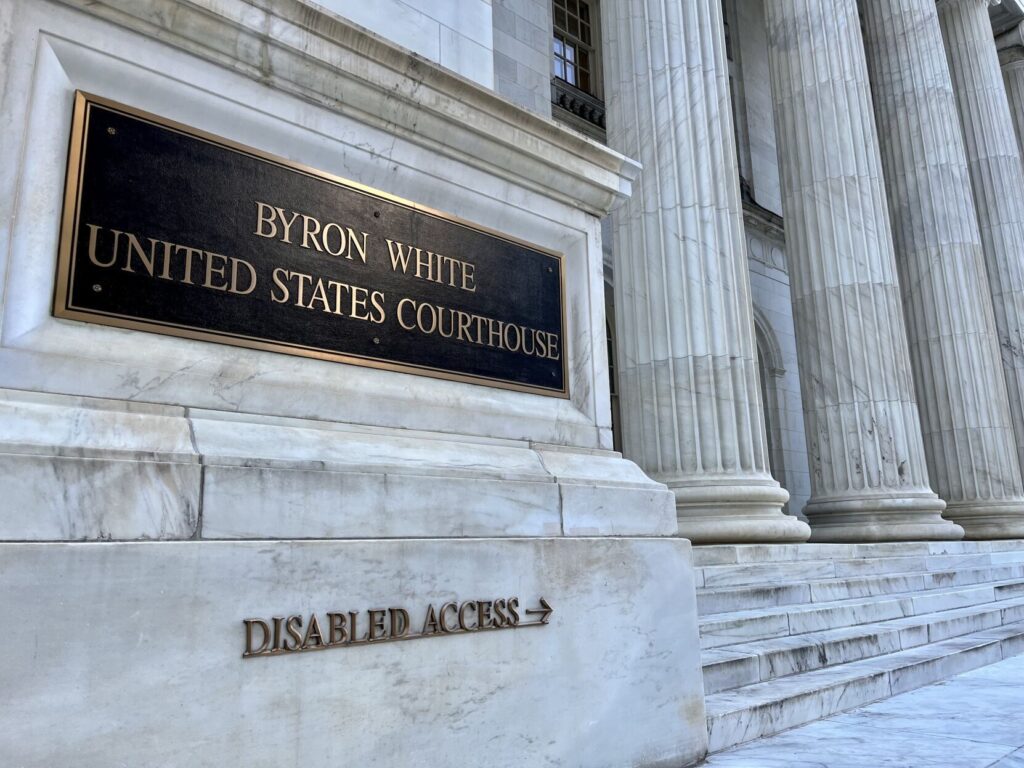
10th Circuit upholds finding of no misconduct against Colorado federal judge
Michael Karlik
michael.karlik@coloradopolitics.com
Updated 12 hours ago
A judicial committee for the Denver-based federal appeals court upheld the chief judge’s finding last week that a federal judge in Colorado did not engage in misconduct by handling a civil case involving other attorneys and judges in the state....

Denver mayor says city police will detain ICE officers using ‘excessive force’
Deborah Grigsby
deborah.smith@denvergazette.com
Updated 11 hours ago
Denver Mayor Mike Johnston on Thursday outlined his city’s response to immigration enforcement operations, including intervening to stop federal officers when local police observe them using “excessive” force. Johnston also said the city will not allow federal authorities to “stand...
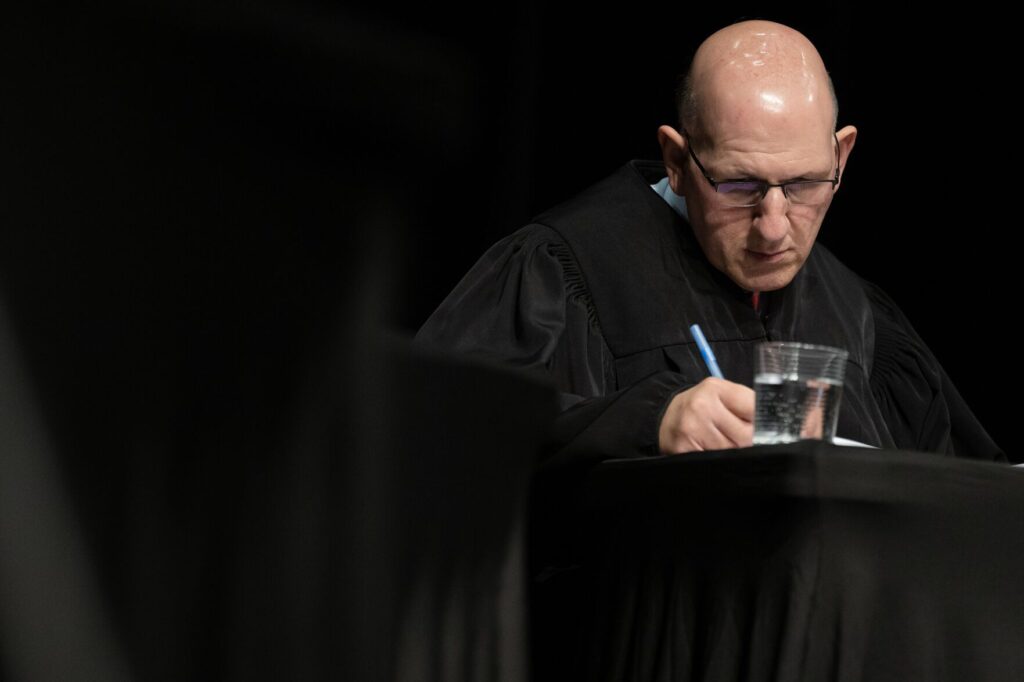
SCOTUS whisperer? Justice Carlos Samour may get second opportunity to turn state dissent into national precedent
Michael Karlik
michael.karlik@coloradopolitics.com
Updated 16 hours ago
For the second time in two years, Justice Carlos A. Samour Jr. occupies an unusual position: Having his dissent in a Colorado Supreme Court case potentially forming the basis of U.S. Supreme Court precedent. Earlier this week, the nation’s highest...

Republicans roll out first ad pinning Democrats for not standing during State of the Union
Emily Hallas, Washington Examiner
emily.hallas.washington.examiner@gazetteedit.wpenginepowered.com
Updated 17 hours ago
A conservative group is launching a sweeping ad campaign on Thursday, seeking to capitalize on Democrats‘ refusal to stand during a portion of President Donald Trump’s State of the Union address centered on illegal immigration. American Sovereignty created a message...

Rubio says any future nuclear proliferation deals have ‘to involve’ China and Russia
Washington Examiner Staff, Washington Examiner
washington.examiner.staff.washington.examiner@gazetteedit.wpenginepowered.com
Updated 17 hours ago
During a visit to the Caribbean on Wednesday, Secretary of State Marco Rubio was asked about recent talks in Geneva regarding weapons of mass destruction and the prospect of future nuclear weapons agreements. He responded that any such deal would...
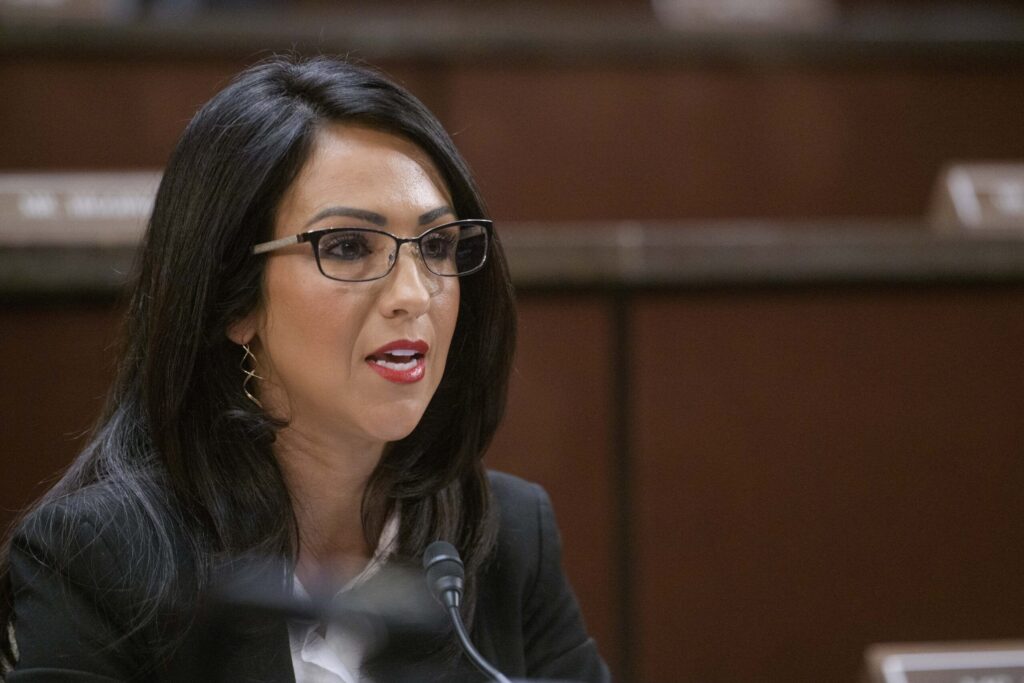
Hillary Clinton deposition paused after Lauren Boebert allegedly leaks photo from inside hearing
Molly Parks, Washington Examiner
molly.parks.washington.examiner@gazetteedit.wpenginepowered.com
Updated 17 hours ago
The House Oversight Committee has paused the deposition of former first lady and Secretary of State Hillary Clinton on Thursday after political commentator Benny Johnson shared a photo on social media of the closed-door hearing. Rep. Lauren Boebert (R-CO), who...

Colorado district attorneys oppose bipartisan bill limiting government access to bought data
Marissa Ventrelli
marissa.ventrelli@coloradopolitics.com
Updated 18 hours ago
A bipartisan coalition of Colorado lawmakers is advancing a bill that would prohibit police from purchasing personal consumer data without a warrant, setting up a clash with prosecutors who warn the measure could hamper criminal investigations. House Bill 1037, sponsored...

Lawmakers propose raising excise taxes on alcohol, marijuana to fund mental health spending
Marissa Ventrelli
marissa.ventrelli@coloradopolitics.com
Updated 18 hours ago
Colorado lawmakers hope to refer a measure to the November ballot that would increase excise taxes on alcohol and marijuana, with the revenue going toward mental health and civil commitment facilities around the state. House Bill 1301, sponsored by Rep....
10th Circuit appoints ex-Colorado solicitor general to argue issue after federal government declines
Michael Karlik
michael.karlik@coloradopolitics.com
Updated 1 day ago
The Denver-based federal appeals court took the unusual step earlier this month of appointing an attorney to independently argue a key issue in a criminal sentencing appeal after the government indicated it would not contest the defendant’s view of the...

Greeley voters halt landmark development project
Hap Fry, Special to The Gazette
hap-fry@gazette.com
Updated 1 day ago
GREELEY – The landscape-altering Cascadia development project has been put on ice, according to unofficial results of a city referendum on the project Tuesday. The proposed development would have included an 8,600-seat multiuse arena and ice center that would be home to the Colorado Eagles,...