

More ‘bad dudes’ headed for Colorado? Politicians stand ground against Obama on Gitmo transfer
Colorado political officials are pressing forward, asking the Obama administration to abandon a proposal that could send accused terrorists from the Guantanamo Bay, Cuba, detention center to correctional facilities in the central part of the state.
Two of the four sites being considered in an upcoming White House report that recommends transferring some of the remaining 60 Guantanamo detainees to U.S.-based prisons are in Colorado.
One is the Federal Correctional Complex in Florence; the other is the Colorado State Penitentiary II, also known as the Centennial Correctional Facility, in Canon City.
President Obama pledged early in his first term of office to close the Guantanamo detention facility. As of press time, White House officials said he could announce his plan for alternate detention sites on the U.S. mainland within days.
Colorado Gov. John Hickenlooper and Attorney General Cynthia Coffman are urging the president to look elsewhere for an alternate detention site.
“Nothing has changed from the governor’s earlier position,” Kathy Green, a spokeswoman for Hickenlooper, told The Colorado Statesman. “It’s still illegal under federal law to transfer the detainees to the U.S.”
Coffman recently joined with the state attorneys general of Kansas and South Carolina in sending a letter to Obama that called the potential transfer of Guantanamo detainees to their states a violation of constitutional law.
The others sites being considered are at Leavenworth, Kansas, and Hanahan, South Carolina.
“Your proposed action denigrates the Constitution and defies the rule of law,” the letter from the state attorneys general said. “It disrupts domestic tranquility and therefore the general welfare of the states.”
They warned about the risk of reprisal that could fall on their states from sympathizers of the accused terrorists.
“Recent attacks in France, Egypt, Lebanon and elsewhere underscore the risk your illegal action would bring to our states,” the letter said. “Several previously released detainees sought refuge with” the Islamic State. “Moving detainees to the mainland will create imminent danger and make the communities where they are place targets.”
Dozens of Colorado sheriffs wrote separately to Obama to caution him about dangers for their communities if international terrorists are housed nearby.
Any transfer of detainees to Colorado would put the state’s detention facilities at the center of a tense standoff between Obama and Congress.
Despite Obama’s pledge to close the facility, Congress has repeatedly blocked his efforts. The 2015 National Defense Authorization Act passed by Congress forbids the use of federal funds to move the Guantanamo detainees.
“It’s true I have not been able to close the darn thing because of congressional restrictions,” Obama said at a recent White House news conference.
He said he has considered transferring the prisoners using his executive authority, which means another confrontation with Congress is likely to play out in federal courts. Obama acknowledged that anyone who participates in his decision to move the detainees could face liability.
He has said the U.S. Naval Base detention center at Guantanamo is a recruitment tool in the propaganda used by terrorists from ISIS and al Qaida.
But it appears Obama will have only weeks to make the transfers. President-elect Donald Trump said that rather than closing the Guantanamo facility, he would keep it open.
“We’re going to load it up with some bad dudes,” Trump said during a campaign speech, referring to terrorist groups like ISIS and al Qaida.
The letter from Coffman and the other attorneys general discussed the heightened risks for Americans from the detainees when it asked Obama to respond by Dec. 4 on “how the administration proposes to guarantee the safety and security of the American people, and notwithstanding the attorney general’s clear statement that a transfer is illegal, the legal authority upon which you plan to act” in transferring detainees to Colorado or other states.
The letter said the state attorneys general have been working with U.S. Speaker of the House Paul Ryan and Senate Armed Services Committee Chairman John McCain (R-Ariz.) “to find ways to prevent illegal executive action related to the detainees that would defy Congress and present a risk to our states and our citizens.”
Colorado Rep. Doug Lamborn (R-Colorado Springs) added similar comments to the controversy last week, stating he has supported legislation to prevent transferring the detainees to the U.S. mainland, “especially in light of the fact that many former detainees have returned to the fray,” Lamborn said. “Some have even killed American soldiers after being transferred from Gitmo. Bringing accused terrorists-the worst of the worst-to Colorado is a national security risk …”
Lamborn added that it was “highly unlikely” the Guantanamo detainees would be transferred to Colorado.
The extent of Trump’s discussions with Obama on Guantanamo have not been revealed publicly.
A White House press spokesman acknowledged the president and president-elect have discussed the transition of administrations but did not give details.
What is known is that Pentagon officials toured possible relocation sites in 13 states before narrowing their preferred alternate prisons to four in Colorado, Kansas and South Carolina.
Obama initially presented his plan for the relocation in February. He said during a news conference, “For many years, it’s been clear that the detention facility at Guantanamo Bay does not advance our national security.”
Housing the accused terrorists at the facility is “contrary to our values,” he said.
Defense Department officials reportedly picked the federal “Supermax” prison in Florence, also known as Florence ADX, as the most likely alternate detention site.
About 30 convicted Islamic terrorists already are confined at Florence ADX. They include “shoe bomber” Richard Reid and “underwear bomber” Umar Farouk Abdulmutallab, both of whom tried unsuccessfully to detonate explosives concealed in their clothing while on U.S.-bound flights, as well as Boston Marathon bomber Dzhokhar Tsarnaev.

Colorado Politics Calendar Sept. 7-13
Rachael Wright, Special to Colorado Politics
rachael.wright@coloradopolitics.com
Updated 6 days ago
CoPo’s weekly political calendar will help you find political and public-policy events throughout Colorado. It includes candidate and issue campaign events, public policy meetings, court hearings, state and local party conventions, assemblies, debates, rallies, parades, speaking engagements, traveling dignitary appearances,...

Blue-collar support trends highlighted GOP gains among rank‑and‑file workers | A LOOK BACK
Rachael Wright, Special to Colorado Politics
rachael.wright@coloradopolitics.com
Updated 5 days ago
Forty-five years ago this week: Kathy Oatis of the Colorado AFL-CIO’s Committee on Political Education said that organized labor had a negative image with the American voter. “I don’t think the country is against us,” said Oatis. “I think the...
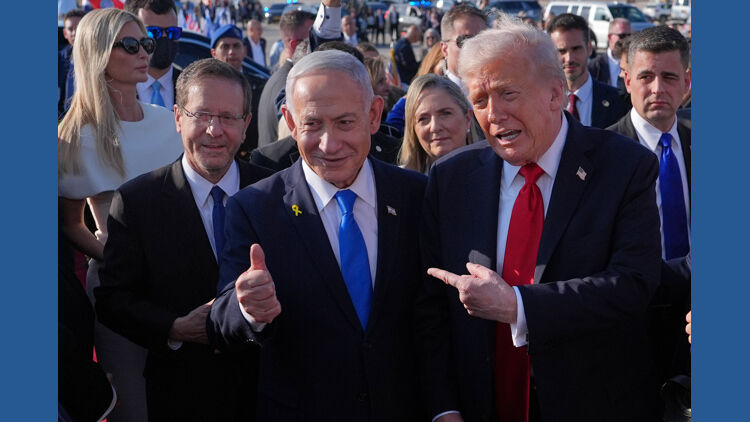
The dissonance of an American Jew thinking about Israel | SONDERMANN
Eric Sondermann
eric-sondermann@coloradopolitics.com
Updated 5 days ago
The Jewish High Holidays will soon be upon us. The third anniversary of Oct. 7 will then quickly follow. Three weeks later, Israeli voters will head to the polls to elect all 120 members of its parliament, the Knesset and...

Parenting from prison: Inmates hope to be present in their children’s lives, while physically absent
Marianne Goodland
marianne.goodland@coloradopolitics.com
Updated 6 hours ago
The room was decorated with balloons, the tables sparking bright with colors as the smell of pizza and cake wafted through the air. As did music. This was, after all, a father-daughter dance. Except this was not a typical father-daughter...

Colorado House ethics committee issues ‘stern letter’ to Democrat over caucus funds mismanagement
Marianne Goodland
marianne.goodland@coloradopolitics.com
Updated 2 days ago
The Colorado House ethics committee on Friday voted unanimously to issue a “stern letter” to Rep. Mandy Lindsay, D-Aurora, regarding her mismanagement of House Democratic caucus funds. The committee further voted to request that Lindsay resign as Democratic Caucus co-chair...
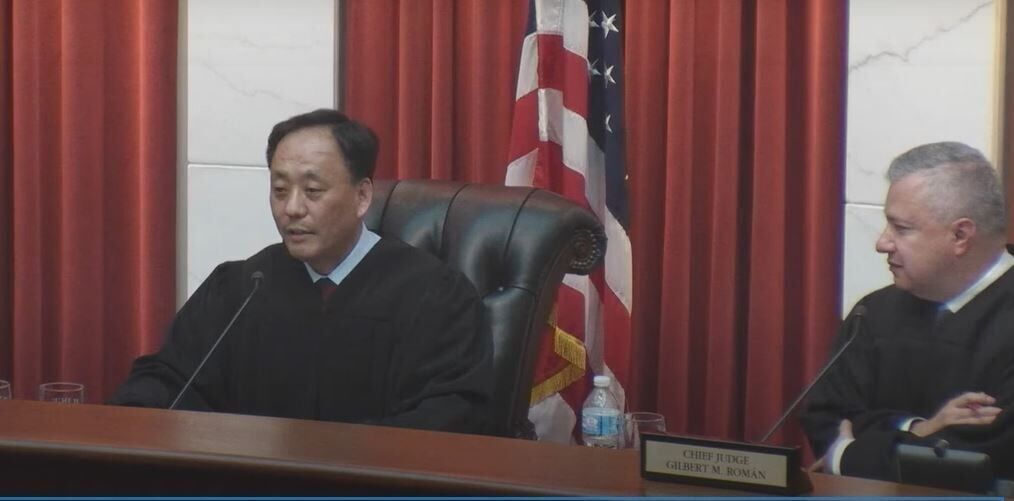
Appeals court confirms Colorado judges can compel electronic records from out of state
Michael Karlik
michael.karlik@coloradopolitics.com
Updated 2 days ago
Colorado’s second-highest court clarified on Thursday that judges are empowered to compel out-of-state companies to produce electronic records under state law. El Paso County jurors convicted Mischa Jargowsky on three counts of money laundering and one violation of Colorado’s organized...

Federal judge extends block on Trump executive order seeking to limit mail voting in the midterms
The Associated Press
the-associated-press@coloradopolitics.com
Updated 3 days ago
A federal judge on Friday extended her prohibition against the U.S. Postal Service implementing President Donald Trump’s executive order seeking to limit mail voting during the midterms, putting another major obstacle in the way of the administration as the first...
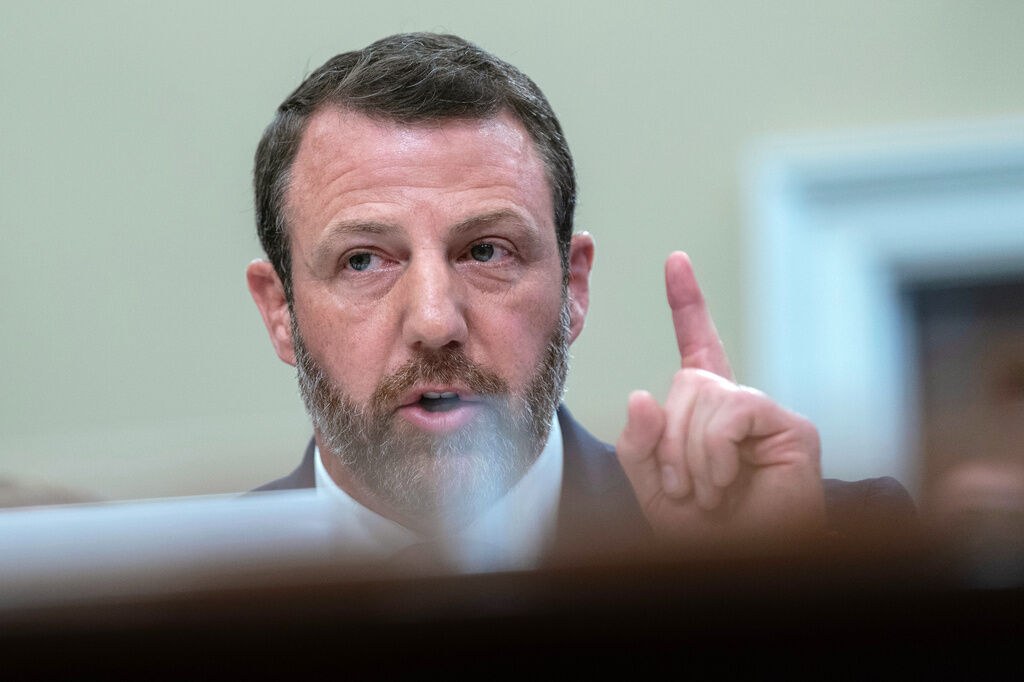
Mullin asks DOJ to review voter data sharing tied to Zuckerberg-funded nonprofit group
The Washington Examiner
the-washington-examiner@coloradopolitics.com
Updated 1 day ago
Washington Examiner Homeland Security Secretary Markwayne Mullin asked the Justice Department this week to review whether election-related nonprofit groups, some with multimillion-dollar backing from a Mark Zuckerberg-linked nonprofit, improperly received sensitive state motor vehicle and voter-registration data. In a letter...

Colorado secures FEMA support for wildfire, flooding and mudslide recovery
Marissa Ventrelli
marissa.ventrelli@coloradopolitics.com
Updated 2 days ago
Federal authorities on Friday approved Colorado’s request for federal public assistance to help communities devastated by the Aspen Acres and Gold Mountain Fires. The Federal Emergency Management Agency did not announce how much the state would receive but confirmed that...
State seeks $50K penalty against GOP candidate Victor Marx over alleged campaign finance violations
Deborah Grigsby
deborah.smith@denvergazette.com
Updated 3 days ago
Republican gubernatorial candidate Victor Marx is looking at more than $50,000 in fines in what the Elections Division of the Office of the Secretary of State calls “unprecedented” campaign finance violations. The state has not imposed that fine yet, and...