

Wheat Ridge issue committee faces campaign finance scrutiny

A Wheat Ridge issue committee formed to support Initiative 300 in the city may have broken the state of Colorado’s campaign finance laws, and is having their activities questioned by the Wheat Ridge City Attorney while raising concern from the mayor and raising eyebrows among citizens alike.
Citizens for an Inclusive Wheat Ridge circulated a mailer urging support for the TIF-reform proposal, but also explicitly supporting the election of four city council candidates. CFIWR is registered with the Wheat Ridge City Clerk’s office as an issue committee, which under state law is to be established for supporting or opposing issues, as opposed to candidate committees, which are for the support of candidates for political office. The mailer includes the words “paid for by Citizens for an Inclusive Wheat Ridge.”
The group may also have been involved in distributing an automated phone call to voters, or “robo-call,” also supporting the four candidates.
The committee has ostensibly been set up to promote Initiative 300, which would require any Tax Increment Financing (TIF) package over $2.5 million to be subject to a popular vote, and approval for any TIF under that amount to be taken away from the Urban Renewal Authority, and be given over to the City Council for a vote. TIF’s are a financial tool used by local governments to help businesses develop blighted properties by providing financing of public improvements, such as demolition, installation of utilities, and road way improvements.

The back of a campaign mailer that has been distributed in Wheat Ridge supporting four city council candidates is marked “Paid for by Citizens for an Inclusive Wheat Ridge,” an issue committee. Legal and ethical questions have been raised over CFIWR’s allegedly mixing issue committee activities and funds with directly supporting candidates. Traditionally, the two committee types serve uniquely different purposes as their names suggest.

In a letter to the Mayor and City Council dated October 20, Wheat Ridge City Attorney Gerald Dahl acknowledged the situation, saying that he had “recently been asked whether an issue committee may spend money in support of or in opposition to candidates in the upcoming election.” In the letter, he iterated that the definitions of issue committees, political committees, and candidate committees are separate in the Colorado state constitution, and that “Political committees and candidate committees support candidates; issue committees support only issues.” He also stated that “an issue committee paying for an ad that in part urges voters to vote for candidates is a contribution to the candidate and the candidate committee.” He went on to say that this contribution was considered an independent expenditure if it was not controlled by or coordinated with the candidate committee; if it was, then it would have to be reported as a contribution by the candidate or candidate committee.
As of the latest reports filed with the City Clerk’s office, CFIWR has not reported any contributions to any candidates or candidate committees, and none of the candidate committees for the four candidates promoted in the mailer have reported any contribution from CFIWR.

The front of the campaign mailer that has raised eyebrows in Wheat Ridge while drawing the close examination of the city attorney and mayor over questions of whether Colorado campaign finance laws have been broken by CFIWR.

Richard Matthews, the registered agent for the committee, told The Statesman that the mailer and robo-call in question were paid for by former Wheat Ridge City Councilman Joe DeMott, and reported as an in-kind contribution by the committee. When asked why the mailer stated that it was paid for by Citizens for an Inclusive Wheat Ridge, Matthew said that “the mailer was coordinated by the committee.”
When asked for contact information for members of CFIWR, to help further explain these contributions and expenditures and the purpose and motives of its activities, Matthews declined.
CFIWR’s campaign report does not list any contributions from DeMott, in kind or otherwise, although it does report $2,810.95 in “Total Non-Monetary Contributions” and the same amount reported in “Total Coordinated Non-Monetary Expenditures” a category labelled “for candidate/candidate committee and political parties only.” The report also lists $1,430 to Neighborhood Publications in September for an ad, $2,649.82 to Ecographics on October 9 for postage, and $125 to Robocall LLC on Oct 12 for a robo-call. Matthews said that while he was unsure, he believed that payment was for a different robo-call, for Monica Duran, who is running as a candidate in District 1, and is one of the four candidates supported by CFIWR.
Matthews also pointed out that the legal advice CFIWR received from the City Attorney, referring to the same letter sent by Dahl to the mayor and city council, shows that “it is not really clear” if there was any kind of violation. In the letter, Dahl does in fact state that although the constitution and statutes are clear that issue committees support only issues, “there is no express prohibition on issue committees spending money in support of candidates.”
However, Dahl goes on to say that while he can find no definitive prohibition of the practice within any of the Secretary of State’s regulations, “nevertheless, it seems the better conclusion that expenditures by an issue committee should not be diverted to other purposes, whether those are supporting a candidate, or some other purpose. Otherwise there would not be a reason for the distinction made between issue committees and candidate committees in the Constitution, statute, and regulations.”
Matthews, however, also pointed to a caveat that Dahl added to his conclusion. Dahl referred to the definition of “issue committee” in the Constitution as a committee which “has a ‘major purpose’ of supporting or opposing any ballot issue or ballot question…” Matthews said that CFIWR’s support of candidates could be classified as a “minor purpose.”
However, the mailer at issue says that CFIWF is “proud to endorse the following candidates for city council, and clearly portrays the four supported candidates, including color photos, names and contact information, on the front of the brochure. The back shows a black and white photo of the four opposed candidates, along with the Wheat Ridge mayor, along with the words “It’s time for a change at city hall.” Initiative 300 is only mentioned once.
Wheat Ridge Mayor Joyce Jay says that she is deeply concerned that the issue committee may have skirted campaign finance rules. “At the city we want everyone to follow the rules,” she said. “These rules were intended to protect voters and demonstrate integrity in the system.” Jay said that she would like to see an investigation, adding that “integrity is an important part of the electoral process.”
Dahl said in his letter that while it appears that issue committees may engage in “minor purposes, “it would be interesting to hear what the Secretary of State may conclude these minor purposes could include, and specifically to support or oppose candidates.” He also said that in any event, reporting requirements for committees and candidates remained unchanged, and pointed to possible confusion in reporting arising from issue committees crossing the line into candidate contributions. “Certainly an issue committee spending money on a candidate confuses the reporting obligations of both the committee and the candidate.”
Mayor Jay cited this as one of her biggest concerns. “I don’t like if there is doubt,” she said. “Citizens need to know what their contributions are going for. Some people like a candidate, but not an issue, and vice versa.
“Wheat Ridge citizens are owed that.”

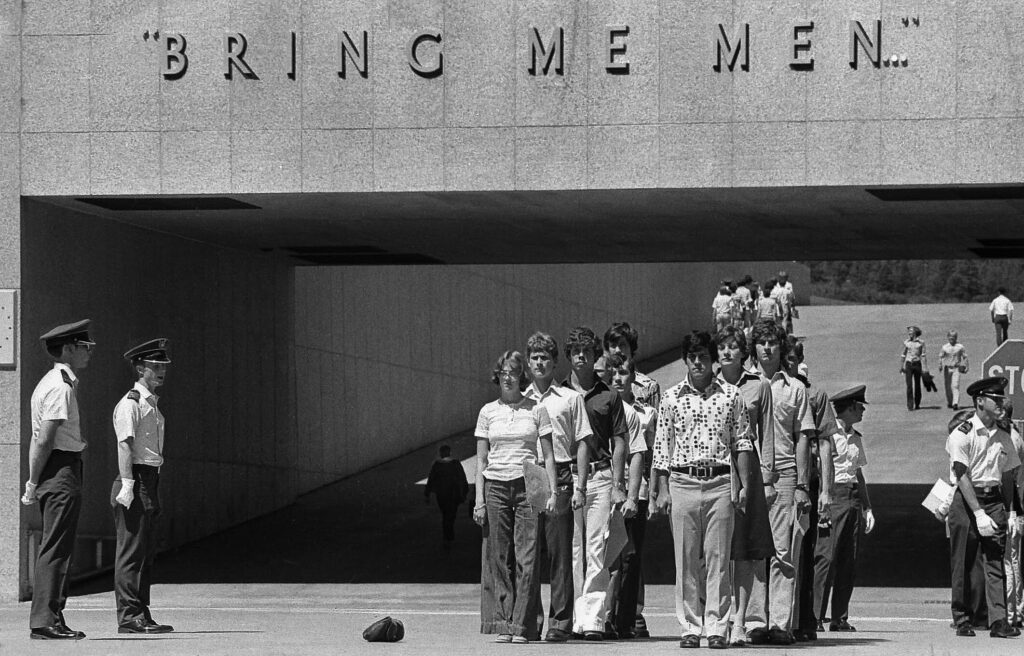
Fifty years later, women reflect on first coed class at the Air Force Academy, struggle for equality
Mary Shinn
mary-shinn@coloradopolitics.com
Updated 1 day ago
When the first female Air Force Academy cadets arrived 50 years ago this summer, they stood in front of an enormous sign on campus that read “Bring me men.” In the shadow of that sign, Kathleen Utley Kornahrens, one of...

As Lake Powell shrinks, marinas are having to adapt to dwindling water levels | OUT WEST ROUNDUP
The Associated Press
the-associated-press@coloradopolitics.com
Updated 4 days ago
ARIZONA Reservoirs near record lows PAGE — The Colorado River’s Lake Powell, the second largest reservoir in the U.S., is shrinking. A record-dry winter and extreme heat — as well as decades of overuse, chronic drought and climate change —...

A new day? Colorado’s troubled guardianship office pursues ‘cultural reset’
Marianne Goodland
marianne.goodland@coloradopolitics.com
Updated 3 days ago
Colorado’s guardianship program, long criticized for mismanagement and high staff attrition, is undergoing a “cultural reset,” as its new director works to repair partnerships and prepare for a major expansion under recent legislation. Created by lawmakers in 2017, the Office...
U.S. Senate OKs funding bill to avoid government shutdown
Wire Services
wire-services@coloradopolitics.com
Updated 2 days ago
Hemp provision became point of contention WASHINGTON • The U.S. Senate in an overnight vote Saturday approved a short-term measure to fund federal agencies into early December and avoid a government shutdown during the middle of campaign season. The late-summer...
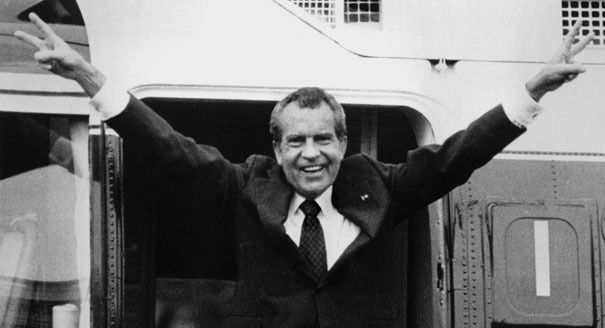
The relevance of Watergate more than a half-century later | SONDERMANN
By Eric Sondermann
by-eric-sondermann@coloradopolitics.com
Updated 4 days ago
It was the scandal for which all other scandals are now named. In June 1972, a small group of Cuban burglars with high-level connections broke into the headquarters of the Democratic National Committee. Those headquarters were located in the Watergate...
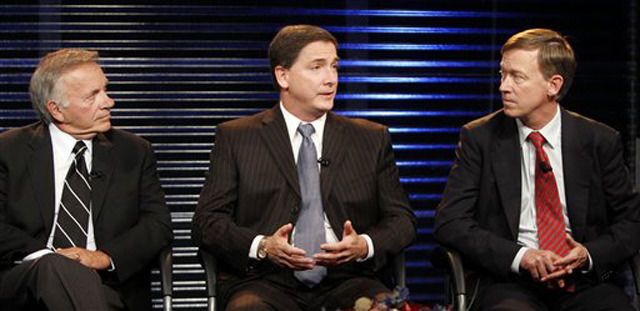
Wirth downplays Social Security disaster talk | A LOOK BACK
Rachael Wright, Special to Colorado Politics
rachael.wright@coloradopolitics.com
Updated 4 days ago
Forty-five years ago this week: “As time goes on,” said Democratic U.S. Rep. Tim Wirth, of the 2nd Congressional District, “we are finding that the safety net, which was proposed earlier this year, has some very large holes in it,”...
Colorado Politics Calendar Aug. 10-16
Rachael Wright, Special to Colorado Politics
rachael.wright@coloradopolitics.com
Updated 4 days ago
CoPo’s weekly political calendar will help you find political and public-policy events throughout Colorado. It includes candidate and issue campaign events, public policy meetings, court hearings, state and local party conventions, assemblies, debates, rallies, parades, speaking engagements, traveling dignitary appearances,...

Democratic group aims Spanish-language TV ad at Gabe Evans in Colorado’s battleground 8th CD
Ernest Luning
ernest.luning@coloradopolitics.com
Updated 2 days ago
A national group tied to House Democratic leadership launched a six-figure Spanish-language TV ad in Colorado this week targeting Republican U.S. Rep. Gabe Evans and the GOP’s signature budget legislation. The 30-second spot is part of $15 million in new...

Colorado School of Mines lands major share in Trump’s $100M mining-education plan
Thelma Grimes
thelma.grimes@coloradopolitics.com
Updated 2 days ago
President Donald Trump on Friday named the Colorado School of Mines among roughly a dozen institutions that will share in a $100 million commitment “to train the next generation of American miners.” Paul Johnson, the university’s president, said he is...
Local party leaders, incoming judge among members of judicial performance commission that violated law
Michael Karlik
michael.karlik@coloradopolitics.com
Updated 1 day ago
A local Democratic leader and 2024 presidential elector. A legislative aide and leader in the Young Republicans. An incoming county court judge freshly appointed by the governor. They are among the eight members of the northeastern Colorado judicial performance commission...
PREV
PREVIOUS

RNC official charges NBC ‘hijacked’ Boulder debate
A member of the RNC committee in charge of the Republican presidential debates said at a Colorado GOP fundraiser in Denver on Thursday night that the CNBC debate held in Boulder the night before “was hijacked by NBC,” its corporate parent, leaving the financial news network serving “as surrogates for MSNBC,” its liberal-leaning sister network. […]

Hickenlooper, Salazar fire up Clinton supporters
Hundreds of supporters of Hillary Clinton packed the north Denver home of former Interior Secretary and former U.S. Sen. Ken Salazar on Monday for an organizing event meant to “catapult” the presidential candidate out of the 2016 caucuses to the Democratic nomination. “We’ve got to make sure the news coming out of Colorado isn’t just […]