

Vote delayed on Homeless Bill of Rights
A House panel on April 15 was transformed into the “There but for the grace of God go I Committee” as several current or former homeless persons — including a former lawmaker — testified on behalf of a bill that would provide the homeless with more public rights.
House Bill 1264, which has been dubbed the Homeless Bill of Rights, or the Right to Rest Act, would allow the homeless to eat, sleep and panhandle in public without being told to leave.
The bill would provide civil remedies for the homeless when their rights are violated.
The legislation is a result of ordinances imposed by cities including Denver, Boulder and Fort Collins that have put the clamps on public camping and panhandling.
Some testimony on the bill was heard by the House State, Military and Veterans Affairs Committee. However, the remainder of the hearing was postponed due to time constraints.
Witnesses who testified in favor of the bill said public sleep and panhandling bans are akin to the “criminalization” of the homeless. Ticketing of people who cannot afford to pay a fine only sets them up for jail time, bill supporters said.
“There is not enough shelter spaces,” said Stuart Hill, who is homeless and lives in Fort Collins. “You cannot be ticketing for camping and criminalizing them for not being able to pay their tickets.”
Nicole Sisneros of Boulder said she has been homeless for seven years due to mental health and addiction issues. She testified that she has been ticketed 15 times in Denver alone and has been jailed because she could not afford the fines.
“There became a point where I actually started calling myself a serial camper,” Sisneros said.
Then there’s Robert Bowen, who spoke on a bill inside the Capitol for the first time in 27 years — when he was a member of the General Assembly.
“Twenty-seven years ago, I was on top of the world, so I thought,” Bowen said.
Bowen represented Denver’s House District 4 from 1982 to 1989. Bowen testified that everything went downhill for him not long after losing a re-election race. The economy was struggling and he ended up losing his business and became bankrupt.
Bowen then moved to California, where he became homeless.
“(I went from) being on TV all the time, in the newspapers, accomplishing things to having two suitcases of clothes, two boxes of mementos and a car I had to keep out of site of the repo guy,” he said.
The bill is receiving stiff opposition from municipal organizations amid complaints that excessive camping and panhandling hurts businesses. Cities that include Denver also oppose the measure.
Regina Huerter of Denver’s Crime Prevention and Control Division stressed to committee members that the city has made strides in getting the homeless the care they need.
Huerter said Denver’s Road Home program, which is aimed at ending homelessness within the city, has an annual budget of $6.5 million that provides housing and employment services to the homeless population. Huerter also said the city has set up mental health and substance abuse treatment options inside the Denver Public Library.
“We have devoted many resources to many agencies to try to meet the needs of the persons who are experiencing homelessness,” she said.
And Huerter said that police are required to offer services to the homeless before they issue a ticket. If a homeless person is cited, it is because they refused those services, Huerter said.
Rep. Joe Salazar, D-Thornton, a bill sponsor, pressed Huerter on Denver’s policy, asking, “How does criminalizing homeless folks help them out whatsoever?”
Huerter insisted that Denver’s ordinance does not criminalize the homeless community. Still, she said, actions must be taken to protect businesses and their customers. “If somebody is intoxicated and in front of a business and they are refusing to allow passage to allow other people to access that business, we have to take action…,” she said.
How lawmakers respond to Salazar’s bill remains to be seen. But the formerly homeless, former Denver lawmaker hopes the panel will show compassion.
Bowen, who is no longer homeless, said he was fortunate to come out of his situation. He said he does not suffer from mental illness, does not have a drug addiction and is well-educated. But he said others in the homeless community are not as fortunate.
“When you vote, I want you to think it could, by the grace of God, be you 18 months from now,” Bowen said. “I don’t care how successful you are, you can fall.”

Mysterious letter causes uproar, investigation in Mesa County GOP | A LOOK BACK
Rachael Wright, Special to Colorado Politics
rachael.wright@coloradopolitics.com
Updated 3 days ago
Twenty Years Ago This Week: An unregistered activist group calling themselves ‘The Colorado Republican Caucus’ mailed letters to at least 160 Republicans in Mesa County calling various Grand Junction Republicans “turncoats” and “traitors.” “The danger was that the letters were...

Colorado Politics Calendar Apr. 20-26
Rachael Wright, Special to Colorado Politics
rachael.wright@coloradopolitics.com
Updated 3 days ago
CoPo’s weekly political calendar helps you find political and public policy events throughout Colorado. It includes candidate and issue campaign events, public policy meetings, court hearings, state and local party conventions, assemblies, debates, rallies, parades, speaking engagements, traveling dignitary appearances,...
A happier budget week | Capitol M | Week of April 18, 2026
Marianne Goodland
marianne.goodland@coloradopolitics.com
Updated 3 days ago
It’s budget time at the state Capitol, and generally, it’s a humorless situation. It certainly was that way in the House last week, with a 15-hour reading of the long bill at 661 pages that resulted in lawmakers having to...

Colorado lawmakers advance bill to tackle Colorado’s prison capacity issues
Marianne Goodland
marianne.goodland@coloradopolitics.com
Updated 1 day ago
As lawmakers move the 2026–27 state budget toward completion, they are intensifying efforts to address overcrowding and capacity challenges within the Department of Corrections and related agencies—issues that have contributed to increased spending in the budget. The state Senate on...
Colorado justices, lawyers speak with rural students through outreach program
Michael Karlik
michael.karlik@coloradopolitics.com
Updated 10 hours ago
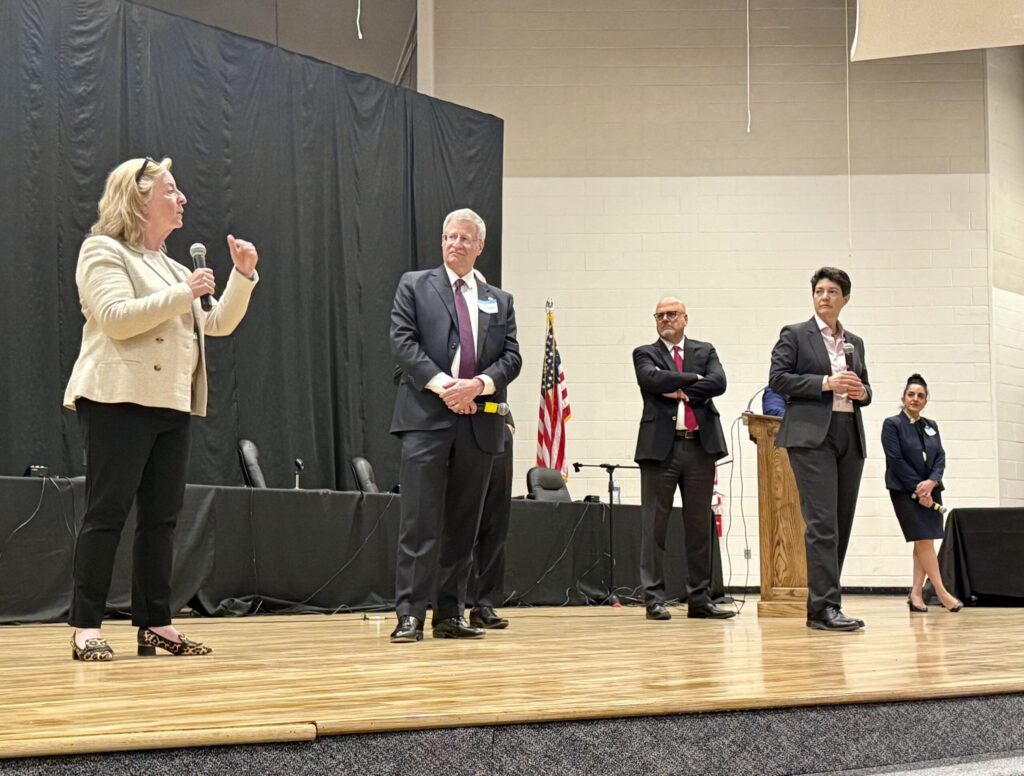
Members of the Colorado Supreme Court appeared before students from eight rural schools on Thursday to hear a pair of cases, field questions, and mark the first time the state’s newest justice participated in the long-running program. “I had such...
Democrats want Colorado colleges to provide medication abortion
Marissa Ventrelli
marissa.ventrelli@coloradopolitics.com
Updated 1 day ago
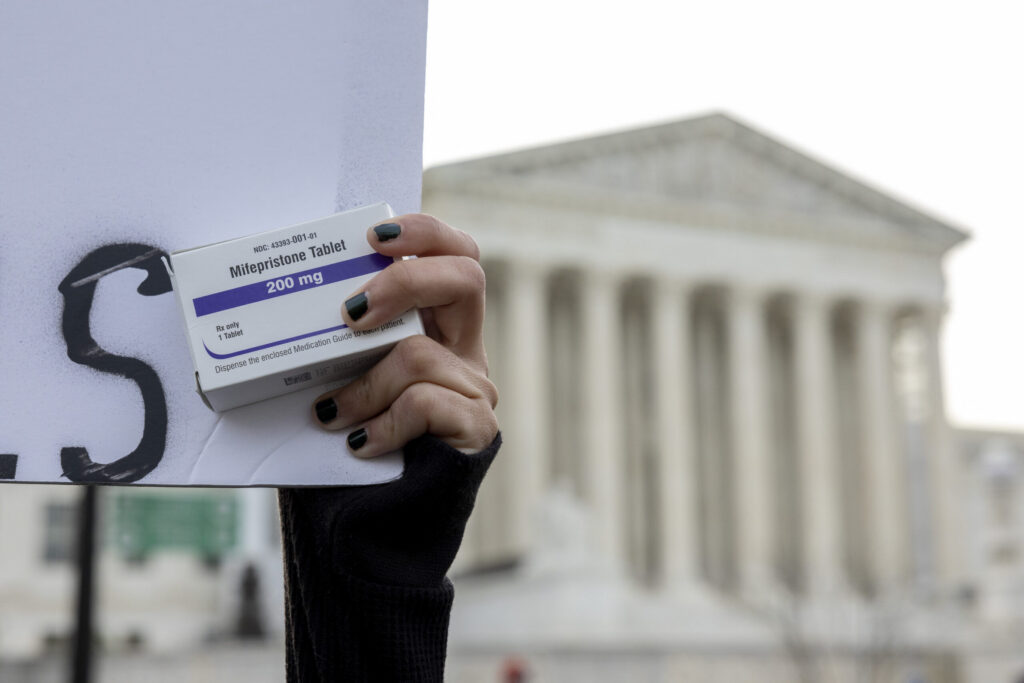
A bill proposing to require Colorado colleges and universities to provide abortion medication services cleared a legislative committee on Thursday. Advocates said the measure — which exempts religious-based institutions but applies to public, private, and community colleges — will improve...

Trump ‘in discussions’ with IRS to cut deal in tax record lawsuit
Brady Knox, Washington Examiner
brady.knox.washington.examiner@gazetteedit.wpenginepowered.com
Updated 1 day ago
President Donald Trump is in talks with the Internal Revenue Service to strike a deal over the release of his tax records. The news was revealed in a legal filing, where his legal team said they were in “discussions” with...
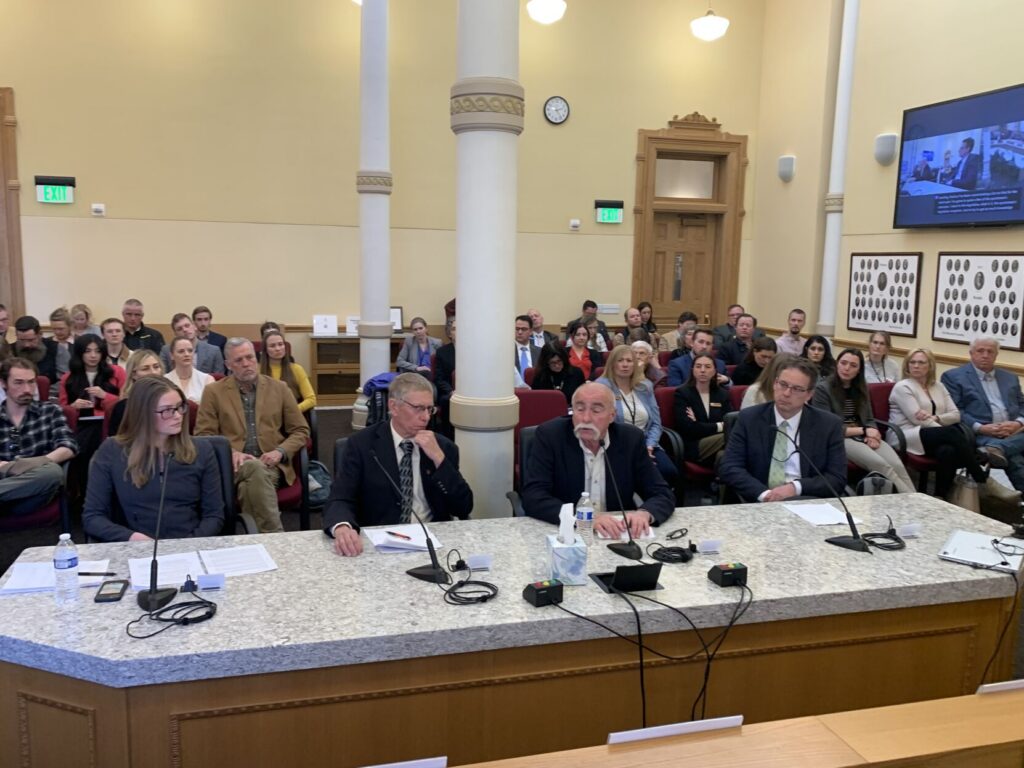
Governor’s wildlife commission picks face pushback ahead of Colorado Senate hearing
Marianne Goodland
marianne.goodland@coloradopolitics.com
Updated 1 day ago
Colorado’s largest coalition of hunters, anglers, and wildlife conservation groups is urging state lawmakers to reject two of Gov. Jared Polis’ latest nominees to the Colorado Parks and Wildlife Commission, setting up a contentious confirmation hearing before the Senate Agriculture...
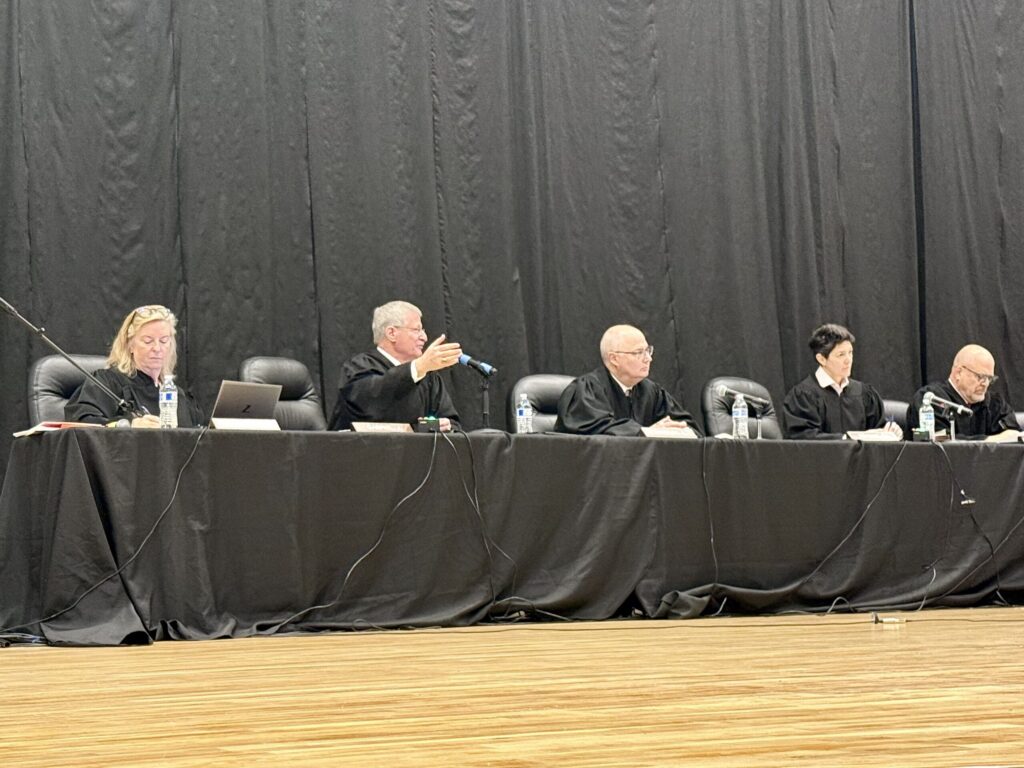
Colorado justices skeptical of snowboarder’s bid to revive injury lawsuit after signing new waiver
Michael Karlik
michael.karlik@coloradopolitics.com
Updated 11 hours ago
The Colorado Supreme Court seemed to agree on Thursday that a plaintiff is not entitled to continue his snowboarding injury lawsuit because he purchased another pass in the middle of litigation that released all past legal claims. “It says you’re...
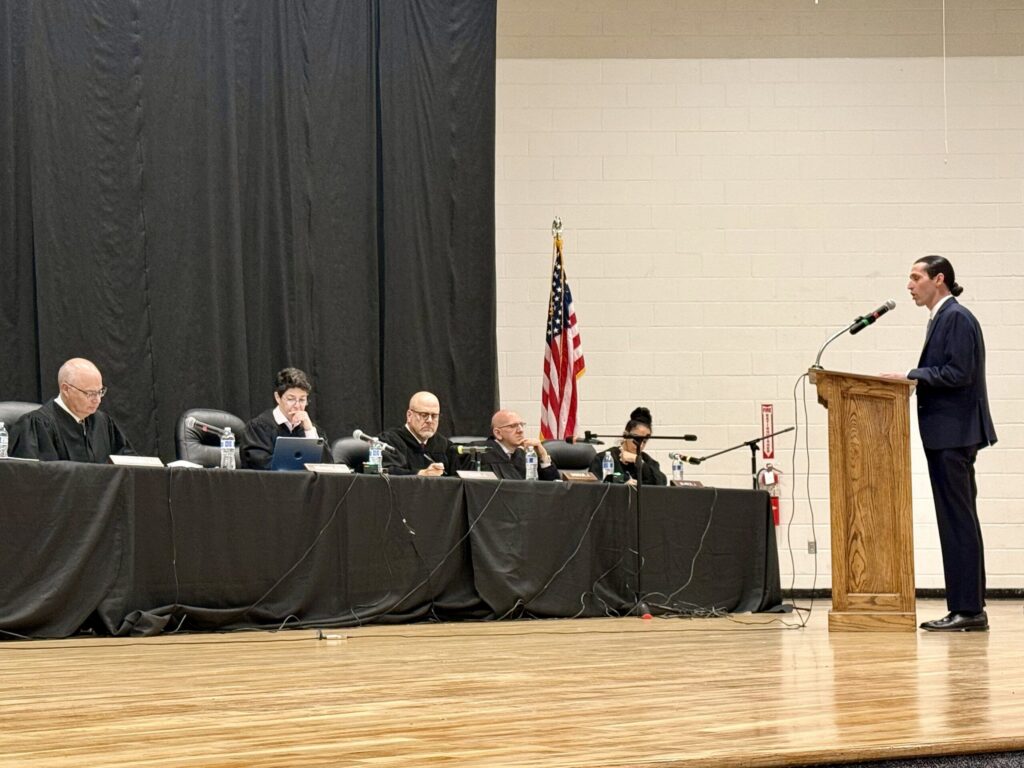
Colorado Supreme Court appears OK with revised ‘reasonable doubt’ instruction
Michael Karlik
michael.karlik@coloradopolitics.com
Updated 8 hours ago
The Colorado Supreme Court appeared largely comfortable on Thursday with the recently revised definition of “reasonable doubt” that is now part of the template jury instructions for criminal cases. To date, multiple Court of Appeals decisions have endorsed the constitutionality...
PREV
PREVIOUS

Student testing battle lines drawn
Given the recent start of the Colorado Rockies season, it was appropriate last week for state Rep. Jim Wilson to use a baseball metaphor to describe the polarized debate at the Capitol over how best to reduce student testing in our schools. “We have a lot of folks here today who are trying to hit […]

Bruce returns to court, blames politics
Doug Bruce was back in Denver District Court last week, proving once more that he remains the one Coloradan most likely to precipitate a fistfight at a Quaker meeting house. Whether you believe the California transplant received the language for his TABOR amendment on engraved tablets delivered by a host of conservative archangels or that […]