

Bruce returns to court, blames politics
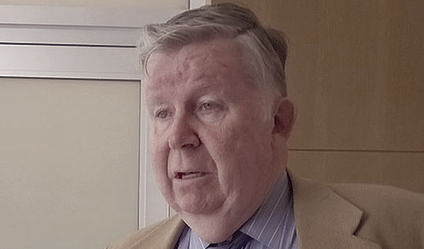
Doug Bruce was back in Denver District Court last week, proving once more that he remains the one Coloradan most likely to precipitate a fistfight at a Quaker meeting house. Whether you believe the California transplant received the language for his TABOR amendment on engraved tablets delivered by a host of conservative archangels or that it was drafted during a fevered dream fueled on psychedelic fumes, Bruce remains one of the more interesting political personas in our state. He may be an angry man, but he is not a stupid one. His arraignment for alleged probation violations links back to his conviction for a miscellany of tax evasion charges that resulted from his donation of his salary as an El Paso County Commissioner to a 501(c)3 charity organized to promote public sector tax discipline. Republican Attorney General John Suthers took his case to court, resulting in a 180-day sentence, of which Bruce served 104 days. Even at the time, the charges appeared more a civil matter of legal interpretation than a criminal offense. Bruce’s legal appeal still lingers somewhere in the bowels of the court system.
Upon his release from the Denver County jail Bruce complained bitterly about his treatment, threatening to file a suit against the city. In light of what has transpired within the Denver Sheriff’s office since that time, it might have proven wise to examine his complaints. Be that as it may, Bruce has been on probation for the past three years — years where he asserts, “I have served as a model probationer.” Nonetheless, the Attorney General’s office, now under the command of Cynthia Coffman, claims Bruce has failed to report a number of financial transactions as required as a condition of his parole. One involves a transfer of half the proceeds from the sale of his mother’s condominium to his brother as his portion of her estate. Bruce argues that her death in 2007 preceded his later legal troubles and that this transaction therefore should not come under the supervision of the probation department. “What’s wrong with giving my brother the funds he was entitled to,” he asks. There are additional allegations of real estate transfers engineered to avoid a court lien (also under appeal), in collusion with Helen Collins, a Colorado Springs councilwoman. Whatever the truth of these charges, it was evident that Bruce attempts to skate just inside any legal requirements. All of the claims and counterclaims will be thrashed out at a probation hearing scheduled for 1:30 p.m. on June 13.
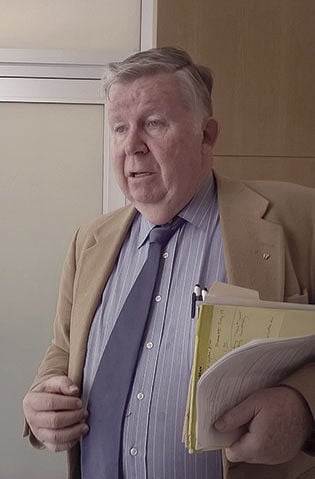
Doug Bruce

Judge Sheila Rappoport was tolerant of his insistence that he had been found guilty of “felony philanthropy” at his original hearing. Bruce also pointed out that the IRS has determined, in writing, there was no violation of federal law and his appeal is pending. On a morning of otherwise janitorial tasks: parents pleading for medical care for their son in the Denver County jail, a plea deal for a burglar that would send him to juvenile court and a domestic violence release to VA mental health services for time served, the Bruce case stood out. Appearing pro se, Bruce indicated he was unwilling to spend more of his money on attorneys. During his initial prosecution, however, he retained the services of David Lane, the anti-death penalty and premier civil rights lawyer who probably didn’t agree with Bruce on anything other than the fact that he was being railroaded. Robert Shapiro advised the judge that she should probably schedule the entire afternoon to hear the complaint. “It has been our experience that appearances with Mr. Bruce always take several hours,” he reported. As Bruce continued to raise concerns, a woman sitting behind me and waiting for a case grumbled, “Why don’t you just shut up?” But first we learned about Brady vs. Maryland and the assessment of reasonable duplication fees. (Mr. Rael from the probation department’s economic crimes unit had mentioned a folder he had recently received from the Colorado Springs city attorney.) Bruce also expressed concern about the “…specter of further incarceration or additional fines.”
Outside the courtroom a cameraman from Channel 13 in the Springs accosted Bruce together with several scribes. He immediately confronted Megan Schrader, the Capitol reporter for the Gazette, with an accusation that her editor, Wayne Laugesen, was simply waiting to run the phrase “convicted felon” before each use of his name in her report. “There are evil men at work, why don’t you report about them,” he asked. When I identified myself as reporting for The Statesman he said, “I’ll forgive you.” Bruce distributed a campaign flyer he apparently mailed widely attacking John Suthers’ candidacy for mayor of Colorado Springs. A political realist, Bruce expressed no hope that he could stop the candidate’s apparent juggernaut, but bragged about forcing him into a run-off. He then explained that Suthers and a new majority on the city council are plotting a tax hike. “They need to attack my integrity and denigrate my credibility. ‘Convicted felon’ works nicely,” he said. “It seems awfully convenient that someone (unidentified, but presumably Suthers or a Suthers supporter) picked up the phone and called probation and had them drop a dime on me.” When I asked if he felt harassed, Bruce replied, “I can’t say that. I don’t want the judge to read that I’m complaining, but you can say that.” Of course when you call a candidate “Napoleon” and guilty of “jailing political foes on fake charges”, you shouldn’t be surprised if they strike back.
I’m sure a number of Bruce’s longstanding opponents are experiencing the thrill of schadenfreude as they witness him jerked back into court for yet another public flogging. The Gazette’s story did say ‘convicted felon Doug Bruce’. But, just because the man may be a little paranoid doesn’t mean “they” aren’t out to get him. If so, we should all tremble. As Martin Luther King so aptly observed, “Injustice anywhere is a threat to justice everywhere.”
Miller Hudson is a public affairs consultant. He can be reached at mnhwriter@msn.com.


Mysterious letter causes uproar, investigation in Mesa County GOP | A LOOK BACK
Rachael Wright, Special to Colorado Politics
rachael.wright@coloradopolitics.com
Updated 3 days ago
Twenty Years Ago This Week: An unregistered activist group calling themselves ‘The Colorado Republican Caucus’ mailed letters to at least 160 Republicans in Mesa County calling various Grand Junction Republicans “turncoats” and “traitors.” “The danger was that the letters were...

Colorado Politics Calendar Apr. 20-26
Rachael Wright, Special to Colorado Politics
rachael.wright@coloradopolitics.com
Updated 3 days ago
CoPo’s weekly political calendar helps you find political and public policy events throughout Colorado. It includes candidate and issue campaign events, public policy meetings, court hearings, state and local party conventions, assemblies, debates, rallies, parades, speaking engagements, traveling dignitary appearances,...
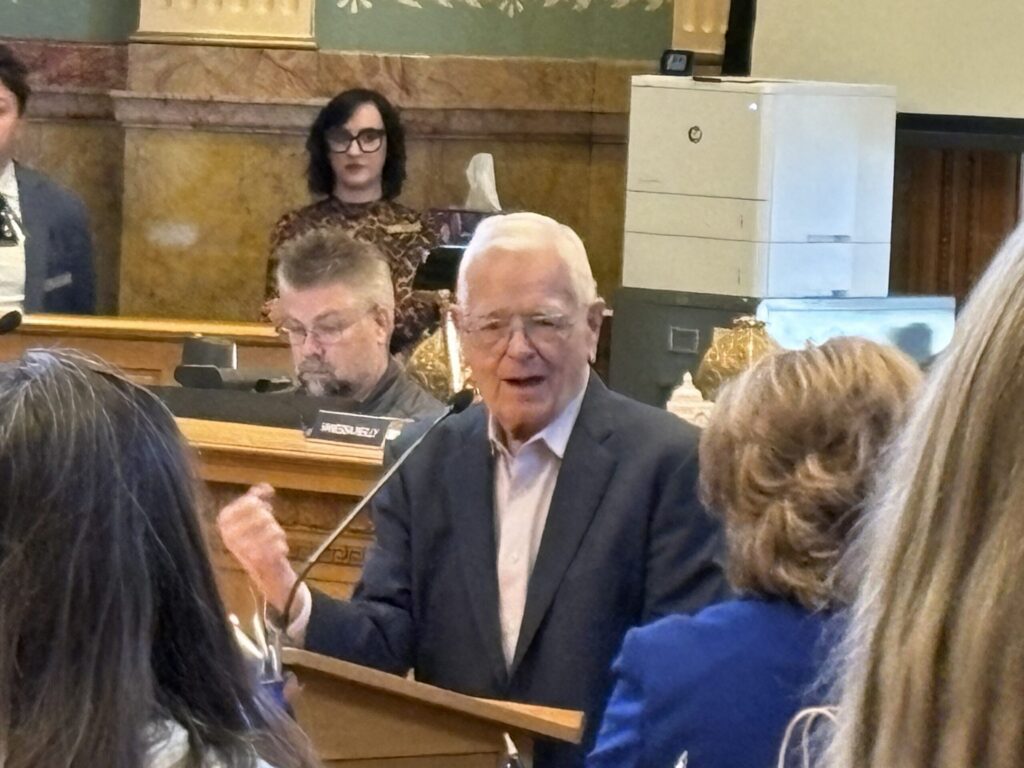
A happier budget week | Capitol M | Week of April 18, 2026
Marianne Goodland
marianne.goodland@coloradopolitics.com
Updated 2 days ago
It’s budget time at the state Capitol, and generally, it’s a humorless situation. It certainly was that way in the House last week, with a 15-hour reading of the long bill at 661 pages that resulted in lawmakers having to...

Colorado lawmakers advance bill to tackle Colorado’s prison capacity issues
Marianne Goodland
marianne.goodland@coloradopolitics.com
Updated 1 day ago
As lawmakers move the 2026–27 state budget toward completion, they are intensifying efforts to address overcrowding and capacity challenges within the Department of Corrections and related agencies—issues that have contributed to increased spending in the budget. The state Senate on...

Colorado justices, lawyers speak with rural students through outreach program
Michael Karlik
michael.karlik@coloradopolitics.com
Updated 9 hours ago
Members of the Colorado Supreme Court appeared before students from eight rural schools on Thursday to hear a pair of cases, field questions, and mark the first time the state’s newest justice participated in the long-running program. “I had such...

Democrats want Colorado colleges to provide medication abortion
Marissa Ventrelli
marissa.ventrelli@coloradopolitics.com
Updated 1 day ago
A bill proposing to require Colorado colleges and universities to provide abortion medication services cleared a legislative committee on Thursday. Advocates said the measure — which exempts religious-based institutions but applies to public, private, and community colleges — will improve...

Trump ‘in discussions’ with IRS to cut deal in tax record lawsuit
Brady Knox, Washington Examiner
brady.knox.washington.examiner@gazetteedit.wpenginepowered.com
Updated 1 day ago
President Donald Trump is in talks with the Internal Revenue Service to strike a deal over the release of his tax records. The news was revealed in a legal filing, where his legal team said they were in “discussions” with...
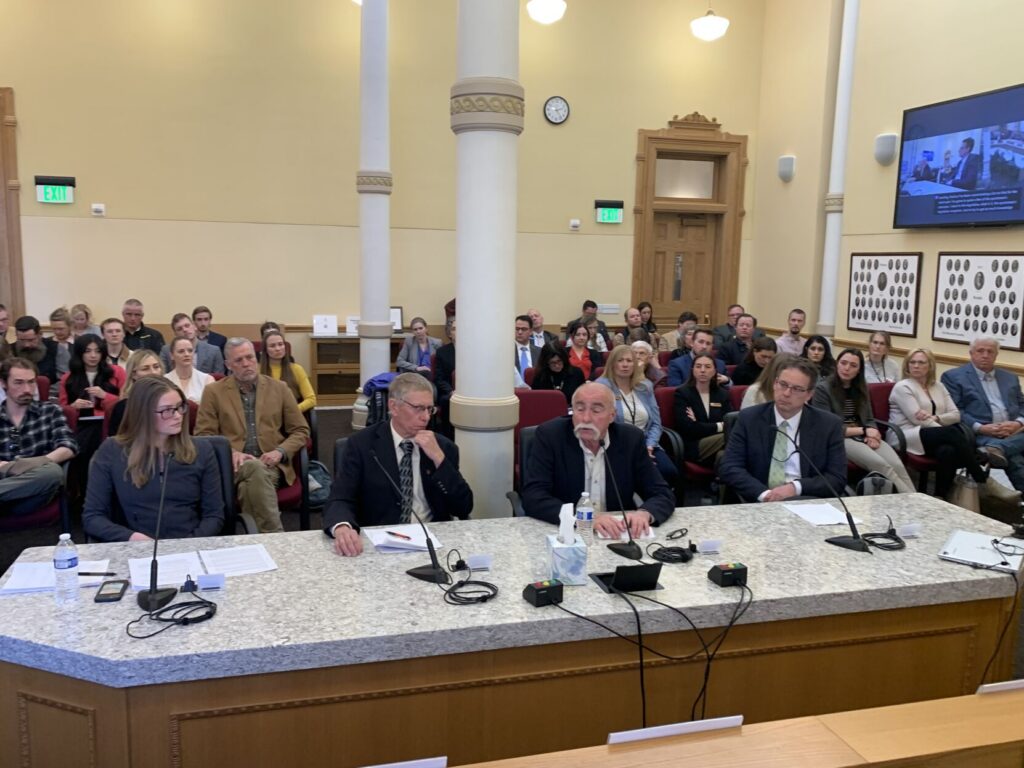
Governor’s wildlife commission picks face pushback ahead of Colorado Senate hearing
Marianne Goodland
marianne.goodland@coloradopolitics.com
Updated 1 day ago
Colorado’s largest coalition of hunters, anglers, and wildlife conservation groups is urging state lawmakers to reject two of Gov. Jared Polis’ latest nominees to the Colorado Parks and Wildlife Commission, setting up a contentious confirmation hearing before the Senate Agriculture...
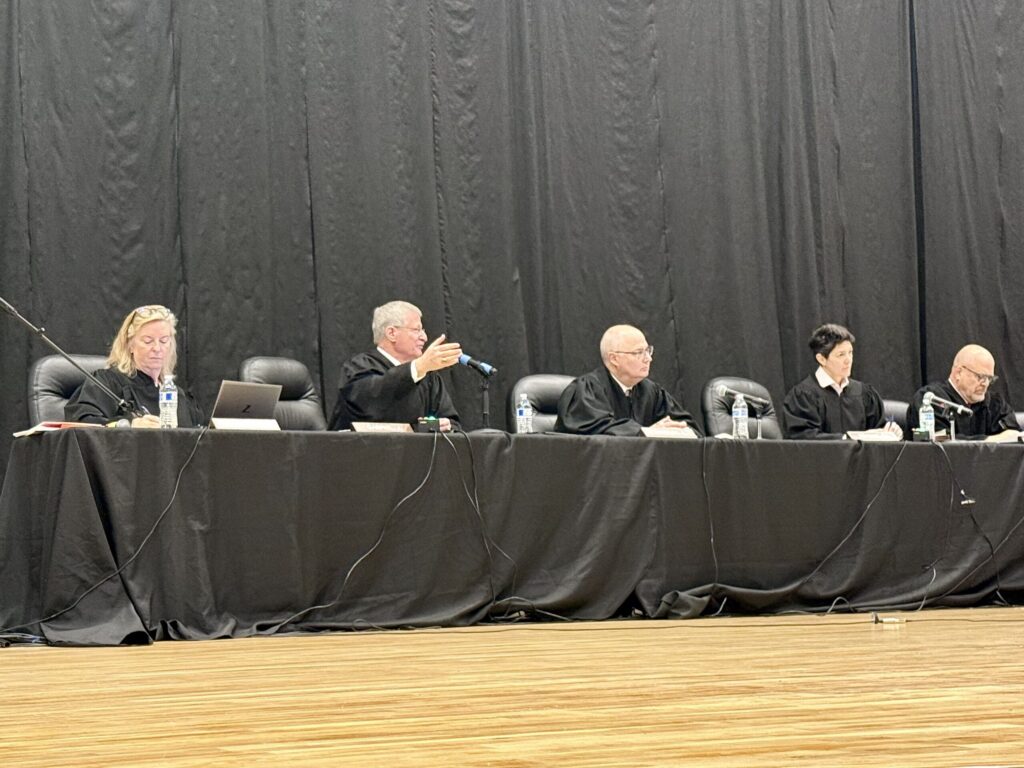
Colorado justices skeptical of snowboarder’s bid to revive injury lawsuit after signing new waiver
Michael Karlik
michael.karlik@coloradopolitics.com
Updated 10 hours ago
The Colorado Supreme Court seemed to agree on Thursday that a plaintiff is not entitled to continue his snowboarding injury lawsuit because he purchased another pass in the middle of litigation that released all past legal claims. “It says you’re...
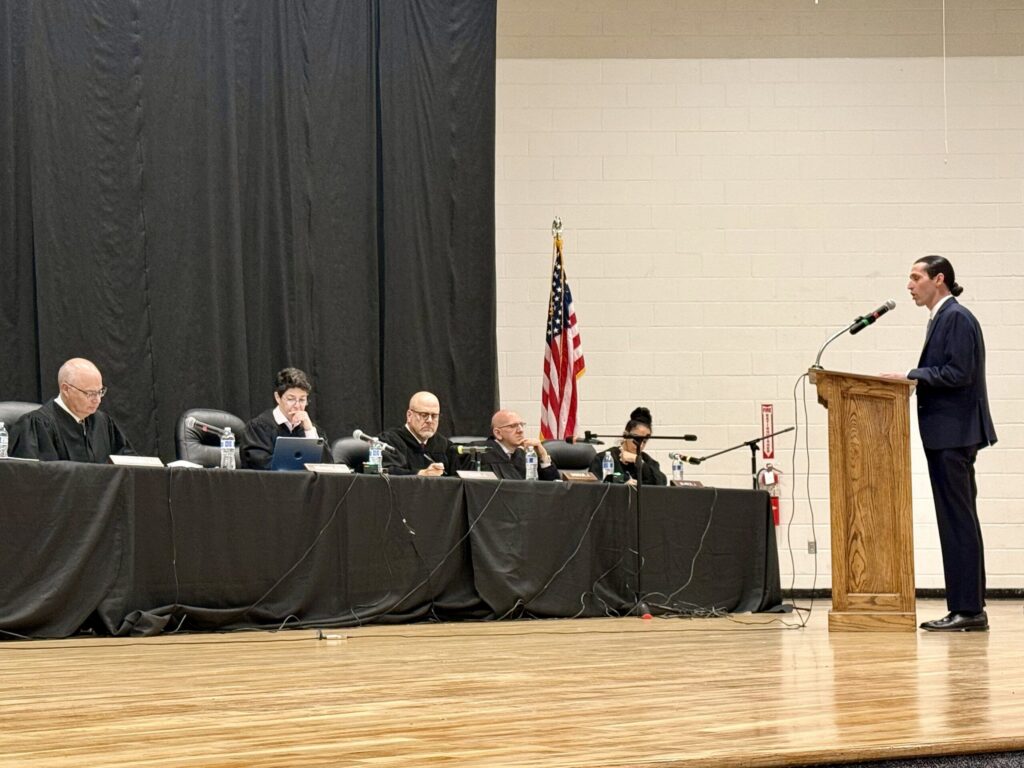
Colorado Supreme Court appears OK with revised ‘reasonable doubt’ instruction
Michael Karlik
michael.karlik@coloradopolitics.com
Updated 7 hours ago
The Colorado Supreme Court appeared largely comfortable on Thursday with the recently revised definition of “reasonable doubt” that is now part of the template jury instructions for criminal cases. To date, multiple Court of Appeals decisions have endorsed the constitutionality...