

Student testing battle lines drawn

Given the recent start of the Colorado Rockies season, it was appropriate last week for state Rep. Jim Wilson to use a baseball metaphor to describe the polarized debate at the Capitol over how best to reduce student testing in our schools.
“We have a lot of folks here today who are trying to hit the home run; just step up and hit the long ball,” the Salida Republican said in an interview with The Statesman. “And my experience playing ball is that was exciting until it was caught in the outfield.”
Wilson said progress is more realistic than perfection when it comes to legislation to curb the number of state-mandated student assessments.
“You hit the singles, move people around the bases and you score more runs,” the former school superintendent said.
Wilson — who is a prime sponsor of a bill that would cut the number of required standardized tests in K-12 schools — is worried that if fellow lawmakers draw lines in the sand on this issue, this year’s efforts to reduce the number of tests students have to endure may go for naught.
That’s in spite of widespread public and bipartisan political support to get something done to ease the testing burden being felt by students and teachers around the state.
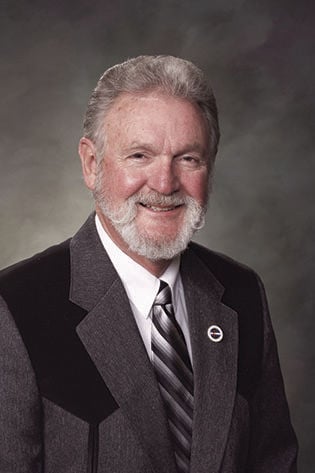
Rep. Jim Wilson

Look no further than Senate Bill 15-215 as an example. Upon its introduction earlier this year, the bill had bipartisan support and was backed by Gov. John Hickenlooper. Yet it failed to get off the ground because of the charged debate surrounding this issue.
Still, there clearly remains political will on the part of lawmakers to get something done about student testing — easily the biggest education issue of the session — as evidenced by the 11 testing bills that have been introduced this year. And two significant testing bills recently moved forward at the Capitol.
But can lawmakers iron out differences on those bills as they go through the legislative process — and still have legislation that is palatable to the governor?
“Right now it seems like fewer assessments may be at risk if everyone draws their line in the sand and says, ‘I’m not going to move one way or another,’” Wilson said. “Then we’re back to where we were when we started this year and that’s not acceptable to me.”
House effort moves forward
With SB 215 shelved, attention is now focused on House Bill 15-1323 and Senate Bill 15-257 as being the last viable options for student assessment reform this year.
Both bills easily received initial, bipartisan approval in separate committee hearings on April 9 and 13. The bills must clear separate appropriations committees before advancing to full votes in their chambers.
HB 1323 would eliminate state-mandated testing for high school juniors and seniors, except for ACT testing in 11th grade. The legislation also streamlines readiness and literacy testing.
The bill, which is similar to SB 215, would implement many of the recommendations from the Standards and Assessments Task Force that the Legislature created last year.
Nine amendments were tacked on to the bill prior to it passing the House Education Committee on a 9-2 vote. The most significant of those amendments would keep ninth grade English and math assessments. The original version made such testing optional for school districts.
The ninth grade testing requirement has become a key area of disagreement in the debate over standardized testing. Some feel a ninth grade assessment is unnecessary and is burdensome to students and teachers. Others feel it is important for parents to know where their children and districts stand as students move through the school system.
The House panel also amended the legislation to make social studies assessments optional for school districts. The original version of the bill included some social studies testing.
The lawmaker who proposed the change, Rep. Pete Lee, D-Colorado Springs, said he presented the amendment in spite of his own adoration for social studies. But Lee said his effort came as a result of pleas from parents who feel their children are overwhelmed with tests.
“I had to gulp hard to bring this amendment,” Lee said.
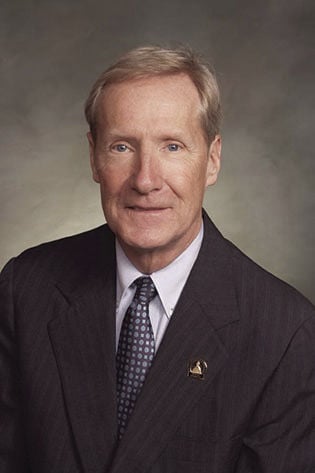
Rep. Pete Lee

The committee also approved an amendment that would give districts an extra year before they are held accountable for assessment performance. And new students who are immigrants would be exempt from testing during their first year in school, under an amendment that also received committee approval.
But amendments that would have removed Colorado from Common Core standards — the controversial national initiative that sets standards for reading, math and critical thinking skills — failed to become part of the bill.
Rep. Paul Lundeen, R-Monument, who sponsored the Common Core pull-out amendment, was one of two Republican lawmakers to vote against the entire bill. Lundeen believes the legislation does not go far enough.
“I’m concerned, I’m alarmed, that this bill’s way forward is more complicated,” said Lundeen, a former chairman of the State Board of Education. “There’s a very different version that’s coming from the Senate.”
Senate efforts also gain movement
Lundeen was referring to SB 257, which passed the Senate Education Committee on an 8-1 vote on April 9, following nearly six hours of testimony.
SB 257 is a more aggressive assessment reform bill than its House counterpart.
Like the House version, SB 257 would streamline school readiness and literacy tests for children. But the Senate version would move the state closer to federal minimums on testing requirements. Only 10th grade students would be tested in English and math. And social studies testing would be cut, under the bill.
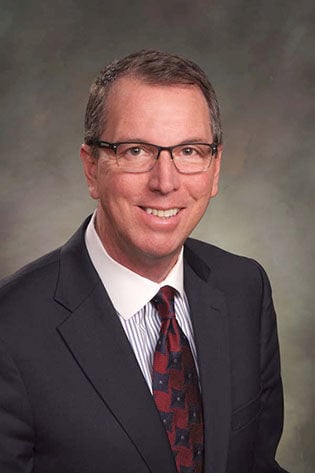
Rep. Paul Lundeen

The bill also would put on hold a requirement that 50 percent of a teacher’s evaluation be based on student growth and test scores. That requirement, which came as a result of legislation from 2010, would be postponed by three years.
And school districts could pilot alternative test systems, so long as they are federally approved, under the current bill.
Another testing bill that passed the same committee that day is Senate Bill 233, which is even more aggressive in its assessment reduction efforts. That bill would do away with many standardized tests in schools, including Common Core and Partnership for Assessment of Readiness for College and Careers, PARCC, standards and assessments.
The legislation also would tie just 15 percent of a teacher’s evaluation to test performance.
However, that bill, which passed the Republican majority Senate Education Committee on a party-line vote, likely will not advance far in the Democrat-controlled House. Nor has it received support from the governor’s office.
A handful of other bills having to do with student testing are also moving through the Capitol, including a measure that would protect parents’ rights to opt their children out of standardized tests.
Lines in the Sand
But it is HB 1323 and SB 257 where most of the attention is focused — and battle lines are being drawn in favor or opposition of those efforts.
Sen. Chris Holbert, R-Parker, who sits on the Senate Education Committee, said the House version doesn’t go far enough and that SB 257 — which is being sponsored by Republican Owen Hill and Democrat Mike Merrifield, both of Colorado Springs — is legislation that most parents can get behind.
“What gets a Democrat retired teacher like Mike Merrifield and conservative Republican Chris Holbert from Douglas County together? How do you get the two of us talking? It’s the moms, it’s the parents,” Holbert told The Statesman.
Some of those “moms” held a rally inside the Capitol just before the Senate Education Committee met, where they vented frustration over testing requirements that they say overwhelm their children.
They included Bethany Rosenthal of Colorado Springs, a member of the Standards and Assessments Task Force, who disagrees with the task force’s recommendations.
“If our public servants will not stand, then we the parents and the taxpayers will,” Rosenthal said at the rally. “We are committed to the long haul.”
But others worry that if the Rosenthals of the assessment reform movement get their way, students and districts would suffer.
Van Schoales, who heads the education reform group A+ Denver, testified during the SB 257 hearing that the “well-intended,” but “extremely problematic” bill would make it difficult for districts to draw performance comparisons.
“Rather than providing flexibility, it dismantles checks and balances,” he said.
It is that very polarized debate that doomed SB 215. But one of its sponsors, Sen. Andy Kerr, D-Lakewood, hopes his effort took a proverbial bullet to pave the way for some sort of legislation to get passed.
“Perhaps the sponsors on that bill, we laid down on the barbed wire and the other 96 members of the Legislature were able to walk over our backs to actually get to where we are,” Kerr told The Statesman. “And if that’s the case, great.”
But there is a long way to go before lawmakers “get to where” they need to go. And the two bills are now further apart than when they were first introduced.
Those who argued that HB 1323 does not go far enough to reduce testing requirements most certainly won’t support the measure now that it has been amended to include mandatory ninth grade testing.
“I would not support that because I could not look a constituent in the eye and say we did everything we possibly could,” Holbert said of any bill that includes mandatory ninth grade testing.
And with House Democrats and a governor who may not be supportive of a bill that does away with virtually all high school assessments, SB 257’s fate is just as uncertain.
So what happens if no student testing reform legislation is passed this session? Wilson cringes at the thought.
When asked if a bill will pass this year, Wilson paused and said, “Today, I can’t tell you,” before extending his baseball metaphor.
“I can’t tell you because there’s some philosophical differences that need to be set aside to get those singles to be hit once again,” he said.
@VicVela1

Victor Marx says he’ll only debate Phil Weiser once in Colorado governor’s race — without a moderator
Ernest Luning
ernest.luning@coloradopolitics.com
Updated 5 hours ago
Colorado Republican gubernatorial nominee Victor Marx said on Tuesday that he will participate in only one debate with Attorney General Phil Weiser before the November election — and he challenged the Democratic nominee to hold the event without a moderator....
10th Circuit finds no fair housing violation by Littleton landlord for worker’s alleged rape of tenant
Michael Karlik
michael.karlik@coloradopolitics.com
Updated 7 hours ago
The Denver-based federal appeals court concluded on Monday that Littleton’s housing authority could not be held liable for a maintenance worker’s alleged rape of a tenant, as the worker’s employment did not provide any special access to the victim. A...
Fauci’s Fifth Amendment answers may test Biden pardon as GOP eyes contempt
Kaelan Deese
kaelan-deese@coloradopolitics.com
Updated 7 hours ago
Dr. Anthony Fauci invoked his Fifth Amendment right against self-incrimination more than 100 times on Wednesday, a move legal experts described as strategically sound despite the politically damaging optics. Sen. Rand Paul (R-KY), chairman of the U.S. Senate Committee on...
Democrats must win 57 out of 77 competitive House seats to take majority: Cook Political Report
Hailey Bullis
hailey-bullis@coloradopolitics.com
Updated 9 hours ago
Democrats’ path to retaking the House in November has significantly slimmed as a result of the mid-decade redistricting war this cycle, a new analysis found. The nonpartisan Cook Political Report found that under the newly drawn maps across 10 states,...
Denver labor acknowledgment proposal faces council committee questions
Deborah Grigsby
deborah.smith@denvergazette.com
Updated 13 hours ago
A proposal to add a labor acknowledgment to Denver City Council proceedings has been delayed by the Finance and Business Committee after members raised questions about its wording, intentions and place in the council’s opening proceedings. The proposal, put forth...
Fauci invokes the Fifth Amendment and declines to testify in GOP-led Senate panel’s COVID-19 hearing
The Associated Press
the-associated-press@coloradopolitics.com
Updated 14 hours ago
WASHINGTON (AP) — Dr. Anthony Fauci on Wednesday invoked the Fifth Amendment and declined to answer questions from senators in a Republican-led committee hearing about his handling of the COVID-19 pandemic. The move injects new drama into the lingering tensions...

Colorado residents rush to buy guns ahead of new restrictions, breaking sales records for several stores
By Debbie Kelley
by-debbie-kelley@coloradopolitics.com
Updated 13 hours ago
Colorado residents are lining up to buy guns ahead of the latest weapons restrictions set to take effect this Saturday. The new law mandates individuals seeking to purchase semiautomatic firearms with detachable magazines to first complete a firearm safety course...

Crime continues to decline in Aurora, police chief says
Kyla Pearce
kyla.pearce@gazette.com
Updated 14 hours ago
Crime in Aurora continued to decline in the first half of 2026, according to Aurora Police Department officials. Crime overall in the city has been on a downward trend since 2024, according to APD. Between Jan. 1 and June 30,...
El Paso County rejects multi-family zoning request near Monument Academy
Savannah Eller
savannah-eller@coloradopolitics.com
Updated 13 hours ago
The El Paso County Board of Commissioners narrowly rejected a developer’s bid to convert land from low- to high-density residential zoning. The request, made by MA Infrastructure, LLC, would have allowed 12 units per acre on half of a 14-acre...
Atop taxes, here’s how much each Colorado resident pays in fees
Marissa Ventrelli
marissa.ventrelli@coloradopolitics.com
Updated 1 day ago
Each Colorado resident paid nearly $5,000 in state-sanctioned fees last year, according to a report by a policy think tank. The report, which analyzed how fees have affected Colorado’s economy, found that fee revenue has more than tripled since 2008...
PREV
PREVIOUS

Log Cabin Republicans disinvited from Western Conservative Summit
The organizers of this year’s Western Conservative Summit — billed as “the premiere summer destination for Americans who still believe in freedom, family, faith, and the future” — this week told a Republican organization devoted to advocating for gays and lesbians that it can’t formally participate in the June conference in Denver. Former Senate President […]
Vote delayed on Homeless Bill of Rights
A House panel on April 15 was transformed into the “There but for the grace of God go I Committee” as several current or former homeless persons — including a former lawmaker — testified on behalf of a bill that would provide the homeless with more public rights. House Bill 1264, which has been dubbed […]