

Healthcare freefall: Subsidy cuts, insurance gaps reshape how Coloradans will seek care
Editor’s Note: Colorado’s healthcare system is entering a period of accelerating instability — a “tsunami,” as multiple leaders describe it — driven by collapsing hospital finances, shrinking Medicaid reimbursements, disappearing services and a political fight over who is responsible for this unraveling. Healthcare Freefall is a multipart series examining how Colorado arrived at this moment, what H.R. 1 will do next and why communities across the state are bracing for deeper shocks.
Colorado hospitals are bracing for major shifts in how patients seek care as Medicaid eligibility tightens in 2027, state funding drops and insurance enrollment rates surge.
Health officials have warned the changes will reshape a healthcare system already in distress.
With rising costs for basic primary and OB care, experts expect more people to rely on emergency departments for needs typically handled in outpatient clinics. Hospitals — from small rural facilities to large urban safety‑net systems — anticipate increases in uninsured, underinsured and charitable‑care cases.
Health officials said the impact will vary by size, location and patient mix, but the core concern is the same: when fewer people have stable coverage, emergency departments become the default entry point, driving up uncompensated care and straining already-thin margins.

Where will patients go?
Essey Yirdaw, senior director for data and analytics at the Colorado Hospital Association, said hospitals are bracing for more people in the community to lose insurance, a shift she called both troubling and consequential for patients. Without coverage, she added, people are forced into difficult choices — paying for premiums they may not be able to afford or using that money for essential items, such as gas or rent.
Emergency rooms treat everyone, regardless of the severity of their condition or whether they have insurance. Yirdaw said the challenge is that ERs are built for urgent, acute problems — not the routine, preventive care people usually receive from a primary care or OB provider.
When residents go without insurance and can’t qualify for Medicaid or other state-funded programs, Yirdaw said, they often end up in the emergency room, where care is expensive and not the right setting for treatable conditions that should be handled by a primary care provider with proper follow‑up.
Patients who start using the ER for everyday issues that a regular care physician could handle more easily and cheaply aren’t the only problem, Yirdaw said. When people skip the paperwork required to meet the new Medicaid qualifications — and can’t afford plans on the state marketplace version of the Affordable Care Act — they become uninsured. At that point, many begin avoiding care altogether, ignoring symptoms and problems until they turn into emergencies.
By delaying care, uninsured patients often wait until symptoms become severe, leading to more advanced diagnoses — cancers caught later, complications that could have been managed earlier and conditions that only come to light once someone arrives in the ER, already in crisis.
Both rural and urban hospitals expect to see more uninsured and underinsured patients in 2027, though the effects will vary by community.
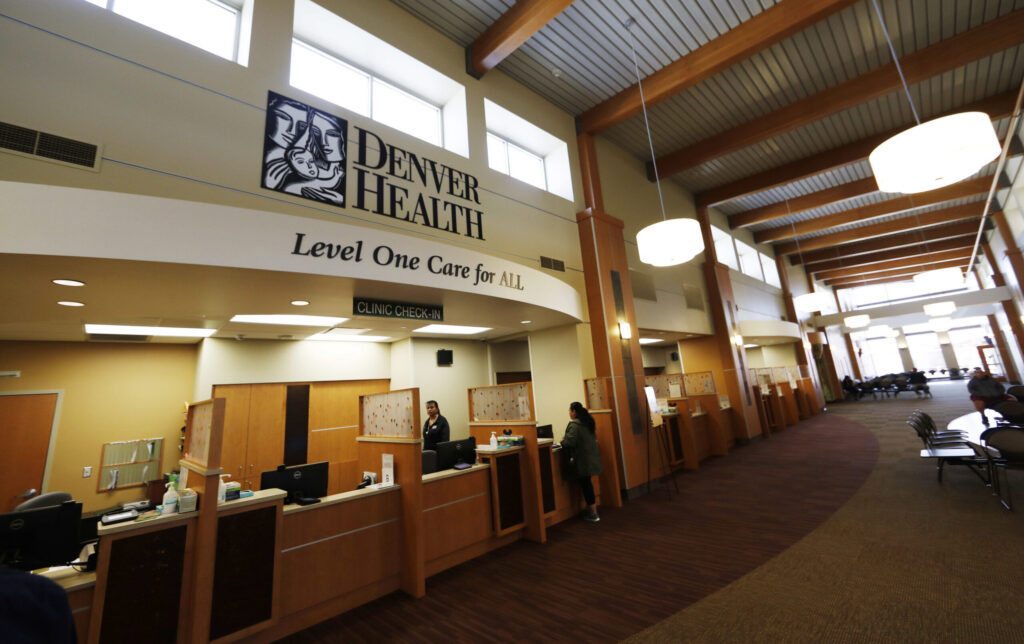
Denver Health, which serves a large share of Medicaid patients and immigrants, reported that it already cares for individuals who require extended stays because appropriate placement options are limited.
CEO Donna Lynne said the hospital will continue providing emergency and critical care but noted that changes to Medicaid reimbursement may require closer evaluation of how long hospitals can keep patients who no longer meet coverage criteria.
Lynne estimated that H.R. 1, the federal budget approved last year, could reduce Denver Health’s budget by about $65 million annually. She said the hospital is not considering closing its emergency department but acknowledged that broader systemwide reductions could affect how safety‑net hospitals operate.
The bulk of the Medicaid cuts comes in the form of work requirements. The federal law requires states to make sure recipients are working by 2027 but gave them the option to do it sooner. The law mandates that people ages 19 to 64 who have Medicaid coverage work or perform community service at least 80 hours a month or be enrolled in school at least half time to receive and keep coverage.
Some people would be exempted from the requirements, including disabled veterans, pregnant women, parents and guardians of dependent children under 14 or disabled individuals, people who were recently released from incarceration and people getting addiction treatment.
Supporters said the changes are long overdue — that the federal savings is needed to curb the national debt; that states would no longer be able to game the system by artificially inflating federal matching funds; that the reductions, rather than harm people, preserve the program for those who actually need them; and that restoring personal responsibility on the part of able-bodied enrollees would reduce government dependency and lead to upward mobility.
Hospital leaders in Colorado emphasized that they do not control what patients owe. Insurers set deductibles, coverage levels and reimbursement rates, leaving many families with high out‑of‑pocket costs. Marketplace plans have climbed in price, and employer‑sponsored insurance has also grown more expensive over the past five years, prompting some patients to delay procedures or skip medications.
Gov. Jared Polis has long argued that hospitals bear some culpability. He said high hospital bills and steep pharmaceutical prices remain among his biggest frustrations. He noted he has backed measures requiring itemized billing and has pushed for lower drug costs, including efforts to work with Canada to expand access to more affordable medications.
High deductible employer plans have become common, creating situations where patients pay premiums but still face large deductibles before coverage begins. Many arrive at hospitals assuming their insurance will cover treatment, only to learn their plan leaves significant gaps, said Tom Rennell, senior vice president of financial policy for the Colorado Hospital Association.
Employer‑provided insurance covers 52.2% of Colorado residents — about three million people. Roughly 6.7% rely on individual plans. Coverage is nearly universal among large employers, with 92% of businesses with 50 or more employees providing insurance options, according to the Colorado Health Institute.
It is far less common among small businesses, where only 22.9% offer employees’ insurance. That leaves many workers turning to the marketplace, Medicaid, Medicare or going without coverage entirely.
Rennell said that, after the pandemic in 2020, more than 300,000 Coloradans were removed from Medicaid, adding significant strain on hospitals. He noted that under H.R. 1’s Medicaid budget mandates for the next decade, many current enrollees are expected to lose eligibility. That shift has hospitals worried about how residents will seek care through the rest of 2026 — and especially in 2027, when the major requirements take effect.
The state’s Medicaid program currently covers 1.4 million people — about one in four residents. Hospitals now receive roughly 67 cents for every dollar spent treating Medicaid patients.
In fact, the Medicaid population expansion that occurred during the pandemic was meant to be temporary, an emergency response to a crisis that was expected to go away at some point, with the high enrollment also “unwinding.” One assumption underlying the estimates saying hundreds of thousands would lose health coverage is they would simply not find another way of insuring themselves, such as by going back to the workforce and getting insurance through an employer.
Some hospital leaders have accused Colorado’s health officials of botching that Medicaid “unwind.”
Cuts are also coming to the state’s Cover All Coloradans program, which was approved by the state legislature in 2022. The program provides healthcare coverage to women and children living in the country illegally. Colorado had seen a surge in people arriving in the state after illegally crossing the U.S. border with Mexico in the last few years.
Of the roughly 40,000 who arrived here, the estimate was half stayed. The rise in healthcare costs for this population coincided with the illegal immigration surge in metro Denver.
Initially, the program was budgeted to cost $14.7 million in the 2025-26 budget, but it actually cost nearly $105 million with nearly 30,000 patients enrolled.
Charitable care costs increase
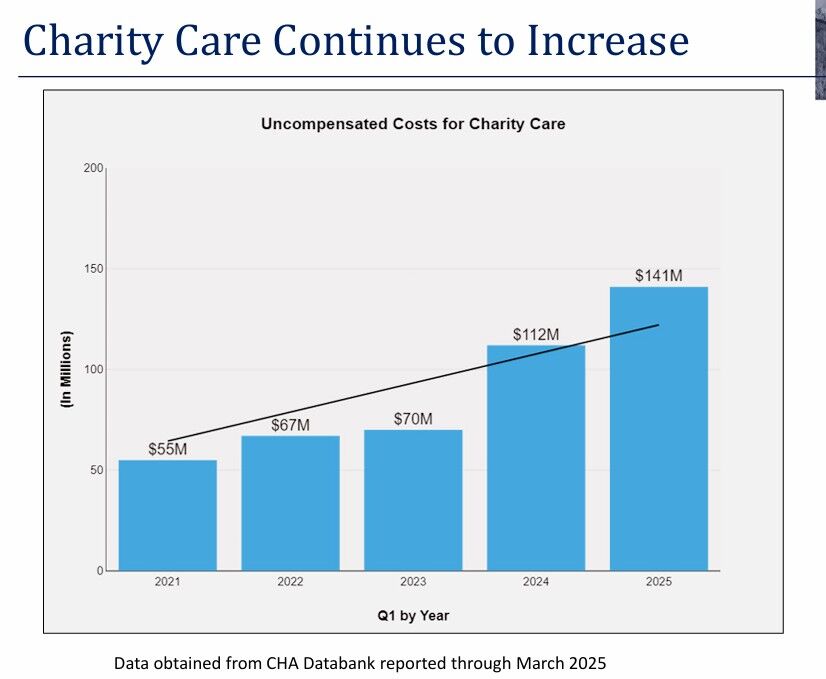
Charity care is becoming a larger share of hospital budgets, and the pressures are mounting.
Hospitals said the number of patients who cannot pay their bills is rising even with expanded outreach, payment plans and financial‑assistance screenings.
Since 2021, charity care has increased 112% — a $208 million jump — according to the Colorado Hospital Association. The Colorado Health Institute estimated that roughly 345,000 residents have no insurance or government assistance, a trend that hospital leaders warn will deepen the uncompensated‑care burden.
Hospitals also face growing pressure from care provided to immigrants living in the country illegally. Some cases become charity care, while others qualify for the state’s Cover All Coloradans program, which now provides health coverage to about 30,000 women and children. The program was expected to cost $27 million in 2022. By 2026, spending reached about $100 million — six times the original estimate — and projections show costs could exceed $151 million in 2027.
Facing a $1.2 billion budget deficit, state lawmakers changed enrollment qualifications, a move that could limit access for immigrants who previously qualified.
Hospitals said the underlying cost of delivering care — staffing, equipment, facilities and 24‑hour operations — must be recovered somehow. When bills go unpaid, the financial strain shifts to insured patients and local communities. Those pressures can force hospitals to scale back services, and in rural areas, the risk of closure is acute.
Rennell said hospitals are already weighing which services they may need to shed to stay open, decisions he described as painful in small towns, where providers know their patients personally.
Closures would devastate rural economies, where hospitals are often the largest employer, hospital leaders have said. One elected official said at least 10 Colorado hospitals have said they are on the verge of shutting down, a trend she called unsustainable.
Hospitals confront trade-offs
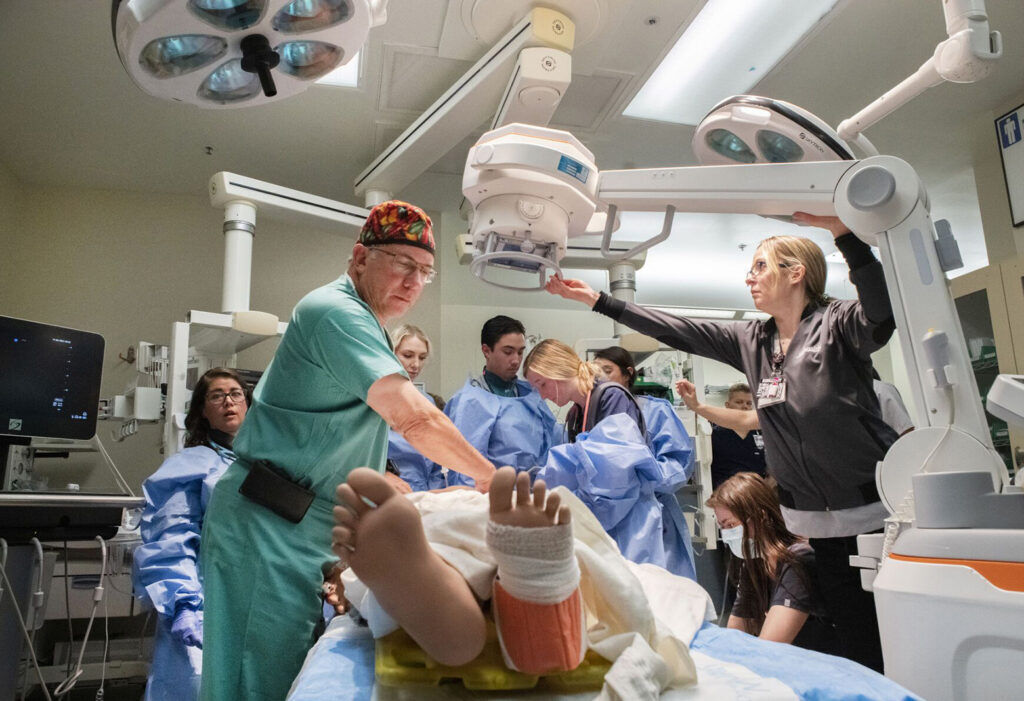
Hospital leaders said they are increasingly vulnerable, with some publicly warning they face the risk of closure. Many noted that beyond providing care, rural and frontier hospitals serve as economic anchors for their communities.
Colorado has so far avoided the rural hospital closures seen elsewhere, but the Colorado Hospital Association said the trend may be shifting.
Nearly seven in 10 hospitals operate on slim or negative margins, and the group estimated the state could lose $10.4 billion in federal funding by 2032 under H.R. 1. Without a way to replace that money, officials warned the entire system — from urban safety‑net hospitals to small rural facilities — will feel the strain.
To avoid closure, hospitals are experimenting with ways to manage the shift toward more patients relying on emergency rooms for basic care. One of the most common strategies is cutting departments and specialty services. Some hospitals have eliminated labor and delivery units, others have reduced cancer care programs and many are continually searching for additional cost‑saving measures.
Rennell said these reductions — and the effort to stay open — will likely continue as roughly 75% of Colorado hospitals operate on margins he described as unsustainable and financial outlooks that are unlikely to change any time soon.
Continued regulations have also created more obstacles for general-care physicians and OB providers, especially in rural communities. While there are fewer regular medical clinics in rural communities, those in urban areas are increasingly stopping Medicaid patient acceptance altogether.
Read more from the Healthcare freefall series:
Healthcare freefall: Once built on federal investment, rural hospitals today fight to survive

Healthcare freefall: Once built on federal investment, rural hospitals today fight to survive
Thelma Grimes
thelma.grimes@coloradopolitics.com
Updated 42 minutes ago
Editor’s Note: Colorado’s healthcare system is entering a period of accelerating instability — a “tsunami,” as multiple leaders describe it — driven by collapsing hospital finances, shrinking Medicaid reimbursements, disappearing services and a political fight over who is responsible for...
Healthcare Freefall: Finger‑pointing intensifies as Colorado’s healthcare system strains under rising costs, shrinking coverage
Thelma Grimes
thelma.grimes@coloradopolitics.com
Updated 43 minutes ago
Editor’s Note: Colorado’s healthcare system is entering a period of accelerating instability — a “tsunami,” as multiple leaders describe it — driven by collapsing hospital finances, shrinking Medicaid reimbursements, disappearing services and a political fight over who is responsible for...

Colorado shifts vaccine authority to state as Trump administration revises childhood framework
Marissa Ventrelli
marissa.ventrelli@coloradopolitics.com
Updated 2 days ago
As the Trump administration rolls out a revised childhood vaccine framework, Colorado’s law allowing the state to set its own immunization schedule has now taken effect. Issued Monday, President Donald Trump’s executive order separates childhood and adolescent vaccines into three...

Colorado’s troubled guardianship office pursues ‘cultural reset’
Marianne Goodland
marianne.goodland@coloradopolitics.com
Updated 4 days ago
Colorado’s guardianship program, long criticized for mismanagement and high staff attrition, is undergoing a “cultural reset,” as its new director works to repair partnerships and prepare for a major expansion under recent legislation. Created by lawmakers in 2017, the Office...

New Colorado laws going into effect cover AI disclosures, medical marijuana access and gambling limits
Marissa Ventrelli
marissa.ventrelli@coloradopolitics.com
Updated 1 week ago
More than 100 new Colorado laws take effect Aug. 12, bringing changes to chatbot safety rules, psychedelic research, campus wellness checks and sports betting restrictions. Here is a look at some of those laws set to take effect. The law:...

Colorado to implement new laws on jail standards, safe haven rules, and agricultural labeling
Marissa Ventrelli
marissa.ventrelli@coloradopolitics.com
Updated 7 days ago
In mid-August every year, a slew of recently passed laws in Colorado go into effect 90 days after the end of the legislative session. This year, all bills without a specified effective date or safety clause — a provision stating...

‘Explosive’ diarrhea-causing parasite cyclosporiasis cases nearly triple in Colorado
Nico Brambila
nico.brambila@denvergazette.com
Updated 1 week ago
Cases of the “explosive” diarrhea-causing parasite cyclosporiasis nearly tripled in Colorado over the past month, prompting renewed attention after related deaths were reported in Michigan. Twenty-nine counties in Colorado have reported cases, according to the Colorado Department of Public Health...

U.S. News names Saint Joseph best hospital in Colorado, ending University of Colorado Hospital’s 13-year streak
Nico Brambila
nico.brambila@denvergazette.com
Updated 1 week ago
University of Colorado Hospital is no longer Colorado’s top-ranked hospital for the first time in more than a decade, with Intermountain Health Saint Joseph Hospital taking the No. 1 spot in U.S. News & World Report’s latest rankings. Located on...

Colorado lawmakers start crafting strategy to manage $200 million in federal rural health funds
Marissa Ventrelli
marissa.ventrelli@coloradopolitics.com
Updated 2 weeks ago
Colorado officials have begun to strategize as the state is set to receive hundreds of millions of dollars from a federal program meant to boost rural health. Cristen Bates, deputy Medicaid director at the Department of Health Care Policy and...
Fauci’s private COVID-19 diaries: Six takeaways on fame, prize money and the lab leak debate
The Washington Examiner
the-washington-examiner@coloradopolitics.com
Updated 2 weeks ago
Anthony Fauci’s private writings from 2020 and beyond portray a public health official who was fixated on his growing celebrity while privately grappling with a pandemic response he believed was chaotic, leaderless and consumed by internal rivalries. The writings of...
PREV
PREVIOUS

Colorado appeals judge’s delays in releasing opinions noted by performance commission
The citizen-led performance commission that provides guidance to voters about whether to retain members of Colorado’s second-highest court raised concerns by judges and attorneys that Judge Elizabeth L. Harris sometimes struggles with releasing opinions promptly. Harris, who joined the Court of Appeals in 2015 and who will appear alongside five other appellate judges on the […]
Healthcare freefall: Once built on federal investment, rural hospitals today fight to survive
Editor’s Note: Colorado’s healthcare system is entering a period of accelerating instability — a “tsunami,” as multiple leaders describe it — driven by collapsing hospital finances, shrinking Medicaid reimbursements, disappearing services and a political fight over who is responsible for this unraveling. Healthcare Freefall is a multipart series examining how Colorado arrived at this moment, […]