

Patchwork laws challenge nationwide hog production | Rachel Gabel
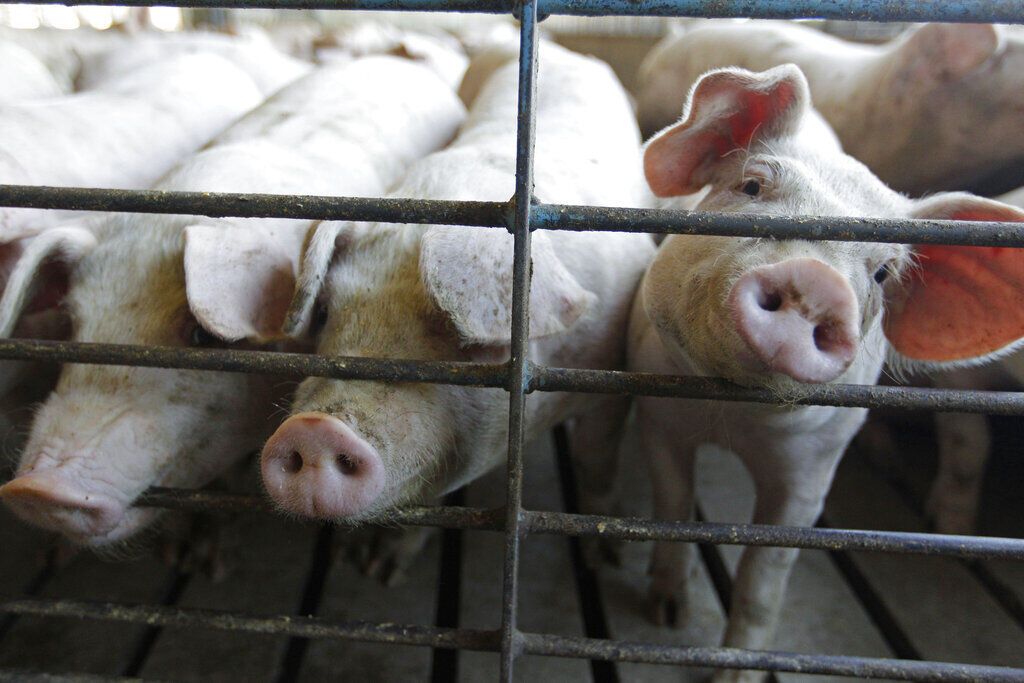
The newest iteration of the long-overdue Farm Bill leaves intact California’s Prop 12. There’s an obscene amount of information within the bill, but animal welfare laws have the potential to shape the food systems here in America. A country unable to feed itself is a country unable to defend itself. In terms of Prop 12, hog producers are the most impacted, so I defer to hog producers who raise their livestock in housing, a production method about which I lack expertise. I’m much like an animal welfare ballot proposal proponent in that way.
In a nutshell, passed in 2018, Prop 12 established arbitrary guidelines for the size of confinement pens and required that pork sold in the state be compliant with the pen sizes.
The American Veterinary Medical Association has said the pen sizes do little to improve animal welfare and may unintentionally cause harm. It’s been a few years since I mentioned that sows will periodically eat their piglets. Sows are aggressive, and sow fights are ear-splitting, violent, and fast. Think a barfight involving 600-pound aggressors who can move like the most agile wide receiver in the league. And then add sharp teeth. There are producers able to raise pasture pigs or pigs in large pens and the beauty of this country is they may do so and be paid a premium for this value-added production method marketing. There are certainly some in California who were ahead of the curve when Prop 12 requirements took effect. I spoke to a producer last week who said Prop 12 was positive for him, consumers, and hogs.
On a large scale, retrofitting existing facilities to comply gets more difficult and very expensive. Some university studies have concluded that facilities built or refurbished to be in compliance with Prop 12, cost as much as 40% more than conventional facilities. That’s in addition to what studies have estimated to be a 15% loss in efficiency and performance. For price takers, that just doesn’t pencil. As consolidation becomes a greater concern within agriculture, these greater costs and lower returns encourage that very thing. There is room for the big operators – the Chinese-owned Smithfield, for example, but there should also be room for the producers between the big boys and a backyard, pasture-type farm.
If hog producers can only be sustainable at a huge scale, the small to medium-sized operations will sell to larger corporations or will, like the poultry industry, raise stock on contract.
Eleven of the world’s top 25 pork-producing companies are in China, and only 7 are here in the U.S. Notably, hog facilities in China look nothing like the long, nondescript barns in the U.S. Chinese hog producers are operating on extremely limited space and huge production needs. Especially since the rise of African Swine Fever (ASF), Chinese hog growers are going up and staying contained for the life cycle of the animal. State-of-the-art barns are stacked six stories high with each floor housing over 600 sows from farrow to fork. One large Chinese pork company produces 30 million pigs annually. That’s about 20% of total U.S. production raised by one company.
It was in 1995 the last time small, backyard operations out-produced larger ones in China. Now, it’s estimated that 65% of the nation’s pork is produced at these mega farms.
The main concern with Prop 12 and other measures in other states is the creation of a patchwork of requirements. For example, there is a proposal in Oklahoma that increases pen sizes beyond the increases in California. If that measure were to pass, the pork producers nationwide who want to access that market would, for the second time, be out of compliance. That’s just throwing good money after bad and not because I wish for anything but hogs that gain weight and are healthy. The measurements are arbitrary and could have been pulled out of the hip pocket of a hog. In that way, it’s not unlike the number of wolves Colorado needs to be sustainable. It’s a guess.
Rachel Gabel writes about agriculture and rural issues. She is an assistant editor of The Fence Post Magazine, the region’s preeminent agricultural publication.

Digesting all the consequences of a weighty Colorado primary election | Miller Hudson
Miller Hudson
miller-hudson@coloradopolitics.com
Updated 2 days ago
I arrived home on election night just in time to catch the 10 p.m. news. Flipping to Channel 9 and Kyle Clark, I found him engaged in conversation with a reporter at the Melat Kiros primary victory celebration. The pair...

Colorado needs an Independence Day | Jon Caldara
Jon Caldara
jon-caldara@coloradopolitics.com
Updated 3 days ago
Happy 250th Birthday, America! You look fabulous. As all the cool countries are saying, “250 is the new 230.” The Declaration of Independence wasn’t merely an announcement of war against a tyrant. It was the most revolutionary political document ever...

Colorado primary election voters shake things up | Cronin & Loevy
Tom Cronin Bob Loevy
tom-cronin-bob-loevy@coloradopolitics.com
Updated 2 days ago
Every election has its surprises, but last Tuesday’s Colorado primary election results gave us several unexpected outcomes. U.S. Sen. Michael Bennett lost his bid to switch from the U.S. Senate and become Colorado’s next governor. Meanwhile, progressive Democratic U.S. Rep....

Victor Marx holds a steady lead over Barbara Kirkmeyer in Colorado Republican governor contest
Thelma Grimes
thelma.grimes@coloradopolitics.com
Updated 3 days ago
Victor Marx overtook state Sen. Barbara Kirkmeyer in the Republican primary for governor on Wednesday evening, seizing a narrow lead after trailing her since polls closed. Kirkmeyer, one of three candidates, opened the night with a clear advantage, at one...

Democrats confront shift as socialist-aligned candidates win races in Colorado
Thelma Grimes
thelma.grimes@coloradopolitics.com
Updated 2 days ago
Democratic socialists’ recent electoral gains — punctuated by Melat Kiros’ victory on Tuesday over U.S. Rep. Diana DeGette, the dean of Colorado’s congressional delegation — are the result of a movement that has been taking shape in metro Denver for...
Our legislature’s mission — absolve criminal conduct | George Brauchler
George Brauchler
george-brauchler@gazette.com
Updated 3 days ago
As the dust settles on a primary election that should alert Coloradans to the downward dive public safety may take in November — our current attorney general and secretary of state have presided over a state that is now America’s...

Colorado governor fires clemency board members who opposed Tina Peters commutation
Marissa Ventrelli
marissa.ventrelli@coloradopolitics.com
Updated 4 days ago
Gov. Jared Polis has fired two members of his clemency board who opposed his commutation of Tina Peters’ sentence, according to Colorado Politics news partner 9News. In firing Azra Taslimi and Hannah Seigel Proff, Gov. Jared Polis said they had...
Telling themes to take away from Tuesday’s primary elections | Paula Noonan
Paula Noonan
paula-noonan@coloradopolitics.com
Updated 4 days ago
Let’s be clear about how Colorado’s primaries arrived at these unexpected results. The most significant voting cohorts on both the Democratic and Republican sides were women from 65 to 75-plus. These senior women voters selected Phil Weiser and have given...
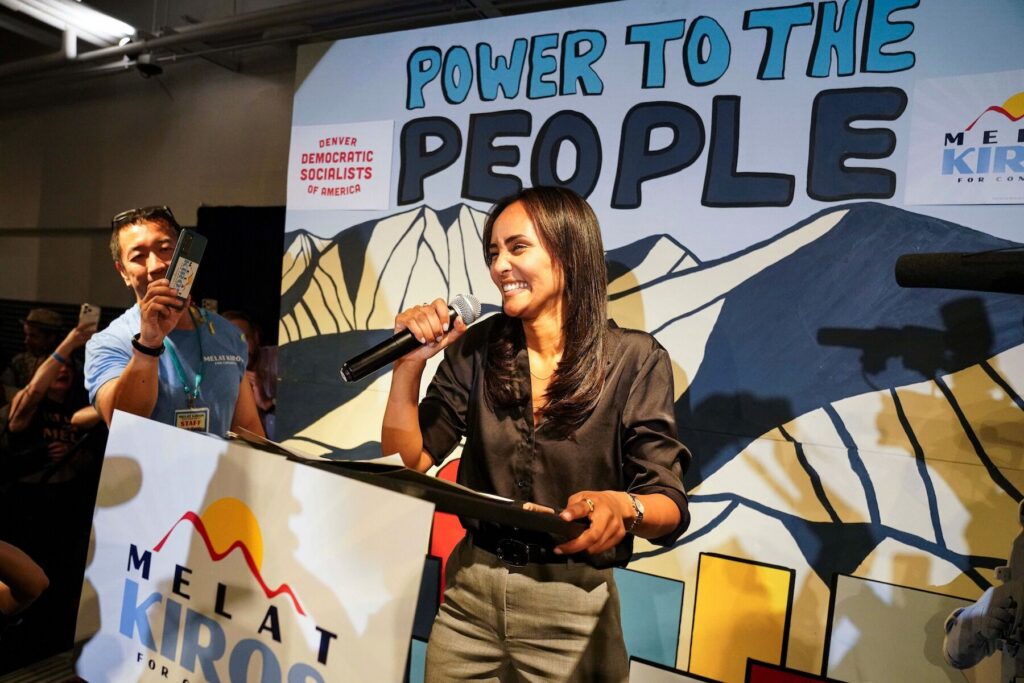
How Melat Kiros pulled Democratic Party left in upset win over Diana DeGette
Ernest Luning
ernest.luning@coloradopolitics.com
Updated 4 days ago
“It’s time for change,” Democratic congressional candidate Melat Kiros, a political newcomer and self-described democratic socialist, said in her campaign’s TV ad. On Tuesday night, primary voters in Denver agreed, giving the nomination to the 29-year-old, while at the same...

Aurora Mayor Mike Coffman on what sleeping in a homeless shelter is teaching him | The OpEdge Podcast
Tony Olivero
tony.olivero@gazette.com
Updated 5 days ago
Aurora Mayor Mike Coffman joins The OpEdge to explore why he’s spent every Friday night since February sleeping at a homeless shelter. Coffman tells host and investigative columnist Jimmy Sengenberger what the experience is teaching him about homelessness, why he...
PREV
PREVIOUS

Colorado needs an Independence Day | Jon Caldara
Happy 250th Birthday, America! You look fabulous. As all the cool countries are saying, “250 is the new 230.” The Declaration of Independence wasn’t merely an announcement of war against a tyrant. It was the most revolutionary political document ever written. The Declaration was a landmark in human development, perhaps the landmark of all human […]

Digesting all the consequences of a weighty Colorado primary election | Miller Hudson
I arrived home on election night just in time to catch the 10 p.m. news. Flipping to Channel 9 and Kyle Clark, I found him engaged in conversation with a reporter at the Melat Kiros primary victory celebration. The pair expressed surprise at the energetic chants of “Melat!, Melat!” The on-site reporter found the enthusiasm […]