

Digesting all the consequences of a weighty Colorado primary election | Miller Hudson

I arrived home on election night just in time to catch the 10 p.m. news. Flipping to Channel 9 and Kyle Clark, I found him engaged in conversation with a reporter at the Melat Kiros primary victory celebration. The pair expressed surprise at the energetic chants of “Melat!, Melat!” The on-site reporter found the enthusiasm and youthfulness of her ebullient supporters reminding him of a mosh pit. “Have you ever seen anything like this?” he asked and Clark replied, “No, never.” Well, I have. In 1983, a crowd chanting “Peña!, Peña!, Peña!,” included a 26-year-old attorney named Diana DeGette. I didn’t know her that evening but would meet her the following year when she managed Mike Johnson’s campaign for the House District 6 legislative seat for east Denver. They lost to a Republican in November after a tough primary win over Marty Flahive.
Two years later, Diana, who earned a reputation for her work with the ACLU, preparing legal defenses in capital punishment cases, chose to run herself and served a decade in the Colorado legislature, then another three decades in Congress. Her abrupt departure carries many parallels with Peña’s dark-horse dispatch of Mayor Bill McNichols, dislodging his 14-year reign at City Hall. Federico entered the campaign with 3% name recognition and a general opinion he had no real chance of success. The same could be said for Kiros. Yet, in both cases, voters decided otherwise. In neither instance did voters hugely resent either incumbent. McNichols, then 74, had proven a competent Mayor, with the sole exception of deficient snow removal following the 1982 Christmas blizzard, while DeGette was providing workmanlike service as she reached 69. The Yuppies of 1983 no longer wished to be residents of a “Cowtown”, and were readily captivated by Peña’s slogan “Imagine a Great City.”
Both, however, had simply reached their “sell by dates.” I met Melat Kiros at a policy forum with north Denver Democrats last winter. I didn’t walk away with the impression I had when first meeting Jimmy Carter, convinced he would become president. Melat didn’t seem on her way to Washington, although there was a charm which left me wondering if she just might have “the right stuff.” She didn’t win simply because she called herself a socialist, nor would this have mattered to most 21st-century Denver voters. As the economist and political observer Anand Giridharadas points out, “Socialism only sets off alarms for Baby Boomers, who lived through the Cold War red scares. Anyone younger, and especially Generation Z, thinks ‘free buses, Medicare for all and affordable college tuition’ sounds like a pretty sound program.” Melat Kiros can join “The Squad” if she wants so long as she follows through on her promise to flip over the tables and break some crockery.
Looking at the governor’s contest, I’ve expected Attorney General Phil Weiser to win for many months. He had assets that didn’t translate onto financial reports. A peripatetic Attorney General who crisscrossed the state for eight years, he has become a virtual homeboy with local police, prosecutors and the aggrieved in every Colorado county. Having attended a half-dozen Democratic assemblies, as well as the state convention, it was evident Phil was the favorite among active Democrats. Bennet would need to persuade a large turnout among unaffiliated voters to stem this tide. He failed to attempt that. Democrats, by and large, like both men but determined they would rather Michael return to Washington and finish the job he signed up for. As it has become apparent Democrats may grab a majority in the Senate, his seniority becomes even more important.
Political consultants may need to reconsider their reliance on negative ads. The crowd at Weiser’s victory party expressed heated animosity toward the unrelentingly ugly campaign run by the Bennet camp. As one pundit observed to me, “First, it was Weiser filing too many lawsuits and wasting money. ‘Colorado can’t sue its way to prosperity.’ Then, it was whining that Phil hadn’t joined enough lawsuits, ignoring the fact that Trump had been in office two years before he was even elected AG. So, which was it — too many or too few? I could smell their desperation.”

Manny Rutinel In the 8th Congressional District race probably would agree. In a blue state, Democrats may want to consider adopting a “good conduct code” governing intramural contests. Say whatever you want about Republicans without objection, but tone it down so primary losers, even if grudgingly, can still support the winners. Jena Griswold seems to understand this principle. On Wednesday morning, the first political email in my mailbox was Jena, slapping around her Republican opponent, Mike Allen, as an abortion extremist, and asking for my support. During the campaign her three opponents flogged Griswold for having little court room experience, while she said what was needed in an AG is a policy leader — not to mention probably being the best on-the-ground campaigner in the entire Democratic stable.
The Hickenlooper vs. Gonzales race proved once again it helps immensely when candidates are likable. Hick, who has been one of the luckiest politicians in living memory, blessed with repeatedly weak opponents, drew a crowd to Steuben’s that “looked like Colorado.” Doyen Elbra Wedgeworth and a contingent of African Americans were paired with Ken Salazar and a Hispanic table where the small talk leapt back and forth from English to Spanish. Ken, former attorney general, former senator and recent ambassador to México, shared a story of approaching John before either of them were running for office. He was working to prop up the agriculture economy of the San Luis Valley and asked John whether the expanding Colorado brewpubs could help by purchasing grain from farms in the valley. Hick was quick to help and Ken hasn’t forgotten. Doggone it, people like him even if he acts a little goofy at times.
The Texan, Julie Gonzales, by contrast, is a frequently unpleasant, even nasty presence. Known at the Capitol as Julie “I Went To Princeton” Gonzales, she was disliked by many of her Democratic colleagues and detested by most of the lobbyists. A belligerent demeanor catches up with any politician. This was a good year to be running from the left in a Democratic primary. Progressives even swept away as capable a legislator as Sean Camacho, a moderate who lost his east Denver seat. It was also a tough year to be an incumbent. At least four legislators lost to challengers across both parties when, in normal times, this almost never occurs. The retired U.S. Navy Admiral Eileen Laubacher, who will face off against U.S. Rep. Lauren Boebert in November, stands a real chance if she can persuade a slice of eastern plains Republicans Rep. Boebert’s erratic performance is just another part of the problem in D.C.
Finally, as I submit this column, the Republican candidate for governor appears likely to be Victor Marx. Although he is leading state Sen. Barbara Kirkmeyer narrowly, former Republican Party Chairman Dick Wadhams lamented recently nominating him would amount to a suicide pact. When Colorado Republicans have overdosed on MAGA zealots previously, the results have proven dismal. Marx will surely make life difficult for other down-ballot Republican candidates. It may be time to dispatch a box of NARCAN doses to Dick.
Miller Hudson is a public affairs consultant and a former Colorado legislator.


Taxpayers donate to tax increase campaign | Jon Caldara
Jon Caldara
jon-caldara@coloradopolitics.com
Updated 3 days ago
Give the man his due. President Donald Trump has undeniable talents. Colorado politicians are learning. Chief among The Don’s skills is taking the self-serving, ethically dubious behavior of previous politicians and putting it on steroids. Or, to borrow from the...
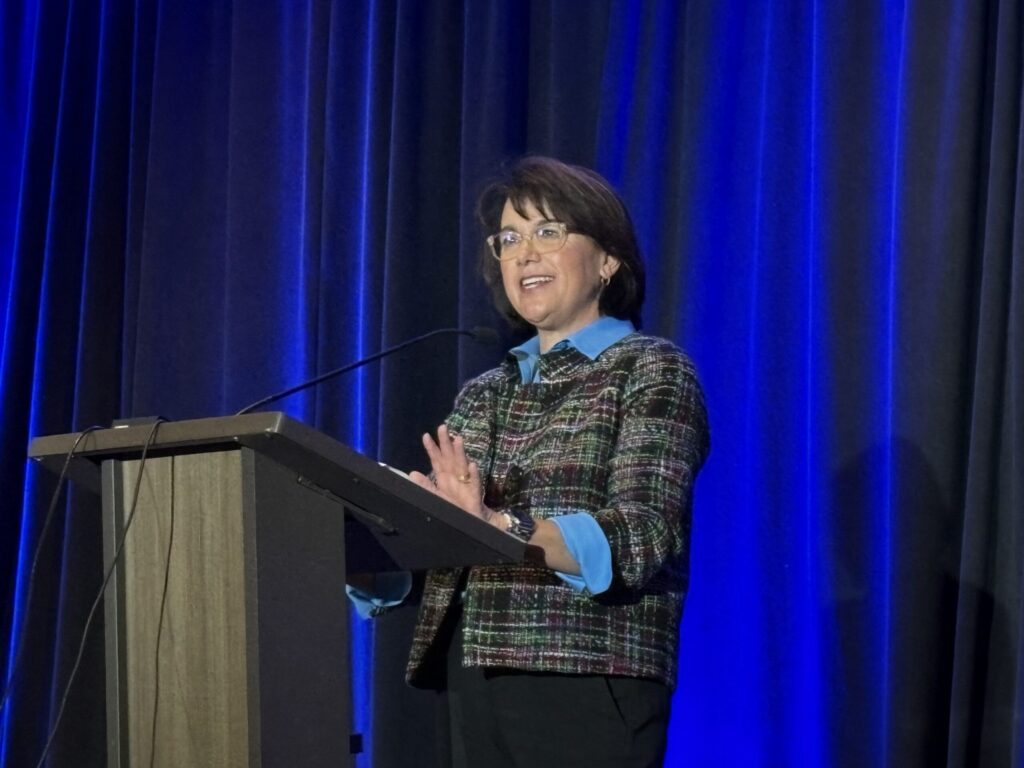
Democratic candidate in Colorado’s 4th CD urges long-term water planning
Marianne Goodland
marianne.goodland@coloradopolitics.com
Updated 12 hours ago
The Democrat hoping to become the next representative of Colorado’s 4th Congressional District on Thursday made her case on the final day of Colorado Water Congress in Steamboat Springs. Eileen Laubacher, who spent 34 years in the U.S. Navy and...

Proposal to cap Colorado income tax rate qualifies for November ballot
Thelma Grimes
thelma.grimes@coloradopolitics.com
Updated 2 days ago
Election officials on Thursday confirmed that the proposal to cap the state’s income tax at the current rate submitted signatures and voters will consequently decide its fate this November. The fight over tax rates is part of the tug and...

Democratic gubernatorial candidate Phil Weiser promises to appoint rural outreach director, water adviser
Marianne Goodland
marianne.goodland@coloradopolitics.com
Updated 2 days ago
Democratic gubernatorial candidate and current Attorney General Phil Weiser told the Colorado Water Congress Thursday he intends to appoint a rural outreach director and a water policy adviser should he win the election in November. Weiser’s speech at the Steamboat...
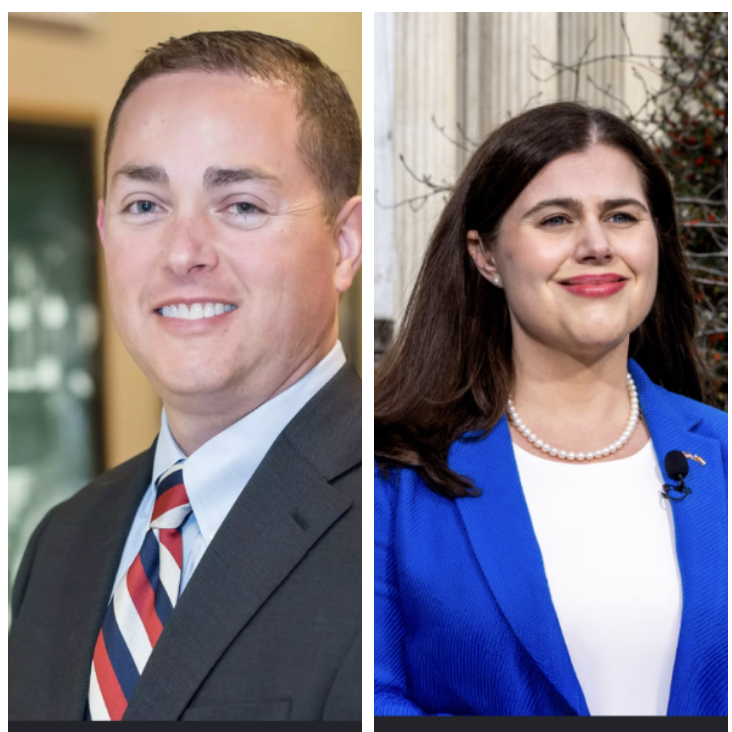
Attorney general candidates present priorities at Colorado Water Congress
Marianne Goodland
marianne.goodland@coloradopolitics.com
Updated 2 days ago
The two major-party candidates for attorney general — Republican Michael Allen, the district attorney for Teller and El Paso counties, and Democratic Secretary of State Jena Griswold — on Thursday outlined their priorities at the Colorado Water Congress. Griswold attended...
State money diversion scheme the unsurprising downfall of ERBOCES scam | Paula Noonan
Paula Noonan
paula-noonan@coloradopolitics.com
Updated 3 days ago
Falcon School District 49, aka El Paso County School District 49, has finally cut bait, thrown the fishing pole into the lake and sunk the canoe. The longtime enabler of the Education Reenvisioned BOCES’ (ERBOCES) schemes to fund private Christian...
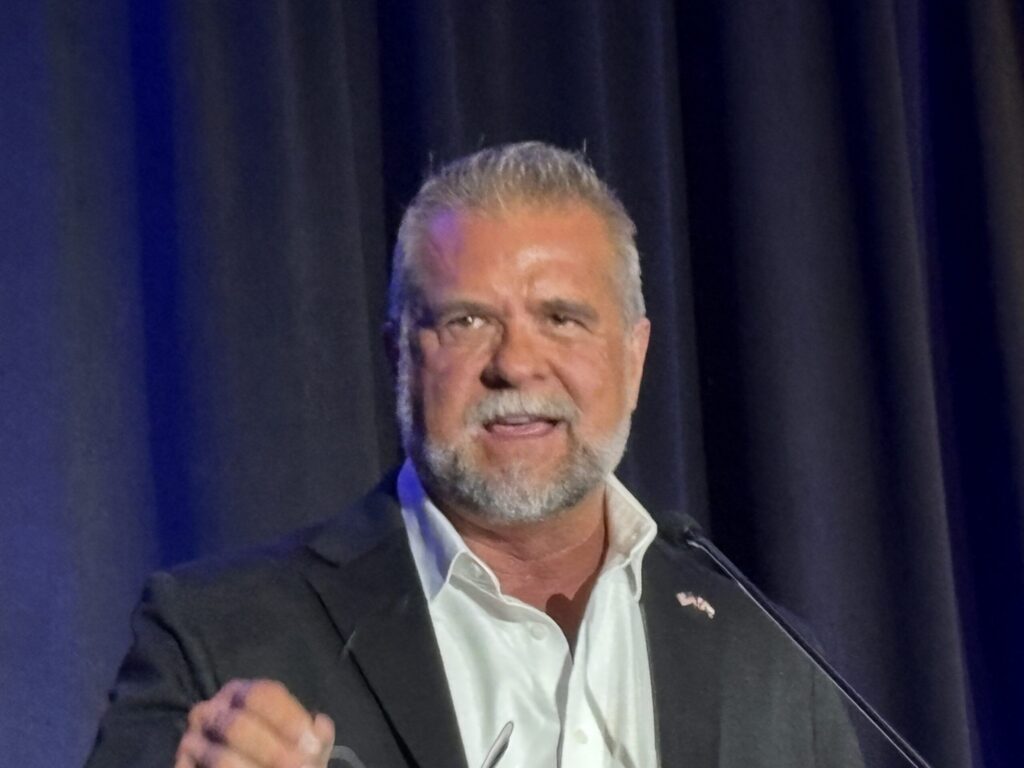
GOP gubernatorial candidate Victor Marx pushes aggressive water-storage expansion at Colorado Water Congress
Marianne Goodland
marianne.goodland@coloradopolitics.com
Updated 3 days ago
Victor Marx, the Republican nominee for governor, took the spotlight Wednesday during the opening day of the Colorado Water Congress, laying out how he says the state should approach its water future. Marx told the standing-room-only audience in Steamboat Springs...

U.S. Rep. Lauren Boebert stresses storage, forest health and Upper Basin rights at Colorado Water Congress
Marianne Goodland
marianne.goodland@coloradopolitics.com
Updated 3 days ago
Republican U.S. Rep. Lauren Boebert used her brief Wednesday appearance at Colorado Water Congress to tout her record on delivering water projects for the state and her district. Boebert, who is running for her second term representing the 4th Congressional...

Steve Schuck on the ‘magic’ of school choice | The OpEdge Podcast
Tony Olivero
tony.olivero@gazette.com
Updated 4 days ago
Parents Challenge co-founder and longtime school choice advocate Steve Schuck joins The OpEdge to discuss expanding educational opportunities and ensuring parents are in charge of their kids’ education. Schuck tells investigative columnist and host Jimmy Sengenberger why he believes Colorado...
Do lobbyists add value to policymaking? | PODIUM
Colorado Politics
colorado-politics@coloradopolitics.com
Updated 4 days ago
By Corky Kyle I was recently asked a straightforward question: are lobbyists a valuable component in the development of public policy? After more than four decades working with the Colorado General Assembly, state agencies, local governments, associations and businesses, my...
PREV
PREVIOUS

Patchwork laws challenge nationwide hog production | Rachel Gabel
The newest iteration of the long-overdue Farm Bill leaves intact California’s Prop 12. There’s an obscene amount of information within the bill, but animal welfare laws have the potential to shape the food systems here in America. A country unable to feed itself is a country unable to defend itself. In terms of Prop 12, […]

Colorado joins 24-state challenge to USPS rule tied to Trump election order
The Colorado Attorney General’s Office joined 24 state attorneys general in filing a formal complaint against what it called the U.S. Postal Service’s attempt to aid President Donald Trump’s efforts to seize control of elections and restrict mail-in voting. In March, Trump signed an executive order calling for the compilation of a list of individuals […]