Democrats supercharge court fight after campaign finance ruling
Democrats are hoping to dampen the GOP’s midterm cash advantage after Republicans scored a major win allowing unlimited coordination between political parties and candidates.
Republican campaign arms say they can access discounted TV ad rates after the Supreme Court lifted a cap on coordinated expenditures between committees and candidates. Broadcast stations must offer the lowest rate to candidates, while super PACs and other groups pay more for TV time. The Supreme Court ruling did not address the lowest unit rate.
But Democrats hope to stymie the possibility that committees might have access to the cheaper candidate rate. A Democratic lawsuit seeks to halt the ability of campaign committees from either party to tap into cheaper time on the airwaves. The suit challenges Federal Communications Commission guidance from March clarifying coordinated expenditures are entitled to the federally mandated lower rates.
“It’s just a partisan attempt to fuel this desperate plea by the Republicans to get this low, low rate for party committee advertising,” Jacquelyn Lopez, an elections lawyer representing the suit from Democrats, told the Washington Examiner. “On the Democratic side of the aisle, our candidates have an incredible fundraising advantage.”
Democrats feel a greater impetus to block party committees from accessing the lowest rate since Republican committees have more cash than their Democratic counterparts. Meanwhile, Democratic candidates hold a fundraising advantage over Republican candidates.
Lopez’s firm, Elias Law Group, is led by Marc Elias, the Democratic election lawyer who frequently tussles with the GOP in court. His firm brought the lawsuit on behalf of four Democratic candidates and was also involved in the Supreme Court case.
The Democratic lawsuit alleges the FCC guidance conflicts with a section of the Communications Act that entitles candidates to the so-called lowest unit charge. Just hours after the Supreme Court handed down its ruling, the judge granted a motion from Democrats to fast-track their case. Opening briefs are due Monday.
“We’re here because the the FCC is taking a position based on purely a desire of the Republican Party to make the law say something other than what it says,” Lopez told the Washington Examiner.
Lopez argues the law cited by the FCC only grants the individual candidate the lowest rate and that the FCC guidance references a different subsection of that law.
Broadcast stations have discretion over whether they want to grant coordinated buys the lowest rate and have typically done so in recent years. Coordinated buys made up a small fraction of TV time purchased but are expected to skyrocket after the Supreme Court struck down the limits.
Republicans see the legal challenge as Elias’s latest frivolous venture that, even if successful in the lower courts, would eventually face the same Supreme Court justices who sided with the GOP to roll back federal campaign finance laws.
The Senate GOP’s campaign arm, the National Republican Senatorial Committee, which brought the Supreme Court case challenging a 1970s-era monetary cap on coordination with candidates, expects to now qualify for ad time as much as 13 times cheaper than it previously would have been. The NRSC moved to immediately end its traditional independent expenditures in the hours after the ruling, which, like a super PAC, cannot coordinate with candidates and purchases airtime at a more expensive rate. Instead, “all NRSC-funded voter contact will largely be executed as coordinated spending, developed directly with campaigns,” the group said in a memo.
“Coordinated buys qualify for Lowest Unit Charge (LUC) on broadcast and cable,” the NRSC concluded.
But that determination appears to be more uncertain than Republicans claim, at least for the moment. Democrats believe the solicitor general, who argued on behalf of the Trump administration before the Supreme Court to allow unlimited campaign coordination, undermined the GOP’s position by telling the justices that broadcasters must charge low rates for candidates “but not for party spending — whether coordinated or independent.”
Covington and Burling, a Washington-based law firm specializing in business and government policy that was not involved in either litigation, also cited the solicitor general’s position as a reason for uncertainty.
“It is not yet clear how the broadcast industry will respond,” the firm concluded in an analysis of the Supreme Court ruling. “How this issue is ultimately resolved will have a significant impact on how today’s decision reshapes federal campaign spending.”
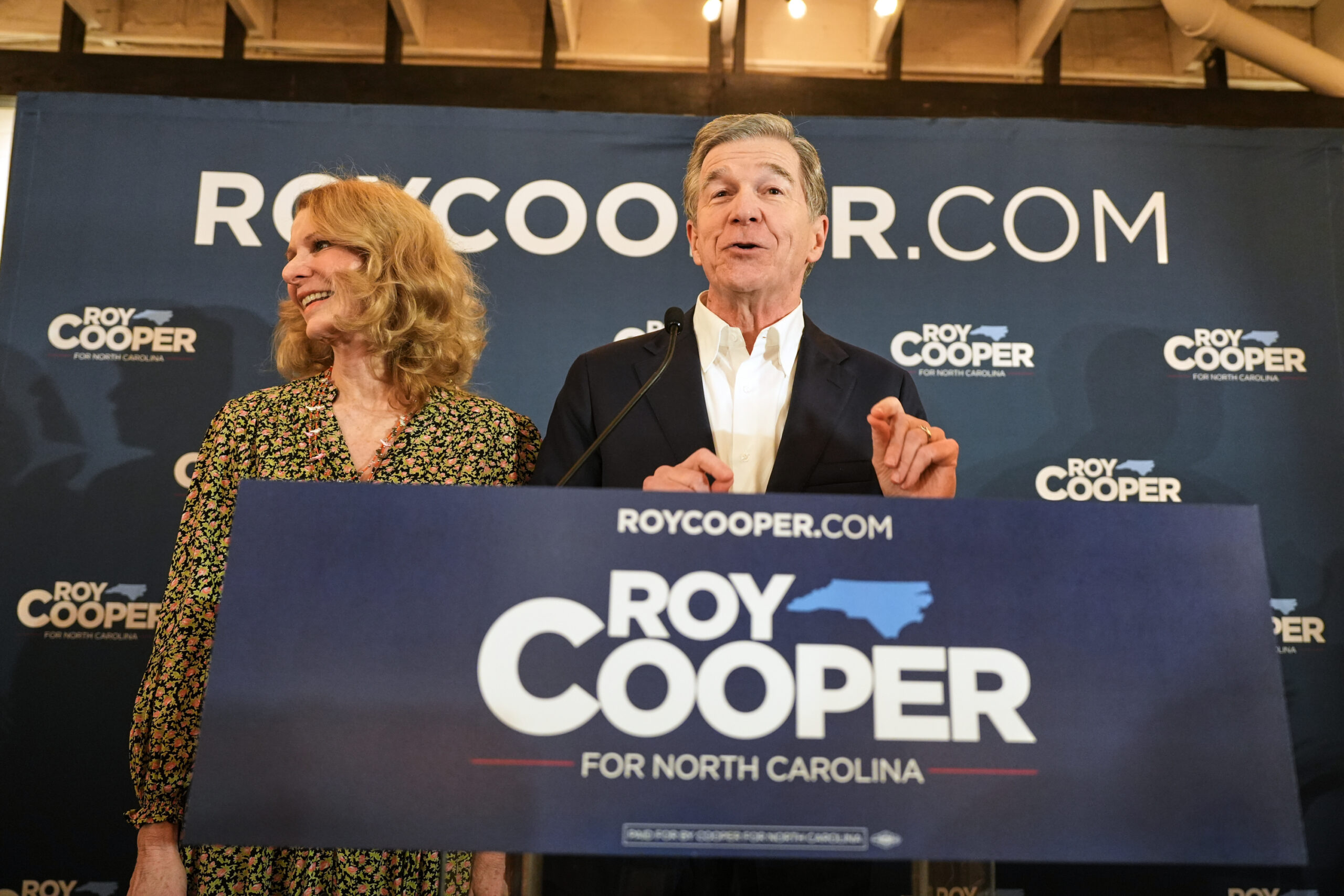
Four Democratic candidates are spearheading the legal challenge: Sen. Jon Ossoff (D-GA), former Ohio Sen. Sherrod Brown, former North Carolina Gov. Roy Cooper, and Rep. Kristen McDonald Rivet (D-MI), all of whom hold significant cash advantages over their opponents.

House dismissed for July 4 holiday amid SAVE America Act impasse
Hailey Bullis
hailey-bullis@coloradopolitics.com
Updated 1 day ago
House GOP leadership is sending members home early for the weeklong July 4 recess, after a GOP blockade shut down the floor for the second week in a row. Speaker Mike Johnson (R-LA) canceled scheduled votes over his inability to...
Clarence Thomas shreds ruling that ‘devalues’ citizenship in Supreme Court dissent
Jack Birle
jack-birle@coloradopolitics.com
Updated 1 day ago
Justice Clarence Thomas shredded the Supreme Court‘s ruling striking down President Donald Trump‘s birthright citizenship order on Tuesday, accusing the majority ruling of using an “alternative history” of the 14th Amendment and expressing dismay over how it “devalues” citizenship. The...
Trump made over $1 billion from crypto businesses in 2025, filing shows
Molly Parks
molly.parks@washingtonexaminer.com
Updated 1 day ago
President Donald Trump raked in over $1 billion from his cryptocurrency dealings in 2025, according to a recent Office of Government Ethics filing. The 937-page filing shows his employment assets and income, including the hundreds of millions of dollars he...

GOP poised to flex midterm cash advantage after Supreme Court win
Ramsey Touchberry
ramsey-touchberry@coloradopolitics.com
Updated 1 day ago
Republican Party campaign committees are gearing up to pump tens of millions of dollars into campaigns across the country as they try to protect narrow House and Senate majorities. Thanks to the Supreme Court, they can now coordinate with candidates...
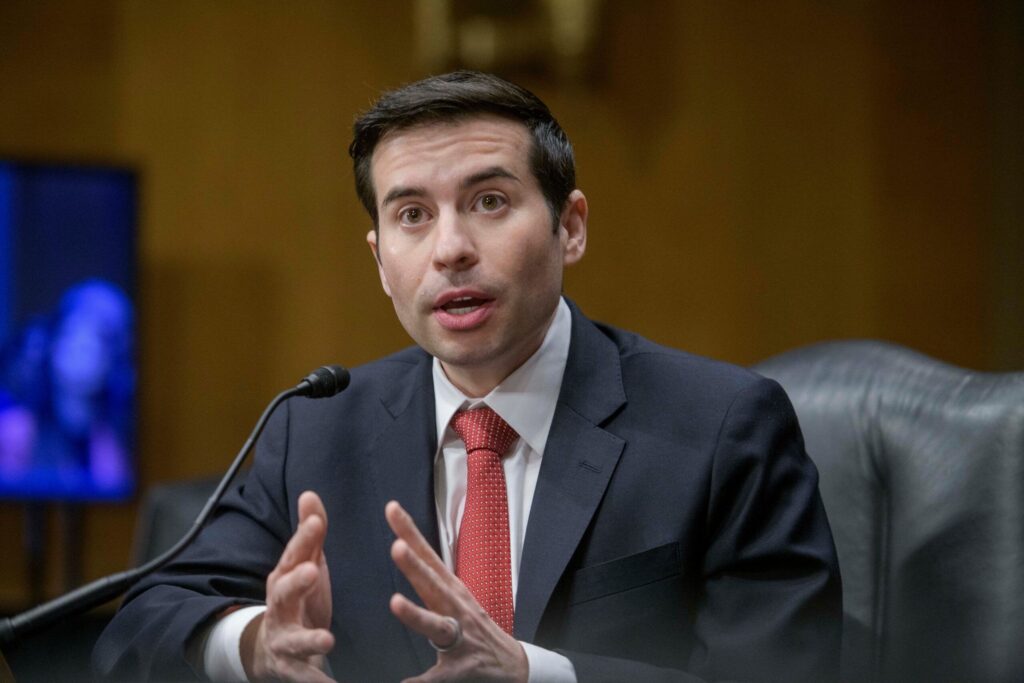
Trump nominates acting Labor Secretary Keith Sonderling to permanent role
Brady Knox
brady-knox@coloradopolitics.com
Updated 2 days ago
President Donald Trump nominated acting Labor Secretary Keith Sonderling to keep the role permanently. Trump made the announcement on Truth Social, touting his experience during his first and second terms in the Labor Department. “Throughout his career, Keith has proven...
Supreme Court upholds birthright citizenship, rejecting Trump’s proposed limits
Wire Services
wire-services@coloradopolitics.com
Updated 2 days ago
WASHINGTON • A divided Supreme Court on Tuesday upheld a broad conception of birthright citizenship, rejecting President Donald Trump’s executive order declaring that children born to people who are in the United States illegally or temporarily are not American citizens....
Trump says communism greater threat than WWI, WWII, 9/11, and Pearl Harbor
Naomi Lim
naomi-lim@coloradopolitics.com
Updated 3 days ago
President Donald Trump compared the rise of socialism to the Sept. 11 terrorist attacks. Trump was asked about the possible rise of more socialist candidates after three candidates New York City Mayor Zohran Mamdani endorsed last week won their Democratic...
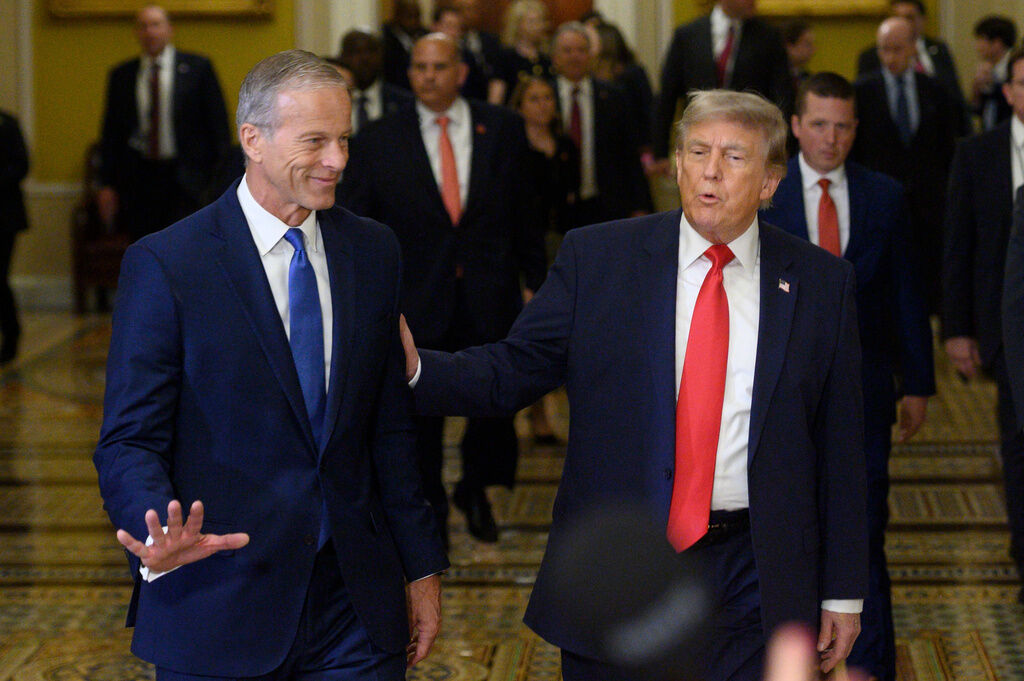
GOP doubles down on SAVE America Act after Supreme Court allows mail ballots to be counted late
Lauren Green
lauren-green@coloradopolitics.com
Updated 3 days ago
Congressional Republicans continue to push the voter identification bill — that has left Washington in grid lock for months — after the Supreme Court ruled states can count mail-in ballots that arrive after Election Day. The 5-4 decision rejected a...

US and Iran to cease strikes and discuss Strait of Hormuz this week: Report
Carter Schroppe
carter.schroppe@washingtonexaminer.com
Updated 3 days ago
Officials from the United States and Iran will meet in Qatar this week to discuss the Strait of Hormuz after agreeing to “halt strikes” following a weekend of intermittent fighting between the two countries. The meeting, scheduled for Tuesday in...
Congress is struggling to get its work done and a new report argues for 21st-century upgrades
Kevin R. Kosar
kevin-r-kosar@coloradopolitics.com
Updated 3 days ago
The news coming from Capitol Hill over the past couple of weeks has left much to be desired. Congress has had difficulty discharging its lawmaking duties. The Senate’s appropriations committee is at loggerheads over how much spending to authorize. The...