

Mobolade, Colorado Springs leaders say election date lawsuit is attack on local voters

Mayor Yemi Mobolade and other city leaders will fight to keep Colorado Springs elections in April in the face of a new lawsuit.
Mobolade, the mayor’s Chief of Staff Wayne Williams and City Councilmember Roland Rainey addressed the lawsuit in a news conference Thursday morning.
The lawsuit filed on Wednesday argued that holding municipal elections in April of odd-numbered years unintentionally limited turnout for Black and Hispanic voters, which violated the Colorado Voting Rights Act.
The three city officials called the lawsuit an attack on Colorado Springs’ home-rule authority and said it was beneficial for local voters to focus on local elections on a stand-alone ballot rather than competing with other issues in November.
“Colorado Springs municipal elections work because they are focused on Colorado Springs. When residents vote in April, they are focused on city issues, city leadership and city challenges,” Mobolade said.
Mobolade and Rainey said they also felt personally slighted as Black residents of Colorado Springs who were elected under the current system.
The lawsuit is the first challenge to a Colorado city’s election timeline under the Colorado Voting Rights Act, which was passed by state legislators in 2025. Mobolade had opposed the Colorado Voting Rights Act when it was in the legislature and said Thursday that he asked Gov. Jared Polis to veto it to avoid lawsuits like this one.
Aly Belknap is the executive director of Common Cause Colorado, one of the plaintiffs in the lawsuit. Belknap had campaigned for the Colorado Voting Rights Act in 2025 because of concerns that the federal Voting Rights Act was being weakened.
She said the U.S. Supreme Court’s recent decision in a case involving majority-Black congressional districts in Louisiana was exactly the undercutting of federal protections that the state law was meant to protect in Colorado.
“It doesn’t make it OK for vast numbers of Black and Hispanic voters to be missing in the electorate simply because we have some diversity in the leadership of the city,” Belknap said.
The April election date has been set in the Colorado Springs city charter for more than 100 years.
City leaders said the lawsuit was coming from outside interests because the attorneys and one of the four parties are based in Denver.
“When you are actually going after the people of this community and telling them that their votes don’t matter because the people in Denver know better than you what you want, that is a reason to specifically speak out,” Williams said.
Two of the other plaintiffs are the League of Women Voters of the Pikes Peak region and Citizens Project, which previously sued the city under the federal Voting Rights Act about the April elections. The lawsuit was dismissed in 2024 after a judge ruled the groups did not have standing to sue.
The individual plaintiff in the lawsuit is a Colorado Springs resident and member of Common Choice Colorado. Belknap said the plaintiff regularly voted in the November elections but had not known that Colorado Springs’ local elections were at a different time.
Local election data shows a stark divide in general voter turnout between the April and November elections. There were 124,000 votes cast in the May 2023 mayoral runoff election between Mobolade and Williams. In comparison, the three city ballot questions that appeared during the November 2024 election each received more than 235,000 votes.
Williams is a former Secretary of State for Colorado, a position in which he oversaw the state’s elections. Williams said the lower turnout might be because local races do not have explicit political party affiliation, which tends to drive turnout.
Williams also poked holes in some of the lawsuit’s assertions. While the suit claims that Colorado Springs is one of only two major cities that hold municipal elections in the spring, Denver’s elections are held at the same time. Williams also said the lawsuit incorrectly describes how ballots are sent out to voters by Colorado Springs and El Paso County in different elections.
Rainey and Mobolade said the city should continue working to increase voter turnout for the April elections instead of changing the date.
“Protecting voter rights and protecting home rule, these are not competing values and we can and should work with both,” Rainey said.
When asked directly about placing the election timing question on the ballot for local voters to decide, Mobolade said his focus was on protecting the city’s home rule authority. Mobolade also said the issue did not seem to be a high priority for most residents.
A public vote on the issue would be fine with Belknap but she said it didn’t have to be on groups like Common Cause to get it there. The Colorado Springs City Council can refer questions directly to the ballot.
“The city still has a choice here. They could end this today by putting this on the ballot and letting the people of Colorado Springs decide,” Belknap said. “That is a perfectly acceptable outcome.”


Judge grants partial injunction to GEO in fight against state health inspection law
Kyla Pearce
kyla.pearce@gazette.com
Updated 7 hours ago
A judge ruled Thursday that The GEO Group does not have to follow parts of a new state law requiring more frequent health and safety inspections at the U.S. Immigration and Customs Enforcement processing center in Aurora. Under the order...

Democratic gubernatorial candidate Phil Weiser promises to appoint rural outreach director, water adviser
Marianne Goodland
marianne.goodland@coloradopolitics.com
Updated 8 hours ago
Democratic gubernatorial candidate and current Attorney General Phil Weiser told the Colorado Water Congress Thursday he intends to appoint a rural outreach director and a water policy adviser should he win the election in November. Weiser’s speech at the Steamboat...
Attorney General candidates present priorities at Colorado Water Congress
Marianne Goodland
marianne.goodland@coloradopolitics.com
Updated 9 hours ago
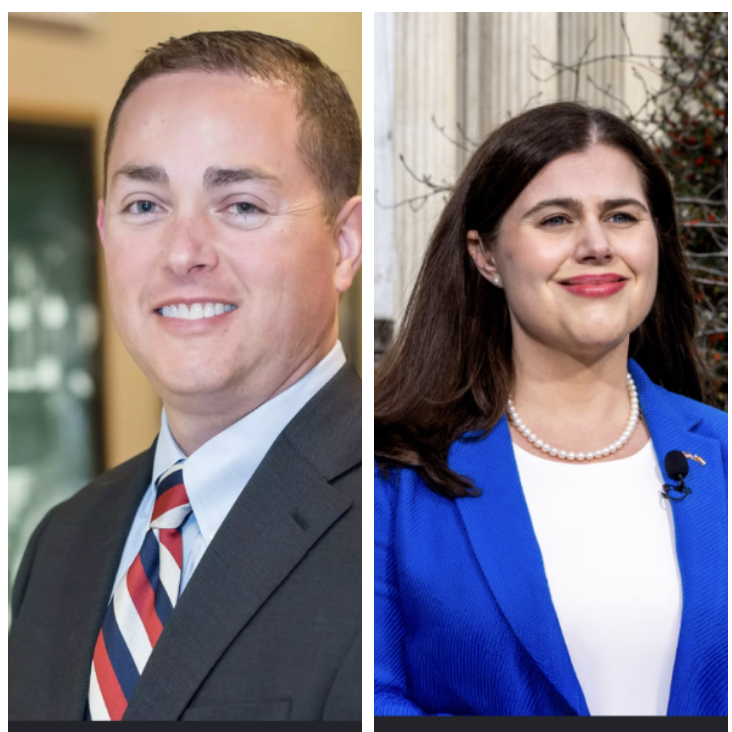
The two major-party candidates for attorney general — Republican Michael Allen, the district attorney for Teller and El Paso counties, and Democratic Secretary of State Jena Griswold — on Thursday outlined their priorities at the Colorado Water Congress. Griswold attended...
GOP gubernatorial candidate Victor Marx pushes aggressive water-storage expansion at Colorado Water Congress
Marianne Goodland
marianne.goodland@coloradopolitics.com
Updated 17 hours ago
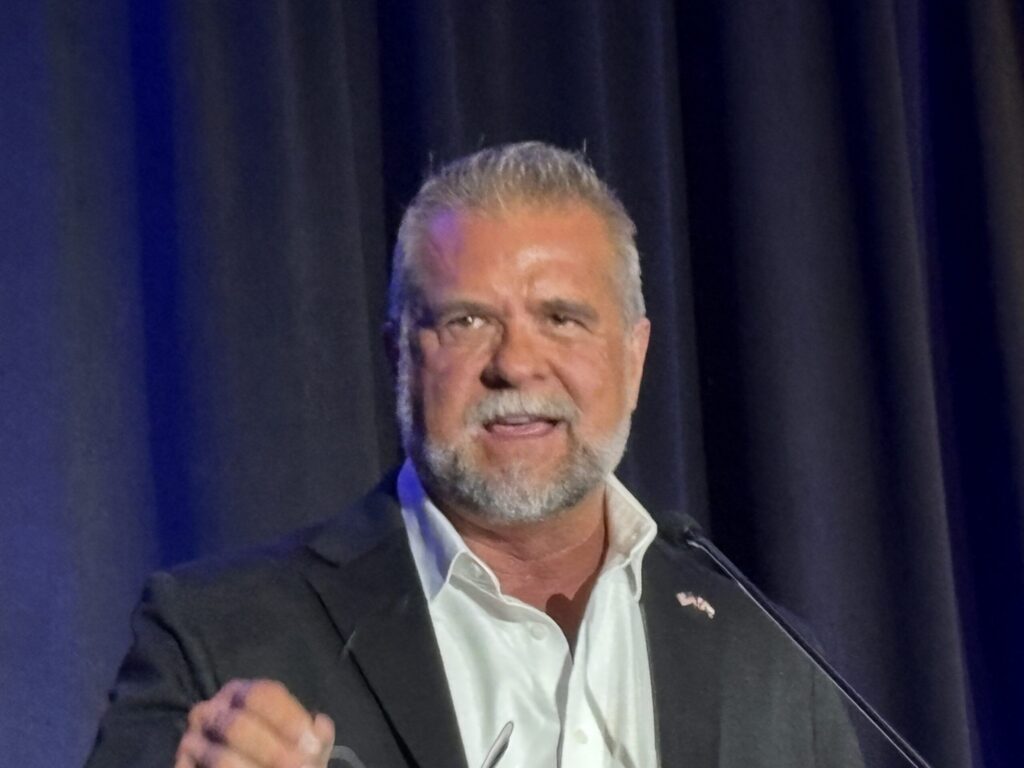
Victor Marx, the Republican nominee for governor, took the spotlight Wednesday during the opening day of the Colorado Water Congress, laying out how he says the state should approach its water future. Marx told the standing-room-only audience in Steamboat Springs...

U.S. Rep. Lauren Boebert stresses storage, forest health and Upper Basin rights at Colorado Water Congress
Marianne Goodland
marianne.goodland@coloradopolitics.com
Updated 8 hours ago
Republican U.S. Rep. Lauren Boebert used her brief Wednesday appearance at Colorado Water Congress to tout her record on delivering water projects for the state and her district. Boebert, who is running for her second term representing the 4th Congressional...

Denver to form data-center regulation group ahead of 2027 moratorium deadline
Matt Kyle
matt.kyle@denvergazette.com
Updated 17 hours ago
As Denver evaluates how to regulate data-center development, the city is launching a website and forming a resident-expert panel to guide the process. Denver currently has a moratorium on new data center construction through May 2027. The working group and...

Aurora grapples with affordable housing needs, deficits
Kyla Pearce
kyla.pearce@gazette.com
Updated 2 days ago
Aurora is grappling with affordable housing needs as demand for project funding increases and the state cuts grant money. Currently, the city needs about 12,000 affordable housing units, Martin Petrov at Aurora Housing Authority told members of the Housing, Neighborhood...

Wheat Ridge considers ordinance to restrict drone use in public spaces
Matt Kyle
matt.kyle@denvergazette.com
Updated 2 days ago
Drone users may soon have to abide by new restrictions should they wish to fly in Wheat Ridge. During Monday night’s City Council meeting, council members discussed a proposed ordinance that would restrict the use of remote-controlled drones within city...

Douglas County unveils plan to cut red tape, speed business approvals
Nicholas Fogleman
nicholas.fogleman@denvergazette.com
Updated 2 days ago
Douglas County officials on Monday unveiled a Red Tape Reduction Action Plan aimed at streamlining permitting and development reviews to position the county as “the best place in America to invest.” The plan, developed through a partnership between the Douglas...
Colorado House Democrats’ caucus finances under scrutiny as ethics case against leader advances
Marianne Goodland
marianne.goodland@coloradopolitics.com
Updated 2 days ago
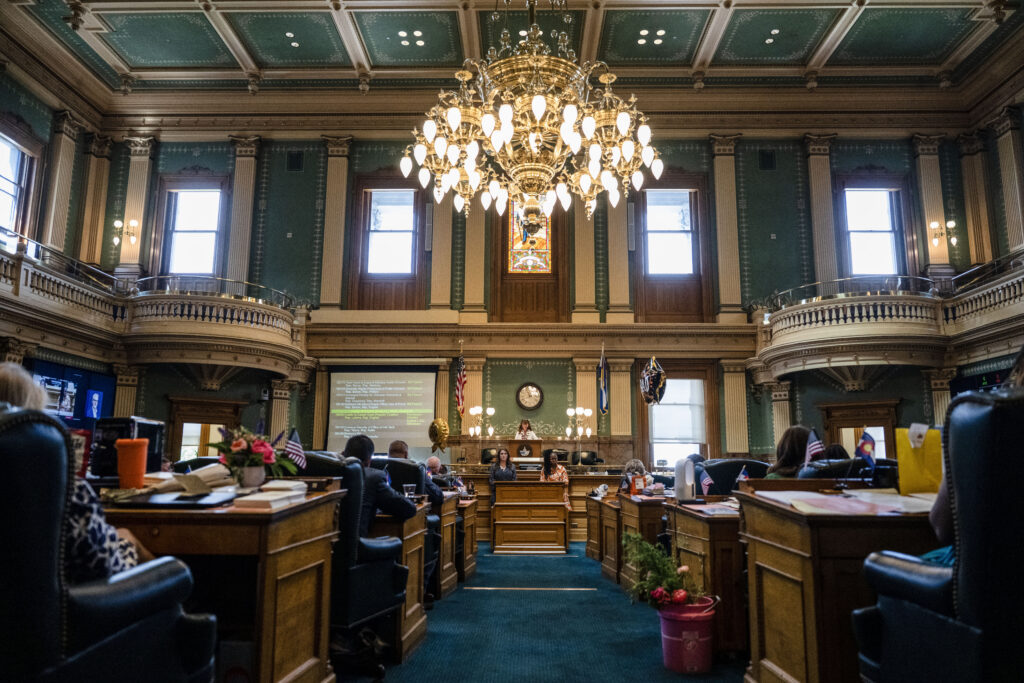
Democratic lawmakers told a legislative ethics panel that a leader’s management of caucus finances left them with unanswered questions, disputed reimbursements and a breakdown in communication that ultimately triggered a formal complaint. The House Ethics Committee is examining a complaint...
PREV
PREVIOUS

Colorado health officials say federal budget adds pressure to already stressed system
As the first anniversary of H.R. 1 approaches, Colorado Democrats and hospital executives say the law’s Medicaid reductions and eligibility rules are accelerating financial stress in a system where many facilities were already operating on the brink. Signed by President Trump on July 4 last year, H.R. 1, which the president has nicknamed the “one […]

RTD to reconsider service priorities as cuts, budget deficit loom
Should the Regional Transportation District aim to maximize ridership or system coverage? That question sat at the heart of the RTD Board of Directors’ first Comprehensive Operations Analysis briefing on Thursday afternoon. With the Denver transit agency facing a budget deficit of over $200 million next year, the analysis aims to re-evaluate the RTD’s entire […]