

Colorado health officials say federal budget adds pressure to already stressed system
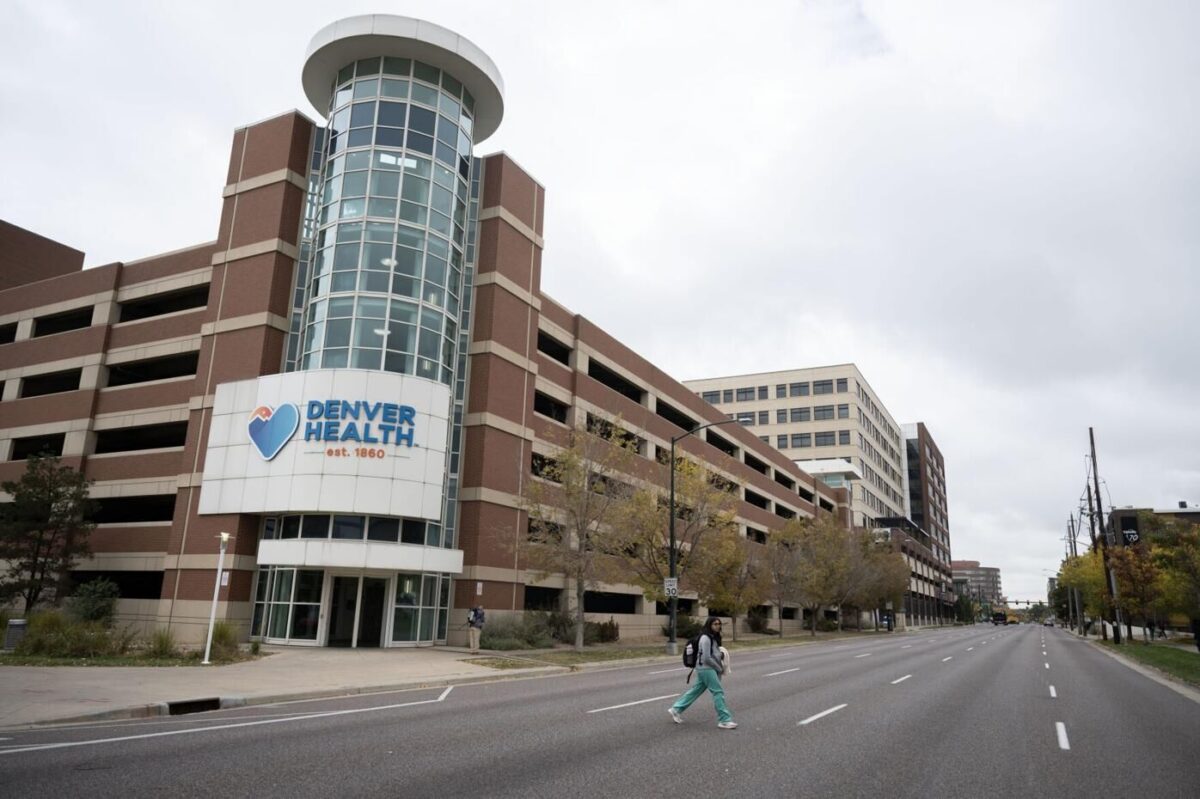
As the first anniversary of H.R. 1 approaches, Colorado Democrats and hospital executives say the law’s Medicaid reductions and eligibility rules are accelerating financial stress in a system where many facilities were already operating on the brink.
Signed by President Trump on July 4 last year, H.R. 1, which the president has nicknamed the “one big beautiful bill,” includes a $1 trillion cut to Medicaid funding over the course of 10 years, establishes work requirements for certain Medicaid recipients, requires biannual eligibility checks for Medicaid recipients, and excludes certain reproductive health care providers from receiving federal Medicaid payments, among other provisions.
Republicans argued the bill would reduce federal spending, increase accountability from the states and Medicaid recipients, and eliminate “waste, fraud, and abuse” from the Medicaid system.
Rep. Brett Guthrie, R-Ken., who chairs the House Committee on Energy and Commerce, said the bill was necessary to “rein in spending,” prevent fraud, and “protect Medicaid’s long-term viability and ensure resources reach the most vulnerable populations.”
Democrats have widely criticized the bill, arguing it will leave millions of Americans without health care coverage.
About 240,000 Coloradans are expected to lose their health care coverage in the next decade as a result of H.R. 1, U.S. Sen. John Hickenlooper said during Thursday’s call.
“By any measure, this is cruelty,” he said. “This is an unforced calamity that the White House really premeditated and put into effect by passing that ridiculous bill.”
U.S. Rep. Brittany Pettersen noted that individuals who lose their health care coverage will delay medical visits until it’s an emergency, which could overwhelm emergency departments and ultimately pass on costs to patients with commercial insurance.
Colorado’s rural hospitals are already in dire straits, with many forced to eliminate certain programs or close their doors entirely due to rising costs, shrinking reimbursements, and state and federal regulations.
Many of these hospitals and care facilities have been struggling for many years, well before the federal budget was passed last year. To avoid closing, many have resorted to eliminating departments and specialty services.
“We’ve already seen maternity wards being closed across Colorado; we are seeing rural hospitals at the brink of whether or not they’re going to be able to keep their doors open,” said Pettersen.
In 2024, nearly 70% of Colorado’s hospitals reported operating with “unsustainable” margins, with expenses far outpacing revenue, according to the Colorado Hospital Association.
One of those rural hospitals is Lincoln Health Community Hospital in Hugo, on the Eastern Plains. According to the hospital’s CEO Kevin Stansbury, the funding from the Rural Health Transformation Program established in H.R. 1 won’t be enough to offset his hospital’s losses in Medicaid reimbursements.
“There’s $50 billion in the fund, and it does not replace the $150 billion in estimated losses for rural hospitals across the country,” he said.
Stansbury echoed Pettersen’s sentiment about the “trickle-down” effect Medicaid cuts will have on all Colorado patients and added that it will have a significant impact on rural economies as well; Lincoln Health is the largest employer in Hugo and the second-largest employer in Lincoln County, he said.
Urban hospitals, particularly “safety net providers” like Denver Health that serve vulnerable populations, are also feeling the squeeze, said Donna Lynne, the hospital’s CEO.
Nearly half of Denver Health’s patients are on Medicaid, and the hospital has had to hire 15 additional employees just to handle the additional administrative requirements from H.R. 1, Lynne said.
“That’s money that’s absolutely wasted, although we’re going to spend it wisely, and we have gotten some support from the state, but multiply the work that we do times all the counties and all the states,” she said. “We’re spending hundreds of millions of dollars implementing just the first phase of this law.”
While government-funded programs such as Medicaid and Medicare account for over 60% of hospital coverage, the Colorado Hospital Association said, reimbursement falls billions of dollars short of actual care costs.
H.R.1 will only make a bad situation worse in 2027, according to CHA.


Healthcare Freefall: Longer drives, fewer options for maternity care in Colorado
Thelma Grimes
thelma.grimes@coloradopolitics.com
Updated 19 hours ago
Editor’s Note: Colorado’s healthcare system is entering a period of accelerating instability — a “tsunami,” as multiple leaders describe it — driven by collapsing hospital finances, shrinking Medicaid reimbursements, disappearing services and a political fight over who is responsible for...

State health department directs GEO to assist in tuberculosis investigation at ICE facility
Kyla Pearce
kyla.pearce@gazette.com
Updated 4 days ago
The Colorado Department of Public Health and Environment issued a public health order directing the GEO Group to participate in the ongoing tuberculosis investigation at the Aurora ICE Processing Center. The Adams County Health Department confirmed an active case of...
Healthcare freefall: Once built on federal investment, rural hospitals today fight to survive
Thelma Grimes
thelma.grimes@coloradopolitics.com
Updated 2 days ago
Editor’s Note: Colorado’s healthcare system is entering a period of accelerating instability — a “tsunami,” as multiple leaders describe it — driven by collapsing hospital finances, shrinking Medicaid reimbursements, disappearing services and a political fight over who is responsible for...
Healthcare freefall: Subsidy cuts, insurance gaps reshape how Coloradans will seek care
Thelma Grimes
thelma.grimes@coloradopolitics.com
Updated 10 hours ago
Editor’s Note: Colorado’s healthcare system is entering a period of accelerating instability — a “tsunami,” as multiple leaders describe it — driven by collapsing hospital finances, shrinking Medicaid reimbursements, disappearing services and a political fight over who is responsible for...
Healthcare Freefall: Finger‑pointing intensifies as Colorado’s healthcare system strains under rising costs, shrinking coverage
Thelma Grimes
thelma.grimes@coloradopolitics.com
Updated 2 days ago
Editor’s Note: Colorado’s healthcare system is entering a period of accelerating instability — a “tsunami,” as multiple leaders describe it — driven by collapsing hospital finances, shrinking Medicaid reimbursements, disappearing services and a political fight over who is responsible for...

Colorado shifts vaccine authority to state as Trump administration revises childhood framework
Marissa Ventrelli
marissa.ventrelli@coloradopolitics.com
Updated 1 week ago
As the Trump administration rolls out a revised childhood vaccine framework, Colorado’s law allowing the state to set its own immunization schedule has now taken effect. Issued Monday, President Donald Trump’s executive order separates childhood and adolescent vaccines into three...

Colorado’s troubled guardianship office pursues ‘cultural reset’
Marianne Goodland
marianne.goodland@coloradopolitics.com
Updated 1 week ago
Colorado’s guardianship program, long criticized for mismanagement and high staff attrition, is undergoing a “cultural reset,” as its new director works to repair partnerships and prepare for a major expansion under recent legislation. Created by lawmakers in 2017, the Office...

New Colorado laws going into effect cover AI disclosures, medical marijuana access and gambling limits
Marissa Ventrelli
marissa.ventrelli@coloradopolitics.com
Updated 2 weeks ago
More than 100 new Colorado laws take effect Aug. 12, bringing changes to chatbot safety rules, psychedelic research, campus wellness checks and sports betting restrictions. Here is a look at some of those laws set to take effect. The law:...

Colorado to implement new laws on jail standards, safe haven rules, and agricultural labeling
Marissa Ventrelli
marissa.ventrelli@coloradopolitics.com
Updated 2 weeks ago
In mid-August every year, a slew of recently passed laws in Colorado go into effect 90 days after the end of the legislative session. This year, all bills without a specified effective date or safety clause — a provision stating...

‘Explosive’ diarrhea-causing parasite cyclosporiasis cases nearly triple in Colorado
Nico Brambila
nico.brambila@denvergazette.com
Updated 2 weeks ago
Cases of the “explosive” diarrhea-causing parasite cyclosporiasis nearly tripled in Colorado over the past month, prompting renewed attention after related deaths were reported in Michigan. Twenty-nine counties in Colorado have reported cases, according to the Colorado Department of Public Health...
PREV
PREVIOUS

Phil Weiser leading Michael Bennet in Colorado’s Democratic gubernatorial primary, internal poll finds
Attorney General Phil Weiser holds a lead over U.S. Sen. Michael Bennet among likely voters less than a week before ballots are due in Colorado’s Democratic gubernatorial primary, according to a new poll released Thursday by a group backing Weiser. The survey, conducted Wednesday and Thursday by Democratic firm Public Policy Polling, found Weiser with […]

Mobolade, Colorado Springs leaders say election date lawsuit is attack on local voters
Mayor Yemi Mobolade and other city leaders will fight to keep Colorado Springs elections in April in the face of a new lawsuit. Mobolade, the mayor’s Chief of Staff Wayne Williams and City Councilmember Roland Rainey addressed the lawsuit in a news conference Thursday morning. The lawsuit filed on Wednesday argued that holding municipal elections […]