Colorado GOP request to block unaffiliated voters from receiving Republican primary ballots denied by judge
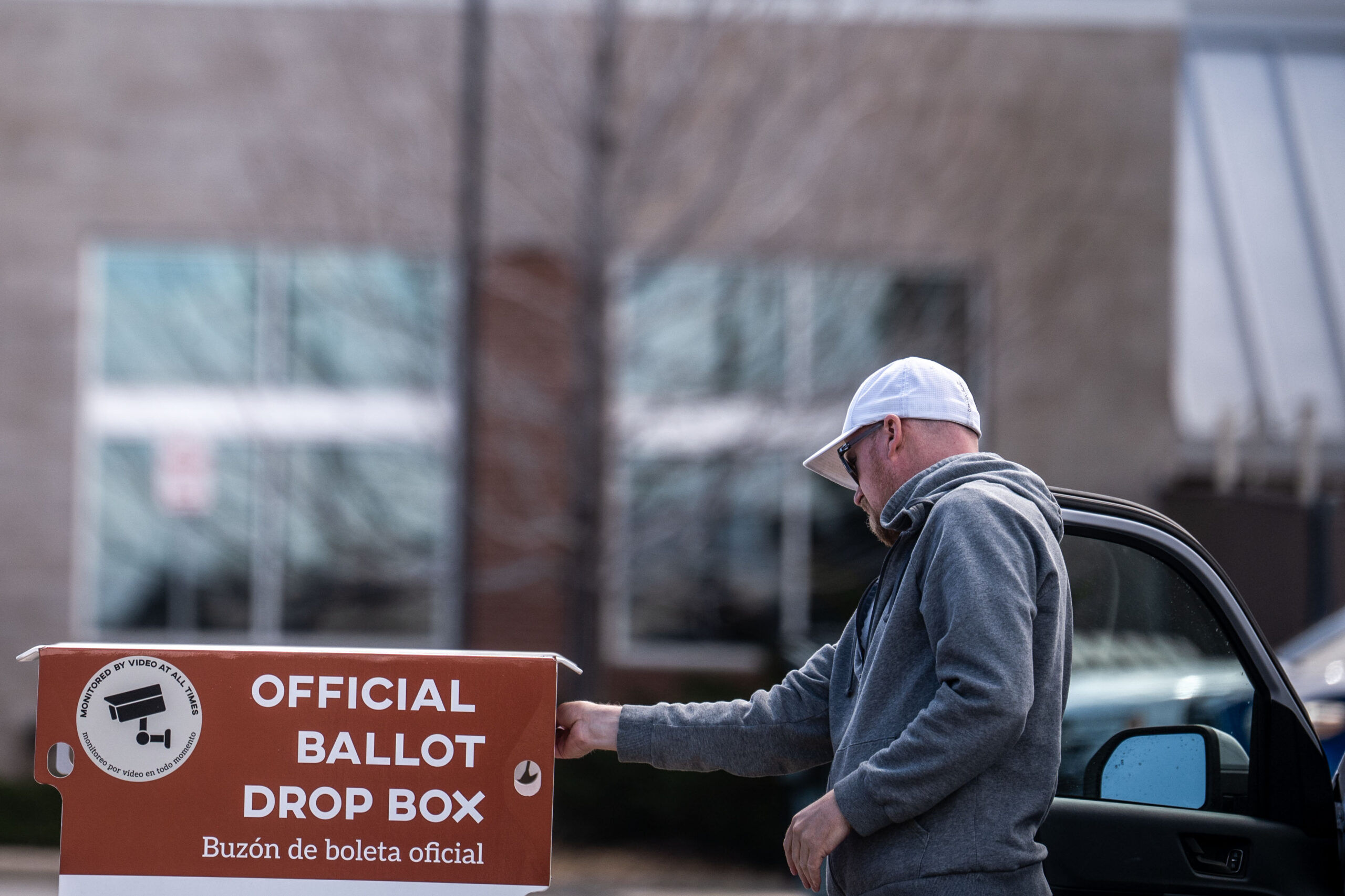
A federal judge on Tuesday denied the Colorado Republican Party’s request for an emergency injunction barring unaffiliated voters from participating in the state’s upcoming Republican primary election.
U.S. District Court Judge Philip A. Brimmer said that preventing unaffiliated voters from receiving Republican primary ballots just weeks before ballots for the June 30 primary are scheduled to go out in the mail would lead to voter confusion, violating a longstanding federal court doctrine that cautions against changing election rules “on the eve of an election.”
Lawyers for the state GOP asked the court on April 20 to prevent the party’s primary ballots from going to unaffiliated voters, based on a March 31 ruling by the same judge that found a portion of the voter-approved law that establishes the state’s semi-open primary system unconstitutionally infringes on the party’s freedom of association under the First Amendment.
Late last week, the four Republican members of Colorado’s congressional delegation — U.S. Reps. Jeff Hurd, Lauren Boebert, Jeff Crank and Gabe Evans — and the National Republican Congressional Committee filed to intervene in the case in opposition to the state party’s request.
In their April 24 motion, the Republican U.S. House members said that changing the rules so close to the election would jeopardize their abilities to prepare for the November election by determining which unaffiliated voters voted in which primary, among other arguments involving their standing as candidates seeking reelection this year.
As part of his order issued Tuesday, Brimmer denied the Republican office-holders’ and the campaign committee’s request to join the case, calling it moot, since he was rejecting the underlying motion.
Under a Colorado law in place since state voters approved Proposition 108 in 2016, voters who aren’t affiliated with a political party receive both Democratic and Republican primary ballots and can fill out and return one of them. Unaffiliated voters make up just over 50% of the state’s roughly four million active, registered voters, according to the most recent voter registration reports.
The law requires that county clerks send primary ballots to military and overseas voters by May 16 and begin mailing out ballots to the rest of the state’s electorate on June 8.
The Colorado Republican Party has been attempting to overturn the state’s semi-open primary system in court since 2023, alleging it unconstitutionally limits the party’s ability to decide who gets to participate in nominating candidates to the general election ballot.
Proposition 108 sets a requirement that 75% of the membership of a major political party’s central committee has to agree to “opt out” of the next year’s primary in a vote that has to take place by Oct. 1 in odd-numbered years. The state GOP’s central committee has attempted to opt out of the system every two years since 2017, but the party has fallen short of attaining the super-majority each time.
Although he left the rest of the law standing, Brimmer said in last month’s ruling that the unusually high threshold “constitutes a severe burden on the major parties’ right to association and is therefore unconstitutional.” Litigation surrounding the GOP’s underlying objection to the law is ongoing.
Based on the March 31 decision, the state Republicans’ lawyers — California-based Alexander Haberbush and Randy Corporon, one of Colorado’s Republican National Committee members — asked the court to close the party’s June primary “to prevent irreparable constitutional injury.” Brimmer, however, said Tuesday in his order that the remedy sought by the GOP “is not supported by Colorado law.”
That’s because Proposition 108 gives major parties just two options for nominating candidates, Brimmer noted: either participate in the state-run, semi-open primary or, if a party votes to opt out of the primary, pick their candidates in a privately funded convention or assembly.
Colorado Secretary of State Jena Griswold, a Democrat, was the defendant in the Republican Party’s request for an emergency injunction, since she administers state elections and is preparing to certify the June primary ballot by Friday’s deadline.
In a written statement to Colorado Politics, Griswold said the court made the right decision.
“The court rightly decided that unaffiliated voters will be able to participate in either the Republican or Democratic primaries,” Griswold said. “This decisive ruling ensures that the Colorado June primary aligns with Colorado law.”
Colorado Democratic Party chair Shad Murib hailed the judge’s decision in a text message to Colorado Politics.
“The judge made the right decision. Unaffiliated voters deserve a voice,” Murib said. “If voters are looking for a party that’s growing, changing and not going to court to stop them from participating in their elections, we hope they know they have a home in the Democratic Party.”
Neither Corporon, the GOP’s attorney in the case, nor Eric Grossman, the state party’s interim chair, responded to requests for comment on the ruling.

Colorado candidates square off up and down the ballot ahead of primary election
Ernest Luning
ernest.luning@coloradopolitics.com
Updated 4 days ago
With just over two months to go until ballots are counted in Colorado’s primary, candidates are squaring off in high-stakes contests for their party’s nominations in statewide and congressional races approaching the midterm election. For the first time in memory,...
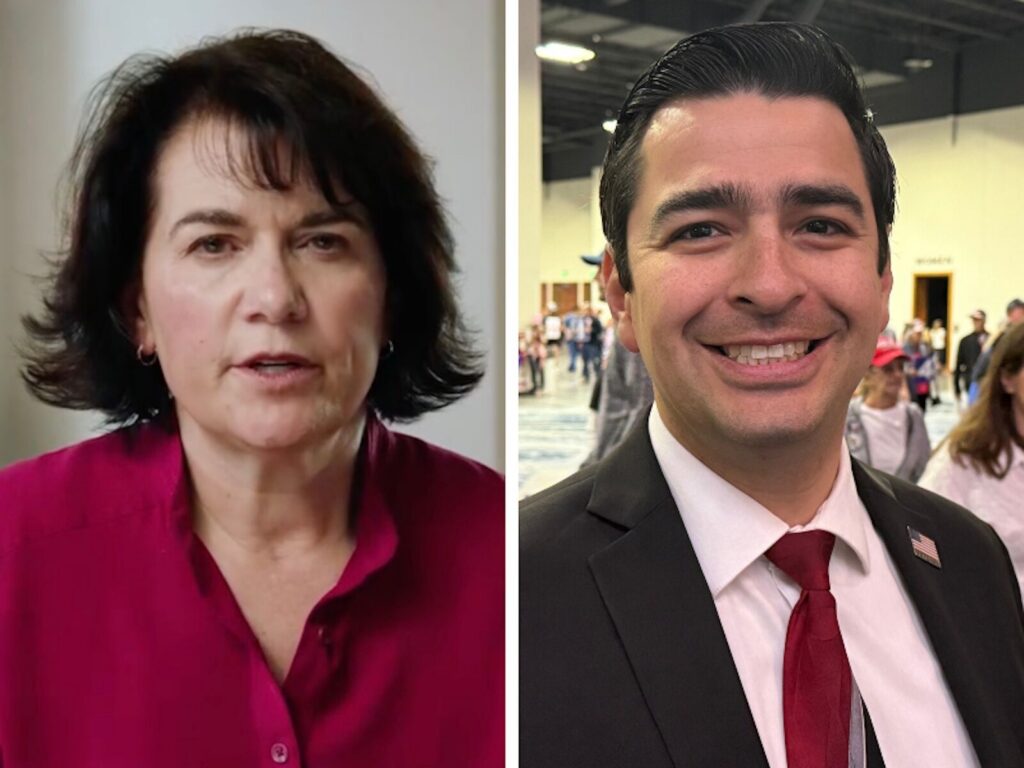
Boebert challenger Eileen Laubacher, Republican Gabe Evans lead Colorado’s quarterly House fundraising
Ernest Luning
ernest.luning@coloradopolitics.com
Updated 3 days ago
The Democrat challenging U.S. Rep. Lauren Boebert in Colorado’s most solidly Republican congressional district again posted the state’s biggest fundraising numbers for the most recent quarter, while Republican U.S. Rep. Gabe Evans, who is defending the state’s lone toss-up seat,...

Federal shift on medical cannabis draws praise and concern in Colorado
Marianne Goodland
marianne.goodland@coloradopolitics.com
Updated 5 days ago
Colorado’s response to the federal reclassification of medical cannabis ranged from industry leaders celebrating the development to youth advocacy groups warning that the change heightens the need for stronger protections for children. The U.S. Justice Department and the Drug Enforcement...
Colorado congressional elections see over $9M in ad reserves from House Democrats’ super PAC
Ernest Luning
ernest.luning@coloradopolitics.com
Updated 4 days ago
Meanwhile, Republican group reserves $5.5 million in Denver market The leading House Democratic super PAC is booking more than $9 million in fall TV and digital advertising across three Colorado media markets as part of an aggressive move to win...
Colorado GOP asks judge to bar state from sending Republican primary ballots to unaffiliated voters
Ernest Luning
ernest.luning@coloradopolitics.com
Updated 6 days ago
The Colorado Republican Party on Monday asked a federal judge to issue an emergency injunction to prevent the state’s unaffiliated voters from being able to cast ballots in the GOP’s upcoming primary election. Lawyers for the party argue in a...

Southern Poverty Law Center charged with defrauding donors with payments to extremist informants
Alanna Durkin Richer
alanna.durkin.richer@associatedpress.com
Updated 5 days ago
WASHINGTON (AP) — The Southern Poverty Law Center was indicted Tuesday on federal fraud charges alleging it improperly raised millions of dollars to secretly pay leaders of the Ku Klux Klan and other hate groups for inside information, acting Attorney General Todd...
Colorado drivers, mad about rising gas prices, may turn midterm election ire on Republicans
Callie Patteson, Washington Examiner
callie.patteson.washington.examiner@gazetteedit.wpenginepowered.com
Updated 2 weeks ago
WELD COUNTY, Colorado — The touch-and-go race for House control in the Nov. 3 midterm elections could very well be decided in places like this wind-swept stretch of Interstate 25. Specifically, at gas stations in this rapidly growing area north...
Boebert working on bill to strip Swalwell of $22,000 annual taxpayer-funded pension
Haris Alic and Lauren Green, Washington Examiner
haris.alic.and.lauren.green.washington.examiner@gazetteedit.wpenginepowered.com
Updated 2 weeks ago
EXCLUSIVE — Rep. Lauren Boebert (R-CO) is working on legislation to strip disgraced former Rep. Eric Swalwell of his $22,000 annual taxpayer-funded congressional pension. Swalwell resigned from the House on Tuesday after allegations of sexual assault by multiple women, including...
Republicans Scott Bottoms, Victor Marx win spots in Colorado gubernatorial primary at party assembly
Ernest Luning
ernest.luning@coloradopolitics.com
Updated 2 weeks ago
Two Christian ministry leaders from Colorado Springs qualified Saturday for the Republican gubernatorial primary ballot at the Colorado GOP’s state assembly in Pueblo in a party meeting that dragged late into the night. State Rep. Scott Bottoms, an Assemblies of...
Colorado GOP votes down bid to ask court to prevent unaffiliated voters from voting in June primary
Ernest Luning
ernest.luning@coloradopolitics.com
Updated 3 weeks ago
Members of the Colorado Republican Party’s executive committee rejected a proposal Thursday night to seek an emergency injunction in federal court to prevent unaffiliated voters from participating in the state’s upcoming June primary election. The proposed motion, backed by Colorado...