

Colorado bill dealing with administration lobbyists garners support but faces potential veto from Polis
A bill that would require lobbyists who work for the state government to abide by the same rules that govern their peers representing for-profit companies and organizations is winning support in both chambers of the Colorado legislature.
Gov. Jared Polis, however, opposes Senate Bill 147, and sources have told Colorado Politics it’s the No. 1 bill on his veto list.
The bill has strong bipartisan support, with dozens of lawmakers in both chambers signed on as co-sponsors. SB 147 has won unanimous votes in the three committees it has so far been heard in, and it passed, 30-4, in the state Senate last week.
Those supportive panels included the House State, Civic, Military and Veterans Affairs Committee, which gave it a 7-0 vote Monday. It now awaits action from the House Appropriations Committee.
SB 147 also has the support of the Colorado Lobbying Association.
The bill is borne out of frustration with the governor and his lobbyists, both within the governor’s office and state agencies, according to supporters of the measure.
Rep. Dusty Johnson, R-Fort Morgan, told Colorado Politics legislators have tried to offer exemptions and a compromise. But she was told the governor’s office was too busy with other bills and didn’t have time to monitor every one.
SB 147 was introduced on March 25.
Johnson argued that the administration’s lobbyists should play by the same rules as any other lobbyist. She noted that taxpayers pay the salaries of the administration lobbyists, one reason for more transparency.
But the bigger reason, she explained, is the difficulty in working with the administration’s lobbyists. The people have a right to know where the agencies and the governor stand on different issues, which is currently rarely disclosed.
Lobbyists for organizations are required to state their clients’ position on bills, either as amend, monitor, oppose, or support. Most of the time, the administration lobbyists rarely provide a position.
The governor’s office, which has a lobbyist, has not listed a position on SB 147 and has never testified on it.
Johnson said legislators get conflicting information from administration lobbyists, telling a lawmaker one day they support a bill and telling other people the next day they don’t support it.
This happens to lawmakers on both sides of the aisle, Johnson said.
“They’re playing us,” she said.
SB 147 also includes requiring lawmakers to wait two years after leaving office to become lobbyists for state agencies.
Rep. Meg Froelich, D-Englewood, told the state affairs committee the bill will “rebalance the power between branches, because for the past eight years, there has been an imbalance made worse by the fact that legislators are caught unaware when the executive branch operates,” as a bill is moving through the legislature.
Supporters say bill ensures disclosure
The proposal will ensure that all individuals and entities engaged in the public policy development process are disclosing those activities, said Kachina Weaver with the Colorado Lobbyist Association.
Lacey Hays, who heads the lobbying association, told the committee “it is extremely difficult for us to understand why the governor’s office and the judicial branch are not supportive of transparency.”
She said there is no functional difference between legislative liaisons and the lobbyists or government affairs professionals who already meet the transparency requirements set in law.
“Lobbying activity by any person or entity should be reported, especially when public dollars are being spent in an effort to amend, support, oppose, or even monitor a bill,” she told the committee.
No one testified against the bill on Monday. The only opposition listed is Rocky Mountain Gun Owners. A handful of judicial agencies are listed as seeking amendments.
Johnson said she believes SB 1476 will win support from the appropriations committee and head to the House floor this week.
And that’s where the timing gets interesting.
On Monday, the clock starts ticking toward the end of the 2026 session, which ends on May 13. That’s the day that the rules change on how much time the governor has to sign, veto or allow a bill to become law without his signature. Starting Monday, that time frame becomes 30 days.
Through Friday, the governor still had just 10 days to act on legislation. That matters, Johnson acknowledged, because if the bill has two-thirds support in both chambers, an effort to override a veto is a possibility.


CPW: Hunter shot a protected Colorado wolf after mistaking it for a coyote
Marianne Goodland
marianne.goodland@coloradopolitics.com
Updated 1 hour ago
Colorado Parks and Wildlife said Monday that a female wolf from British Columbia that died in January was shot by a hunter who mistook her for a coyote. The wolf, identified as 2504‑BC, was one of 17 wolves relocated since...

US Rep. Lauren Boebert’s son arrested, faces charges of sexual exploitation of child
Matt Kyle
matt.kyle@denvergazette.com
Updated 30 minutes ago
U.S. Rep. Lauren Boebert’s son Tyler Boebert has been arrested and faces charges of sexual exploitation of a child, according to court records. The case originates out of Garfield County in Western Colorado. Tyler Boebert, 21, faces five counts in...
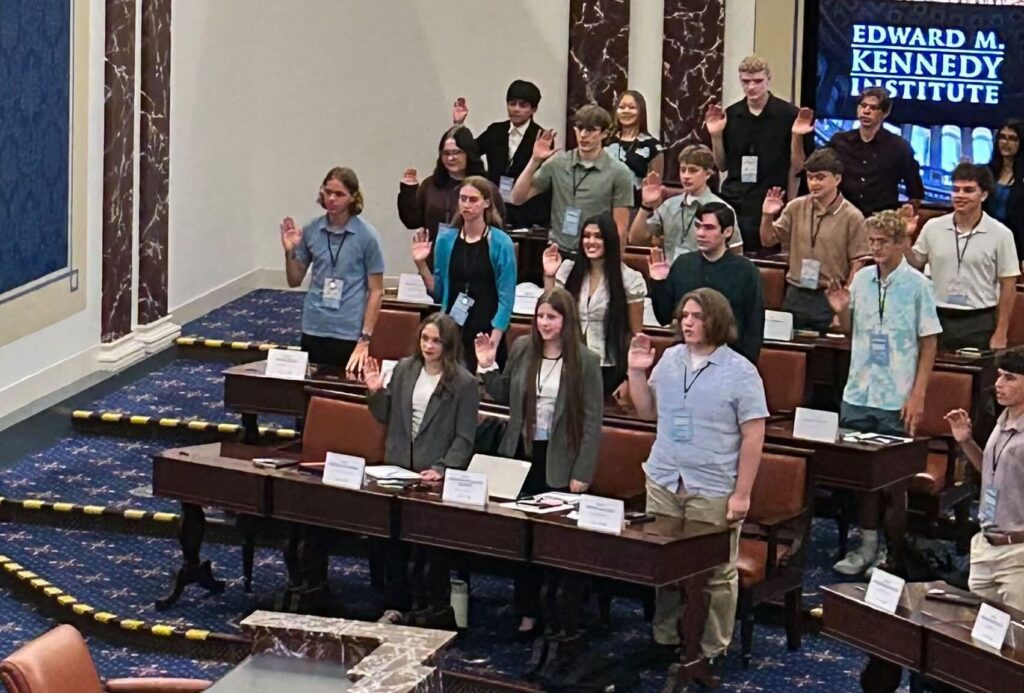
By the students, for the students: Sierra High School represents Colorado in developing national AI framework
Eric Young
eric.young@gazette.com
Updated 4 hours ago
To many, the recent, rapid development of generative artificial intelligence and its lack of frameworks and oversight may evoke comparisons to the unrestrained Wild West in the 1800s or the economic potential of the dot-com boom in the early 2000s....

Colorado’s troubled guardianship office pursues ‘cultural reset’
Marianne Goodland
marianne.goodland@coloradopolitics.com
Updated 4 hours ago
Colorado’s guardianship program, long criticized for mismanagement and high staff attrition, is undergoing a “cultural reset,” as its new director works to repair partnerships and prepare for a major expansion under recent legislation. Created by lawmakers in 2017, the Office...
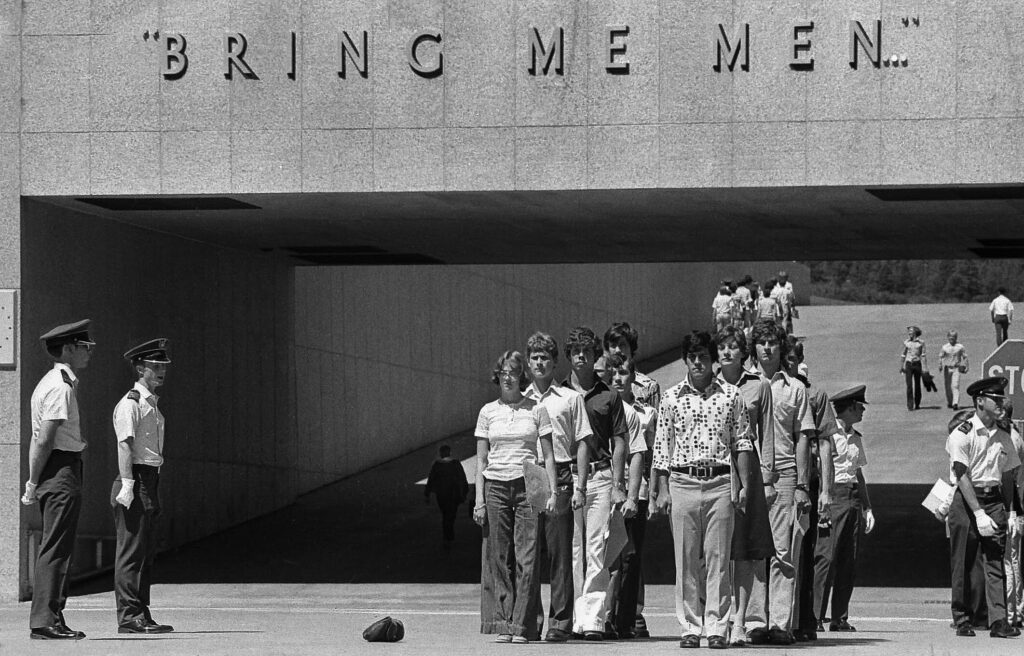
Fifty years later, women reflect on first coed class at the Air Force Academy, struggle for equality
Mary Shinn
mary-shinn@coloradopolitics.com
Updated 2 days ago
When the first female Air Force Academy cadets arrived 50 years ago this summer, they stood in front of an enormous sign on campus that read “Bring me men.” In the shadow of that sign, Kathleen Utley Kornahrens, one of...

Democratic group aims Spanish-language TV ad at Gabe Evans in Colorado’s battleground 8th CD
Ernest Luning
ernest.luning@coloradopolitics.com
Updated 3 days ago
A national group tied to House Democratic leadership launched a six-figure Spanish-language TV ad in Colorado this week targeting Republican U.S. Rep. Gabe Evans and the GOP’s signature budget legislation. The 30-second spot is part of $15 million in new...

Colorado School of Mines lands major share in Trump’s $100M mining-education plan
Thelma Grimes
thelma.grimes@coloradopolitics.com
Updated 3 days ago
President Donald Trump on Friday named the Colorado School of Mines among roughly a dozen institutions that will share in a $100 million commitment “to train the next generation of American miners.” Paul Johnson, the university’s president, said he is...

Denver City Council to consider $248M in airport contracts
Deborah Grigsby
deborah.smith@denvergazette.com
Updated 4 hours ago
Denver International Airport leaders anticipate that the Denver City Council will approve resolutions for three large airport contracts totaling more than $248 million. The council will consider a $135 million, 10-year program management agreement for the North Terminal Expansion and...

Aurora City Council to discuss data center regulations, business permits
Kyla Pearce
kyla.pearce@gazette.com
Updated 4 hours ago
The Aurora City Council will discuss a permit for businesses that target low-income communities and vote on regulations for new data centers in a study session and regular council meeting Monday night. In the study session, the City Council will...

Judge dismisses lawsuit seeking records from Colorado Democratic group
Marianne Goodland
marianne.goodland@coloradopolitics.com
Updated 3 days ago
A lawsuit seeking to obtain records from Democratic lawmakers affiliated with a caucus has been thrown out by a Denver District Court judge. On July 17, Judge Ericka Englert dismissed the April lawsuit filed by progressive activist Derrick Blanton, who...
PREV
PREVIOUS

Colorado's $46.8 billion budget nears finish line. Here's what changed
Colorado legislators on Tuesday adopted a $46.8 billion plan to pay for state operations and programs next year after a joint panel reconciled differences between the House and Senate versions. A small group of lawmakers had resolved those differences. Lawmakers adopted what is called the conference committee report on House Bill 1410 — the budget […]

Colorado's unprecedented AI law can't be enforced yet, judge rules
A federal judge on Monday issued a delay in enforcing Colorado’s artificial intelligence law, touted by backers as a tool to protect consumers and residents from algorithmic discrimination but which critics called heavy-handed and unworkable. The lawsuit against Senate Bill 24-205 was filed by Elon Musk on behalf of his xAI company. The Trump administration […]