

Colorado panel rejects 2 of 3 Polis appointees to wildlife body
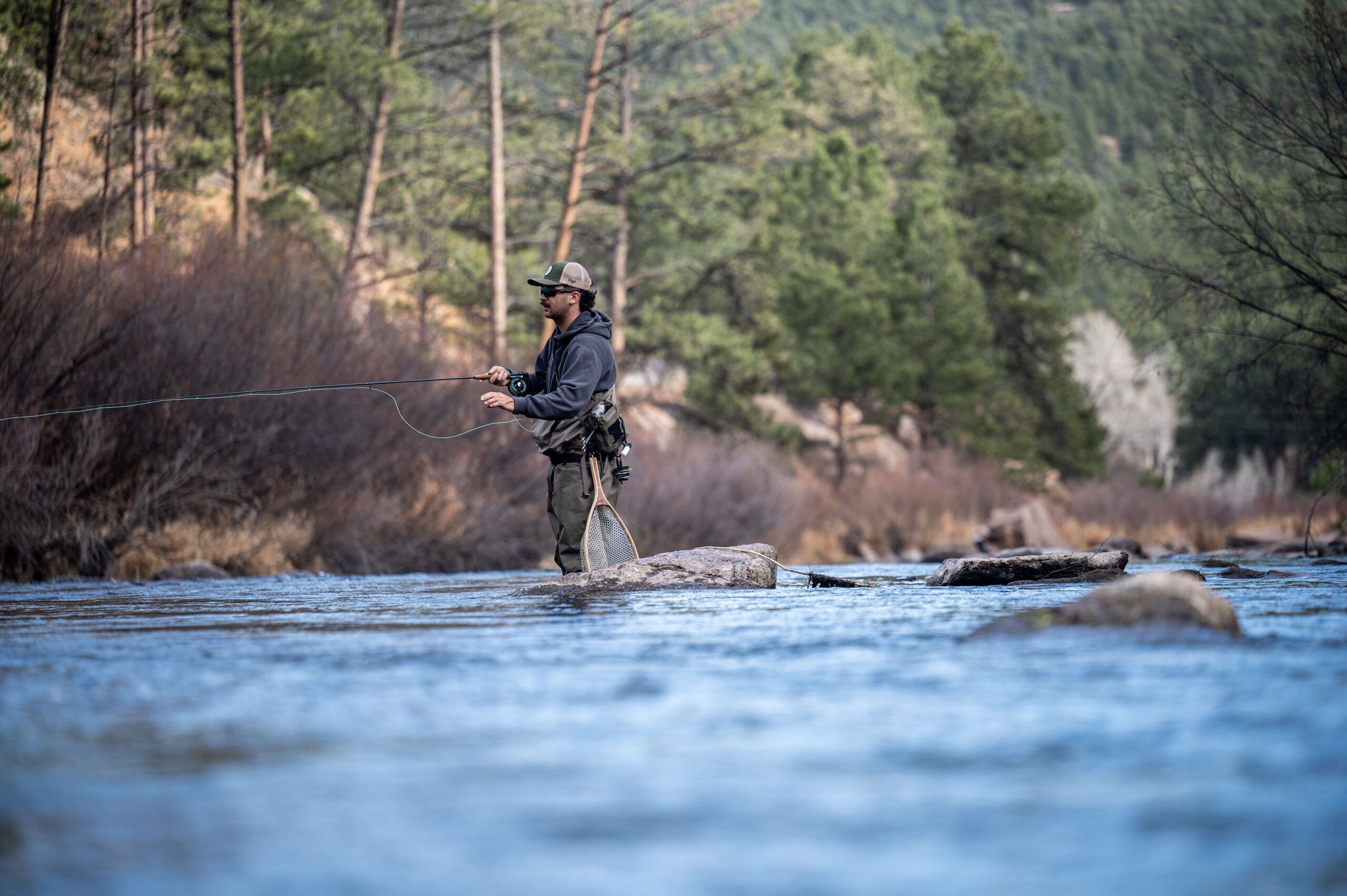
A contentious hearing Wednesday saw two out of three of Gov. Jared Polis’ picks for the Colorado Parks and Wildlife Commission rejected by a panel of legislators.
The Senate Agriculture and Natural Resources Committee approved, on a 7-0 vote, the appointment of Francis Blayney to represent outfitters on the commission.
The panel’s members rejected, on a 3-4 vote, the appointment of Christopher Sichko to represent sportsmen, with committee chair Sen. Dylan Roberts, D-Frisco, noting that every sportsmen’s group in Colorado opposes the nomination.
The harshest words from the committee went to John Emerick, who was appointed to fill an at-large seat. Emerick received a 2-5 vote.
Roberts said he does not believe the governor’s pick is either qualified or prepared to serve in that seat.
Notably absent from the hearing were Department of Natural Resources Executive Director Dan Gibbs and CPW Director Laura Clellan.
The agency’s deputy director, Windi Padia, told the Senate committee that Gibbs was on a previously-scheduled camping trip. She didn’t say why Clellan wasn’t there. A spokesman for the department said after the hearing she had a scheduling conflict.
It’s customary for agency directors to speak on behalf of the governor’s appointments to boards and commissions in Senate committee hearings.
Polis administration: appointees meet the requirements
Padia noted that the commission is made up of 11 members: three who have obtained a hunting or fishing license for at least each of the three years prior to their appointments; three who are actively involved in production agriculture as owners or lessees of agricultural property, and owners or partial owners of the commodities produced on the land; three who can demonstrate that they regularly engage in outdoor recreation and utilize parks resources; and two public at-large members “to round out the expertise of the board and with no additional specific statutory qualifications.”
She also pointed out that at least four commissioners must be from west of the continental divide and that the commission be balanced politically, ensuring a difference of no more than one person affiliated with any major political party.
“Every appointment before this committee today meets these statutory requirements,” she said.
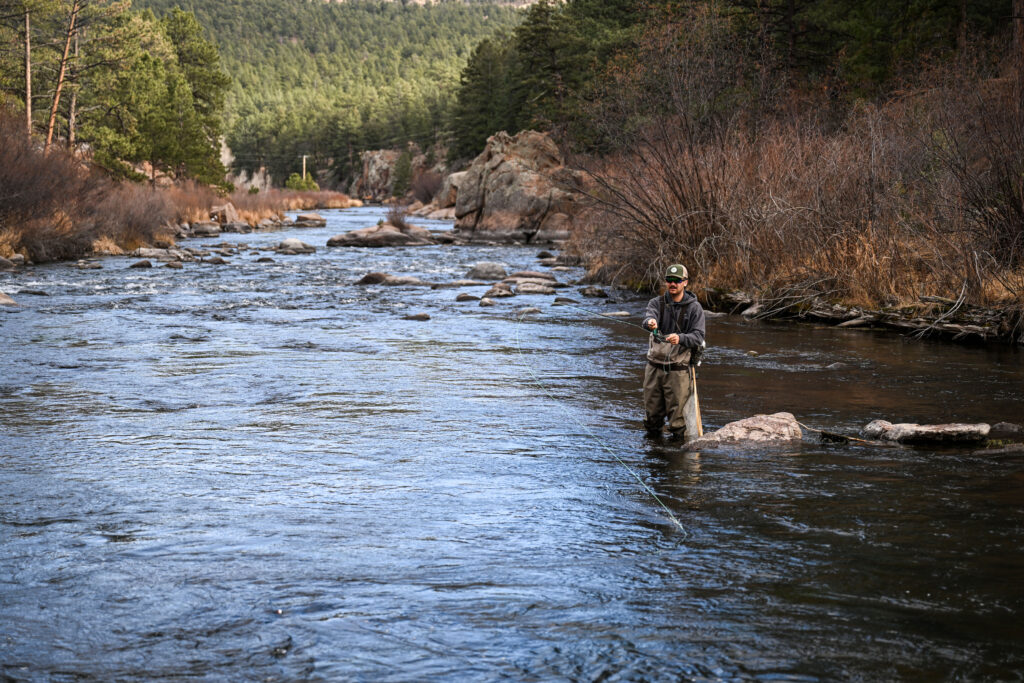
Blayney brings first-hand knowledge of public land use, deep experience with Colorado’s angling and outfitting communities, and a genuine passion for protecting ecosystems while maintaining access for sustainable recreation, Padia said.
Emerick, a Republican, meets the statutory requirement of residing west of the Continental Divide. He spent two decades teaching at the Colorado School of Mines, as well as authoring books on natural history, the agency official said.
Sichko is “actively engaged in small game bow hunting and has been applying for big game tags and accumulating preference points for the last three years,” Padia said.
Blayney got the lightest touch from the committee. Outfitters, including the head of the state’s largest outfitting organization, had told Colorado Politics when Blayney was appointed last July they had no idea who she was.
Blayney told the committee she has been a fly fishing guide for nine years and she co-owns a three-year-old outfitter business with her daughter.
Since her appointment, she said, she has worked to listen to folks in world of outfitters and that she supports policies that value hunting and angling.
“Legal managed hunting is conservation,” she said.
Blayney also spoke in strong support of the North American Model of Wildlife Conservation, saying it has brought the country and the “overexploitation of wildlife to a place of abundance.” She said it provides guidelines for thoughtful wildlife management.
She pledged to rely on science and “objective truths” to guide her decisions on the commission.
Sichko was appointed to represent sportsmen, including big game hunters. Those license fees pay for the bulk of Colorado Parks and Wildlife’s budget. Committee members learned during the hearing that 12 other people with big game hunting experience had also applied for the position.
“I dream of hunting grouse, turkey, deer, and many of our other abundant species with my family and friends until the day I die,” he told the committee.
He’s held a small game license since 2021 but has only hunted small game, such as grouse and snowshoe rabbits, with a hunting bow.
One of his goals, Sichko said, is to rebuild trust between CPW and the community he seeks to represent, a relationship badly damaged by the agency’s much-criticized wolf reintroduction program.
Sichko, who spent four years as an economist with the U.S. Department of Agriculture, said he understands the importance of Colorado agriculture to the state’s prosperity and of private lands for wildlife management.
“I believe in hunting and fishing as conservation tools and will defer to CPW staff expertise and recommendations,” Sichko told the committee.
He was not among the CPW members who voted in March to ban hunting for fur. Emerick voted for it; Blayney voted against it in the 6-4 tally.
Appointee claims he was secretly recorded
Sichko stumbled when asked about comments he had made about “rewilding,” a philosophy of returning land to its native origins — and one that worries ranchers and farmers who fear their lands would be taken away to accomplish that goal.
Among state officials, Colorado State Land Board Director Nicole Rosmarino is a rewilding advocate and, as former executive director of the Southern Plans Land Trust, had worked with CPW Commissioner Jay Tuchton, the trust’s preserve rmanager.
Sichko, who holds a doctoral degree, claimed he doesn’t understand “the larger connotations” of the term and apologized for its “misuse.”
“I understand now that it is associated with driving people off their land, and that is most certainly not what I intend to do,” he said.
Emerick took part of his time to call attention to what he called “abhorrent” behavior by one of the groups opposed to his nomination.
“I also want to put something in the public record today because it needs to be said, and this committee and the public deserves to know that it happened,” he said.
Emerick, like other commissioners, has held public office hours to meet with stakeholders, including a March 3 meeting in Salida at the headquarters of the Arkansas River Headwaters.
Emerick said he was secretly recorded, with the recording shared on social media by Coloradans for Responsible Wildlife Management, which opposes his nomination.
“Covertly recording a commission of conduct and conducting good faith constituent research outreach and then circulating that recording as part of a coordinated campaign to block an appointment is not an honest stakeholder engagement,” he said. “It is not the kind of conduct that builds trust, and this committee and the public deserve to know that it happened.”
That’s not true, according to multiple sources who were at that public meeting, including Jenna Victoria of the Salida Gun Shop, who recorded the meeting on a video camera that was placed on a table in front of Emerick. She told Colorado Politics Emerick was specifically asked for consent and that he, in fact, gave it.
Emerick was also ambiguous about his support for the wolf management plan.
At one point, he told the committee he supports the wolf depredation compensation program, stating that “ranchers must be fully and fairly compensated when they experience losses to wolves, and I believe CPW should do more proactively to notify producers” when wolves are in their area.
“This has been my position and it has not changed,” he said.
A few minutes later, he admitted he signed a petition, submitted just two weeks before he was appointed to the commission, to change the wolf compensation criteria. He had signed that petition along with his partner, Delia Malone, the founder of Colorado Wild, a pro-wolf organization. Emerick had served as the organization’s treasurer until last year, when he was appointed to the commission.
Legislator to Polis pick: ‘I do not think you are qualified’
When the time came to vote, Roberts told Sichko he would have preferred that he apply for the at-large seat, given his lack of experience in big game hunting and a lack of understanding that big game hunting funds the agency.
Roberts said the at-large seats hold a special responsibility to move the commission forward in recognizing that the state is very diverse and that it has many points of view when it comes to wildlife management.
“I am concerned and have become more concerned after today’s hearing that you are not prepared to represent the at-large point of view on the commission,” he told Emerick.
“You have a history of very specific activism, which is absolutely your right, and you seem to have done a good job in that space,” Roberts added. “But given the responsibility that the commission has, I do not think you are qualified or prepared or suited to serve in the at-large position.”
Roberts also had a message for the Polis administration: “I’m worried about the future of the reputation of the CPW Commission, if folks who are continuing to have a very specific point of view (are) being appointed by this governor.”
Roberts said it’s a clear attempt to move the commission away from the mainstream in Colorado.
All three nominations, including the two not recommended by the committee, will move on to the full Senate for a confirmation vote.

Victor Marx says he’ll only debate Phil Weiser once in Colorado governor’s race — without a moderator
Ernest Luning
ernest.luning@coloradopolitics.com
Updated 27 seconds ago
Colorado Republican gubernatorial nominee Victor Marx said on Tuesday that he will participate in only one debate with Attorney General Phil Weiser before the November election — and he challenged the Democratic nominee to hold the event without a moderator....

Denver labor acknowledgment proposal faces council committee questions
Deborah Grigsby
deborah.smith@denvergazette.com
Updated 8 hours ago
A proposal to add a labor acknowledgment to Denver City Council proceedings has been delayed by the Finance and Business Committee after members raised questions about its wording, intentions and place in the council’s opening proceedings. The proposal, put forth...

Colorado residents rush to buy guns ahead of new restrictions, breaking sales records for several stores
By Debbie Kelley
by-debbie-kelley@coloradopolitics.com
Updated 8 hours ago
Colorado residents are lining up to buy guns ahead of the latest weapons restrictions set to take effect this Saturday. The new law mandates individuals seeking to purchase semiautomatic firearms with detachable magazines to first complete a firearm safety course...

Crime continues to decline in Aurora, police chief says
Kyla Pearce
kyla.pearce@gazette.com
Updated 8 hours ago
Crime in Aurora continued to decline in the first half of 2026, according to Aurora Police Department officials. Crime overall in the city has been on a downward trend since 2024, according to APD. Between Jan. 1 and June 30,...

El Paso County rejects multi-family zoning request near Monument Academy
Savannah Eller
savannah-eller@coloradopolitics.com
Updated 7 hours ago
The El Paso County Board of Commissioners narrowly rejected a developer’s bid to convert land from low- to high-density residential zoning. The request, made by MA Infrastructure, LLC, would have allowed 12 units per acre on half of a 14-acre...
Atop taxes, here’s how much each Colorado resident pays in fees
Marissa Ventrelli
marissa.ventrelli@coloradopolitics.com
Updated 24 hours ago
Each Colorado resident paid nearly $5,000 in state-sanctioned fees last year, according to a report by a policy think tank. The report, which analyzed how fees have affected Colorado’s economy, found that fee revenue has more than tripled since 2008...

Colorado National Guard, Swiss Armed Forces celebrate partnership
Marissa Ventrelli
marissa.ventrelli@coloradopolitics.com
Updated 2 hours ago
Colorado’s National Guard marked a year of partnership with the Swiss Armed Forces at the Governor’s Mansion on Monday. “This anniversary marks one strong year of friendship and collaboration between the State of Colorado and Switzerland,” said Gov. Jared Polis....

Q&A with Jeffco Public Schools’ interim superintendent on budget deficit, federal investigation
Matt Kyle
matt.kyle@denvergazette.com
Updated 8 hours ago
For the upcoming school year, Robert Stein will serve as Jeffco Public Schools’ superintendent. The 66-year-old Denver native has been semi-retired for the last few years. He spent 40 years in education, as both a teacher and administrator. Most recently,...

Gov. Polis celebrates Colorado’s first-place education ranking by U.S. News
Marianne Goodland
marianne.goodland@coloradopolitics.com
Updated 56 minutes ago
Colorado officials said they have something to celebrate this week, in addition to the state’s sesquicentennial birthday on Saturday. U.S. News & World Report on Tuesday gave Colorado its top ranking for education efforts from pre-K to postsecondary, though it...

Denver City Council sends Xcel franchise deal to voters
Deborah Grigsby
deborah.smith@denvergazette.com
Updated 1 day ago
This November, Denver voters will decide whether to renew the city’s longstanding franchise agreement with Xcel Energy. Members of the Denver City Council approved on Monday sending a proposed 20-year franchise agreement with Xcel that would deliver more than $180...
PREV
PREVIOUS

University of Denver closes in on carbon neutrality goals
The University of Denver has notched some pretty big goals recently, and they are closing in on another. But this time, it’s off the ice. The goal? Over the next 12 to 24 months, DU, in partnership with Pivot Energy, plans to bring five additional off-site solar projects online, eliminating 100% of campus electricity-related greenhouse […]

Colorado's chief federal judge breaks with colleagues on issue of mandatory immigration detention
Chief Judge Daniel D. Domenico broke with his peers on Colorado’s U.S. District Court last week in siding with the government’s argument about the broad scope of its immigration detention authority. In an April 15 order finding that a man was properly in custody without a bond hearing, Domenico acknowledged his view is the outlier […]