

Overdose deaths from opioids dip in America — but not in Colorado, study says
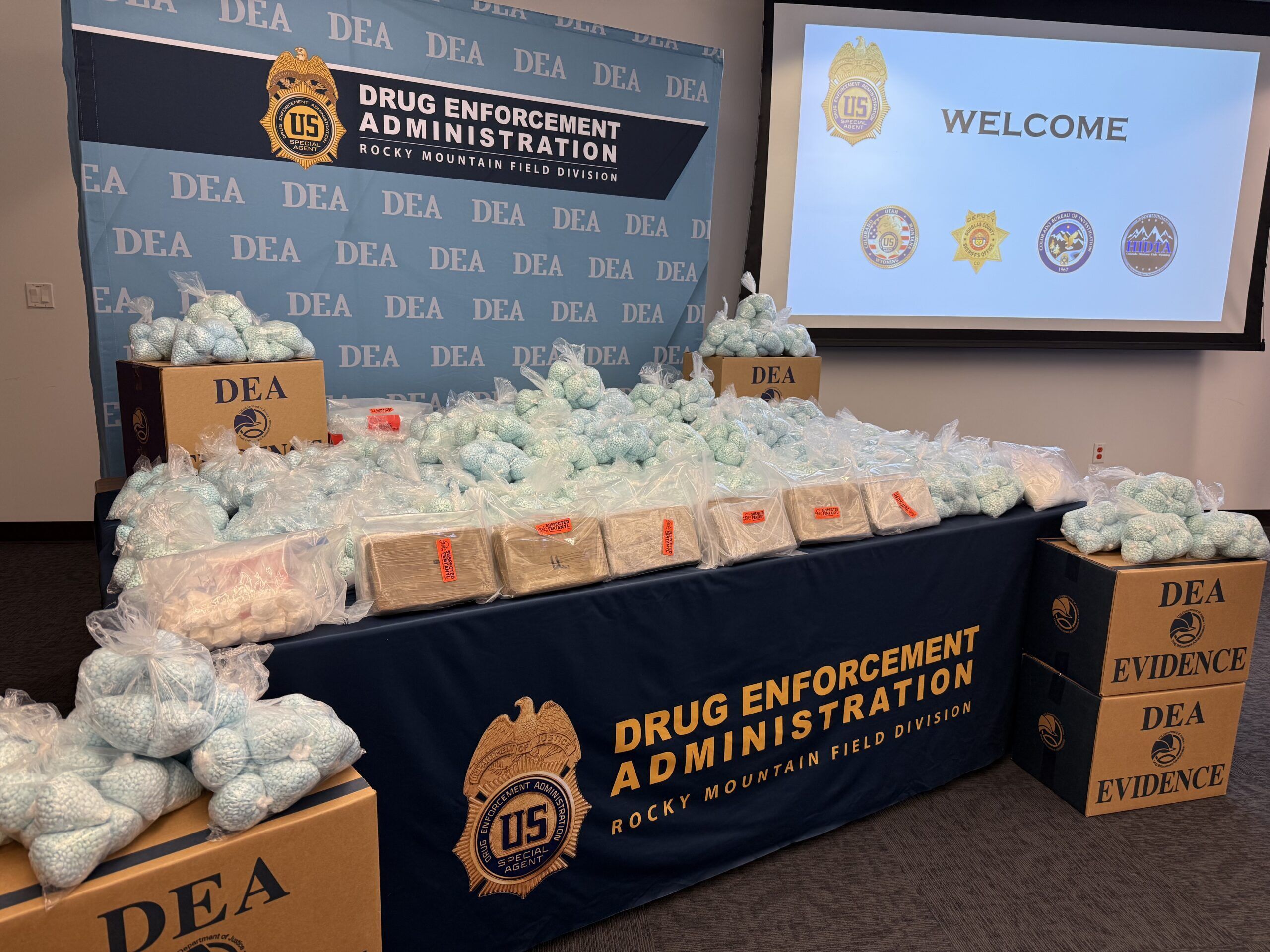
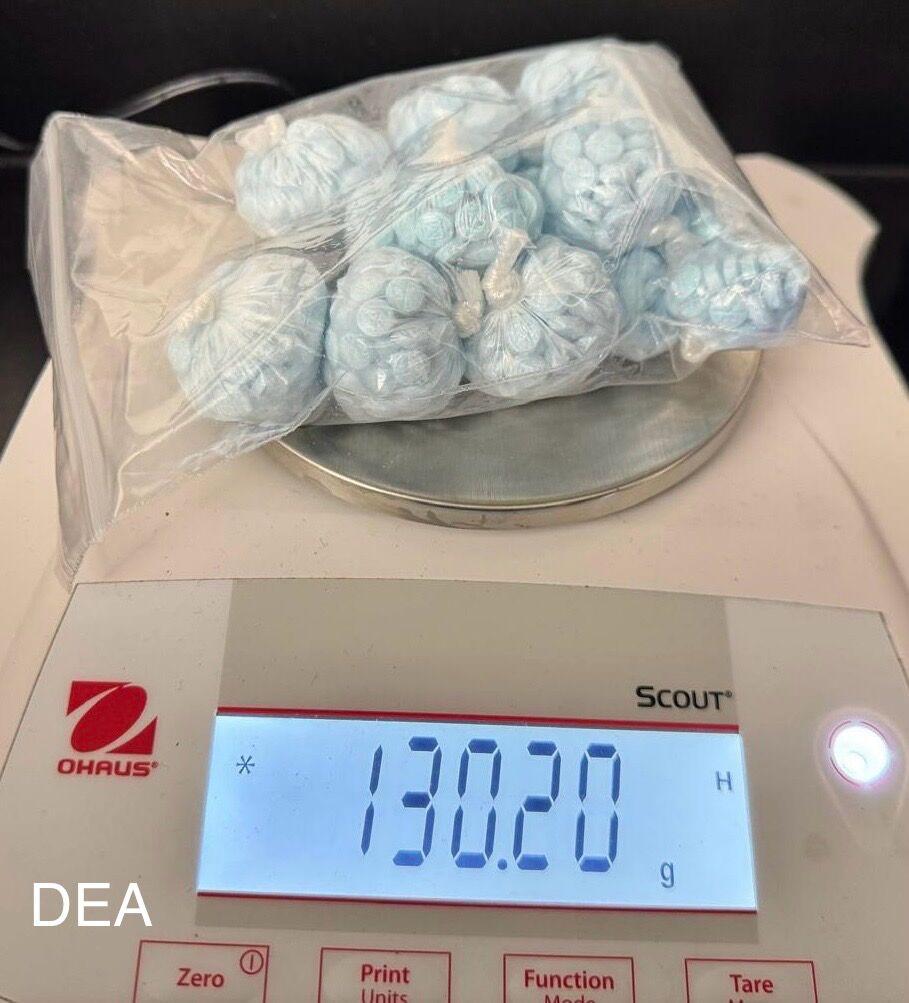
Overdose deaths from opioids rose in Colorado, diverging from the national trend, which has been decreasing, according to a new study from a think tank.
In its new report, the Common Sense Institute said synthetic opioid overdose deaths in Colorado have grown by 17% since November 2024, the third-fastest growth rate in the country. The only states with higher spike rates are Arizona and New Mexico, according to the report.
If Colorado had followed the national trend, some 1,600 lives could have been saved, the study said, adding the opioid deaths represented a cost of roughly $18.3 billion.
“While this number does not encompass the entire value of human life, it does indicate that lives lost due to fentanyl and other opioids reduce the economic potential of the state,” the study said.
Synthetic opioid overdose deaths had been increasing in Colorado in 2018 through November 2023, mirroring the national trend and peaking at 1,213 that year, the report said.
After the peak, deaths in Colorado dipped, just as the country’s trend also decreased.
Then Colorado’s numbers deviated the year after.
If Colorado had followed the nationwide trend, which saw a 57% decrease in synthetic opioid overdose deaths, more than 1,600 lives could have been saved from November 2024 through August 2025, according to the report.
The study’s authors surmised that several factors contributed to the upward trend and pointed to Colorado’s “not as strict” drug laws.
“Colorado’s patterns in lessening criminal sentencing for drug offenses, implementing treatment-based courses of action for those who violate the drug crimes, and overall drug supply and trafficking history in the state, make it an environment where drug overdose numbers continue to increase,” the authors said.
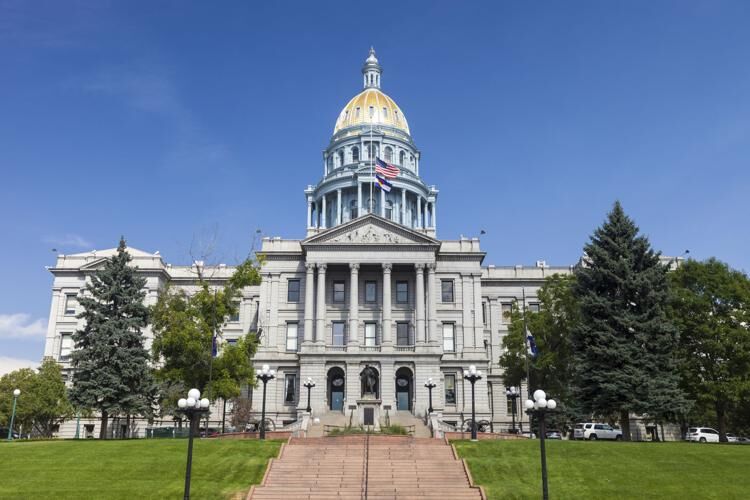
Fentanyl possession and distribution penalties have long been a contentious at the state Capitol, stemming from a 2019 law that reduced penalties for possession of up to 4 grams of the drug from a felony to a misdemeanor.
In response to the overdose crisis, state policymakers in 2022 approved legislation to heighten the felony charges for possession of 1 to 4 grams of any substance containing fentanyl. Under the revised law, the criminal penalty for possession above 4 grams is a felony; under a gram, it is a misdemeanor.
In addition, the law allows defendants charged with the new felony to argue to a judge or jury that they didn’t know they possessed fentanyl, and if a “finder of fact” determines the defendant made a reasonable mistake of fact, the offense becomes a Level 1 drug misdemeanor.
That “knowing” requirement makes Colorado’s drug laws not as strict as Texas, where fentanyl is defined as a Schedule I drug and which includes expanded penalties for possession or distribution, according to the study.
The study’s authors said Texas saw its synthetic opioid overdose deaths drop by negative 27% since December 2024, “despite being a large magnet for in-migration.”
The tension at the state Capitol often revolves around how best to approach penalties, with “harm reduction” advocates arguing that stiffer punishments have not worked, while others countered that lax laws have exacerbated Colorado’s drug woes.
The arguments are familiar.
Testifying on drugs legislation in 2022, Lisa Raville of the Harm Reduction Action Center argued that a “harm reduction” approach tends to be a more effective treatment solution than incarceration.
“People who use drugs and health care providers have a very tumultuous relationship,” she said. “For over 20 years, people have not wanted to access quality health care in the emergency departments because they were being warrant-checked and arrested out of there. That’s not to say that then they’re getting this really great care (upon being arrested). Now, they’re going to jail and getting no health care. People are almost losing limbs out there because they are so afraid to access quality health care.”
“We will never treat or incarcerate our way out of an unregulated drug supply, ever,” Raville added.
Specifically citing legislation that would exempt doctors from being required to report injuries that patients have acquired via the use or possession of drugs, Republicans argued that the state should prioritize curtailing the flow of illicit drugs into Colorado and that incarceration plays a key role in curbing drug abuse.
Then-Rep. Richard Holtorf, R-Akron, said that during his years on the Health and Human Services Committee, he has heard several accounts of former users saying incarceration is what got them clean.
“I cannot support a bill that doesn’t allow for those people that need perhaps to be incarcerated to stop the drug use to save their lives,” he said. “This gives them a pass and lets people break the law with respect to outdated pharmaceuticals. It also tells doctors not to report health data to the Department of Health openly in this bill, going against every practice in every other part of health care.”
“It is antithetical, it doesn’t make sense to me,” Holtorf said, referring to the measure whose core provisions would exempt individuals who receive paraphernalia from a syringe exchange program from being charged with drug possession.
Reached for comment about the Common Sense Institute study, Colorado Department of Public Health and Environment said it has not finalized the 2025 morality data yet. The agency said that data will be available by late spring.
An agency spokesperson cited numbers from the most recent provisional data published by the CDC’s National Center for Health Statistics, showing synthetic opioid overdose deaths in Colorado increasing.
The October 2025 data set showed 1,792 total drug overdose deaths in the state, compared to 1,682 from the 12-month period ending in October 2024.
Of that number, 1,179 deaths involved all forms of opioid in 2025; there were 1,050 fatalities in 2024, the agency said.
The 2025 also showed that 1,005 deaths resulted from ingesting synthetic opioids, fentanyl being the primary drug, according to the state agency. In 2024, the number was 852.
“These trends do suggest the final number of overdose deaths in Colorado, and those involving opioids, may be higher in calendar year 2025 compared to 2024,” Paul Bishop, the health agency’s spokesperson, told The Denver Gazette.
It is difficult to narrow down the reasons for increasing trend and they are “rarely attributable to a single factor,” Bishop said, adding that the state and its partners work to increase access to “life-saving tools, such as naloxone and other evidence-based overdose prevention strategies.”
Denver Gazette Editor Luige del Puerto contributed to this article.

Homeless recruits of ‘The Program’ say they were told to sign NDAs amid investigations in Colorado
David Migoya
david.migoya@gazette.com
Updated 10 hours ago
Several formerly homeless people — each drawn into an Aurora-based enterprise known as “The Program” that promised free housing and cash in return for letting a home-health business administer prescriptions they were given — said they were pressed into signing...
Homeless recruits of ‘The Program’ say they were told to sign NDAs amid investigations in Colorado
David Migoya
david.migoya@gazette.com
Updated 10 hours ago
Several formerly homeless people — each drawn into an Aurora-based enterprise known as “The Program” that promised free housing and cash in return for letting a home-health business administer prescriptions they were given — said they were pressed into signing...
Colorado repeals attorney immigration attestation law after one year
Nico Brambila
nico.brambila@denvergazette.com
Updated 9 hours ago
One year and 12 days. That’s how long a Colorado law requiring attorneys to certify they would not use court data for federal immigration enforcement remained on the books before lawmakers repealed it. Gov. Jared Polis signed the initial legislation,...
Colorado’s ‘right to natural gas’ measure submits signatures to qualify for November ballot
Marissa Ventrelli
marissa.ventrelli@coloradopolitics.com
Updated 12 hours ago
A natural-gas rights initiative backed by Advance Colorado is likely headed to the November ballot, triggering a parallel campaign by environmental groups seeking to impose new liabilities on oil and gas operators. Petitions for Initiative No. 177 were turned in...

Economists: Colorado budget improves slightly, but deficits still loom
Marianne Goodland
marianne.goodland@coloradopolitics.com
Updated 13 hours ago
State economists reported a stronger-than-expected bump in general fund revenue driven largely by higher individual income tax collections, yet warned that Colorado remains on track to begin the next fiscal year with a sizable shortfall. State economists upgraded “significantly” the...
Federal agents arrest ex-New York Mayor Eric Adams’s former chief of staff
Brady Knox
brady-knox@coloradopolitics.com
Updated 16 hours ago
Federal agents arrested former New York Mayor Eric Adams’s chief of staff as part of a wider corruption investigation, according to several outlets. Frank Carone, Adams’s first chief of staff, was reportedly arrested with three others as part of a...
Colorado’s primary turnout tops 10% as election officials warn it’s too late to mail ballots
Ernest Luning
ernest.luning@coloradopolitics.com
Updated 8 hours ago
Colorado election officials cautioned on Tuesday that it’s too late to mail ballots for the June 30 primary and urged voters to use drop boxes and their county’s voting centers instead. Secretary of State Jena Griswold said in a release...

Aurora sales tax increases will be on November ballot
Kyla Pearce
kyla.pearce@gazette.com
Updated 17 hours ago
Aurora voters will decide in November whether to raise sales taxes for the first time since 1993 to help pay for infrastructure, transportation and public safety improvements. The City Council cast a final vote Monday night to put three measures...

Medicaid suspends agency behind ‘The Program,’ citing ‘credible’ fraud allegations
David Migoya
david.migoya@gazette.com
Updated 1 day ago
The agency overseeing Colorado’s federal Medicaid program has suspended an Aurora home-health agency that is the focus of an investigation into an enterprise that lured dozens of homeless people with promises of free housing and cash and reaped tens of...
Missy Woods accepts plea deal, avoids trial on 102 felony counts
Jenny Deam
jenny.deam@gazette.com
Updated 1 day ago
The former top Colorado Bureau of Investigation forensic scientist accused of altering and deleting DNA evidence in scores of criminal cases across the state for years pleaded guilty to four criminal counts Tuesday in Jefferson County. Yvonne “Missy” Woods, 65,...
PREV
PREVIOUS

Colorado voters will decide whether transgender students can join girls' sports
A ballot initiative that would require student athletes to only join sports teams that correspond to their biological sex has qualified for the November ballot, the latest development in the culture war being waged in school districts, in the courts and at the state Capitol in Colorado. The Colorado Secretary of State’s Office said proponents […]

Colorado justices, 4-3, order new murder trial due to wrongfully excluded evidence
The Colorado Supreme Court agreed on Monday that a trial judge incorrectly faulted a defendant for refusing to cooperate in a mental health examination, even though the state’s hospital was the entity that botched its responsibility to evaluate her during the windows where she was competent. However, by 4-3, the justices concluded that the judge […]