

Colorado justices weigh potentially faulty jury instruction in child abuse case
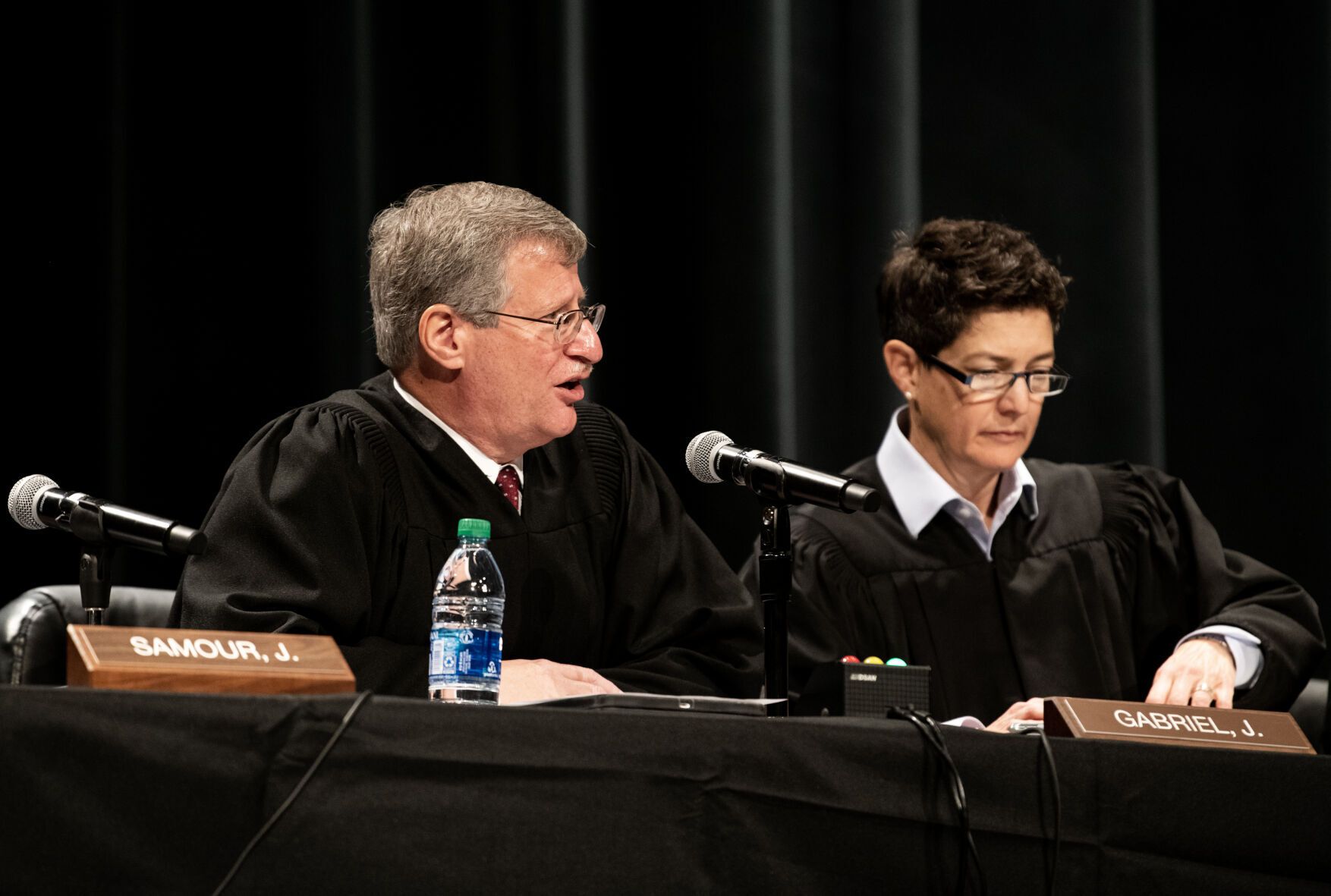
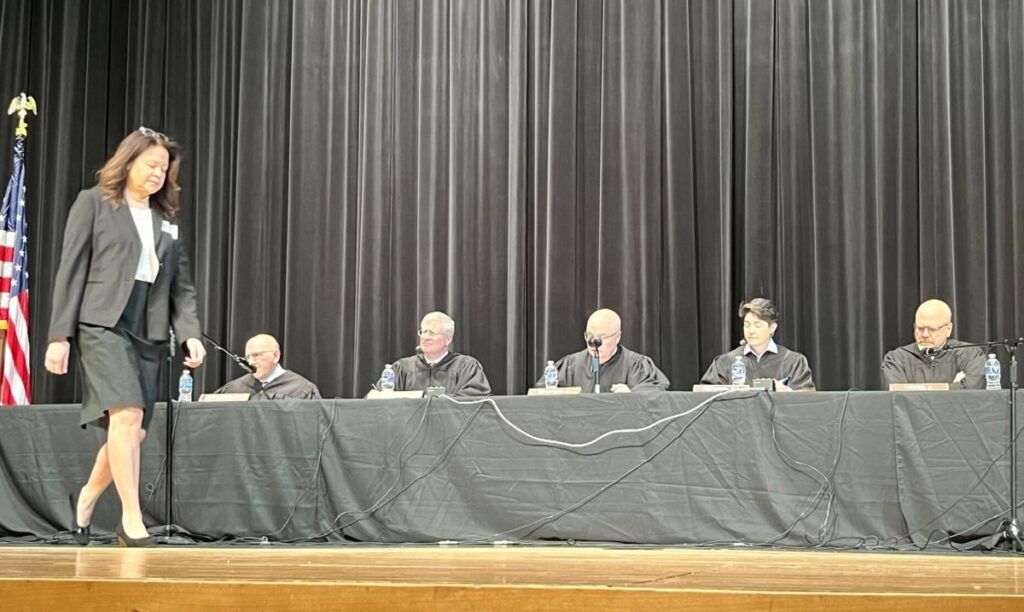
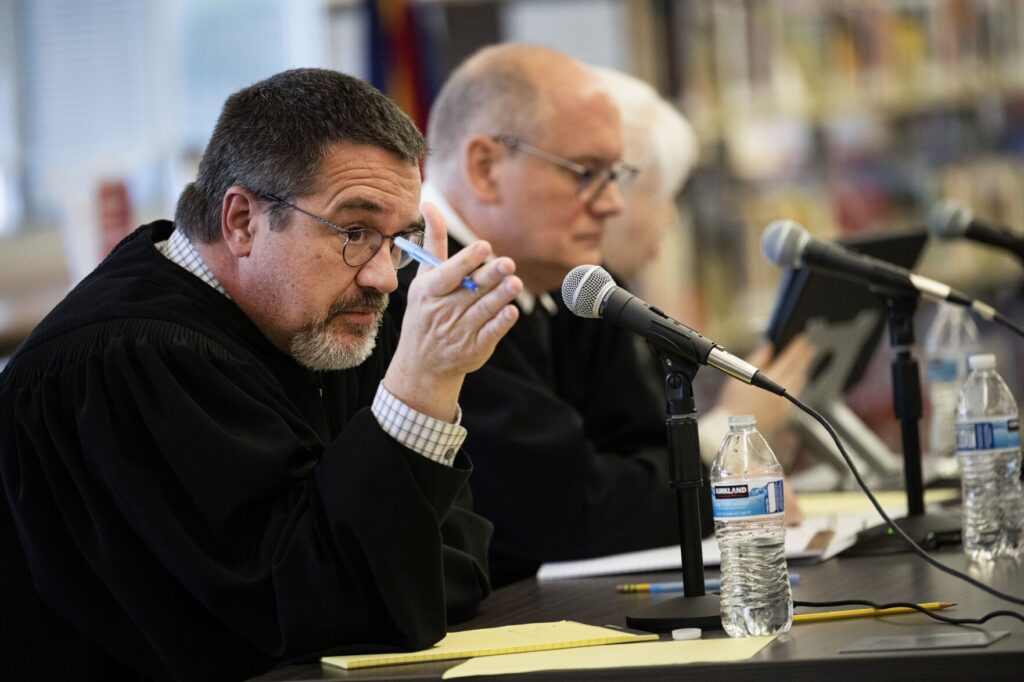
Members of the Colorado Supreme Court questioned on Tuesday whether a San Miguel County jury convicted a defendant of child abuse resulting in death, even though the instructions potentially allowed jurors to avoid finding that the child abuse resulted in death.
Previously, the state’s Court of Appeals reversed the convictions and 64-year prison sentence of Madani Ceus. In the appellate court’s view, the instructions could have allowed the jury to convict Ceus without linking the child abuse to the victims’ deaths.
But during oral arguments to the Supreme Court, the government maintained there was no mystery about what jurors had to decide.
“From the moment the jury arrived and filled out questionnaires, it was clear that this case always was about death,” said First Assistant Attorney General Erin K. Grundy.
Justice Richard L. Gabriel acknowledged that the phrase “Child Abuse Resulting in Death” appeared on the form, but the wording of the instruction suggested that jurors could find the child abuse resulted in death for just one of the three ways of committing the crime.
“The jury could have picked any of the three means, and there’s no instruction,” he said. “The jury wasn’t ever told, ‘You must find her child abuse caused death.'”
Hannah Marshall, 8, and Makayla Roberts, 10, were discovered dead and decomposing in a vehicle located on Frederick “Alec” Blair’s Norwood farm in 2017. A forensic examiner was unable to conclusively state the cause of death because of the condition of the girls’ bodies, but evidence suggested starvation, dehydration and hyperthermia were factors.
Jurors heard that Ceus was the spiritual leader of the group of itinerant adults and children living on the farm. At some point, the victims were left to live in a car with no food. Ceus directed that no one contact them, and she physically distanced her family from the victims.
Jurors convicted the children’s mother of murder and Ceus’ husband of child abuse resulting in death. Blair also received a 12-year prison sentence for his involvement.
Following her own convictions, Ceus contended the trial judge incorrectly instructed the jury about the charges. Under Colorado law, child abuse is a misdemeanor that can be committed in three ways:
• By causing an injury to a child’s life or health
• By permitting a child to be unreasonably placed in a life- or health-threatening situation
• By engaging in a continued pattern of malnourishment, lack of proper medical care, cruel punishment, mistreatment, or an accumulation of injuries leading to death or serious injury
The crime becomes a felony if a person acts knowingly or recklessly and the child abuse results in death. Colorado’s template jury instructions contain a special form asking jurors, if they find a person committed child abuse, “Did the child abuse result in death?”
District Court Judge Keri A. Yoder gave jurors an instruction that deviated from the template. Ceus argued on appeal that it only required a finding of death for the third method of child abuse, not for the other two possible methods. A three-judge panel for the Court of Appeals agreed the defect meant Ceus only stood convicted of misdemeanor child abuse.
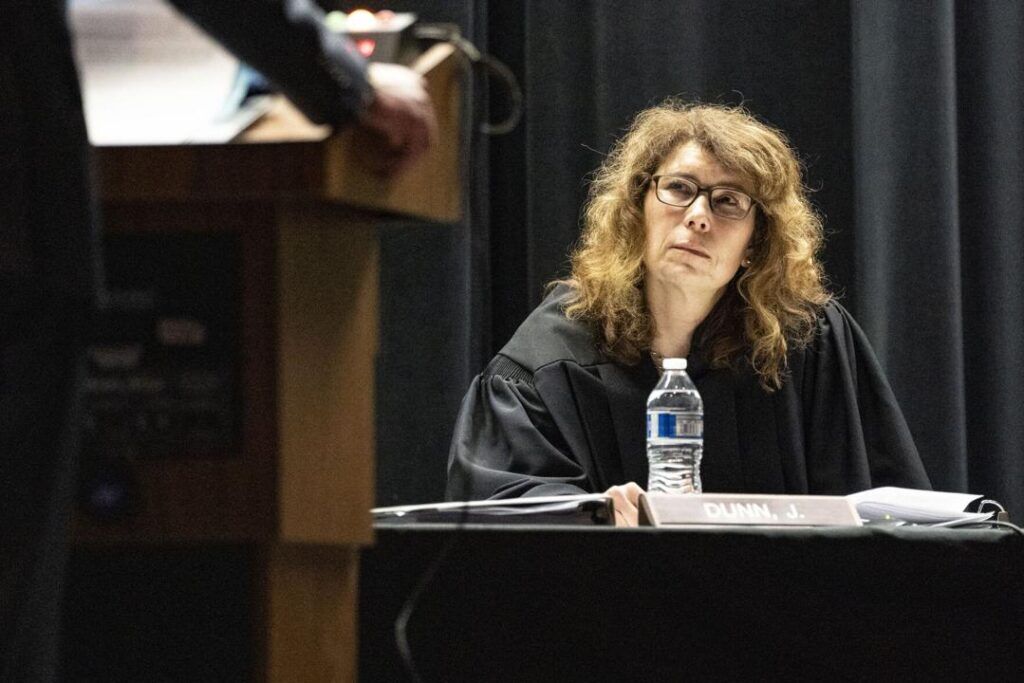
“Without an instruction requiring the jury to find beyond a reasonable doubt that Ceus’s abuse resulted in the children’s death, we are unable to conclude the instructional error was harmless,” wrote Judge Stephanie Dunn.
The Colorado Attorney General’s Office argued it was inconceivable that jurors would have convicted Ceus without finding that the child abuse resulted in death. Moreover, Grundy contended the evidence showed Ceus was guilty, even if she was not directly responsible for someone else’s children.
“We agree that, as a general concept in criminal law, you don’t have a duty to someone else. But if you push someone in the pool, you have a duty to help them get out,” she said. Ceus “pushed them in the pool and she left them there.”
“What do the guilty verdicts tell us here?” asked Justice Carlos A. Samour Jr. “If the evidence was sufficient, what do they convey from the jury?”
Public defender Lisa Weisz responded that jurors were not required to select a single method of child abuse resulting in death, so it was unknown what they believed.
“They found that she committed child abuse, and they found that beyond a reasonable doubt,” pressed Samour. “She kicked the children off the grounds. They were left in a car. They were not getting water. They were not getting food. That was the abuse.”
The victims’ mother “was there to take care of them, as she always had. And Ms. Ceus had no reason to believe that the mother would stop suddenly caring for them,” said Weisz.
“Does it matter that Ms. Ceus seemed to hold sway over (the mother) and was manipulating her psychologically, from the prosecution’s perspective?” asked Justice William W. Hood III.
Or that she told people to stay away from the car, added Chief Justice Monica M. Márquez.
And yet, said Gabriel, the Court of Appeals read the instruction form to allow jurors to convict Ceus of a felony if she only caused an injury or unreasonably placed the victims in a life-threatening scenario.
“Couldn’t the jury here find what was defined as ‘child abuse resulting in death’ on either of those first two choices, where death was not required?” he wondered.
The case is People v. Ceus.


Federal judge upholds constitutionality of Colorado campaign contribution limits
Michael Karlik
michael.karlik@coloradopolitics.com
Updated 2 days ago
A federal judge upheld Colorado’s individual campaign contribution limits as constitutional on Thursday, finding that three Republican plaintiffs failed to prove the campaign finance framework violates their First Amendment rights. U.S. District Court Senior Judge John L. Kane recognized that...

Appeals court rejects theory that existing tax revenue undermines need for new fees
Michael Karlik
michael.karlik@coloradopolitics.com
Updated 3 days ago
Colorado’s second-highest court rejected a plaintiff’s claim on Thursday that the tax revenue generated by an existing activity should prevent local governments from imposing new fees aimed at regulating the activity. The question stemmed from Colorado’s unique constraints on taxation...
Appeals court finds no illegal sentence when defendants forfeit time-served credit
Michael Karlik
michael.karlik@coloradopolitics.com
Updated 2 days ago
Colorado’s second-highest court ruled on Thursday that criminal defendants may agree to relinquish the credits they earned while incarcerated pending trial, despite a state law guaranteeing that such time “shall be deducted” from a person’s sentence. Kerry Ellis Endsley pleaded...
Appeals court reinstates Garfield County arson charge
Michael Karlik
michael.karlik@coloradopolitics.com
Updated 18 hours ago
Colorado’s second-highest court reinstated a Garfield County defendant’s arson charge on Thursday, concluding a trial judge improperly credited a witness’s claim that she alone was responsible for starting the fire. A sheriff’s deputy responded to a brush fire near Parachute...

Federal judges rebuke ex-Colorado judicial discipline director for conduct in lawsuit
Michael Karlik
michael.karlik@coloradopolitics.com
Updated 4 days ago
A pair of federal judges expressed a desire on Thursday to break the logjam on a lawsuit by Colorado’s former judicial discipline director against the state Supreme Court and related entities, while simultaneously showing little tolerance for the plaintiff’s scorched-earth...

Democratic bill would let recipients of ‘conversion therapy’ sue Colorado providers with no statute of limitations
Marissa Ventrelli
marissa.ventrelli@coloradopolitics.com
Updated 4 days ago
Colorado lawmakers have advanced a proposal that would allow people who underwent conversion therapy to sue licensed providers for damages, moving the measure forward on a party-line vote in the House Judiciary Committee. House Bill 1322, proposed by Democratic Reps....
Federal judge refuses to authorize immediate appeal in World Cup trafficking lawsuit
Michael Karlik
michael.karlik@coloradopolitics.com
Updated 5 days ago
A federal judge declined to authorize an immediate appeal last week of a prior decision allowing companies operating out of Colorado to be sued for allegedly participating in a human trafficking venture involving Filipino laborers who constructed facilities for the...
Federal judge considers second round of sanctions against ex-Colorado judicial discipline director
Michael Karlik
michael.karlik@coloradopolitics.com
Updated 5 days ago
A federal judge ordered Colorado’s former judicial discipline director on Tuesday to explain why she should not sanction him a second time for filing documents for improper purposes, such as harassment or delay. U.S. District Court Senior Judge Kathryn H....

Colorado justices agree to review insurance question that has divided federal judges
Michael Karlik
michael.karlik@coloradopolitics.com
Updated 5 days ago
The Colorado Supreme Court granted a federal judge’s request on Friday to address an issue that has produced conflicting answers in policyholders’ lawsuits against insurance companies over unpaid benefits. “Parties (and judges) regularly spend undue time and money fighting in...

Federal judge dismisses background screeners’ challenge to Colorado law
Michael Karlik
michael.karlik@coloradopolitics.com
Updated 2 days ago
A federal judge dismissed a challenge on Friday to a portion of Colorado law that prohibits certain information from being included in consumer reports, in what seemed to be a conflict with federal law. Congress originally enacted the Fair Credit...
PREV
PREVIOUS

Grand jury refuses to indict Democratic lawmakers in connection with illegal military orders video
WASHINGTON (AP) — A grand jury in Washington refused Tuesday to indict Democratic lawmakers in connection with a video in which they urged U.S. military members to resist “illegal orders,” according to a person familiar with the matter. The Justice Department opened an investigation into the video featuring Democratic Sens. Mark Kelly and Elissa Slotkin […]

Colorado Republicans set meeting to restrain state chair Brita Horn, but she says they can't do that
A Colorado Republican Party officer has scheduled a meeting of the party’s state central committee to consider whether to curb state GOP chair Brita Horn’s spending authority and hold a confidence vote in her leadership, but Horn said the party official who issued the formal call lacked the required legal authority, so the meeting won’t […]