

Denver police chief: Officers will intervene when they see ‘excessive force’ by ICE
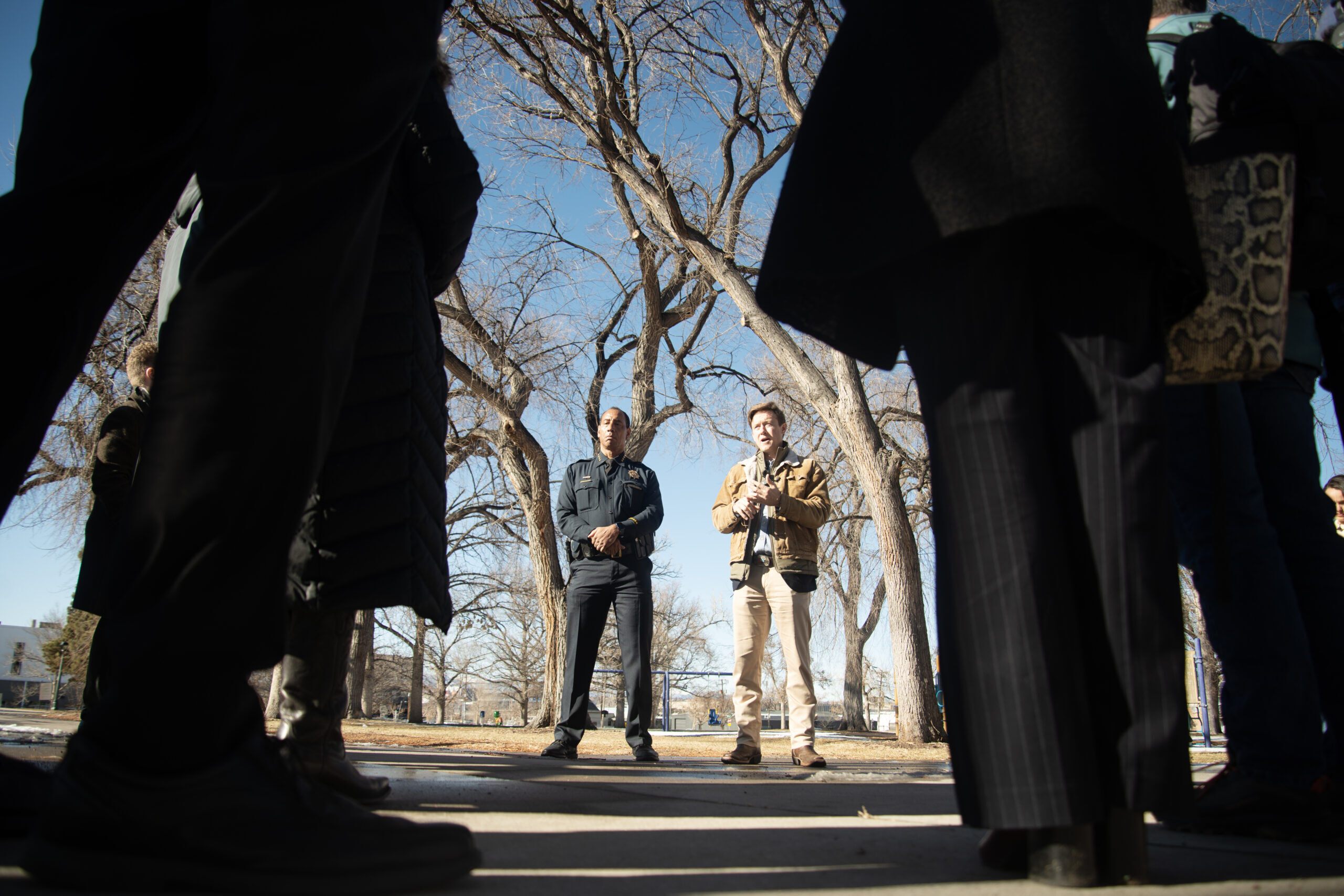
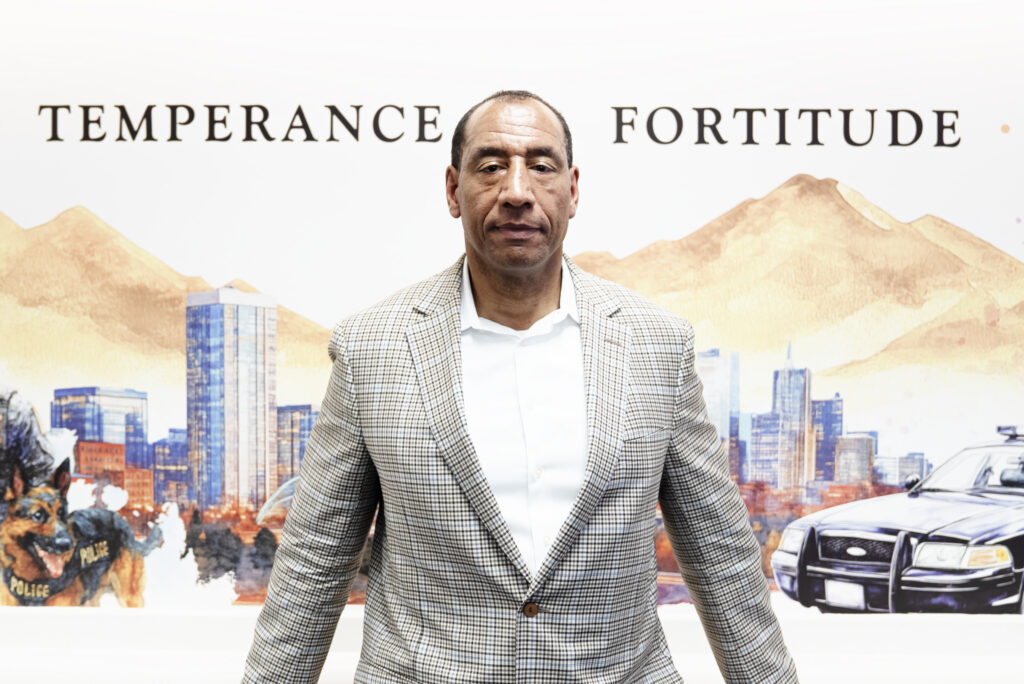
Denver Police Department Chief Ron Thomas said Wednesday that his officers would step in if they witnessed any “excessive force” used by federal agents during operations in the city.
“If we see a federal officer who we believe is using excessive force, then I think our expectation is to intervene in that situation,” Thomas said in an interview with The Denver Gazette.
Thomas’ declaration comes after weeks of stepped-up operations by U.S. Immigration and Customs Enforcement (ICE) in Chicago, New York and Minneapolis, part of the Trump administration’s crackdown on illegal immigration.
During a stop in Colorado in 2024, then-candidate Donald Trump promised a mass deportation of immigrants illegally staying in the U.S. But while ICE agents have conducted major operations in the metro Denver area, the city has not experienced the surge of federal agents seen in other jurisdictions.
In Minnesota, federal agents have clashed with protesters. Federal agents shot and killed two people — both had ties to Colorado — during enforcement actions in the last few weeks. The Trump administration and Democrats have offered competing narratives about the incidents.
This week, the Trump administration said it is pulling hundreds of agents from Minnesota after securing cooperation from local officials to turn over immigrants illegally staying in the country who are in jail.
Border czar Tom Homan said that kind of cooperation means fewer resources needed to enforce immigration laws.
Enforcement actions in jails have been a point of tension in Colorado and elsewhere in the country.
During a tense exchange in March last year, U.S. Rep. Jim Jordan of Ohio called Mayor Mike Johnston to task for releasing from Denver custody and onto the street — rather than to ICE authorities — an alleged gang member, after which a brief chase ensued that resulted in a minor injury to an agent. The immigrant was ultimately detained.
A video released by Denver authorities showed what happened: The alleged gang member was released onto the streets outside the county jail, and, upon seeing federal authorities, he ran, leaving ICE agents to chase after him.
Trump previously linked his administration’s immigration crackdown to a series of fraud cases involving government programs. Additionally, the White House has withheld or threatened to withhold funding from “sanctuary” jurisdictions.
Broadly speaking, a sanctuary city refers to local policies that limit or prohibit cooperation with federal immigration authorities. Both the Colorado government and the city of Denver have adopted laws barring such cooperation, though political leaders insist neither the state nor the municipality is a “sanctuary” jurisdiction.
With tension already high between Colorado and the Trump administration, Thomas hinted at yet another potential response by local officials to stepped-up immigration enforcement.
Thomas said his department will not not work with federal officers in any immigration enforcement activity, though the city, he emphasized, works with them in other areas.
“We do partner with federal law enforcement agencies. We are part of task forces that engage in investigations related to violent crime, human trafficking, drugs, those kinds of things, and we do want to continue those partnerships,” Thomas said. “But when it relates to federal immigration enforcement, we don’t want to take part in that, and so we don’t do that. We don’t provide any assistance in that matter.”
Colorado and immigration enforcement
Colorado has adopted limitations on how closely law enforcement can work with federal agents. Multiple laws passed by the state Senate, and signed by Gov. Jared Polis, have made it illegal for any state or local law enforcement employee to disclose a person’s personal information to federal agents to assist in immigration enforcement.
The limitation does not apply to criminal matters and has already been the subject of litigation.
Last May, Attorney General Phil Weiser filed a lawsuit against a Mesa County Sheriff’s deputy who had uploaded the personal information of a University of Utah student originally from Brazil, but who had been living in the U.S. for over a decade, to a Signal group chat. That drug interdiction communication group included a number of local, state and federal law enforcement agencies focusing on the highways of western Colorado.
The deputy had pulled the student over for a routine traffic stop. ICE agents later stopped and arrested her.
In a statement, the Mesa County Sheriff’s Office argued that such communication had been routinely done and pointed to another chat showing Colorado State Patrol troopers “engaging in conduct similar” to what the deputy did to make a point — that Weiser singled out the officer and did not apply the law equally.
Other Denver-area law enforcement agencies have previously collaborated with federal enforcement, at least to some extent.
Aurora, home to an ICE processing center and detention facility, previously said it is willing to collaborate with federal partners, including those working at the facility.
Federal agents also conducted a significant operation in Aurora last February, during which more than 100 members of the Tren de Aragua gang were targeted for arrest.
The gang, which originated in the prisons of Venezuela, had taken over apartment complexes in Colorado’s third-largest city and gained the attention of Trump, who promised to go after the group. The White House this year declared the TdA is a foreign terrorist organization.
The U.S. Drug Enforcement Administration (DEA) has also conducted joint operations with various local agencies, including in Douglas County, as well as in Lakewood and Arvada. Notably, Douglas County challenged the state’s sanctuary policies in court. A Denver judge dismissed that lawsuit.
When asked for comment Thursday, a Douglas County Sheriff’s Office spokesperson replied that the agency complies with state law.
A spokesperson for the Aurora Police Department said its officers would “step in and intervene if the act is so outrageous and compelling to the conscience. It is not just the law or our policy. It goes beyond tactics and what is right or wrong and comes down to morals.”
“If our officers witness an egregious or excessive use of force, they will not only step in, but will also report that use of force to their supervisors, just like they would if it involved any other officer,” the spokesperson said.
Publicly, Colorado officials have been cautious in speculating about heightened ICE activity in Denver. Some local officials, however, have begun to position the state and jurisdictions they dominate in a more confrontational stance.
The attorney general, for example, wants residents to report alleged misconduct by federal agents via an online tool. The city of Denver is seeking to prohibit the wearing of face masks by officers in response to federal immigration operations.
At the state level, lawmakers are pushing a measure giving people a “cause of action” to sue if a federal agent violates the U.S. Constitution during an immigration enforcement action.
In Denver, where officials are considering enacting the face coverings ban, a deputy legislative counsel said the Denver police would enforce the ban by arresting anyone, including ICE agents, who were in violation of it.
When asked about the latter proposal, Thomas admitted he has no idea how his officers could enforce such a ban.
“Fundamentally, I agree that they shouldn’t be wearing a mask when they engage in the way that they do,” Thomas said. “But what enforcement looks like, I’m not exactly sure, because I don’t necessarily think that it is best to meet force with force.”
Thomas added that, if the measure were to pass, there would be a lot of internal discussion about how to enforce the policy in an effective manner.
Distinguishing Denver police from ICE
Amid ICE operations around the Denver area, Thomas said the department is working to dispel any confusion between the local police force and federal authorities.
“It’s something that we understand. We regularly get contacted by members of the community, asking if something that they’ve observed is an ICE operation or a police operation,” Thomas said. “We have to make sure we help them understand exactly what they observed, and typically what they’re observing is officers engaged in conducting a search warrant or something like that.”
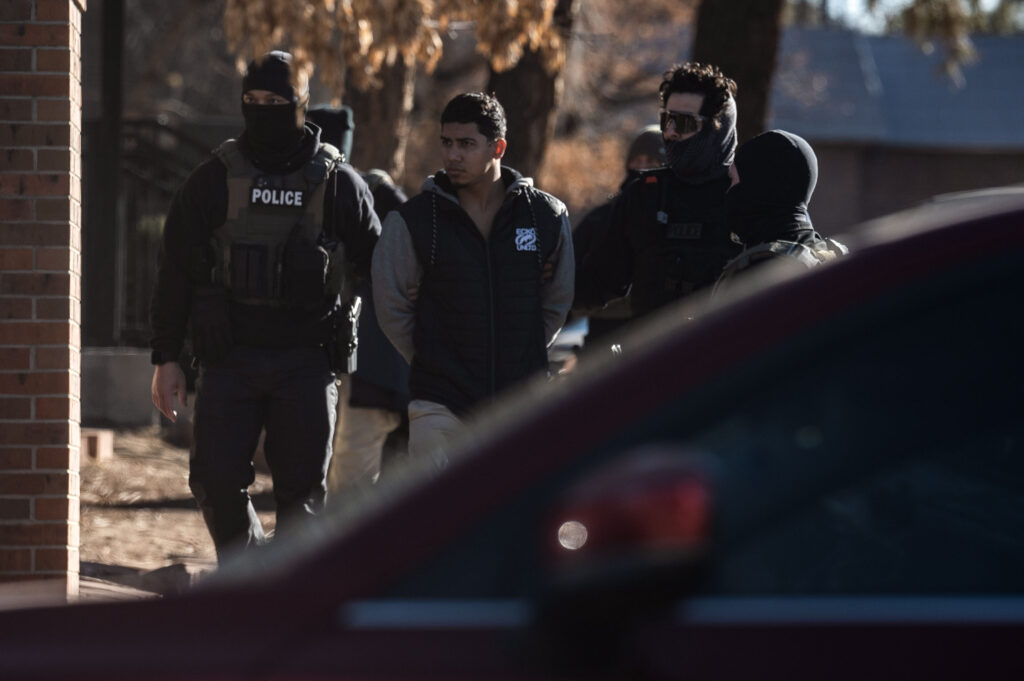
Thomas added that his department recognizes that many people remain confused about what local police look like, as opposed to ICE agents, and is considering publishing photos of officers in their various uniforms so the public can more easily distinguish them from federal authorities.
He also said that, in instances where officers wear black, armored tactical gear — such as for warrant executions, SWAT operations or deployment to protests — they wear DPD badges affixed to the front.
As for other ways to maintain the public trust, Thomas said that department officials have been routinely meeting with community leaders to discuss what’s going on in Minneapolis and gather feedback, as well as ensure a greater understanding of everyone’s legal rights.
“We continue to value de-escalation and we will be there to de-escalate any kind of situation that were to occur,” Thomas said.
Denver’s police chief also noted that the current immigration enforcement action throughout the country has made it harder, from his perspective, for local law enforcement to continue their work.
“I think there’s a lot of confusion that’s been created certainly,” Thomas said. “I think it has made it more difficult because communities are in fear, and I think communities are afraid to report crimes and cooperate with the police.”
Colorado Politics reporters Marianne Goodland and Marissa Ventrelli, as well as Denver Gazette Reporter Nico Brambila and City Editor Dennis Huspeni, contributed to this report. The Associated Press and Washington Examiner also contributed to this article.


Evergreen High School shooting motive still unknown; parents won’t be charged
Sage Kelley
sage.kelley@denvergazette.com
Updated 5 hours ago
The Jefferson County Sheriff’s Office completed the investigation into the Evergreen High School shooting that shocked the county — and country — five months ago. Following the investigation, the parents of the shooter, 16-year-old Desmond Holly, won’t face charges regarding...
Voters will decide proposal to repeal Colorado limits on police cooperation with immigration authorities
Marianne Goodland
marianne.goodland@coloradopolitics.com
Updated 1 week ago
A ballot initiative backed by the group Advance Colorado has qualified for the November general election, setting up a statewide vote on whether to undo limitations placed upon state and local law enforcement agencies’ ability to work with federal authorities....
Colorado lawmakers want officers to conduct ‘lethality assessments’ when responding to domestic violence calls
Marissa Ventrelli
marissa.ventrelli@coloradopolitics.com
Updated 2 weeks ago
A bipartisan group of lawmakers is hoping to reduce to Colorado’s rising domestic violence fatalities through a bill that would require law enforcement agencies around the state to conduct “lethality assessments” on domestic violence victims. In early December of last...
Colorado Joint Budget Committee rejects DOC’s $2.4M request for more beds
Marissa Ventrelli
marissa.ventrelli@coloradopolitics.com
Updated 2 weeks ago
The state’s Joint Budget Committee voted on Wednesday to deny the Department of Corrections’ $2.4 million request for additional prison beds, citing the department’s lack of a plan to address its ongoing overcrowding problems. In September, the committee approved the...
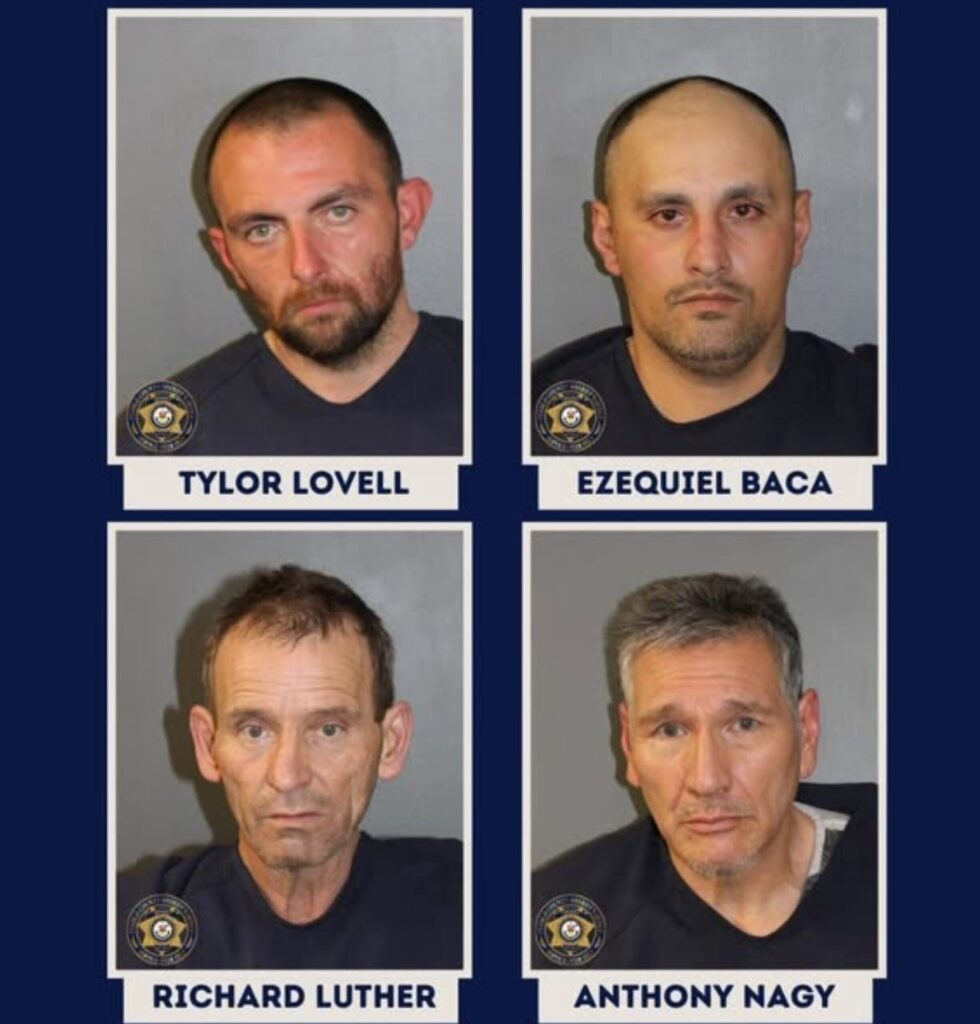
4 arrested after $900K in damages to former Pueblo County middle school
Cleo Westin
cleo-westin@coloradopolitics.com
Updated 2 weeks ago
Pueblo County sheriff’s deputies arrested four men after interrupting a burglary in progress at the former Excelsior Middle School on Thursday, according to a news release by the Sheriff’s Office. Richard Luther, 60, Tylor Lovell, 31, Ezequiel Baca, 35, and...
Gov. Jared Polis touts Colorado’s ‘significant’ drop in crime in 2025
Marissa Ventrelli
marissa.ventrelli@coloradopolitics.com
Updated 2 weeks ago
Gov. Jared Polis is touting a recent report saying Colorado’s overall crime rate decreased by double-digit margins over the past year. “I am thrilled to see our data-driven investments in law enforcement support and crime prevention are working,” Polis said...
Tina Peters involved in prison altercation caught on video
Dan Boniface
dan.boniface@denvergazette.com
Updated 2 weeks ago
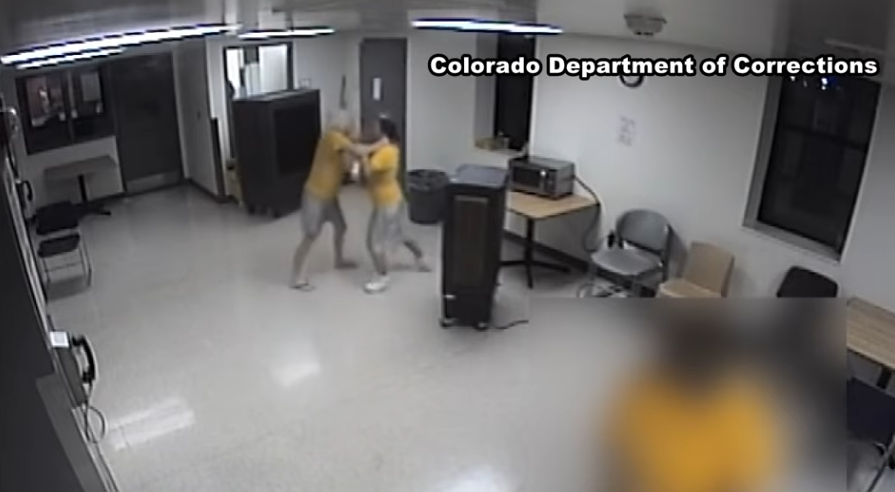
Tina Peters appears to have been involved in a prison altercation on Sunday with another inmate and the incident was caught on video. The incident happened at the La Vista Correctional Facility where Peters is serving a roughly nine-year prison...
Flock cameras assist in road rage shooting arrest in Douglas County
Dan Boniface
dan.boniface@denvergazette.com
Updated 3 weeks ago
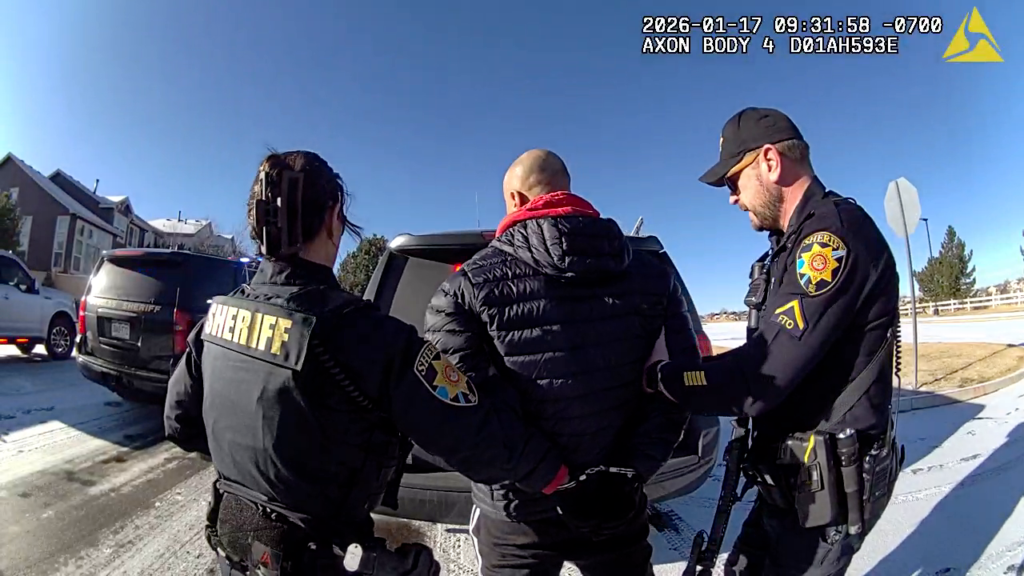
Douglas County deputies on Monday said Flock Safety cameras were critical in an investigation that led to the arrest of a road rage shooting suspect. Deputies with the Douglas County Sheriff’s Office said 43-year-old Mitchell Aaron Weber was arrested Saturday...
Colorado governor insists local officers can work with DEA agents amid non-cooperation law
The Denver Gazette
the-denver-gazette@coloradopolitics.com
Updated 3 weeks ago
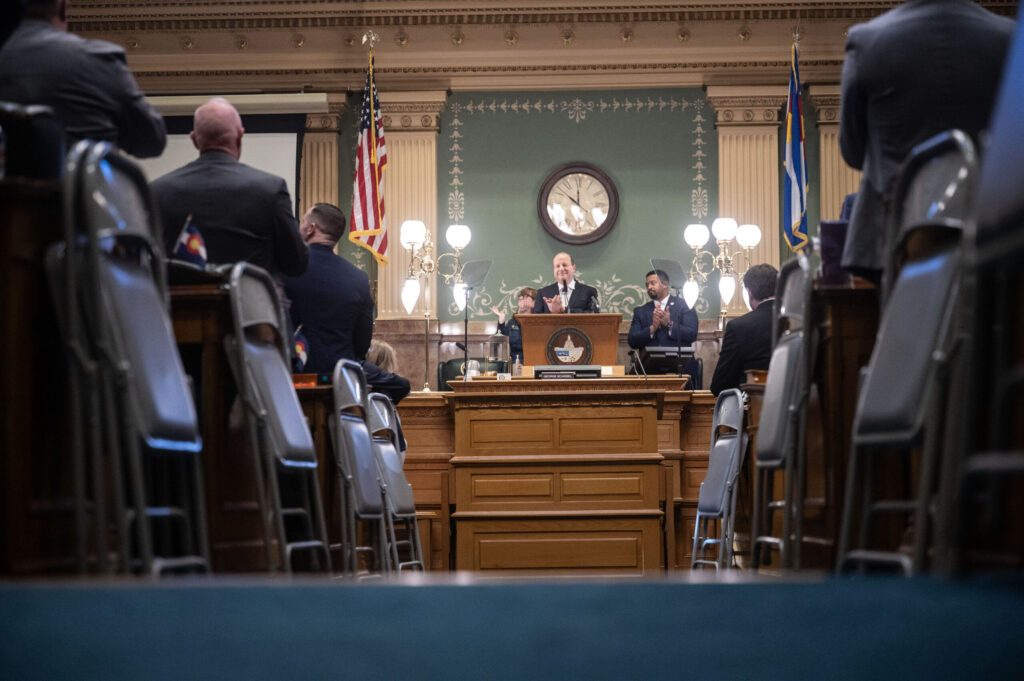
Gov. Jared Polis on Friday insisted that local law enforcement officers in Colorado can — and should — work with federal drug enforcement authorities to go after criminal activity. An official of the U.S. Drug Enforcement Agency earlier said Colorado’s...

Adams County deputy who was shot in stable condition, another man dies in hospital
Michael Braithwaite
michael.braithwaite@gazette.com
Updated 3 weeks ago
An Adams County Sheriff’s Office deputy is stable — though likely still in critical condition, as he remains in the intensive care unit — while a man died after both suffered gunshot wounds from what appeared to be a shootout...
PREV
PREVIOUS

Colorado lawmakers revisit social media guardrails for youth as global momentum grows
In 2024, Australia became the first country in the world to impose age restrictions for social media. As of late 2025, the country requires companies such as TikTok, Instagram, and YouTube to verify users’ ages to prevent children under 16 from accessing their platforms. Since Australia passed its law, several countries, including Malaysia, Denmark, and, […]

Proposal targets dual office-holding by Colorado legislators | Bills in brief
Colorado lawmakers introduce hundreds of bills each year. Bills in Brief cuts through the noise by explaining which proposals matter, what’s at stake, and how decisions at the Capitol could affect everyday life across the state. A bill set for its first hearing later this month would bar Colorado lawmakers from holding more than one […]