

Does Colorado have too high of a population? | Hal Bidlack
I think I first fell in love with Colorado back in 1968, when we took a family vacation from Michigan out to Salt Lake City and back. My dad had been asked to speak at a genealogy event, and rather than him just flying to SLC and back, we loaded up the station wagon (one of the Fords with fake wood panels, painted (and I don’t know why I remember this) the lovely shade called “seafoam green”) and off we went, for a big circle route that included crossing the Centennial State.
Not too many years later, I found the music and messages of John Denver and became a big fan. His poignant music and prose touched my heart. As it turned out, through my later involvement with his environment education organization, the Windstar Foundation, I had the honor of becoming a friend of John’s, a relationship I will always treasure. There’s nothing that is more Colorado than John. Well, maybe the Broncos.
And John’s oft-references to Colorado helped turn my mind to thoughts of living there one day. When I decided to join Air Force ROTC at the University of Michigan, I thought I would spend a tour, maybe two, on active duty and would then move on to the rest of my life. Well, that thought ended up stretching out to more than 25 years on active duty, the bulk of it, happily, in Colorado.
I started off as a “finger-on-the-button” guy in the ICBM world, up in Cheyenne, Wyoming. A handful of our ICBM command sites were in Colorado (the missile field covers more than 18,000 miles across Wyoming, Nebraska and Colorado), and I always enjoyed popping into Colorado from time to time to sit nuclear alert.
Happily, my next assignment was to the faculty of the Air Force Academy, in Colorado Springs. I arrived at the academy for the first time in 1987. I would spend the rest of my career (mostly) in Colorado. I eventually, after I retired from the Air Force, ran for Congress here, and am proud to consider myself a Coloradan, albeit an immigrant one from another state.
I was reminded of all this when I read a report in Colorado Politics, that noted for the first time in a long time, more people moved out of Colorado than moved in. The margin was relatively small, only 12,100 or so, but it did mark the first time in 20 years when more left than arrived.
The report in CoPo was penned by Vince Bzdek, who is one of my many, many bosses, and he noted with some regret the numbers shifted direction, and I think I understand that. But the overall population of the state did increase, and it is possible a bit of an immigration fluke was responsible, in that quite a few immigrants arrived in Colorado as their first U.S. destination, all the while planning on leaving for other states after getting settled. But the point raised remains an important one: we need population growth to keep a vibrant jobs market as well as other factors that add fuel to the economy. And I get that, but I’m not entirely sure I agree (happily, Vince is a forgiving sort of fellow).
The Colorado state song is, as you know… (building suspense with a pause) “Where the Columbines Grow.” That tune was adopted in 1915. But the other state song (yes, we have two), is “Rocky Mountain High” by my old friend John Denver.
I love that song (the latter) but there is a message in there, and it was about people moving to Colorado.
Though you likely know the tune at least enough to hum along when it plays, there are lyrics that might make you wonder what John was talking about. Specifically, his song regrets “more people, more scars upon the land.” That part of the song was written about keeping people out of Colorado.
Back in 1972, our lovely state was awarded the 1976 Winter Olympic games, pending a voter referendum on whether or not we wanted to partially fund the Olympics. John objected to hosting the games, thinking it would bring, well, more people and more scars up on the land. He later mentioned he felt his tune had been helpful in getting the voters to reject hosting by prohibiting the state government from “levying taxes and appropriating or loaning funds for the purpose of aiding or furthering the 1976 Winter Olympic Games.”
The voters rejected the Olympics 60% to 40%.
Now, it is at least somewhat hypocritical of me to argue we have enough people already, given until the late 1980s, I was a Michigan resident. But I’ve been a Coloradan for more than 40 years now, and hopefully that qualifies me to have an opinion, but I admit I’m not entirely sure what that opinion is.
There is certainly a point when we might agree there are enough people and enough development, in general, but I’m guessing every governor we elect, from any party, will always be in favor of additional growth and expansion in the name of progress. I worry mostly about water availability in coming years, especially east and west of the front range. Unchecked, or at least ill-considered growth, poses a danger to people and to the environment. I suspect simple population growth is fine, as long as we, as a state, have a plan, particularly when it comes to energy use and water. But do we?
I suspect my boss (Hi, Vince!) and I actually agree on reasoned growth coupled with proper public administration of resources. Frankly, I can’t understand people who don’t want to move to Colorado.
All that said, as is often the case in political science questions, the answer to whether fewer immigrants is a good thing or not is, well, it depends. It depends on many factors, such as water, and is unlikely to be resolved by any one bit of legislation or public policy. Most important is for state leaders to be aware of our population’s growth, decline, or shifts. Hopefully, good public policy can come forth, regardless of how many moving vans are running in which direction across our borders.
Hal Bidlack is a retired professor of political science and a retired Air Force lieutenant colonel who taught more than 17 years at the U.S. Air Force Academy in Colorado Springs.

Democratic candidate in Colorado’s 4th CD urges long-term water planning
Marianne Goodland
marianne.goodland@coloradopolitics.com
Updated 5 hours ago
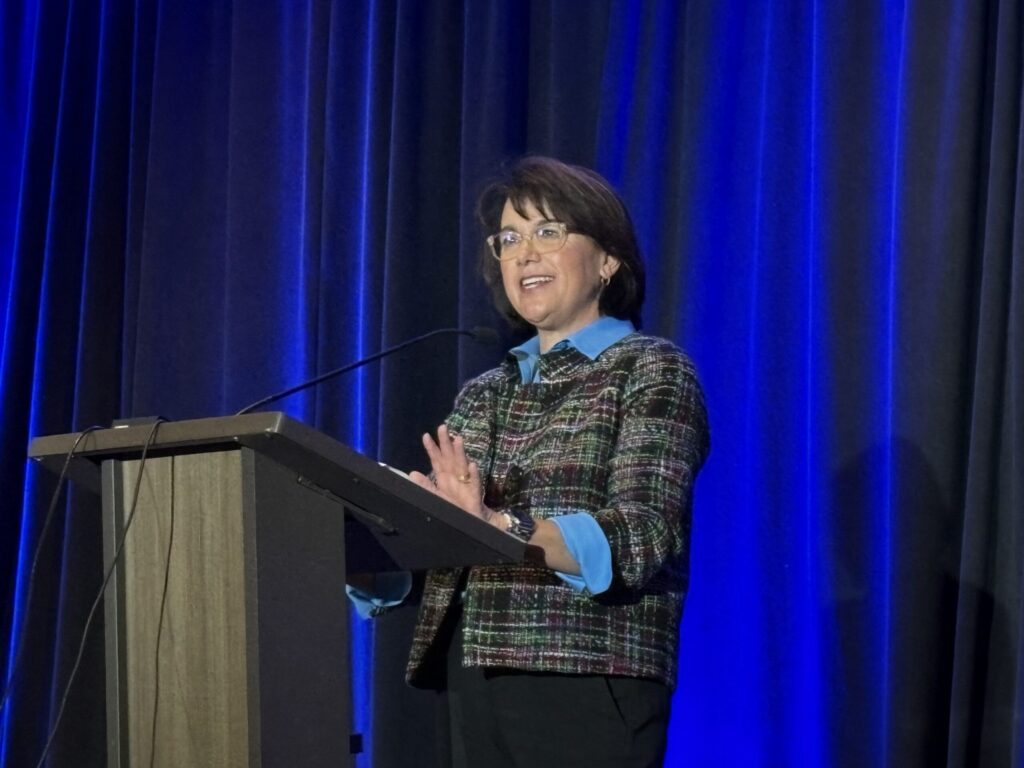
The Democrat hoping to become the next representative of Colorado’s 4th Congressional District on Thursday made her case on the final day of Colorado Water Congress in Steamboat Springs. Eileen Laubacher, who spent 34 years in the U.S. Navy and...

Proposal to cap Colorado income tax rate qualifies for November ballot
Thelma Grimes
thelma.grimes@coloradopolitics.com
Updated 1 day ago
Election officials on Thursday confirmed that the proposal to cap the state’s income tax at the current rate submitted signatures and voters will consequently decide its fate this November. The fight over tax rates is part of the tug and...

Democratic gubernatorial candidate Phil Weiser promises to appoint rural outreach director, water adviser
Marianne Goodland
marianne.goodland@coloradopolitics.com
Updated 2 days ago
Democratic gubernatorial candidate and current Attorney General Phil Weiser told the Colorado Water Congress Thursday he intends to appoint a rural outreach director and a water policy adviser should he win the election in November. Weiser’s speech at the Steamboat...

Attorney general candidates present priorities at Colorado Water Congress
Marianne Goodland
marianne.goodland@coloradopolitics.com
Updated 1 day ago
The two major-party candidates for attorney general — Republican Michael Allen, the district attorney for Teller and El Paso counties, and Democratic Secretary of State Jena Griswold — on Thursday outlined their priorities at the Colorado Water Congress. Griswold attended...
State money diversion scheme the unsurprising downfall of ERBOCES scam | Paula Noonan
Paula Noonan
paula-noonan@coloradopolitics.com
Updated 3 days ago
Falcon School District 49, aka El Paso County School District 49, has finally cut bait, thrown the fishing pole into the lake and sunk the canoe. The longtime enabler of the Education Reenvisioned BOCES’ (ERBOCES) schemes to fund private Christian...

GOP gubernatorial candidate Victor Marx pushes aggressive water-storage expansion at Colorado Water Congress
Marianne Goodland
marianne.goodland@coloradopolitics.com
Updated 3 days ago
Victor Marx, the Republican nominee for governor, took the spotlight Wednesday during the opening day of the Colorado Water Congress, laying out how he says the state should approach its water future. Marx told the standing-room-only audience in Steamboat Springs...

U.S. Rep. Lauren Boebert stresses storage, forest health and Upper Basin rights at Colorado Water Congress
Marianne Goodland
marianne.goodland@coloradopolitics.com
Updated 2 days ago
Republican U.S. Rep. Lauren Boebert used her brief Wednesday appearance at Colorado Water Congress to tout her record on delivering water projects for the state and her district. Boebert, who is running for her second term representing the 4th Congressional...

Steve Schuck on the ‘magic’ of school choice | The OpEdge Podcast
Tony Olivero
tony.olivero@gazette.com
Updated 3 days ago
Parents Challenge co-founder and longtime school choice advocate Steve Schuck joins The OpEdge to discuss expanding educational opportunities and ensuring parents are in charge of their kids’ education. Schuck tells investigative columnist and host Jimmy Sengenberger why he believes Colorado...

Do lobbyists add value to policymaking? | PODIUM
Colorado Politics
colorado-politics@coloradopolitics.com
Updated 3 days ago
By Corky Kyle I was recently asked a straightforward question: are lobbyists a valuable component in the development of public policy? After more than four decades working with the Colorado General Assembly, state agencies, local governments, associations and businesses, my...
Ain’t Polis’ Peters commutation a pity? | Hal Bidlack
Hal Bidlack
hal-bidlack@coloradopolitics.com
Updated 5 days ago
I am hoping that, yet again, my long-suffering and very forgiving editor will pardon my rambling thoughts today, as there are too many open tabs on my computer that deal with issues I want to talk about (Ed: pretty used...
PREV
PREVIOUS

Colorado legislators advance proposal allowing lawsuits against federal immigration agents
A divided panel of Colorado legislators on Monday advanced a proposal to give individuals injured during an immigration enforcement operation the ability to sue federal agents in state court. The measure comes amid speculation that Colorado could be next on the Trump administration’s target, given the tension between the White House and the state, which […]
Specter of litigation looms as Colorado River basin governors head to DC
Feb. 14. That’s the next deadline for the seven states of the Colorado River to reach an agreement on how to manage the river after the current operating guidelines expire. The U.S. Bureau of Reclamation would like the next guidelines to be in place by Oct. 1, the beginning of the next water year, but […]