

Colorado legislators advance proposal allowing lawsuits against federal immigration agents
A divided panel of Colorado legislators on Monday advanced a proposal to give individuals injured during an immigration enforcement operation the ability to sue federal agents in state court.
The measure comes amid speculation that Colorado could be next on the Trump administration’s target, given the tension between the White House and the state, which has adopted “sanctuary” policies that bar cooperation between federal agents and local officers on immigration matters.
It is the latest development in an-already tense relationship between Colorado and the Trump administration, which has traded barbs and lawsuits, underpinned by the former’s campaign to crackdown on illegal immigration and the latter’s “sanctuary” policies. At the outset, Colorado’s Democratic officials have signaled a confrontational stance vis-a-vis the Trump administration — the attorney general last month announced the launch of an online “tool” for Coloradans to report misconduct by federal agents, while the city of Denver is considering barring the wearing of masks by law enforcers.
Broadly speaking, a sanctuary city refers to local policies that limit or prohibit cooperation with federal immigration authorities. Both the Colorado government and the city of Denver have adopted laws barring such cooperation, though political leaders insist neither state nor municipality is a “sanctuary” jurisdiction.
The latest proposal out of the state Capitol would allow a “cause of action” by individuals injured in an immigration enforcement operation.
The proposal does not explicitly identify the U.S. Immigration and Customs Enforcement or the U.S. Border Patrol, though it expressly reference enforcing federal immigration laws.
Senate Bill 5 is sponsored by Sens. Julie Gonzales of Denver and Mike Weissman of Aurora, the Democrats who sponsored last year’s law that, among its provisions, further limited the ability of local governments and law enforcement agencies to provide personally identifying information or immigration status to federal immigration authorities. The exemptions are criminal investigations.
Senate Bill 5 would also allow for “legal or equitable relief or any other appropriate relief” if an agent “violates” the U.S. Constitution while participating in immigration enforcement action.
The Senate Judiciary Committee hearing was dominated by testimony from individuals who support the proposal.
Gonzales began by identifying people who, she said, were killed by federal immigration agents during the past year, including former Colorado resident Renee Nicole Good. The latter died after she was shot by an immigration agent last month in Minneapolis.
The Trump administration and Democrats have offered competing versions of what happened in the case of Good. The former insisted that Good “weaponized” her car against federal officers; the latter countered that shooting her was unwarranted.
What’s happening in Minnesota is not unlike what’s happening here, Gonzales said, pointing to a family in Durango who last year was mistaken for someone else and detained. She said legal observers in Durango were shoved to the ground by U.S. Immigration and Customs Enforcement agents. She added that, in the case of a family in Alamosa, the car windows were smashed by immigration agents while a baby was in the backseat.
“The Constitution protects us all, and that, my friends, is the genesis of this bill,” she said.
The proposal creates a remedy in state court for violations of constitutional law, the Democrat said, adding it will hold those individuals who trample on the rights of Coloradans accountable.
The bill raised several questions, notably what happens to the concept of “qualified immunity” designed to protect federal officers from harassment while performing their duties.

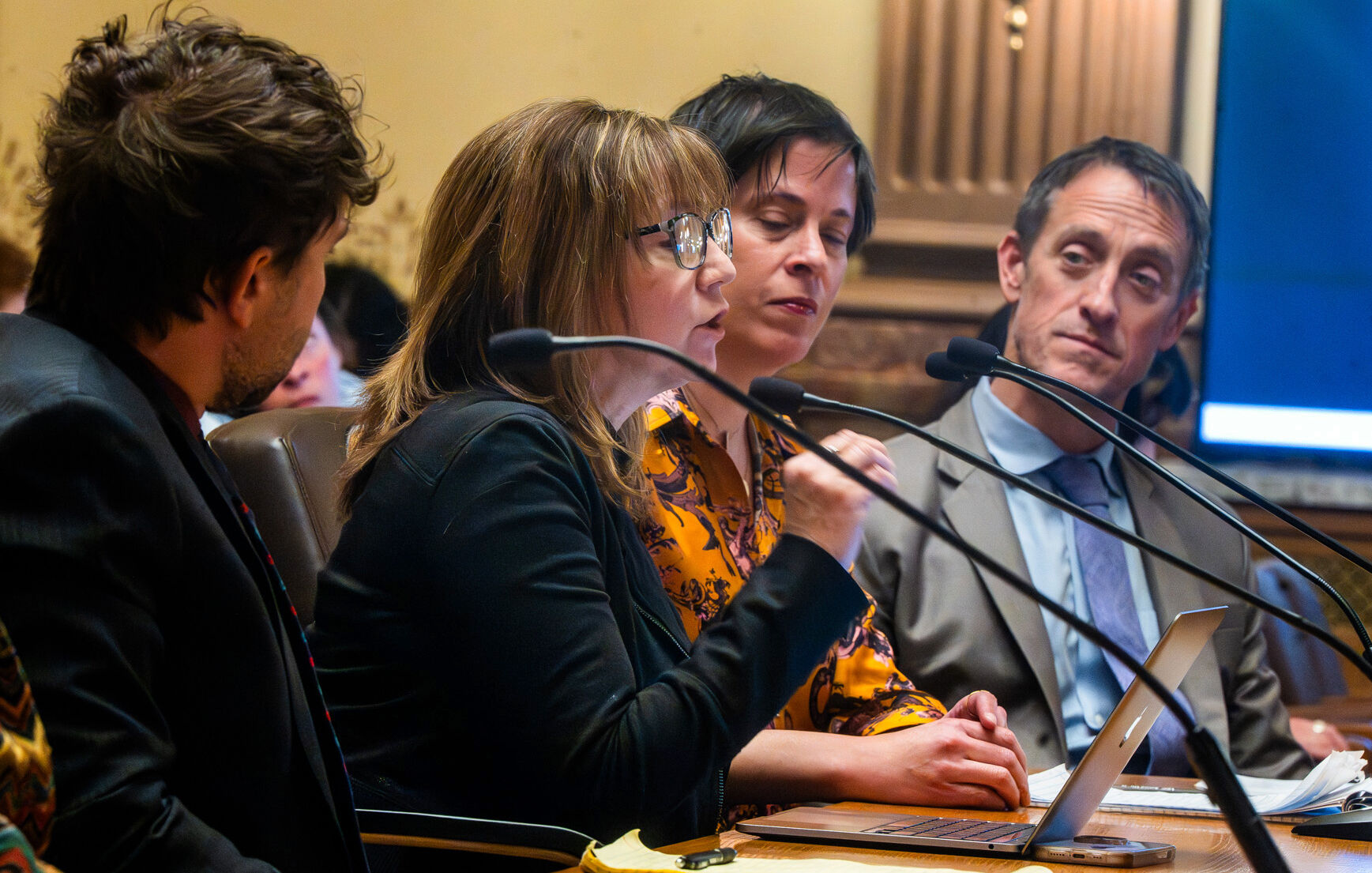
Sen. Lynda Zamora-Wilson, R-Colorado Springs, asked how the state legislature can override federal immunity principles without violating the separations of power or federal supremacy.
Weissman said qualified immunity “is a balancing act between the functions of government” and the rights of the citizenry.
That immunity language was further clarified by an amendment the legislator offered and which the committee approved at the hearing’s end.
Meagan Forbes, senior legislative counsel for the Institute for Justice, said the bill responds to a serious problem — that no meaningful legal remedy exists in state or federal courts when a person’s constitutional rights are violated by federal officials.
“Constitutional rights are supposed to come with enforcement mechanisms,” she said, arguing that the bill will restore basic accountability that was once available under common law and maintaining it “does not impede lawful immigration policy.”
In Eagle County, Alex Sanchez of Voces Unidas talked about the experience of “Jose,” a carpenter who, he said, has spent 10 years building his life in Colorado.
Last summer, he was arrested in a parking lot in Rifle, tackled by agents who, Sanchez claimed, beat him. Jose arrived at the Aurora detention center so bloodied that staff put him in isolation. Weeks later, he was deported to Mexico.
Sanchez did not specifically mention Jose’s immigration status, though his deportation means he had been living in the country illegally.
ICE agents have carried out fake traffic stops, Sanchez also claimed, or left “ace of spades death cards” inside vehicles. Sanchez called the latter racist threats meant for the families of the detained.
He also pointed to the case of Delvin Francisco Rodriguez, who Sanchez said is the first Colorado resident to die in ICE custody.
“It underscores the needs for remedies for families like Jose and Delvin and so many others who have nowhere to turn when their rights are violated,” Sanchez.
Some of those who opposed the bill, like Sofia Llamas of Aurora, suggested that civil rights belong only to lawful residents.
The bill, she added, is but another tool by the state “to protect illegals over Americans,” she said, adding it will hurt Americans because it will cost litigation money.
Llamas listed the first names of people she said had been killed by immigrants illegally living in the U.S. She said supporters of the bill deliberately do not mention any Americans killed, “but you you sure focus on protecting illegals over Americans.”
Others said the proposal does not solve real-world problems.
Juan Candil, who said he is a student and a lawful immigrant who has been in the U.S. for a decade recounted how his family fled cartels and sought refuge in America. He said the proposal only solves problems that “exist in campaign speeches, not in the real world of public safety.”
Removing immunity from federal officers will not safeguard the immigrant community — instead, he said, it will merely “empower” the criminal elements he and his family fled from.
“I have followed the rules, I have respected the process. It’s insulting to a lawful immigrant to see the state prioritized sanctuary policies that make our communities less secure,” he said.
The bill is likely to invite lawsuits from the Trump administration. The proposal comes with a $125,000 cost for those lawsuits — to be covered by a state “risk management cash fund,” akin to a self-insurance pool.
Zamora-Wilson raised the issue of cost: The fiscal analysis also pointed to an estimate of $3.3 million cost per year beginning in Fiscal Year 2026-27 “from an additional 13 cases per year against state employees who are presumed to have injured an individual while participating in federal immigration enforcement.”
During a news conference held prior to the hearing, Rep. Yara Zokaie, D-Fort Collins, said what she heard from her community is “pain and fear.” She accused immigration agencies of operating “in secrecy and outright deception, and that deception is perpetrated by the highest ranking officials in this country that would have us not believe our own eyes and ears.”

Zokaie, Rep. Elizabeth Velasco, D-Glenwood Springs, and others mentioned other bills that they intend to introduce this session — that ICE agents must not be masked, that people must be notified when federal immigration authorities seek information about them or that detention centers would be held accountable when those detained don’t have access to water, food, or even comfortable temperatures.
The bill now heads to the Senate Appropriations Committee after a party-line 5-2 vote.


Democrat Jessica Killin’s internal poll shows dead heat with U.S. Rep. Jeff Crank in Colorado’s 5th CD
Ernest Luning
ernest.luning@coloradopolitics.com
Updated 11 hours ago
Jessica Killin, the Democratic nominee in Colorado’s 5th Congressional District, is in a statistical tie with Republican U.S. Rep. Jeff Crank, according to an internal poll released this week by Killin’s campaign. The poll of likely general election voters, conducted...

Colorado Springs D-11 may present voters with $775 million bond measure
Eric Young
eric.young@gazette.com
Updated 19 hours ago
Colorado Springs’ oldest school district could see new capital funding for the first time in over 20 years. Colorado Springs District 11’s Board of Education will decide whether to present a new, districtwide bond totaling $775 million to voters this...

Victor Marx says he’ll only debate Phil Weiser once in Colorado governor’s race — without a moderator
Ernest Luning
ernest.luning@coloradopolitics.com
Updated 14 hours ago
Colorado Republican gubernatorial nominee Victor Marx said on Tuesday that he will participate in only one debate with Attorney General Phil Weiser before the November election — and he challenged the Democratic nominee to hold the event without a moderator....

Denver seeks to move more than $18 million to cover George Floyd protest claims
Deborah Grigsby
deborah.smith@denvergazette.com
Updated 21 hours ago
City officials want to move millions from Denver’s General Fund contingency account to the City Attorney’s Liability Claims Fund to cover legal settlements and claims stemming from the 2020 George Floyd protests. The hefty shift of cash, proposed in Council...
Small Colorado town grapples with ICE detention center opening
Nico Brambila
nico.brambila@denvergazette.com
Updated 20 hours ago
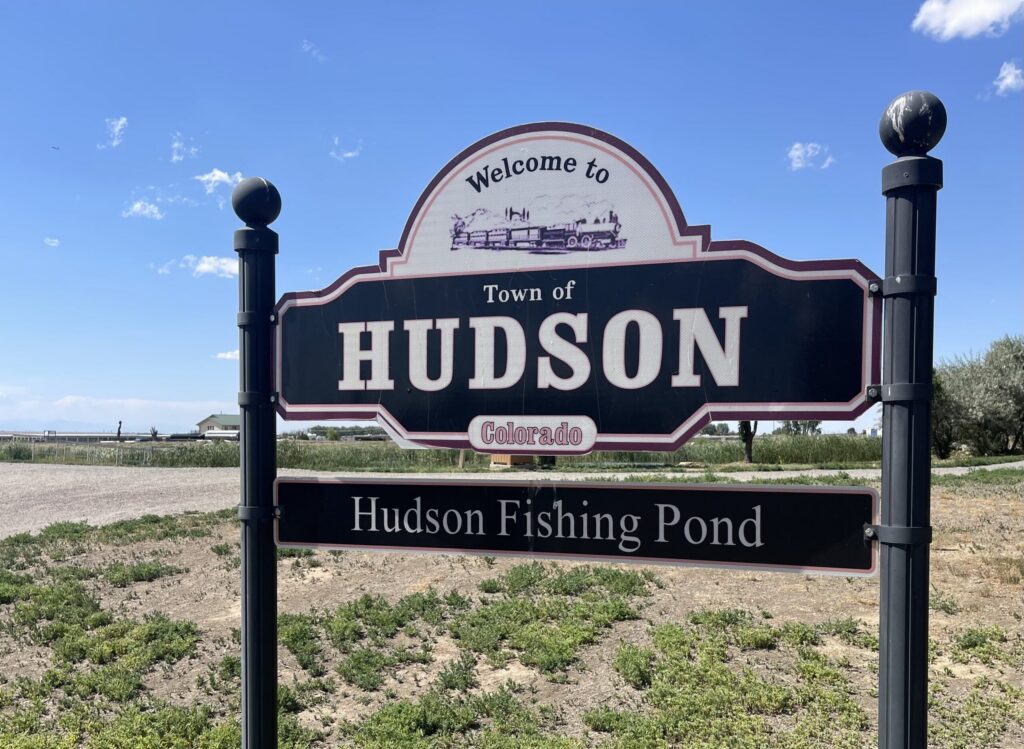
Thirty miles northeast of downtown Denver — where the Front Range loosens its grip, subdivisions give way to open fields and pickups outnumber Teslas — is the town of Hudson. Population 1,652. Hudson still feels like the kind of place...

Jeffco Public Schools sues Trump administration to protect funding after alleged transgender policies violation
Matt Kyle
matt.kyle@denvergazette.com
Updated 20 hours ago
In the wake of several threats by the Trump administration to revoke federal funding, Jeffco Public Schools filed a lawsuit against the Department of Education seeking to protect that badly needed money. Jeffco has been under investigation by the DOE’s...

Denver labor acknowledgment proposal faces council committee questions
Deborah Grigsby
deborah.smith@denvergazette.com
Updated 2 days ago
A proposal to add a labor acknowledgment to Denver City Council proceedings has been delayed by the Finance and Business Committee after members raised questions about its wording, intentions and place in the council’s opening proceedings. The proposal, put forth...

Colorado residents rush to buy guns ahead of new restrictions, breaking sales records for several stores
By Debbie Kelley
by-debbie-kelley@coloradopolitics.com
Updated 2 days ago
Colorado residents are lining up to buy guns ahead of the latest weapons restrictions set to take effect this Saturday. The new law mandates individuals seeking to purchase semiautomatic firearms with detachable magazines to first complete a firearm safety course...

Crime continues to decline in Aurora, police chief says
Kyla Pearce
kyla.pearce@gazette.com
Updated 2 days ago
Crime in Aurora continued to decline in the first half of 2026, according to Aurora Police Department officials. Crime overall in the city has been on a downward trend since 2024, according to APD. Between Jan. 1 and June 30,...

El Paso County rejects multi-family zoning request near Monument Academy
Savannah Eller
savannah-eller@coloradopolitics.com
Updated 2 days ago
The El Paso County Board of Commissioners narrowly rejected a developer’s bid to convert land from low- to high-density residential zoning. The request, made by MA Infrastructure, LLC, would have allowed 12 units per acre on half of a 14-acre...
PREV
PREVIOUS

So … why do we care about Bad Bunny?
Puerto Rican superstar’s selection to headline first Super Bowl halftime show in Spanish has sparked global conversation and controversy Puerto Rican superstar Bad Bunny’s selection as the first artist to headline a Super Bowl halftime show performing entirely in Spanish has sparked global conversation and controversy. But those unfamiliar with the musical world’s wildest hare […]

Does Colorado have too high of a population? | Hal Bidlack
I think I first fell in love with Colorado back in 1968, when we took a family vacation from Michigan out to Salt Lake City and back. My dad had been asked to speak at a genealogy event, and rather than him just flying to SLC and back, we loaded up the station wagon (one […]