

Jason Crow lays out foreign policy rooted in ‘working-class interests,’ homegrown values | TRAIL MIX
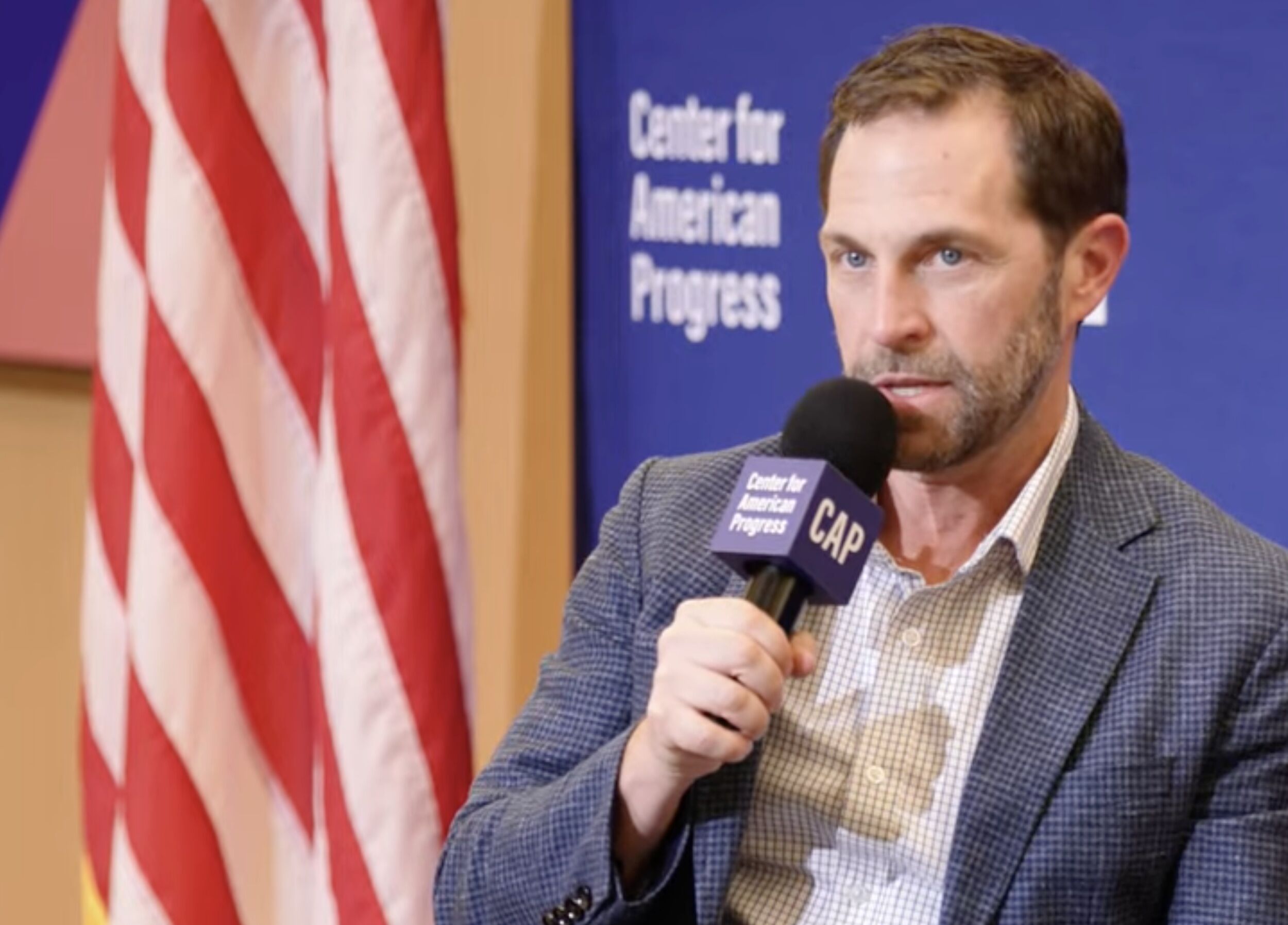
U.S. Rep. Jason Crow, the Aurora Democrat who represents Colorado’s 6th Congressional District, last week called for Congress to reassert its role in steering a revamped foreign policy that lives up to American values, rejects corruption at home and abroad, and draws on a broader range of talent to rejuvenate a system he warned has become “too insular and out of touch.”
In a keynote address delivered on Oct. 22 at the Center for American Progress, Washington’s leading establishment liberal policy shop, the 46-year-old fourth-term lawmaker outlined what the think tank teased as a “new, affirmative vision for the future of American diplomacy and global leadership” before elaborating on the implications in a lengthy conversation with experts in foreign affairs.
An attorney and decorated Army Ranger veteran, Crow sits on the House Permanent Select Committee on Intelligence and Armed Services Committee and was ranking member of the House Foreign Affairs Committee’s Subcommittee on Oversight and Accountability in the last Congress.
In his first term, drawing on lessons he learned in Iraq and Afghanistan about the link between civilian casualties and the creation of extremists, Crow co-founded the Protection of Civilians in Conflict Caucus, which pushed for that approach in the Armed Forces and created a hub in the Department of Defense to help train U.S. military in best practices.
Additionally, Crow cut his teeth on the world stage as a member of the NATO Parliamentary Assembly and on congressional delegations to Ukraine and elsewhere in Europe since Russia invaded its neighbor.
“Americans simply no longer trust the foreign policy establishment in this country,” Crow said. “And they shouldn’t. Because it’s actually failed them in so many remarkable ways.”
The stakes are high, said Crow, depicting the country’s evolving relationship with the world since the mid-1990s through the lens of a string of shocks to American workers, capped by more than two decades of “failed military interventions” that cost trillions of dollars and tens of thousands of lives — shouldered, he noted, unequally by that same working class.
From the time he enlisted in the Army as a private to his tenure in Congress, Crow said, “the world indeed has been turned upside down; all that we had assumed and taken for granted has been thrown into question.”
Crow traced a line from the economic havoc wrought by neoliberal economic policies like NAFTA to decades of intervention in Iraq and Afghanistan, punctuated by the pandemic shattering a sense of safety and disproportionately straining working Americans.
And while Crow didn’t pull any punches castigating Donald Trump — he called the Trump administration “the most corrupt in American history” and characterized the Trump doctrine as “pay to play for tech oligarchs and strong men” — Crow said the biggest divide he sees in Washington these days is between those who think Trump is the cause of the country’s unrest or a symptom.
Crow made clear he favors the latter view.
Restoring trust in the system, he said, is both imperative and urgent, as the U.S. faces increasing threats and pressures in a dangerous world, including an ongoing war in Europe between an American ally and an aggressive, nuclear-armed adversary; fallout from war in the Middle East; and mounting tensions with China over Taiwan, trade and competition for world influence.
Crow posed four questions he said “will determine whether or not people will trust us again and give us the opportunity to serve.”
First, he said, Congress decide whether to reclaim its authority over foreign policy after steadily handing it over to Democratic and Republican presidents alike, from treaties to international trade to authorizations for the use of military force.
“For decades, Congress has ceded and given up many of those powers,” he said, despite the clear language of the U.S. Constitution. “Our founders knew that these things were too important to be entrusted simply to the executive because it needed accountability to those closest to the people.”
Second, Crow said, foreign policy and national security practitioners have to live up to the country’s values by adhering to their own rules.
“Americans believe in rules. This town loves to talk about the ‘rules-based international order,’” Crow said, even though “a lot of Americans just think it’s bull—-.” Not the rules themselves, he added, but the “unequal application and our inconsistency in following those rules” — from making deals with warlords in conflict zones to aligning with autocrats to “keep oil prices low.”
“We make short-term decision after short-term decision that undermines our credibility, and our ability to actually go to the world and make the case,” Crow said.
Decrying the Trump administration’s approach to diplomacy — from punishing Brazil with tariffs to support a political ally and handing a $20 billion bailout to Argentina for parallel reasons, to accepting a luxury jet from Qatar and cutting deals on hotel and golf course developments while conducting diplomacy — Crow said establishing a robust foreign policy requires taking on corruption.
“An ambitious anti-corruption agenda at home and abroad must be our second-order priority, behind recapturing war powers,” Crow said. “And if members of Congress aren’t willing to be serious about that, then they can’t be taken seriously by all of you.”
Lastly, Crow said the foreign policy establishment can’t be responsive to the American people “if it’s with the same people who have gone to the same three colleges, most of whom live within 50 miles of an ocean.”
When he first arrived in Congress, Crow said, he kept encountering the same people at dinners, roundtables, retreats and trips and realized Americans “simply don’t see themselves in their leadership anymore.”
In order to remedy this disparity, he said, it will take tapping into talent across the country, with mentorships, recruiting and a modified security clearance system “so people with actual lived experience can still qualify for important jobs.” He also called for diplomats and national security personnel to “conduct public diplomacy” across the country, taking the global focus to the heartland.
“Most of these folks have lost faith in this town, and rightfully so,” Crow told the audience.
“I share much of that anger and frustration,” he added. “There is so much that we must do, but we will never be given the chance to do any of it unless we prove that we are willing to build an entirely new system based on fundamental principles.”

Trump pardons Tina Peters, but Colorado officials say he can’t reverse state convictions | TRAIL MIX
Ernest Luning
ernest.luning@coloradopolitics.com
Updated 2 days ago
President Donald Trump said late on Dec. 11 that he had issued a pardon for Tina Peters, the former Mesa County clerk convicted of orchestrating a scheme to breach secure election equipment, though Colorado officials and legal experts immediately countered...
Colorado Rep. Brittany Pettersen cheers President Trump signing into law 2 bipartisan bills she led
Ernest Luning
ernest.luning@coloradopolitics.com
Updated 1 day ago
President Donald Trump has signed into law two bills led by U.S. Rep. Brittany Pettersen that address a pair of the Colorado Democrat’s signature issues —opioid addiction treatment and parents traveling by air with breast milk. Known as the SUPPORT...

Palmer Lake to discuss Buc-ee’s, recall elections Thursday
Savannah Eller
savannah-eller@coloradopolitics.com
Updated 3 days ago
The newly-whole Palmer Lake Board of Trustees will have an opportunity Thursday to discuss the setting for two issues going to town voters in the new year. The first is when and how to field a ballot question on the...

Colorado vacancy panels face challenge: Replacing senator and representative from the same area
Marianne Goodland
marianne.goodland@coloradopolitics.com
Updated 4 days ago
Two vacancy committees that will convene in the next month or so will have an interesting challenge: Picking a new state senator and state representative who will represent the same geographic area. The vacancy election for Senate District 25, represented...

Colorado Democrat Julie Gonzales launches U.S. Senate primary challenge to incumbent John Hickenlooper
Ernest Luning
ernest.luning@coloradopolitics.com
Updated 5 days ago
Declaring that Colorado “needs a fighter, not a bystander,” state Sen. Julie Gonzales, a Denver Democrat, on Monday launched her long-anticipated primary challenge to U.S. Sen. John Hickenlooper. Pitching her campaign as a departure from “old-playbook politics,” Gonzales said she’s...
Democrat Shannon Bird to step down from Colorado legislature to campaign full-time for Congress
Ernest Luning
ernest.luning@coloradopolitics.com
Updated 6 days ago
State Rep. Shannon Bird, a Westminster Democrat, said Sunday that she plans to resign from the Colorado legislature next month in order to focus on running for the 8th Congressional District seat held by Republican U.S. Rep. Gabe Evans. Bird...

Colorado Supreme Court to hear case on ballot measure disclosure requirements
Marissa Ventrelli
marissa.ventrelli@coloradopolitics.com
Updated 1 week ago
The Colorado Supreme Court has agreed to hear a case challenging whether the state can require ballot measure committees to disclose the names of their registered agents in election communications. The case stems from a complaint filed during the 2020...
Democrat Jena Griswold lands EMILYs List endorsement in Colorado attorney general race
Ernest Luning
ernest.luning@coloradopolitics.com
Updated 1 week ago
EMILYs List, a national organization that works to elect pro-choice, Democratic women, this week endorsed Colorado Secretary of State Jena Griswold’s bid for attorney general in next year’s election. The 41-year-old Griswold, who is term-limited, was the first Democrat elected...
Colorado secretary of state refuses to hand over election records to DOJ
Marissa Ventrelli
marissa.ventrelli@coloradopolitics.com
Updated 1 week ago
Colorado will not comply with the U.S. Department of Justice’s request to share certain voter information, Secretary of State Jena Griswold said on Wednesday. Federal authorities have sought voter data from more than two dozen states, framing it as part...
Charles Johnson retains District 11 school board seat after election recount
Gazette Staff
gazette-staff@gazette.com
Updated 1 week ago
The order of finish for the last of three open seats on the Colorado Springs School District 11 Board of Education remained the same after a recount, according to figures released Thursday from the El Paso County Clerk and Recorder’s...
PREV
PREVIOUS

Colorado justices consider whether Denver police failed to respect suspect's right to counsel
Members of the Colorado Supreme Court considered on Thursday whether Denver detectives improperly restarted their interrogation of a murder suspect who had clearly invoked his constitutional right to an attorney. The district attorney’s office characterized the circumstances as “peculiar.” When police initially brought in Dakotah Lulei for questioning, he was not under arrest. After receiving […]

Appeals court overturns Denver strangulation conviction for improper expert testimony
Colorado’s second-highest court reversed a Denver man’s assault conviction on Thursday, finding an expert’s testimony about the potential risks of strangulation had no bearing on the facts of the case. Phillip L. Bauereiss and the victim got into an argument. Jurors heard that Bauereiss allegedly took a dog leash and wrapped it around the victim’s […]