

Colorado justices weigh ‘cascade of errors’ in Arapahoe County murder trial
There was no dispute that Terrence G. Davis died by gunshot in an Aurora alleyway in 2017. At the trial of Davis’ suspected killer, jurors reached two conclusions. First, they believed he was guilty of second-degree murder for causing Davis’ death.
Second, they were asked whether the defendant used a gun. No, said the jury, he did not.
That seeming impossibility led the state’s Court of Appeals to overturn the conviction of defendant Jacob Alexander Shockey in 2023. The only way jurors could have believed Shockey caused Davis’ death without being the shooter, the court determined, was by relying on a legal theory the prosecutor discussed extensively during jury selection, but which ultimately was not grounds for conviction.
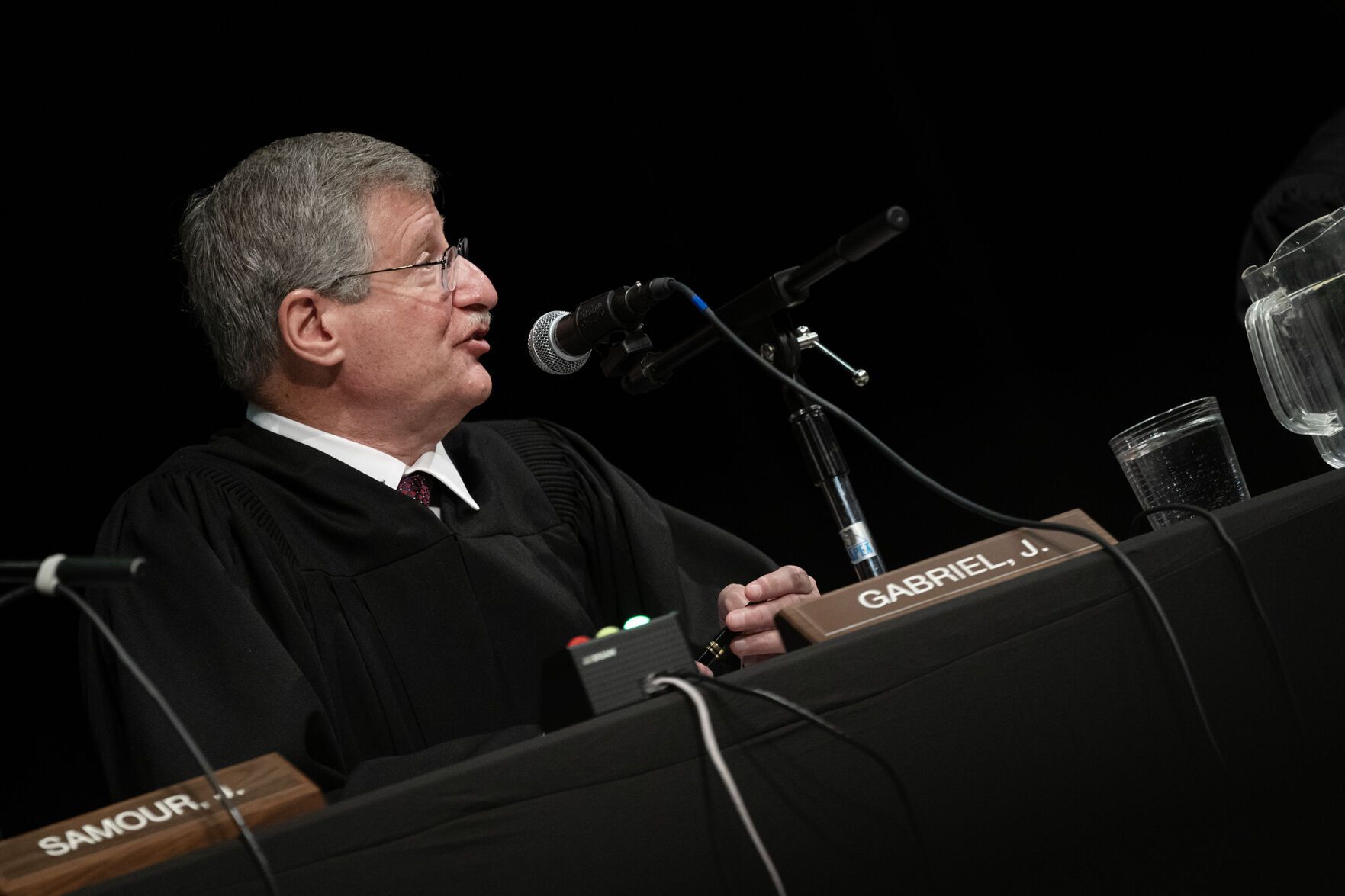
On Monday, the Colorado Supreme Court considered whether Shockey’s murder conviction should stand and, if not, whether prosecutors were barred from bringing him to trial a second time.
“I understand the inherent discomfort in the inconsistency here,” said Senior Assistant Attorney General Jessica E. Ross during oral arguments.
“It’s not just inherent discomfort, at least that I have. It’s an inherent fairness,” responded Justice Richard L. Gabriel. “I have a lot of problems with affirming this conviction. Because I think on these facts, Mr. Shockey was convicted on a theory that was never charged and he never got to defend against.”
A prosecutor’s theory
On the night of Davis’ killing, two men, Shockey and Parus Mayfield, were both present, but each said the other was responsible for shooting Davis. Witness testimony was unreliable and there was evidence suggesting Shockey left the scene prior to Davis’ murder.
Shockey’s jurors convicted him of second-degree murder, but the jury also returned a special interrogatory form aimed at enhancing Shockey’s sentence, which asked if Shockey used or possessed a deadly weapon. They answered no.
The only way the jury could have logically reached that conclusion was by deeming Shockey a “complicitor” — a legal theory holding an accomplice guilty even if another person actually committed the crime.

The idea that Shockey was an accomplice, but not the shooter, arose during jury selection. Although the government advanced the narrative that Shockey alone was the shooter, prosecutor Victoria Klingensmith spent a significant portion of voir dire asking jurors to think about and react to the idea of complicity.
She raised the hypothetical scenario of three bank robbers, one of whom is the lookout and another who is the getaway driver. Her goal was to illustrate that they, too, could be guilty of robbery even if they never went inside the bank.
“You’re OK with that?” Klingensmith, who is now a trial judge, asked one juror.
“They’re all still complicit,” the juror acknowledged.
Although the defense objected on the grounds that jurors would not be asked to evaluate complicity, then-District Court Judge Michael Spear called Klingensmith’s questioning an “opportunity for jurors to kind of break the ice.” He allowed her to continue.
Klingensmith asked several more jurors if they understood the complicity theory, and they indicated they were following her.
At the end of trial, the prosecution asked Spear to instruct jurors they could find Shockey guilty as an accomplice. Spear refused, reasoning the evidence did not support the idea that Shockey and Mayfield were both involved in the murder. Giving such an instruction would “completely confuse” the jury, he said.
After the defense sought to vacate Shockey’s conviction, Spear declined to do so while acknowledging the jury apparently relied on the complicity theory to reach its verdict. Two jurors said as much in statements submitted after the fact.
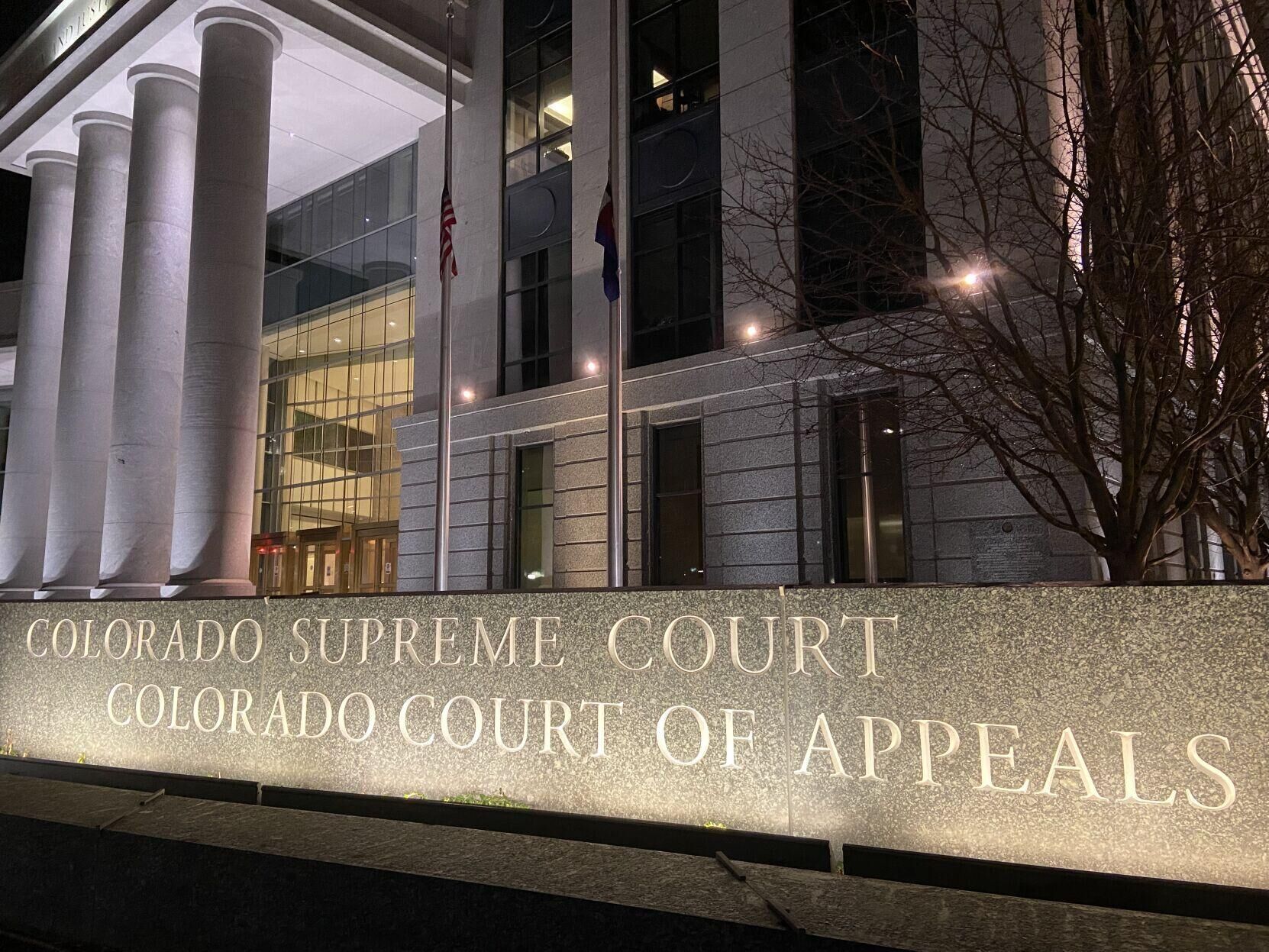
A three-judge Court of Appeals panel agreed Shockey’s conviction could not stand.
“The prosecution’s entire theory of the case was that Shockey was the shooter,” wrote Judge Rebecca R. Freyre for herself and Judge David H. Yun. “But by finding that the prosecution did not prove beyond a reasonable doubt that Shockey used, possessed, or threatened to use a deadly weapon, the jury inconsistently concluded that the prosecution had not proved that Shockey was the shooter.”
The majority believed the verdict was effectively an acquittal, meaning Shockey could not be tried again.
Judge David J. Richman wrote separately to argue prosecutors should be allowed to put Shockey on trial again. In doing so, he detailed the “cascade of errors” that caused the verdict. First, Klingensmith questioned jurors at length about complicity during jury selection and Spear declined to stop her. Then, Spear refused to give an instruction about complicity. Finally, even after acknowledging the jury relied on complicity to reach its verdict, Spear rejected a new trial.
“And, as defendant argues on appeal, a person may not be convicted on a theory that is not submitted to the jury,” wrote Richman.
A functional acquittal?
To the Supreme Court, the government argued Shockey’s jury convicted him of murder, and the use of a deadly weapon was not an element of that crime. Therefore, there was no conflict between their seemingly inconsistent answers.
“Do we just ignore the fact that the government’s sole theory was that Mr. Shockey was the shooter?” asked Gabriel.
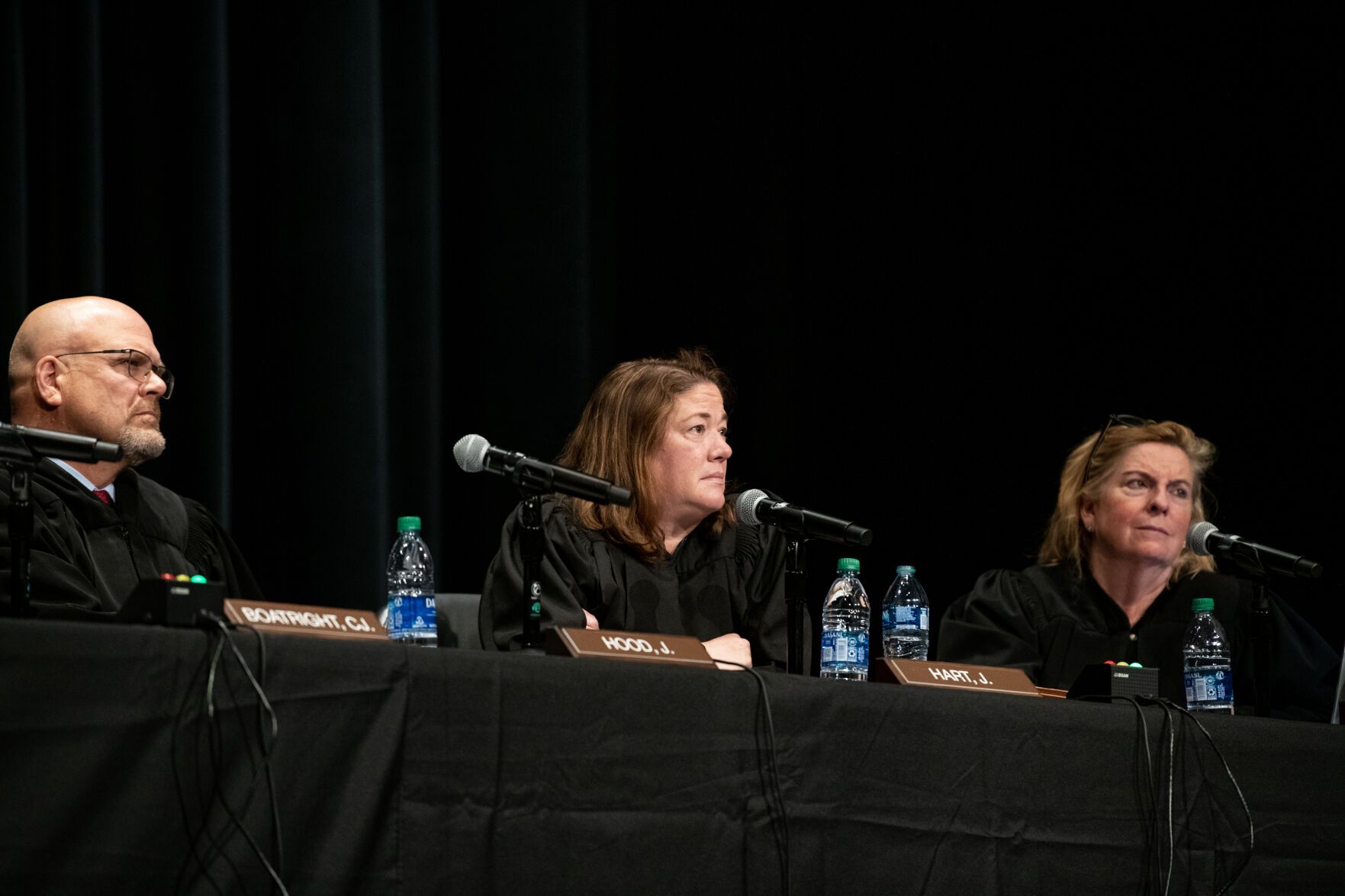
“What facts support this shooting conviction for second-degree murder besides a complicity theory?” added Justice Maria E. Berkenkotter.
Ross, of the attorney general’s office, also argued Shockey surrendered his right to challenge the verdict because he did not object to the inconsistency before Spear accepted the jury’s findings.
“Currently, there’s no law that says that in the criminal context,” interjected Gabriel. “You’re asking us to presume the defendant should have foreseen that we would adopt such law and know that, and for some reason intentionally not object.”
Public defender Casey Mark Klekas urged the justices to agree with the Court of Appeals’ majority that the jury, having deemed Shockey not the shooter, effectively acquitted him.
Justice Carlos A. Samour Jr. indicated he was curious about what the error was precisely.
“Is it more an error during voir dire that the court allowed the lawyer to discuss complicity in front of the jury and not necessarily pursuant to the law?” he wondered. “Or is the error the result that we ended up with the guilty verdict and what we ended up with in the interrogatory, assuming that’s even an error?”
“Assuming I can establish this is an acquittal, we don’t go back and say, ‘Well, was this an acquittal based on a mistake, error, whatever?’” responded Klekas. “How could we have a retrial where, in one trial, a jury has already determined that Mr. Shockey did not shoot the victim?”
“There’s also clear and unambiguous evidence that they unanimously found he was guilty of second-degree murder,” said Justice Melissa Hart.
Mayfield, the other suspect, pleaded guilty to a lesser offense, testified against Shockey and was released on parole in 2021.
The case is People v. Shockey.

Federal judge green-lights excessive force, retaliation claims for trial against Fort Collins officers
Michael Karlik
michael.karlik@coloradopolitics.com
Updated 1 day ago
A federal judge green-lit a jury trial last week against multiple Fort Collins police officers on claims that they used excessive force on one man who was standing unarmed in his underwear, and retaliated against another man for exercising his...
10th Circuit revives wage violation lawsuit against Papa John’s operator
Michael Karlik
michael.karlik@coloradopolitics.com
Updated 2 days ago
The Denver-based federal appeals court on Tuesday reinstated a former Papa John’s delivery driver’s lawsuit alleging violations of federal and state wage law. Steve Mighell worked for one month at a Denver Papa John’s location in summer 2023. He alleged...
Colorado appeals judge’s delays in releasing opinions noted by performance commission
Michael Karlik
michael.karlik@coloradopolitics.com
Updated 1 day ago
The citizen-led performance commission that provides guidance to voters about whether to retain members of Colorado’s second-highest court raised concerns by judges and attorneys that Judge Elizabeth L. Harris sometimes struggles with releasing opinions promptly. Harris, who joined the Court...
Colorado judge explores sanctions against DOJ, ICE for rearresting man 4 days after release on bond
Michael Karlik
michael.karlik@coloradopolitics.com
Updated 2 days ago
A federal judge in Colorado is considering sanctions against the government after immigration agents rearrested a man four days after an immigration judge found him suitable for release on bond. On July 28, U.S. Magistrate Judge N. Reid Neureiter ordered...
Divided disciplinary panel censures Montezuma County judge after agreement reached
Michael Karlik
michael.karlik@coloradopolitics.com
Updated 2 days ago
A disciplinary panel formally imposed a public censure, suspension, and further training on Montezuma County Court Judge Ian J. MacLaren on Tuesday by a 2-1 vote. Under constitutional Amendment H, which voters adopted in November 2024, MacLaren was set to...
Colorado’s Western Slope magistrate judges describe unique role in federal judiciary
Michael Karlik
michael.karlik@coloradopolitics.com
Updated 4 days ago
Two of Colorado’s federal judges stationed on the Western Slope spoke to lawyers on Wednesday about their unique roles, the ways their workloads differ, and the need for more criminal defense lawyers to take cases outside the Front Range. “Here...
Denver sues Philip Morris, other tobacco companies over cigarette butt litter
Deborah Grigsby
deborah.smith@denvergazette.com
Updated 3 days ago
Denver is demanding that some of the biggest tobacco companies in the world pay for the cleanup of discarded cigarette butts on its streets, following a similar campaign that cities in other states have pursued. Denver’s lawsuit, filed this week...
Federal judge rules that request for bond hearing not necessary to challenge immigration detention
Michael Karlik
michael.karlik@coloradopolitics.com
Updated 2 days ago
A federal judge in Colorado ruled last week that it is not mandatory for a person to seek a bond hearing with an immigration judge before they challenge the lawfulness of their detention in federal court. For the past year,...

Boulder Valley School District introduces new policies following antisemitism lawsuit
Marissa Ventrelli
marissa.ventrelli@coloradopolitics.com
Updated 2 days ago
The chief of Boulder Valley School unveiled new policies for the 2026-2027 school year following a lawsuit filed on behalf of a student alleging antisemitic harassment. In June, the Anti-Defamation League filed a federal civil rights complaint against the school...
Colorado NRA chapter seeks injunction against new gun‑training requirement
Marissa Ventrelli
marissa.ventrelli@coloradopolitics.com
Updated 4 days ago
The Colorado chapter of the National Rifle Association is seeking an injunction to stop the state from enforcing a new law that took effect earlier this month. The new law requires anyone buying or selling certain firearms to first complete...
PREV
PREVIOUS

End of federal EV subsidies will hurt Colorado sales
With a ticking clock on Gov. Jared Polis’ 2019 aspirations to put 940,000 electric vehicles on Colorado highways by 2030, his plan hit a major pothole when President Donald Trump ordered cancellation of the Biden administration’s Inflation Reduction Act Clean Vehicle Tax Credits. On Sept. 30, the federal tax credits worth up to $7,500 per […]
Crow joins call for limiting Trump's war powers after third missile strike
After the U.S. launched a third missile strike against an alleged drug trafficking vessel Friday, Colorado Democratic Rep. Jason Crow joined Senate Democrats on Monday in a call to end military action against cartels without congressional approval. “The illegal flow of drugs into the U.S. is a huge problem. But President Trump does not have […]