

Federal judge overturns order to keep bank robbery defendant detained pretrial
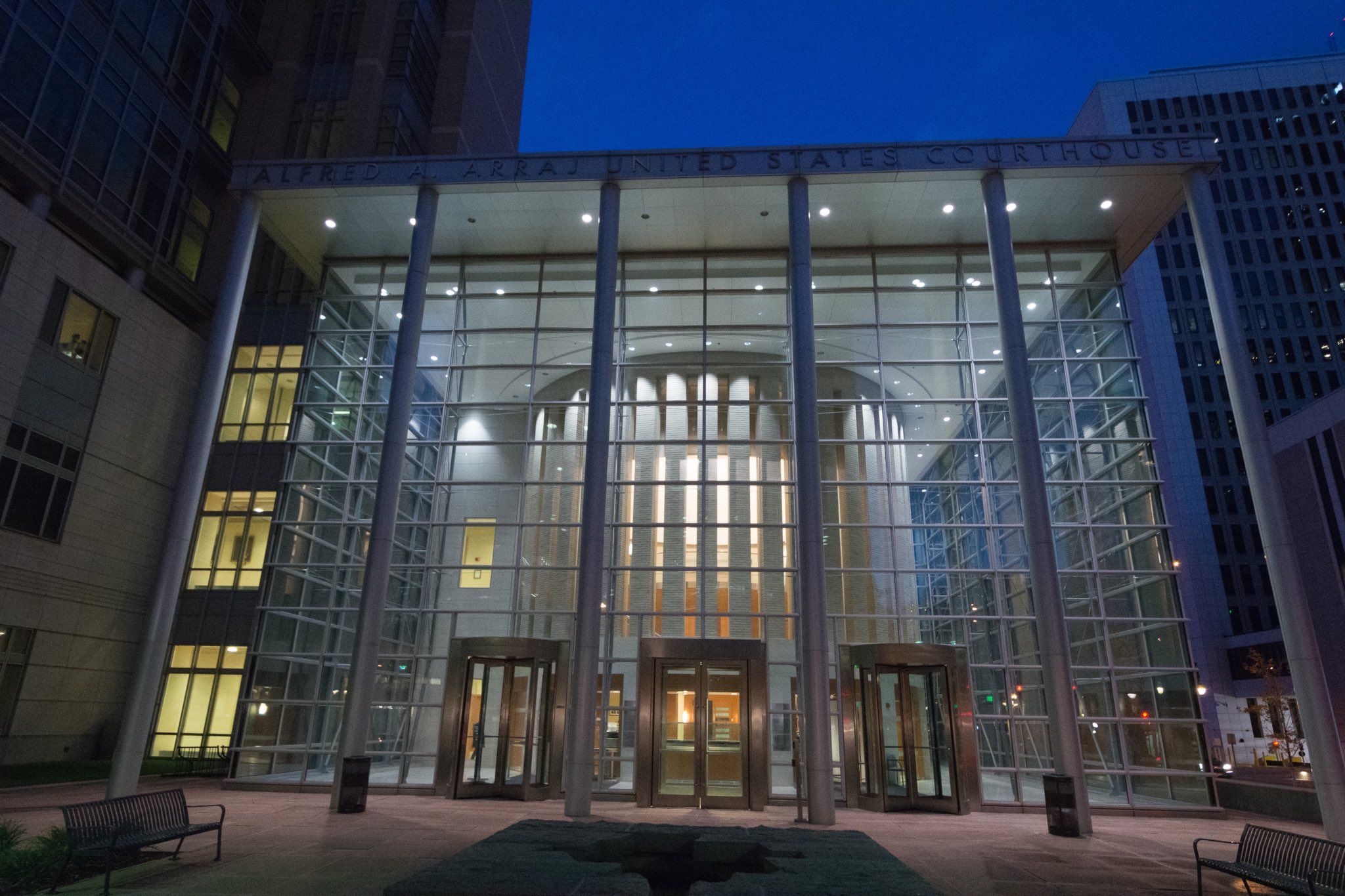
A federal judge on Tuesday reversed an order to keep a man accused of bank robbery detained pending trial, while acknowledging it was a “close question” whether to release the defendant on home detention with GPS monitoring.
In a Sept. 16 order, U.S. District Court Senior Judge William J. Martínez concluded the government failed to show why he should disregard the recommendation of probation officials to release Coby Vance Goldsmith with conditions while the criminal case proceeded.
“The Probation Office agreed that Goldsmith’s lack of criminal history makes it unlikely that he would fail to appear for court dates or pose a safety risk to the community,” wrote Martínez. “The Court notes that the Government does not argue in its response for why it believes home detention would be futile.”
The Bail Reform Act directs that federal defendants be detained pending trial only if “no condition or combination of conditions” will likely ensure the defendant will appear in court and pose no threat to community safety. The University of Chicago’s Federal Criminal Justice Clinic published a 2022 report finding roughly three-quarters of defendants are detained pending trial. But for defendants who are released pretrial, re-arrests or failures to appear only occur around 1% of the time.
“These high detention rates and these long, expensive jail stays are really not what Congress intended when they passed the Bail Reform Act,” said lead author Alison Siegler at a Colorado Springs judicial conference last year. “There was a presumption of release.”
The government charged Goldsmith and two other men with two bank robbery-related offenses on July 7, and a grand jury approved an indictment weeks later. In mid-July, the defendants appeared before Chief U.S. Magistrate Judge Scott T. Varholak, where Goldsmith contested his pretrial detention.
The prosecution described the allegations against the defendants, namely that they were part of a “Houston crew” that jammed ATMs using cards covered in glue. An ATM repairperson would then come to fix the machine, at which point the crew would jump in to rob the ATM.
The government alleged Goldsmith and the others stole more than $290,000 from a Centennial ATM in April and attempted to rob an Arvada location in early July, but law enforcement arrested them.
Assistant U.S. Attorney Brian Dunn told Varholak he “can’t speak to” why probation officials recommended Goldsmith be released on home detention with GPS monitoring. He suggested Goldsmith’s status as the youngest defendant and his lack of “significant previous felony convictions” played a role.
However, Dunn continued, Goldsmith also had an outstanding criminal case South Carolina for a similar 2023 robbery.
“It has been pending since 2023 and it does not look like there has been any violation of the conditions,” countered public defender Jared Westbroek.
“Well, other than allegedly committing the exact crime (on) multiple occasions,” interjected Varholak.

Varholak ultimately ordered that Goldsmith be continuously detained, citing the seriousness of the robbery, his lack of “ties to this community,” and an evading arrest offense as a juvenile.
“And then what is absolutely the most concerning to me is the fact that in 2023, he was arrested for virtually … the exact same offense as he’s alleged to have committed now. And he’s under supervision for that offense,” said Varholak. “I find that there are no conditions or combination of conditions that I can impose to assure his presence or the safety of the community, and I will therefore order him detained.”
Goldsmith appealed the decision and offered multiple clarifications. First, his juvenile offense for evading arrest was ultimately dismissed. Second, Goldsmith complied with all conditions of GPS monitoring in his South Carolina case, which were lifted in November 2024.
More fundamentally, “Judge Varholak did not make an assessment of whether or not the proposed release conditions — namely location monitoring and home detention — could mitigate these perceived risks,” wrote public defender Summer Woods.
Dunn, in response, emphasized that the “strong evidence” against Goldsmith and his alleged “willingness to commit the exact same crimes” were justifications for keeping him incarcerated.
Martínez called it a “decidedly close question” in which several factors “amply support Judge Varholak’s detention order.”
But he believed, under the Bail Reform Act, “there is a combination of conditions — most notably, home detention with location monitoring — that will reasonably ensure that Goldsmith will appear for his court dates and not endanger the community.”
Martínez elaborated that the government focused “so heavily on the strength of its evidence” that it did not acknowledge Goldsmith’s lack of criminal convictions. Moreover, the government did not argue why home confinement and GPS monitoring would be problematic, in light of probation officials’ recommendation made with knowledge of the allegations against Goldsmith.
Martínez ordered Goldsmith released to his mother in Texas, where his travel will be restricted and he will undergo monitoring. Goldsmith appeared in court on Sept. 18, where U.S. Magistrate Judge Cyrus Y. Chung approved his release with those terms.
The case is United States v. Goldsmith.

Wrongfully deported man to be returned to U.S., Colorado federal judge orders
Michael Karlik
michael.karlik@coloradopolitics.com
Updated 19 hours ago
Colorado’s chief federal judge took the extraordinary step of directing the government on Tuesday to do everything it can to return a man it deported in violation of his order. At the same time, Colorado’s chief magistrate judge has set...
Denver murder, assault convictions reversed due to faulty jury instructions
Michael Karlik
michael.karlik@coloradopolitics.com
Updated 1 day ago
Colorado’s second-highest court reversed a defendant’s convictions for murder and assault last week after concluding a Denver judge incorrectly omitted key jury instructions that could have affected the verdict and sentencing. Stephen C. Swainson fatally stabbed Israel Casillas in downtown...
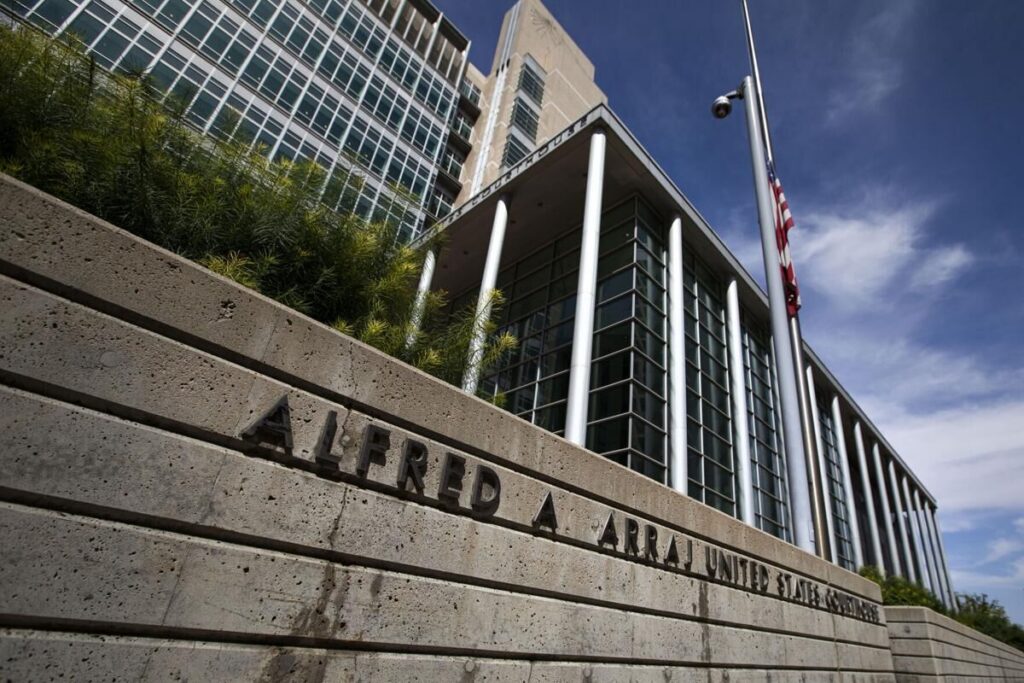
‘Understand people for who they are’: 2 federal judges talk about compassion in courtroom
Michael Karlik
michael.karlik@coloradopolitics.com
Updated 9 hours ago
Before taking the bench in 2022, U.S. District Court Judge Charlotte N. Sweeney was an employment discrimination attorney. While the cases could be emotionally charged, they were different from the criminal proceedings she is now handling. “It wasn’t necessarily affecting...
Denver murder conviction reversed for incomplete self-defense instruction
Michael Karlik
michael.karlik@coloradopolitics.com
Updated 2 days ago
Colorado’s second-highest court reversed a defendant’s murder conviction last week because a Denver judge gave an incomplete instruction to the jury about the man’s right to self-defense. Donald R. Gonzales and Gary McLaughlin met up in a Capitol Hill parking...
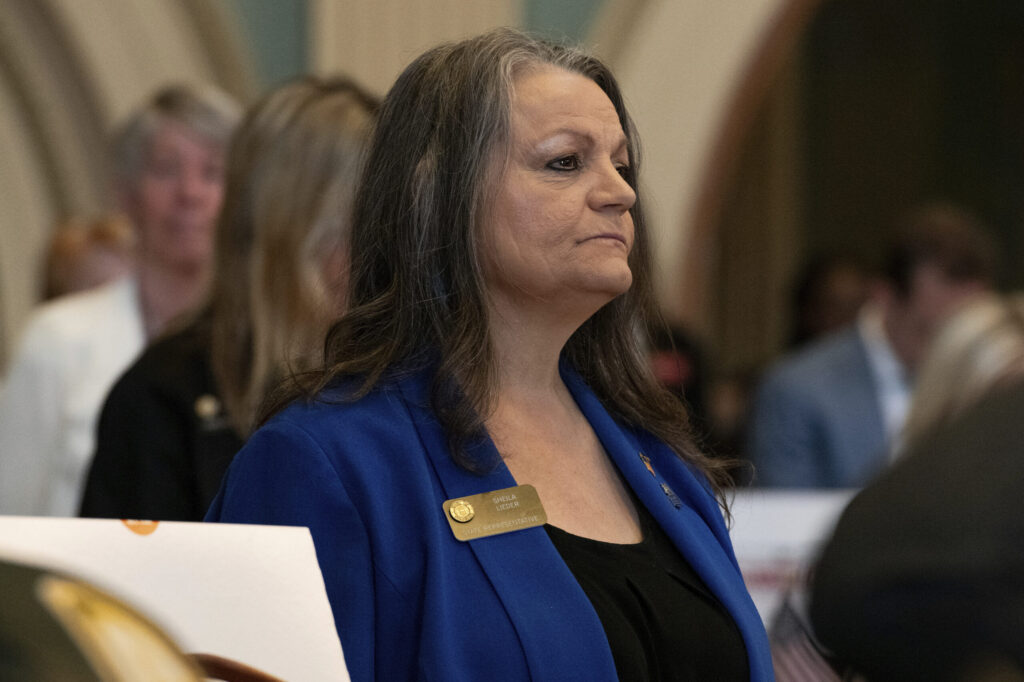
Colorado lawmaker, House leaders named in workplace-retaliation lawsuit
Marianne Goodland
marianne.goodland@coloradopolitics.com
Updated 3 days ago
A former legislative aide has filed a lawsuit alleging she was mistreated, illegally directed to perform campaign work and harmed by a House leadership structure she charged was fragmented, politicized and ineffective at protecting employees. The lawsuit, filed by Jennifer...
Federal judge hears arguments about Colorado’s 3-day gun purchase waiting period
Michael Karlik
michael.karlik@coloradopolitics.com
Updated 3 days ago
A federal judge heard arguments on Monday about the constitutionality of a 2023 Colorado law that generally imposes a three-day waiting period on firearm purchases after the initiation of a background check. The test that the U.S. Supreme Court created...
Colorado Supreme Court intervenes in Weld County prosecution dismissed due to Missy Woods misconduct
Michael Karlik
michael.karlik@coloradopolitics.com
Updated 2 days ago
The Colorado Supreme Court ordered a Weld County trial judge last week to respond to the district attorney’s claim that he improperly dismissed a criminal case because of “outrageous” conduct by the Colorado Bureau of Investigation. Daniel Lee Eatinger stood...
Schoolchildren’s presence at child sex-related trial did not harm Arapahoe County defendant, appeals court says
Michael Karlik
michael.karlik@coloradopolitics.com
Updated 5 days ago
Colorado’s second-highest court decided on Thursday that the presence of a group of schoolchildren on the first day of a child sexual exploitation trial did not violate an Arapahoe County defendant’s constitutional right to a fair trial. Prosecutors charged Jerry...
Appeals court cites week-old Colorado law to reinstate child neglect case at child, father’s request
Michael Karlik
michael.karlik@coloradopolitics.com
Updated 5 days ago
Colorado’s second-highest court invoked a new state law for the first time on Thursday and reinstated a child neglect case that both the child and her father wished to reopen. House Bill 1227 took effect on Aug. 12, reversing a...
Colorado Supreme Court names William Hood as next chief justice
Michael Karlik
michael.karlik@coloradopolitics.com
Updated 13 hours ago
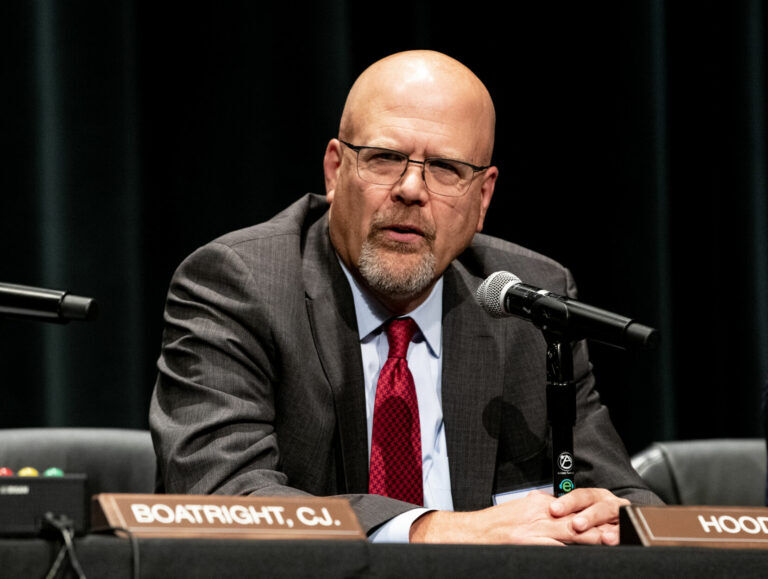
The Colorado Supreme Court has selected Justice William W. Hood III to be the next chief justice, the judicial branch announced on Friday. Hood will succeed Chief Justice Monica M. Márquez, who took over the role in July 2024. “I...
PREV
PREVIOUS

Polis asks Buc-ee's to halt expansion plans near 'consequential conservation' area in Colorado
In case you haven’t heard, Buc-ee’s has been planning an expansion between Denver and Colorado Springs, aiming to build a new travel station in the area of the small town of Palmer Lake. There’s been quite a bit of pushback from locals who have expressed concern that the addition of a Buc-ee’s – a truly […]
Colorado House Republicans to choose new minority leader Saturday
On Saturday, the Colorado House Republican caucus will select a new minority leader to replace former Rep. Rose Pugliese of Colorado Springs, who resigned on Sept. 15. To date, two candidates have announced their intention to seek the top post. However, current House Assistant Minority Leader Ty Winter of Trinidad did not throw his hat […]