

Appeals court upholds firearms prohibition as part of involuntary mental health treatment
Colorado’s second-highest court on Wednesday upheld the process for barring firearm possession for anyone who is involuntarily committed short-term to mental health treatment.
A man identified as R.Z. argued his rights were violated when a Denver judge entered an order affecting his ability to own guns because he met the criteria for short-term mental health commitment. But a three-judge Court of Appeals panel noted lawmakers have provided an avenue for those in R.Z.’s position to remove their name from the National Instant Criminal Background Check System (NICS) and restore firearm access when they no longer pose a danger.
“R.Z. does not point to any legal authority supporting his contention that the right to bear arms enshrined in the Colorado Constitution bars the state from requiring a person to prove that the person’s name should be removed from the NICS,” wrote Judge Lino S. Lipinsky de Orlov in the June 18 opinion.
Under federal law, a person who has been “committed to a mental institution” cannot be sold a firearm. Colorado, in facilitating that prohibition, requires reporting to the NICS database whenever there is an “order for involuntary certification for short-term treatment of a mental health disorder.” However, a person may petition to get their name removed and their gun rights restored when they are no longer a likely safety risk.
R.Z. became hospitalized for a 72-hour evaluation, and a physician filed a notice in Denver Probate Court advocating for short-term involuntary treatment due to R.Z.’s “profound catatonia” and “gravely disabled” condition. Judge Elizabeth D. Leith issued an order the next day confirming the treatment and triggering the addition of R.Z.’s name in the NICS database.
Shortly afterward, Denver moved to involuntarily administer electroconvulsive therapy and Leith appointed an attorney for R.Z. The lawyer requested a hearing, but before it could take place, a doctor at R.Z.’s hospital notified the court that R.Z. no longer met the legal criteria for involuntary commitment. Leith then closed the case.
R.Z.’s attorney then asked Leith to vacate her original order confirming involuntary treatment and remove R.Z.’s name from NICS, arguing the NICS report happened without due process and in contravention of state law. Leith denied the motion, prompting R.Z. to appeal.

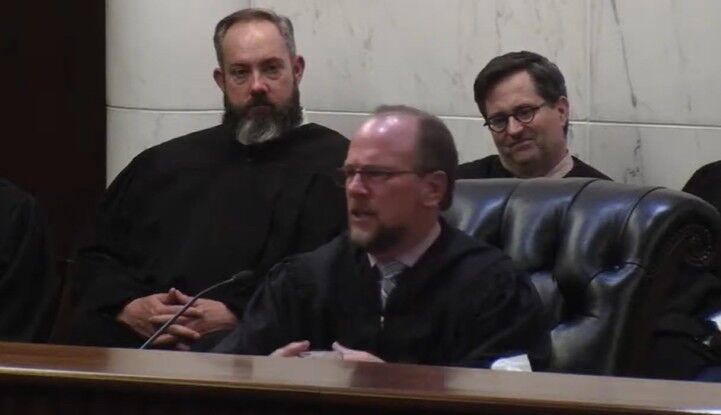
Colorado Court of Appeals Judge Lino S. Lipinsky de Orlov, right, answers a question from students in the Green Mountain High School auditorium after hearing oral arguments in two cases as part of a "Courts in the Community" event on Thursday, Feb. 27, 2025. The Colorado Court of Appeals and Supreme Court hold Courts in the Community events multiple times per year in which they conduct oral arguments in real cases before an audience of students. (Stephen Swofford, Denver Gazette)
Stephen Swofford/ Denver Gazette

The appellate panel deemed it a “legally untenable conclusion” to say that R.Z. had an unconditional right to bear arms after a doctor found R.Z. “unable to meet his basic needs without significant oversight and support from professional staff in a locked, inpatient psychiatric ward,” Lipinsky wrote.
“We are not aware of any legal authority supporting such an expansive reading of the constitutional right to bear arms of someone with a mental health disorder, and R.Z. does not cite any,” he continued.
The panel rejected the idea that R.Z. was entitled to a hearing before the initial court order that caused his name to be added to the NICS database. Lipinsky added that Colorado law contains a procedure for someone to remove their name at the end of their mental health emergency, but R.Z. had not attempted to do so.
Lipinsky concluded that R.Z. had failed to show why it is a constitutional violation to require someone subjected to involuntary mental health treatment to argue for the bar on firearm possession to be lifted. In doing so, Lipinsky quoted from the U.S. Supreme Court’s landmark 2022 decision broadly expanding gun rights.
Someone who “lost the right to bear arms under a short-term certification does not stand in the same position as a person unconstitutionally deprived of that right through a restriction inconsistent ‘with this Nation’s historical tradition’ of firearm regulation,” he wrote.
The case is People in the Interest of R.Z.
Colorado Politics Must-Reads:


Judge grants partial injunction to GEO in fight against state health inspection law
Kyla Pearce
kyla.pearce@gazette.com
Updated 59 minutes ago
A judge ruled Thursday that The GEO Group does not have to follow parts of a new state law requiring more frequent health and safety inspections at the U.S. Immigration and Customs Enforcement processing center in Aurora. Under the order...

Parker man faces 20 years to life for serial sexual assaults
Nicholas Fogleman
nicholas.fogleman@denvergazette.com
Updated 4 hours ago
A 25-year-old Parker man who sexually assaulted three women in 2025 pleaded guilty Wednesday and will serve 20 years to life in prison. Javier Rodriguez-Andrade pleaded guilty to charges stemming from three sexual assaults involving women ages 19 to 24. ...
Divided appeals court upholds warrantless DNA collection in Colorado cold case, cautions of government overreach
Michael Karlik
michael.karlik@coloradopolitics.com
Updated 2 hours ago
Colorado’s second-highest court upheld the warrantless collection of a suspect’s DNA from a discarded soda can as constitutional on Thursday, while warning about potential abuse of DNA privacy in the absence of further guardrails. By 2-1, a three-judge Court of...
Man charged in Northglenn homicide of wife
Matt Kyle
matt.kyle@denvergazette.com
Updated 3 hours ago
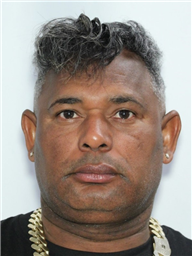
A man has been formally charged with murder and burglary relating to a homicide last week in Northglenn. Alexei Munive-Rodriguez, 48, was arrested Sunday after he was at large following the homicide, which occurred Friday. Police were dispatched around 10:30...

10th Circuit grants immunity to officers for fatal Manitou Springs shooting
Michael Karlik
michael.karlik@coloradopolitics.com
Updated 5 hours ago
The Denver-based federal appeals court ruled on Wednesday that responding officers from Manitou Springs and El Paso County cannot be held constitutionally liable for shooting and killing a man after a 20-minute standoff. Wilford Deweese allegedly pulled out a gun...
10th Circuit rejects invitation for full-court review of tax-avoidance case
Michael Karlik
michael.karlik@coloradopolitics.com
Updated 23 hours ago
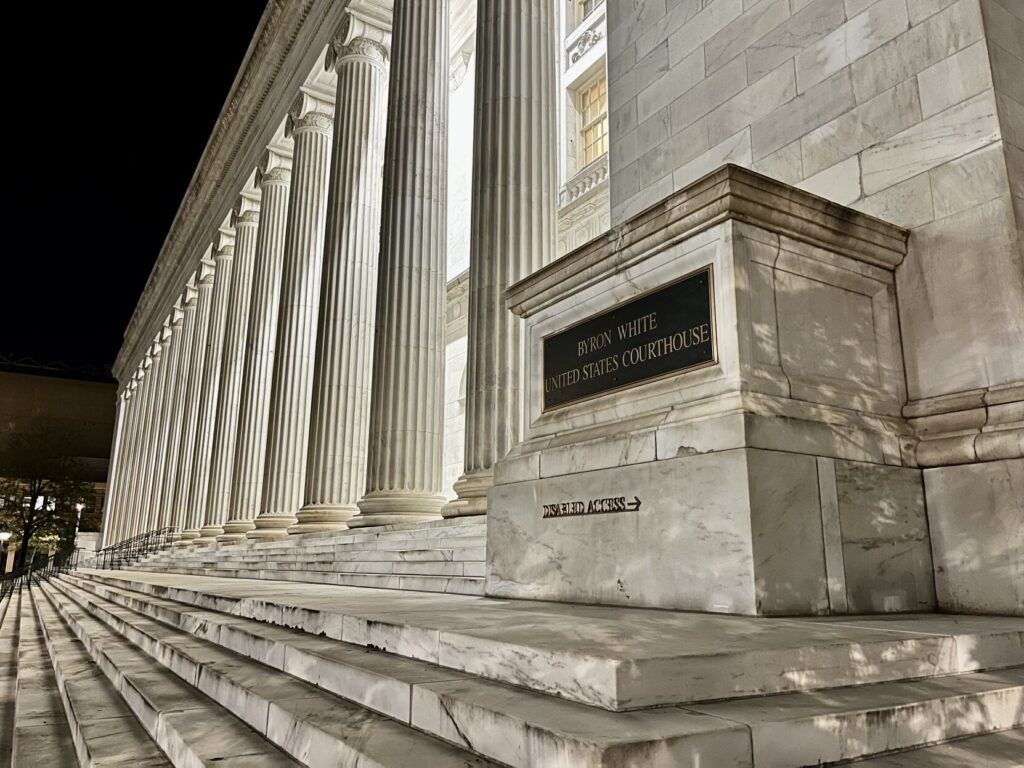
The Denver-based federal appeals court declined to reconsider the standards for holding entities liable for their tax-avoidance schemes, with a majority of judges voting against full-court review on Monday. In April, a three-judge panel of the U.S. Court of Appeals...
Colorado judge blasts state forensics lab in dismissing child sex case
Jenny Deam
jenny.deam@gazette.com
Updated 23 hours ago
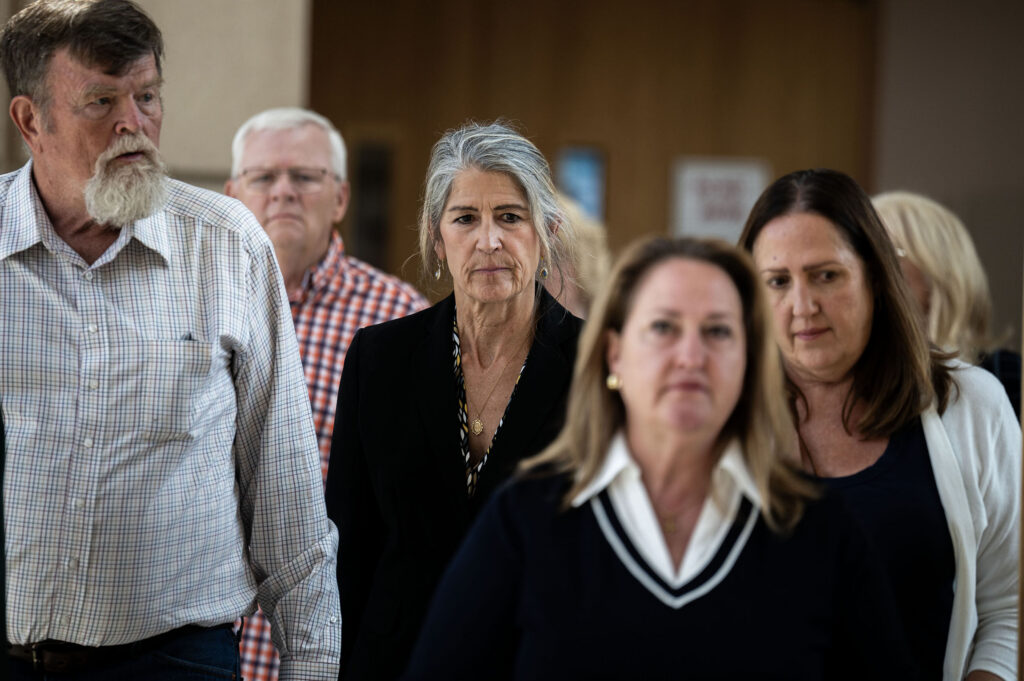
In a potentially widely consequential action, a Weld County district judge dismissed a child sexual assault case, citing the ongoing scandal at the Colorado Bureau of Investigation’s forensic lab that “has left a dark mark on the history of Colorado...
10th Circuit sympathetic to Colorado consumer protection law governing interest rates
Michael Karlik
michael.karlik@coloradopolitics.com
Updated 2 days ago
Members of the Denver-based federal appeals court appeared sympathetic on Tuesday to Colorado’s assertion that it can lawfully require certain out-of-state banks to abide by the state’s own ceilings on interest rates when they lend to consumers in Colorado. The...

Colorado justices to decide insurance companies’ obligation to disclose relevant policies
Michael Karlik
michael.karlik@coloradopolitics.com
Updated 1 day ago
The Colorado Supreme Court announced on Monday that it will decide whether an insurance company violated state law by withholding an at-fault driver’s policy for nearly a year when there was no dispute that the policy was not in effect...

Judicial performance evaluations released, Montezuma County judge disciplined | COURT CRAWL
Michael Karlik
michael.karlik@coloradopolitics.com
Updated 3 days ago
Welcome to Court Crawl, Colorado Politics’ roundup of news from the third branch of government. Colorado’s citizen-led judicial performance commissions released their voter narratives for the judges standing for retention in November, plus a disciplinary panel imposed consequences on a...