

Colorado Springs refugee agency faces funding crisis, layoffs following Trump cuts
Colorado Springs’ only resettlement agency for refugees and asylum-seekers has been forced to lay off employees and adopt an emergency-management protocol since Jan. 20, when the newly inaugurated President Donald Trump suspended federal funding for such agencies, according to Floyd Preston, director of the local office of Lutheran Family Services Rocky Mountains.
“It’s been extremely difficult,” he said Tuesday.
An executive order from Trump not only stopped nationwide processing of incoming refugees and asylum-seekers but also placed on hold resettlement dollars from flowing to nonprofits that provide the services for vetted newcomers.
“The money we use for refugees for housing and cash assistance all were halted,” said Preston, who’s been leading the Colorado Springs office for 19 years.
Colorado Springs parents unite in effort to open center for kids, adults with Down syndrome
Agencies were supposed to hear in 90 days, which would have been April 20, whether funding would be resumed, decreased or eliminated. But there’s been no word yet.
“As it stands now, it remains suspended nationwide,” Preston said.
The budget for Lutheran Family Services is 85% to 90% federally funded, he said, with the remainder coming from private individual donors, churches and other organizations.
In February and March, 22 employees in Preston’s office were reduced to 15.
“These funds also power our employment, if you don’t have the employees, you can’t deliver the services the way they need to be,” he said.
Up to 45 refugees from Afghanistan, Cuba, Haiti, the Democratic Republic of the Congo, the Central African Republic and Ukraine that were accepted in November and arrived in Colorado Springs in December and January have been most affected by the loss of funding, Preston said.
There’s no money for the usual rental assistance, however, “private funds, donations from partners and state funding we receive ensured those individuals and families were housed, and we have no homeless refugees at this time.”
Colorado Springs temporarily pauses section 8 vouchers, worrying housing advocates
The local office is authorized to receive 250 refugees each year but serves almost 1,000 individuals annually since clients have varying status and levels of service, Preston said.
“Right now, our doors are still open and we’re still able to help people who are already here find jobs, facilitate food stamps, Temporary Aid to Needy Families, Medicaid, English as a Second Language classes and also connect them to organizations within the community that help them with things that we cannot.”
Refugee clients have been vetted through the U.S. Department of State, have passed numerous screenings and are documented to legally be in America, Preston said.
Asylees “also have to go through a process on their own of obtaining legal and immigrant help to verify they are eligible for asylum,” he said. “Once they get that, we’re able to help them. If they don’t have the proper documentation, we can’t help.”
In his first term as President, Trump enacted a travel ban, then limited refugees to 50,000 a year, but did not entirely suspend the program.
Coming from a disaster-response background, Preston said he enacted measures that involved rallying a host of supporters.
“Instead of crying over spilled milk, I brought our partners together and explained we need your help: clothing, gift cards, finances, jobs, cultural mentor teams and volunteers,” he said. “They came through in this time of crisis with donations and resources.”
Preston credits a willingness of backers to transcend religious lines and mobilize for a united cause.
Weed-eating goats won’t be baack to Bear Creek Regional Park under new management plan
“Numerous denominations that believe in our work — Lutherans, Anglicans, Islamic centers, Catholics, Evangelicals, the Calvaries, non-denominational — have put differences aside for the sake of a common goal to welcome the stranger among us.”
While it is unknown whether funding will be restored, Susan Bolduc, a member of First Lutheran Church, which provides an office for Preston’s organization, thinks it’s the nation’s duty to care for such immigrants.
“We’ve been doing this since World War II,” she said. “Our government brought in the most vulnerable people in the world who’ve been through trauma, and now we’re going to tell them to go back? They are refugees — where are they going to go back to?”
Financial donations and employers willing to hire clients in small manufacturing, housekeeping, janitorial, landscaping and minor construction jobs are needed.
“A lot are non-English speakers, so we want to highlight their skills versus the language deficiency,” Preston said.
To contribute, email Britton Varn, volunteer and engagement coordinator, at britton.varn@lfsrm.org, or call her at (719) 922-4580.


Can you dig it? Everyone was psyched for the groovy Arts for All Gala | NONPROFIT REGISTER
Joanne Davidson Special to Colorado Politics
joanne-davidson-special-to-colorado-politics@coloradopolitics.com
Updated 21 minutes ago
ARVADA CENTER FOR THE ARTS AND HUMANITIES Arvada News: Between the sequined mini dresses, platform shoes, go-go boots, paisley prints and bell-bottom pants, the 350 guests at the Arvada Center’s 1970s-themed Arts for All Gala clearly were “right on” in selecting what to wear for a “groovy” night of disco-infused fundraising. “Some of you look like you...
Colorado Supreme Court concerned about police overreach in interrogations
Michael Karlik
michael.karlik@coloradopolitics.com
Updated 1 hour ago
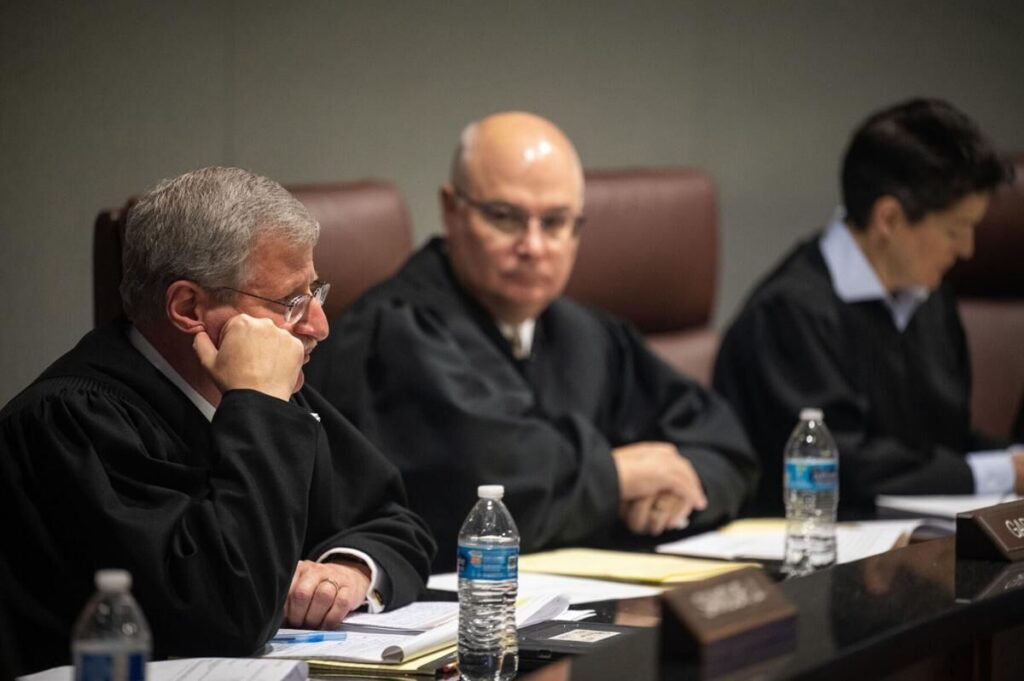
Some members of the Colorado Supreme Court appeared hesitant on Tuesday to endorse the ability of police to interrogate a suspect after they have obtained a court order authorizing only the collection of physical evidence. Under Colorado’s criminal rules, law...

Colorado House committee advances Democratic bill to reduce penalties for ‘extreme indifference’ murder
Marissa Ventrelli
marissa.ventrelli@coloradopolitics.com
Updated 1 hour ago
Lawmakers on the Colorado House Judiciary Committee narrowly passed a bill proposing changes to the state’s sentencing guidelines for murders facilitated with “extreme indifference to the value of human life.” Colorado is one of several states with this type of...

Boebert working on bill to strip Swalwell of $22,000 annual taxpayer-funded pension
Haris Alic and Lauren Green, Washington Examiner
haris.alic.and.lauren.green.washington.examiner@gazetteedit.wpenginepowered.com
Updated 2 hours ago
EXCLUSIVE — Rep. Lauren Boebert (R-CO) is working on legislation to strip disgraced former Rep. Eric Swalwell of his $22,000 annual taxpayer-funded congressional pension. Swalwell resigned from the House on Tuesday after allegations of sexual assault by multiple women, including...

Trump AI framework puts ball in Congress’s court. Time to act is running out
Liz O'Bagy, Washington Examiner
liz.o'bagy.washington.examiner@gazetteedit.wpenginepowered.com
Updated 2 hours ago
Artificial intelligence is no longer a future policy debate. It is already compressing years of drug discovery into months, helping doctors detect cancer earlier through advanced diagnostic imaging, improving aviation and traffic systems that make travel safer, and giving small...
Colorado Supreme Court considers new requirement for leaving-the-scene convictions
Michael Karlik
michael.karlik@coloradopolitics.com
Updated 3 hours ago
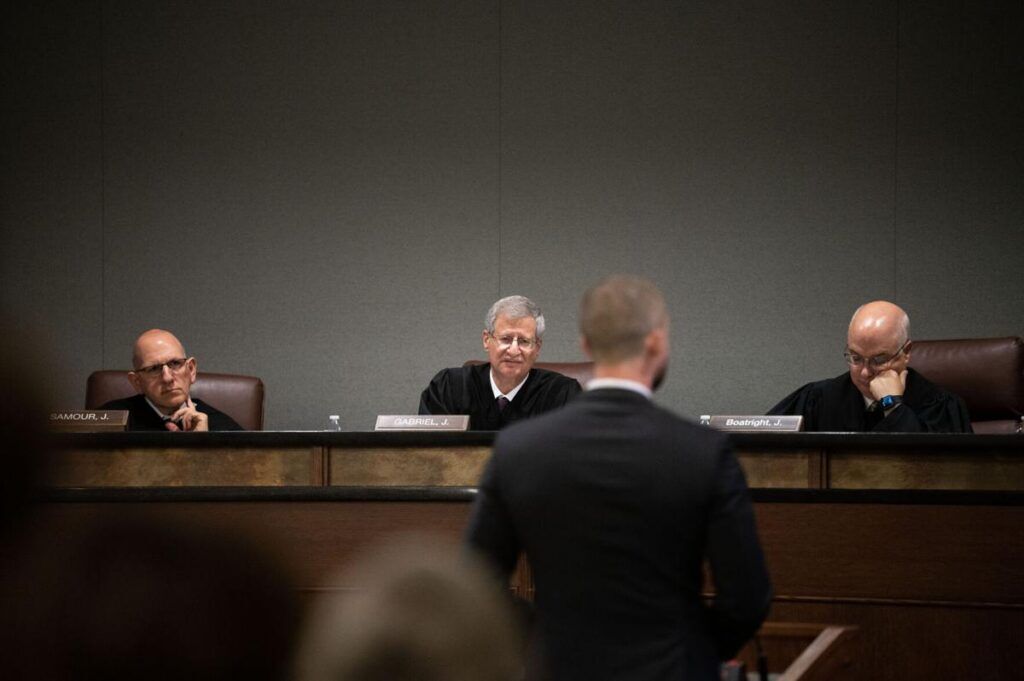
In 2006, the Colorado Supreme Court ruled that leaving the scene of an accident resulting in serious injury is a “strict liability” offense, meaning a person is guilty solely through their conduct, without the need for prosecutors to prove the...

Democratic lawmakers seek fix to Colorado’s stalled prison population plan
Marissa Ventrelli
marissa.ventrelli@coloradopolitics.com
Updated 50 minutes ago
Colorado’s prison population plan was designed to prevent overcrowding. Instead, eight months after it was triggered, the system remains strained and largely ineffective, prompting two Democratic lawmakers to push for changes through new legislation. According to its sponsors, Senate Bill...

After internal strategy sessions, Colorado Senate to take up $46B budget debate
Marianne Goodland
marianne.goodland@coloradopolitics.com
Updated 4 hours ago
Tax Day carries added weight at the state Capitol this year, as the Senate prepares to take up the 2026‑27 budget on Wednesday following a day of preparations by both Republican and Democratic caucuses. Senators are expected to raise some...

Douglas County approves AI system for sheriff’s investigations
Nicholas Fogleman
nicholas.fogleman@denvergazette.com
Updated 49 minutes ago
Douglas County commissioners unanimously approved the purchase of an artificial intelligence system to assist the Sheriff’s Office with investigative analysis. The system is designed to help investigators process large volumes of data more efficiently and turn it into usable investigative...

Colorado’s childcare contribution tax credit bolsters our economy by keeping programs afloat | PODIUM
Colorado Politics
colorado-politics@coloradopolitics.com
Updated 18 hours ago
By Mike Kehoe, Lisa Steven and Johnna Reeder Kleymeyer Colorado parents are struggling to find childcare, programs that serve our most vulnerable families are stretched thin, and private philanthropy has never been more critical. Since it was first enacted in...