

Colorado’s childcare contribution tax credit bolsters our economy by keeping programs afloat | PODIUM



By Mike Kehoe, Lisa Steven and Johnna Reeder Kleymeyer
Colorado parents are struggling to find childcare, programs that serve our most vulnerable families are stretched thin, and private philanthropy has never been more critical. Since it was first enacted in 1998, the Child Care Contribution Tax Credit (CCTC) has been reauthorized with bipartisan support because it is one of the smartest tools Colorado has to support childcare. The legislature has the opportunity this session to extend it for 10 more years under HB 26-1004.
The CCTC offers Colorado taxpayers a 50% state tax credit for qualifying donations to childcare programs. It represents the best kind of public-private partnership: incentivizing private investment to maximize the reach of public dollars. Colorado is a national leader in this space, and each year, more than 15,000 Coloradans contribute more than $60 million to more than 6,000 childcare programs using the CCTC. As a 50% credit, the CCTC generates a 100% return on the state’s investment.
Hope House Colorado is one of the many programs that rely on the CCTC to keep its early childhood education program operating. Located in Arvada, Hope House serves 300 teen moms from across the Denver metro area who are working toward their GEDs, stable jobs and better futures for their kids. Every mom served by Hope House qualifies for the Colorado Child Care Assistance Program (CCCAP), and finding CCCAP-eligible spots has always been difficult. With CCCAP enrollment now frozen across much of the state, nearly 10,000 children are left without access. Private philanthropic dollars aren’t just a bonus — they’re what keep programs like Hope House accessible to families.
Alexa is a mother who has felt the stigma that comes with being a teen mom. Before Hope House, all she heard was teen mom meant bad mom, and she and her son were nothing more than a statistic. At Hope House, Alexa has finally found the support she needs to complete her education and grow into a career, which wouldn’t be possible without the Hope House Early Learning Center. She loves how her kids are treated and has learned how to teach her children by watching it modeled for her. She was raised to fear mistakes, but now she knows missteps can be managed. If her son spills milk, she can hand him a napkin, teaching him how to handle a small mistake so he can face bigger ones as he grows.
Hope House champion, Dana Jensen puts it plainly: “The CCTC allows me to give at this level to partner with Hope House in supporting our teen moms, who are often trying — against all odds — to build a stable future and break the cycle of poverty for two generations.” Dana gives annually to support Hope House Early Learning Center, and the CCTC allows his generosity to go further.
For business leaders, this isn’t just charity; it’s smart economics. Colorado employers lose an estimated $780 million a year in productivity because of the childcare shortage. Sixty-two percent of businesses report childcare is a factor in employee turnover. When parents can’t find care, they can’t go to work, and Colorado businesses feel it. Investing in childcare capacity isn’t philanthropy for its own sake — it’s an investment in the people who show up every day to do the work that keeps our economy moving.
The CCTC incentivizes private investment at a scale that can move the needle: strengthening capital campaigns, helping providers retain qualified teachers, keeping care more affordable for families and ensuring programs can keep their doors open. These private investments are even more important when public funding is frozen or uncertain.
This credit has worked for more than two decades. It is a proven, cost-effective model for how government and private funding can work together to address Colorado’s childcare shortage and make sure it’s a great place to start a business and raise a family. Extending the CCTC is a straightforward investment in Colorado’s families, businesses and long-term economic strength.
Mike Kehoe is vice president of finance at PCL Construction Enterprises and chairman of the Board for EPIC. Lisa Steven is founder and executive director at Hope House Colorado and an executive member of Executives Partnering to Invest in Children (EPIC). Johnna Reeder Kleymeyer is president and chief executive of the Colorado Springs Chamber & EDC.



Colorado Ed Department Must Up Its Competence to prevent waste, fraud, abuse | Paula Noonan
Paula Noonan
paula-noonan@coloradopolitics.com
Updated 7 hours ago
The Colorado Department of Education let $24 million fly from its checking accounts from January 2017 through June 2026 to CHE, aka Colorado Homeschool Enrichment. The details show how easily CHE and Education Re-Envisioned BOCES re-envisioned how to convert public...

Remember the injustice of forced unionism
Colorado Politics
colorado-politics@coloradopolitics.com
Updated 7 hours ago
By Mark Mix This Labor Day we celebrated the men and women whose hard work keeps the country running. But in Colorado, many of those same workers face a real threat: pay union dues or lose their job. That’s because...

Should we always blame voters for low civic participation in elections? | GUEST COLUMN
Roland Halpern
roland-halpern@coloradopolitics.com
Updated 7 hours ago
This year, like every election cycle, we hear the same complaints — enough citizens don’t vote. Voter turnout is too low. People are disengaged. Citizens are shirking their civic responsibility. If only voters cared more, democracy would work better. Fair...

Colorado joins lawsuit challenging changes to Endangered Species Act
Marissa Ventrelli
marissa.ventrelli@coloradopolitics.com
Updated 14 hours ago
Colorado once more joined a coalition of states challenging the Trump administration — this time on proposed rules regarding the Endangered Species Act. The pair of lawsuits challenge new rules made under Interior Secretary Doug Burgum, who earlier said the...

Boebert challenger Eileen Laubacher says she’ll ‘break through the noise’ in Democrat’s 1st TV ad
Ernest Luning
ernest.luning@coloradopolitics.com
Updated 11 hours ago
Democratic congressional candidate Eileen Laubacher says she’ll take a different approach than her opponent in a campaign ad released Wednesday that opens with a cacophonous series of videos featuring Republican U.S. Rep. Lauren Boebert. “Eileen’s had enough of the noise...

Lori Gimelshteyn on 3 ballot measures to ‘let kids be kids’ | The OpEdge Podcast
Tony Olivero
tony.olivero@gazette.com
Updated 18 hours ago
Lori Gimelshteyn — board member of Protect Kids Colorado and executive director of the Colorado Parent Advocacy Network — joins The OpEdge to discuss three measures headed to Colorado voters this November. Gimelshteyn tells host and investigative columnist Jimmy Sengenberger...

A path toward justice and public safety | PODIUM
Anthony Hartsook
ahartsockop@gmail.com
Updated 1 day ago
Strangulation can be one of the most dangerous forms of assault; despite the lack of visible ailments it is accompanied by. Though strangulation leaves no broken bones, bruises or visible wounds, it is one of the strongest predictors of future...

From moving people to managing them | GUEST COLUMN
Michael Hancock
michael-hancock@coloradopolitics.com
Updated 1 day ago
Transportation policy used to have a fairly uncomplicated purpose: move people safely, efficiently and reliably. Build roads where people drive. Maintain bridges before they fail. Add capacity where growth overwhelms the system. Provide transit where it makes sense. Infrastructure was...
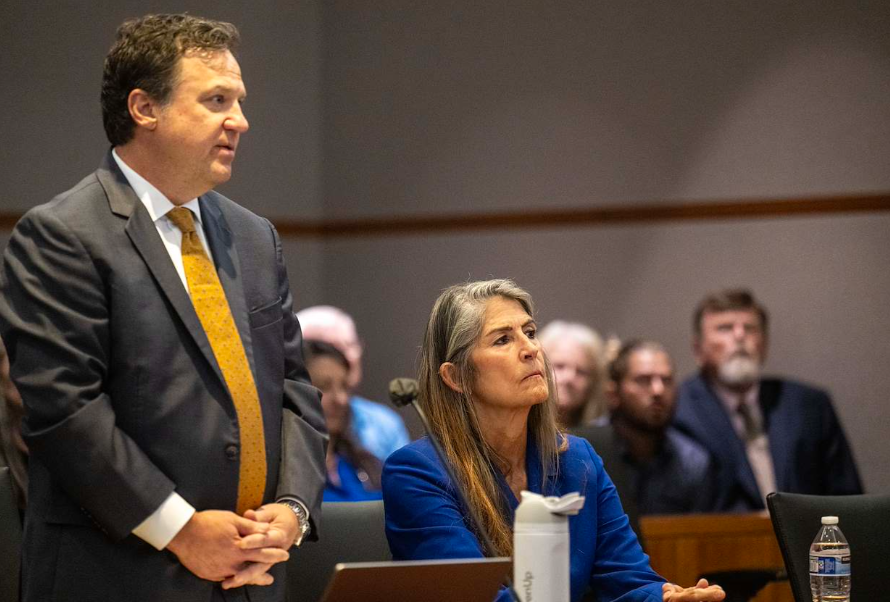
Disgraced ex-CBI analyst Missy Woods sentenced to prison in DNA scandal
Jenny Deam
jenny.deam@gazette.com
Updated 2 days ago
A Jefferson County district court judge on Tuesday sentenced a disgraced former Colorado Bureau of Investigation DNA analyst to a decade in prison for altering and deleting data in scores of criminal cases over several years. Jefferson County District Judge...

Jason Crow endorses Democrats up and down Colorado’s ballot, chips in $100K for campaign efforts
Ernest Luning
ernest.luning@coloradopolitics.com
Updated 2 days ago
Democratic U.S. Rep. Jason Crow on Tuesday formally endorsed more than 60 Democrats running up and down Colorado’s ballot and said he’s putting $100,000 into statewide and county campaigns and organizing programs to drive turnout in the fall election. Crow,...
PREV
PREVIOUS

Senate Democrats outline amendment strategy as budget debate nears
Members of the Colorado Senate met with their respective caucuses on Tuesday to discuss the state’s proposed $46.8 billion budget for fiscal year 2026-2027, which passed through the House over the weekend following lengthy debate. The full Senate will begin debating the budget on Wednesday. Joint Budget Committee members Sens. Jeff Bridges and Judy Amabile […]

After internal strategy sessions, Colorado Senate to take up $46B budget debate
Tax Day carries added weight at the state Capitol this year, as the Senate prepares to take up the 2026‑27 budget on Wednesday following a day of preparations by both Republican and Democratic caucuses. Senators are expected to raise some of the House amendments from last week’s debate, as well as their own ideas. On […]