

Medicaid cuts could cost 458,000 Coloradans health coverage, study claims
If Republican lawmakers follow through on $880 billion in proposed budget cuts, more than 450,000 Coloradans could lose their health coverage, claimed a new report, which came out amid the debate over how to tackle the major drivers of federal and state spending.
In Colorado, rising Medicaid costs make up a significant portion of a $1 billion deficit, and any federal action would have ramifications for state spending.
Broadly speaking, Republicans have argued that the federal government needs to significantly reduce spending in order to begin chipping away at deficit spending, while Democrats have countered that deep cuts to Medicaid, notably, would put health coverage out of reach for millions of people.
The new report from the Urban Institute sought to highlight the potential cuts’ effects on health coverage. Other studies focused on how Medicaid is flawed from the start and how its “runaway expenses are a program feature, not a bug.” One report said the program is riddled with improper payments or payment errors.
Nationally, an estimated 30.7 million people could lose their Medicaid coverage next year, according to the Urban Institute, which conducted a state-by-state examination of the potential impact of the proposal.
In Colorado, the study put the number of enrollees who could lose their health care coverage at 458,000.
Democratic members of Colorado’s congressional delegation echoed Polis’ warning, while U.S. Rep. Gabe Evans, a Republican, said identifying systemic problems is crucial to ensuring Medicaid remains viable for the most vulnerable.
In past statements, U.S. Rep. Lauren Boebert, a Republican, said she supports reducing federal spending and eliminating what she described as “wasteful” entitlement programs.
Medicaid is the government’s health insurance program that provides a safety net for lower-income Americans, traditionally including pregnant women, seniors and those with disabilities. It has expanded under the Affordable Care Act to other populations.
Federal funding pays for about two-thirds of state Medicaid programs.
Jointly funded by federal and state governments, Medicaid covers one in five Americans, costing the federal government $618 billion last year, according to the nonpartisan Congressional Budget Office.
The Urban Institute study assumes — based on previous Republican proposals — that lawmakers are eyeing cuts to the 90% federal match states receive for Medicaid expansion under the Affordable Care Act (ACA), commonly known as “Obamacare.”
Under the ACA, the federal government covers 90% of the Medicaid expansion costs, leaving states responsible for the remaining 10%.
“Most of the money has to come from Medicaid, but they have not specified where the cuts would be made,” said Matthew Buettgens, a senior fellow in the Health Policy Division at the Urban Institute and author of the report. Based in Washington D.C., the Institute is a nonprofit think tank that conducts economic and social policy research and analysis.
Buettgens added: “It’s not clear how you get cuts that large.”
‘Fraud, waste and abuse’
Should the federal government end the enhanced funding for Medicaid expansion — something Republican lawmakers have previously sought — states would need to come up with an additional $44.3 billion to make up for the lost revenue. That would mean a 25.6% increase in state Medicaid spending nationwide, according to the report.
In eight states — including Colorado — Medicaid spending would need to rise by more than 30%, a challenge as the state faces a projected $1.2 billion budget shortfall next year.
Without federal expansion dollars, Colorado could lose another 228,000 from the Medicaid rolls.
According to the Urban Institute, if the budget resolution passes, the number of uninsured nationally would rise by 10.8 million, or 37.9%. Medicaid and CHIP enrollment would decline by 15.9 million. Of those, an estimated 5.1 million would obtain coverage elsewhere, but 10.8 million would not.
Without the Medicaid expansion nationally, those hardest hit would be adults ages 19 to 34; people older than 55; non-Hispanic Whites and Blacks; and individuals in fair or poor health, the study shows.
Eliminating the additional federal funding for the Medicaid expansion would shift costs to the states, the report said.
“Taking a chainsaw to programs that over 1.5 million Coloradoans rely on, like Medicaid and SNAP, is not eliminating waste, fraud, and abuse,” said U.S. Rep. Diana DeGette, a Denver Democrat. “It will only make health care harder to access and put vital food assistance out of reach.
Other Democrats — U.S. Sen. Michael Bennet, U.S. Rep. Joe Neguse, U.S. Rep. Brittany Pettersen — echoed that sentiment.
Lawmakers have not laid out how the U.S. House Energy and Commerce Committee should cut $880 billion over the next decade to offset the cost of extending President Donald Trump’s 2017 tax cuts, which expire at the end of the year. According to the nonpartisan Congressional Budget Office, extending the Trump tax cuts for the next decade — as Republicans have proposed — would add $4.6 trillion to the deficit.
Of the Republican proposal, U.S. Sen. John Hickenlooper said it “throws working families under the bus” while advancing “tax breaks to the ultra-wealthy.”
“This will harm the most vulnerable and explode the deficit,” he said.
Rising Medicaid costs
Republicans noted that the $800 billion target spans health care, energy and other areas, effectively saying the cuts could come from any one of these pots.
Democrats argued that Medicaid, the largest expense, would likely bear the brunt.
The debate comes as Medicaid costs continue to rise under the Affordable Care Act. Forty states, including Colorado, and Washington D.C. have expanded Medicaid eligibility.
While specific Medicaid reductions have not been detailed, Republicans argued that reforms are needed to address rising costs and ensure long-term program sustainability.
They also pointed to the nation’s $36 trillion debt, not to to mention the federal government running a $1.8 trillion deficit last year.
While House and Senate leaders met last week to discuss proposed cuts, the numbers aren’t expected for a couple of weeks, said Delanie Bomar, Evans’ deputy chief of staff.
“We know that there is fraud, waste, and abuse in the system that we have to be able to find so that we can actually save Medicaid for the vulnerable populations who need it most,” the Republican said in a statement to The Denver Gazette.
One study — from a group called Paragon — noted that the federal government has paid for a bigger and bigger share of Medicaid expenses, with the “Obamacare” expansion responsible for much of that shift.
The group claimed the expansion led to Medicaid resources being diverted from children and individuals with disabilities to “able-bodied, working-age adults.”
The new categories of eligible enrollees receive a much higher federal reimbursement rate, leading to a diversion of resources away from traditional Medicaid enrollees, particularly low-income children and people with disabilities,” a “near quadrupling” of Medicaid’s “improper payments” and a “surge of spending” that contributed to the growing federal deficit.
“And existing Medicaid enrollees have a harder time obtaining health care appointments after expansion, with a large increase in emergency department use for non-emergency services,” the group said.
An older study said states employed strategies to “artificially inflate their Medicaid spending in order to maximize the federal reimbursement.”
“State strategies that shift a larger share of program financing to the federal government increase overall Medicaid spending — a problem that will grow as Medicaid’s enrollment rapidly escalates,” the study, from 2016, predicted.
‘Denver Health is eating the cost’
Generally speaking, unauthorized immigrants are not eligible for Medicaid. But there are exceptions, such as for medical emergencies.
In Colorado, a state program extends eligibility to pregnant and postpartum women up to 12 months and to children younger than 18, regardless of their immigration status.
“Cover All Coloradans” has about 16,000 people enrolled, said Marc Williams, a spokesperson for the Colorado Department of Health Policy and Financing.
A fiscal note in 2022 assumed 3,600 people would enroll in Cover All Coloradans at a cost of $2.1 million.
More than 15,000 have this fiscal year, state data showed.
Those costs now are projected to be $51 million, Williams said.
In the months and years since estimating the cost of implementing the 2022 law, the immigration crisis at the southern border spilled over into Denver, likely contributing to the sharp and unexpected increase.
Roughly 43,000 immigrants — mostly from South and Central America who crossed the border illegally — have come to the Denver metro region since 2022. Bus, plane and train tickets for immigrants to travel to their final U.S. destination suggest that about half have stayed. That’s roughly the equivalent of adding a city the size of Golden in less than two years.
Last year, Denver Health reported a 700% increase across its health system over 14 months in the number of new patients from South and Central America, raising concerns the cost of health care had not been part of the equation in welcoming the immigrants to Denver.
“Denver Health is eating the cost for many of these visits,” Dr. Taylor McCormick, associate director of Pediatrics Emergency Medicine at Denver Health, has said.
The surge in patients contributed, officials said, with a corresponding rise in uncompensated care, or services that are not reimbursed often because a lack medical insurance or the ability to afford the cost of care.
At the state, Medicaid has been one of the biggest drivers of the Colorado government’s $1 billion shortfall for the next fiscal year.
Last February, in a letter to budget writers, the chief of the governor’s Office of State Planning and Budgeting identified the drivers of the increased spending: Long-term home health caseload and cost increases, newly negotiated capitation rates for behavioral health, rising enrollment and costs associated with waivers, specifically among developmental disabilities and Children’s Extensive Services waivers.
A supplemental spending plan earlier outlined Medicaid’s fiscal woes. One of the additional costs emanated from a state law in 2022, which requires the state health department to provide health benefits through Medicaid for children who lack access because of their immigration status. That added $13.9 million in general funds to the supplemental plan — and it does not come with a federal match.

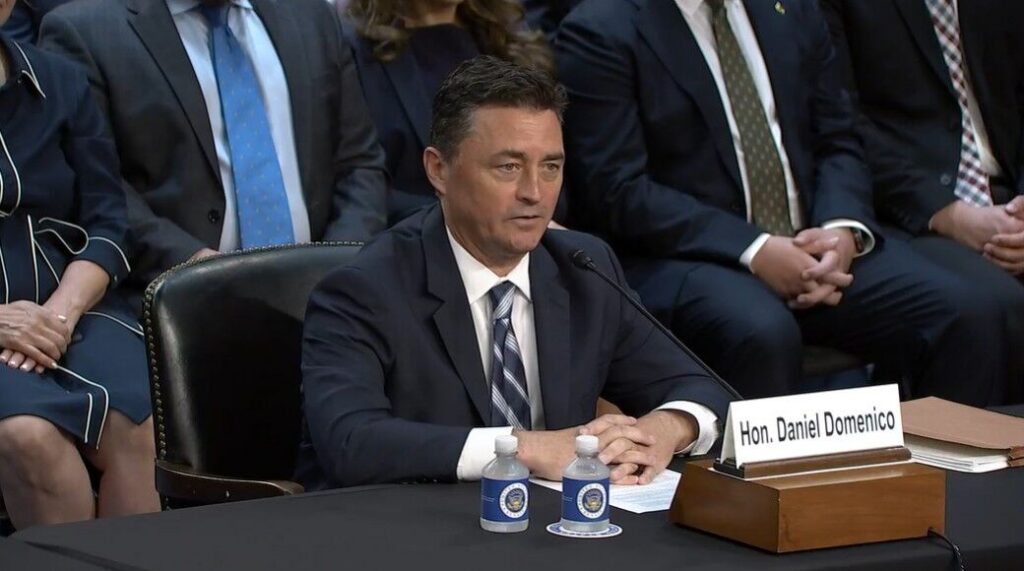
Senate committee advances Trump’s 10th Circuit nominee, as Domenico responds to questions about delays
MICHAEL KARLIK Colorado Politics
michael_karlik_colorado_politics@coloradopolitics.com
Updated 5 hours ago
The U.S. Senate Judiciary Committee advanced President Donald Trump’s nominee to the Denver-based federal appeals court on Thursday by a party-line vote of 12-10. U.S. District Court Judge Daniel D. Domenico, who was Trump’s first-term appointee to Colorado’s federal trial...

Colorado justices to hear embryonic donation dispute
MICHAEL KARLIK Colorado Politics
michael_karlik_colorado_politics@coloradopolitics.com
Updated 5 hours ago
The Colorado Supreme Court announced on Monday that it will decide whether lower court judges properly applied its framework for adjudicating disputes over the fate of pre-embryos, in which one person wants to use them to become a parent and...

Colorado faces $8M repayment demand after federal Medicaid audit
Marianne Goodland
marianne_goodland@coloradopolitics.com
Updated 7 hours ago
Colorado failed to follow federal and state requirements for certain Medicaid personal care service payments, according to a report from the U.S. Department of Health and Human Services inspector general, which is now seeking an $8 million repayment from the...

Jefferson County to fill commissioner vacancy after Dahlkemper tapped for lieutenant governor
Matt Kyle
matt.kyle@denvergazette.com
Updated 5 hours ago
Democratic gubernatorial nominee Phil Weiser on Wednesday announced that Jefferson County Commissioner Lesley Dahlkemper would be his lieutenant governor, meaning she would be leaving her commissioner seat open should he win the race in November. However, Dahlkemper’s term was already...

New wolf pack confirmed in Eagle County, marking 4th Colorado pack with pups this year
Marissa Ventrelli
marissa.ventrelli@coloradopolitics.com
Updated 7 hours ago
A new gray wolf pack has formed in Eagle County, Colorado Parks and Wildlife announced on Wednesday. Known as the Piney Ridge Pack, it is the fourth pack of gray wolves in the state to have produced pups this year....
Colorado justices to hear embryonic donation dispute
Michael Karlik
michael.karlik@coloradopolitics.com
Updated 3 hours ago
The Colorado Supreme Court announced on Monday that it will decide whether lower court judges properly applied its framework for adjudicating disputes over the fate of pre-embryos, in which one person wants to use them to become a parent and...
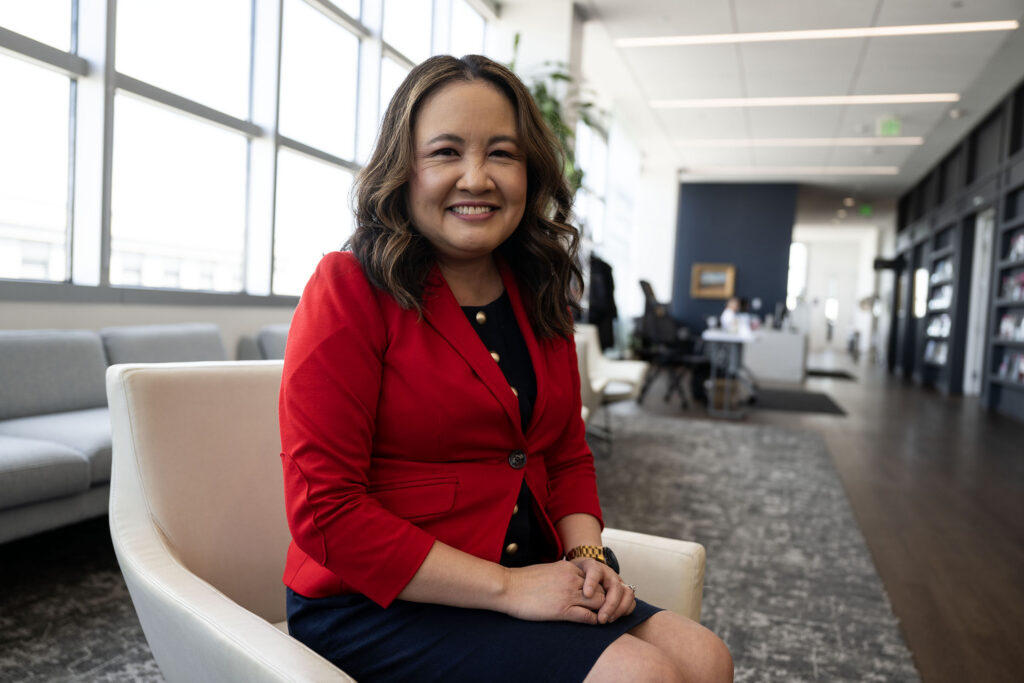
Isolation, emotion, persona: Colorado judicial programming prepares people for life on the bench
Michael Karlik
michael.karlik@coloradopolitics.com
Updated 5 hours ago
As a trial judge and now as a member of the Colorado Supreme Court, Justice Carlos A. Samour Jr. has heard the view that being a judge is isolating. “In neither court have I felt isolated. I’ve always interacted a...
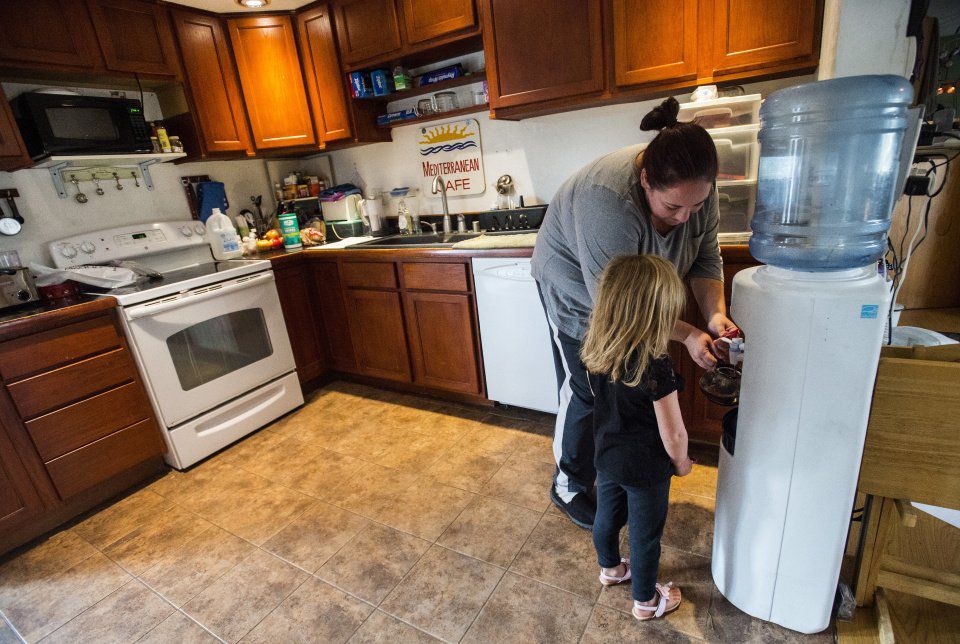
Colorado housing laws take effect, expanding tools for affordable and workforce housing
Marissa Ventrelli
marissa.ventrelli@coloradopolitics.com
Updated 1 day ago
New housing laws taking effect on Aug. 12 in Colorado aim to boost affordability, improve homelessness response and ensure safer water systems for mobile‑home communities. The first bill, Senate Bill 001, allows municipalities to sell county- or town-owned property to...

Ex-Venezuelan dictator Nicolas Maduro and wife scheduled for June 2027 drug trafficking trial
Kaelan Deese
kaelan-deese@coloradopolitics.com
Updated 1 day ago
Disgraced former Venezuelan dictator Nicolas Maduro and his wife are scheduled to stand trial June 1, 2027, on charges that they participated in a decadeslong conspiracy to flood the United States with cocaine. U.S. District Judge Alvin Hellerstein, a 92-year-old...
Democrat Phil Weiser names Jeffco Commissioner Lesley Dahlkemper as his gubernatorial running mate
Ernest Luning
ernest.luning@coloradopolitics.com
Updated 1 day ago
Colorado Attorney General Phil Weiser, the Democratic nominee for governor, on Wednesday named Jefferson County Commissioner Lesley Dahlkemper to be his lieutenant governor running mate in the general election. Calling her “someone who can be a governing partner,” Weiser said...