

Colorado fire districts face mounting problems, budget woes
Fire districts across the state are struggling with a cascading set of challenges, including decreased funding and increased costs.
From the Western Slope to the Eastern Plains, firefighters are wondering how they can best serve the public to put out structure fires, control wildland blazes, and respond to medical calls.
One area that has drawn conversation is Durango Fire Protection District (DFPD) in Southwest Colorado. Fire chief Randy Black penned an open letter to the community in January, spurred on by issues raised by the deadly wildfire that month in Los Angeles.
“Our intent is we want to motivate people,” Black said in an interview. “We want to support people. We want to support our public. We want to say you really do need to engage. At the point things are burning, it’s too late to take any action.”
The district’s attempt at engaging with its community has worked. Black said the district has received more than 100 requests for free fire mitigation consultations, a number that isn’t typically seen during the slow winter season.
Officials said DFPD faces funding issues that are being felt statewide, but the nature of the district also creates other challenge unique to Durango. In Colorado, district funding is connected to property taxes, which have been rising in recent years. However, reallocation of those taxes by the legislature have meant that fire budgets have not gone up. Plus, it doesn’t look like there will be a quick fix from the Capitol, they said.
Colorado SB24-194, signed into law last year, allows fire districts to implement impact fees and sales taxes, but such measures have to be approved by voters.
That’s where DFPD has another problem.
The City of Durango is not in the district. Rather, DFPD services the city via a contract. So, if DFPD wants to ask voters for taxes, the district first have to run an election in the fire district — which voters inside city limits can’t vote on — and then run another election with city voters.
This is both logistically challenging and costly — a setup that is unusual in Colorado, Black said.
In Montrose, fire chief Tad Rowan said that tax assessments have been a “constant moving target.”
“Up until this legislative session, each and every year, there has been some sort of change to residential assessment rates, commercial assessment rates, ag assessment rates, all of those things taking place in the Capitol that make it very difficult — for particularly fire protection districts, which are primarily property tax funded — to adequately plan and determine what their revenues are going to be moving forward, and that’s been a real struggle,” Rowan said.
The new ability for fire districts to implement a sales tax will be valuable to districts going forward, Rowan said, with the caveat that all taxes must be TABOR compliant.
Without adequate funding channels, fire departments can’t recruit and retain talent to their workforce, officials said.
Black has a hard time offering his employees a salary that competes with higher paying jobs on the Front Range, especially as cost of living is a challenge in communities like Durango.
In Montrose, Rowan said his district is seeing a drop in applications and in the quality of candidates for open positions. There isn’t one answer to why, but he said pay, desire for remote jobs, or stress and burnout in the emergency services could play a role.
Rising costs and delivery delays for fire trucks and other equipment are being felt in Montrose, Durango and across the nation.
In January 2022, DFPD ordered three fire trucks, but they weren’t delivered for two years. By October 2022, they ordered three more, with the first truck from that order arriving last week, in February 2025. In that 10-month span in 2022, the price of one truck model went up $100,000, Black said.
Rowen adds that funding uncertainties combined with long lead times makes it hard to plan for equipment needs numerous years in the future.
Industry consolidation — fire engine manufacturing is primarily controlled by three companies — in addition to labor shortages and supply chain delays is having an impact nationwide, according to The New York Times.
These issues are felt statewide.
The Salida fire chief recently raised concerns about funding in the wake of canceled grants and increased equipment costs. In Steamboat Springs, a proposed merger between the city-run fire department and surrounding fire district has been raised by a city councilmember. That could ease funding concerns for the ski town’s first responders.
The southwest corner of the state has had a dry winter; the snowpack is at 64% of the median, as measured by Snow Water Equivalent. There have already been some wildfire calls in January and February in the area, and additional fires are almost a certainty.
Montrose and central Colorado are doing better, and northern Colorado, including Summit County, are nearing or exceeding 100% of the median snowpack.
The federal spending freeze has paused grant money from the Environmental Protection Agency that DFPD planned to use for mitigation near subdivisions west of town, but Black said they should be able to tap into other funds.
Despite a challenging set of circumstances, both Black and Rowan are confident they can meet the needs of their communities.
On the topic of wildfire, Black said that local, regional and federal agencies work exceptionally well together in his part of the state, and relationships have only gotten stronger since 2018’s 416 Fire north of Durango. The city’s water system is also great, the official said, adding that, despite challenges, firefighters will still bend over backwards to respond to emergencies.
“We’re able to take care of our community right now,” Rowan said. “We don’t have a huge budget shortfall. We don’t have to close fire stations. We don’t have to take drastic measures because of all of these complexities that are going on. We’re able to keep our head above water and maintain quality service to our area.”


Colorado to participate in Great American State Fair in Washington
Marissa Ventrelli
marissa.ventrelli@coloradopolitics.com
Updated 1 hour ago
Visitors to Washington, D.C., for the country’s 250th anniversary will have the opportunity to learn about Colorado’s natural beauty and culture during the Great American State Fair, a World’s Fair-style event that opened Thursday at the National Mall. While all...
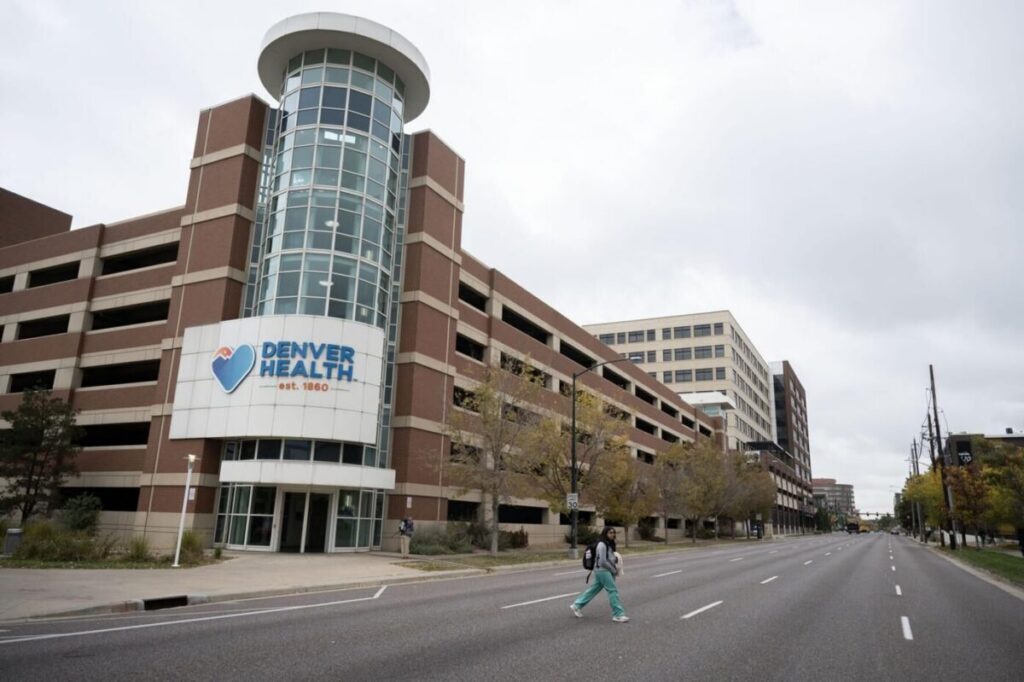
Colorado health officials say federal budget adds pressure to already stressed system
Marissa Ventrelli
marissa.ventrelli@coloradopolitics.com
Updated 2 hours ago
As the first anniversary of H.R. 1 approaches, Colorado Democrats and hospital executives say the law’s Medicaid reductions and eligibility rules are accelerating financial stress in a system where many facilities were already operating on the brink. Signed by President...

Phil Weiser leading Michael Bennet in Colorado’s Democratic gubernatorial primary, internal poll finds
Ernest Luning
ernest.luning@coloradopolitics.com
Updated 57 minutes ago
Attorney General Phil Weiser holds a lead over U.S. Sen. Michael Bennet among likely voters less than a week before ballots are due in Colorado’s Democratic gubernatorial primary, according to a new poll released Thursday by a group backing Weiser....
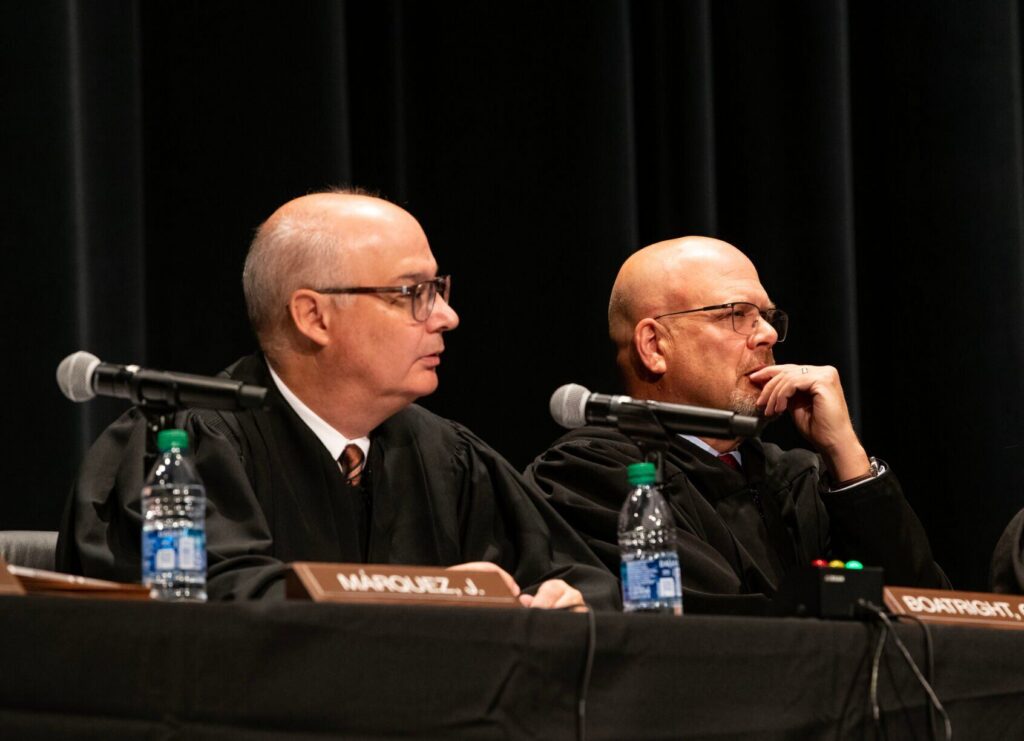
Colorado justices suggest father entitled to appeal of custody decision
Michael Karlik
michael.karlik@coloradopolitics.com
Updated 4 hours ago
Members of the Colorado Supreme Court signaled strongly on Tuesday that a father deserved some avenue for challenging a temporary child custody order that no lower court believed it could review due to the unusual circumstances of the case. Because...
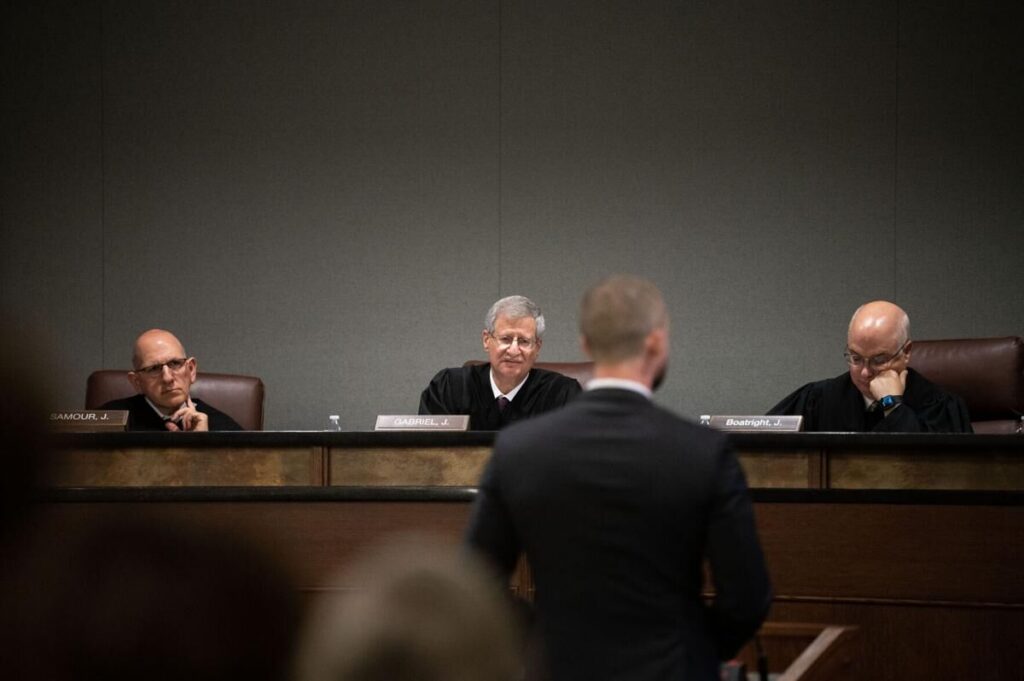
Colorado justices agree fraud claims belong in corporate dispute
Michael Karlik
michael.karlik@coloradopolitics.com
Updated 6 hours ago
The Colorado Supreme Court decided on Tuesday that a corporate plaintiff validly pursued fraud claims over conduct that was not covered by a contract or by a set of interrelated business agreements leading up to the contract. Previously, the Court...
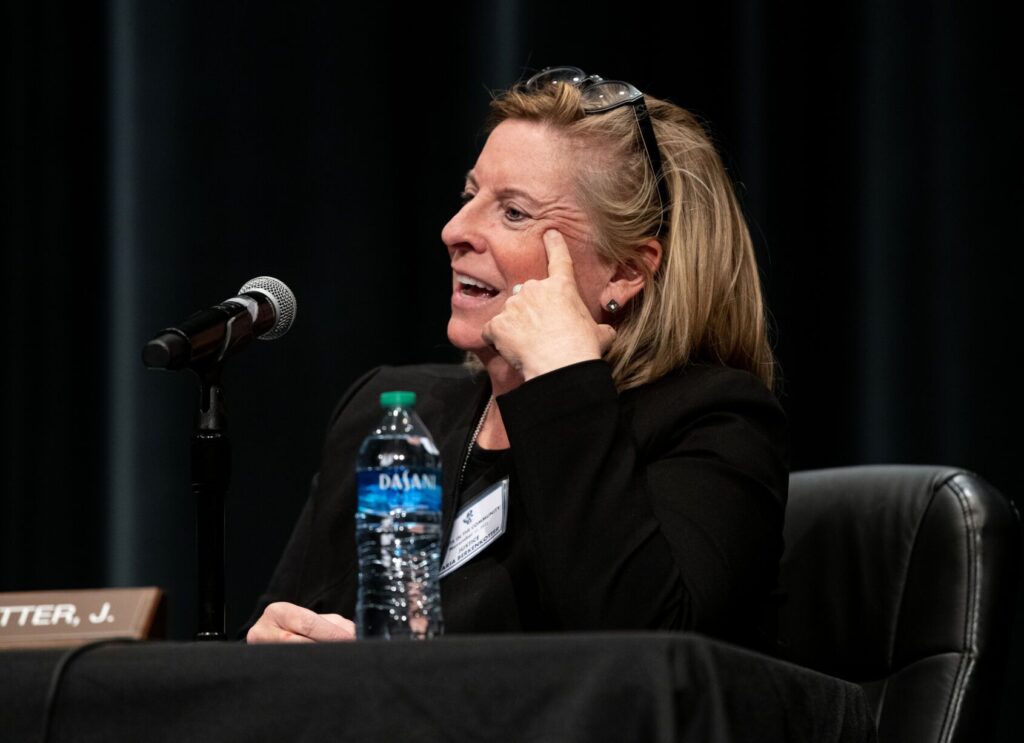
Colorado Supreme Court says intimate messages irrelevant to assault case
Michael Karlik
michael.karlik@coloradopolitics.com
Updated 8 hours ago
The Colorado Supreme Court decided on Tuesday that a Douglas County judge acted reasonably by blocking evidence of a defendant’s BDSM-related conversations with the victim in his trial for assault and false imprisonment. While the Court of Appeals believed that...

Postmaster general spars with Senate Democrats over mail-in ballot restrictions
Molly Parks
molly.parks@washingtonexaminer.com
Updated 8 hours ago
Senate Democrats sparred with Postmaster General David Steiner on Wednesday over the U.S. Postal Service’s move to stop delivering mail-in ballots in states that don’t hand over their voter rolls to the federal government. Steiner, who has stayed out of...
Douglas County water plan entering public review phase
Nicholas Fogleman
nicholas.fogleman@denvergazette.com
Updated 6 hours ago
After more than two years of formal work, Douglas County officials are moving into the public review phase of a countywide water plan they say will help guide future development and water resources through 2050. The Douglas County Water Commission...

Douglas County cracks down on illegal scooter, off-road vehicle use
Nicholas Fogleman
nicholas.fogleman@denvergazette.com
Updated 6 hours ago
Douglas County joined a growing list of local governments regulating electric scooters and motorcycles, setting standards and penalties for misuse. County commissioners approved an ordinance Tuesday regulating off-highway vehicles and low-powered scooters following broad community support and a presentation from...
Homeless recruits of ‘The Program’ say they were told to sign NDAs amid investigations in Colorado
David Migoya
david.migoya@gazette.com
Updated 1 day ago
Several formerly homeless people — each drawn into an Aurora-based enterprise known as “The Program” that promised free housing and cash in return for letting a home-health business administer prescriptions they were given — said they were pressed into signing...