

Winn downplays role in HUD scandal, threatens Colorado media with libel suits | A LOOK BACK
Thirty-Five Years Ago This Week: “We didn’t do anything illegal. Maybe stupid, but nothing illegal.”
Phil Winn, former Ambassador to Switzerland, former chairman of the Colorado Republican Party, and former assistant secretary of the Department of Housing and Urban Development, spoke with The Colorado Statesman, defending himself against the scandal surrounding his service in HUD.
Allegations of misconduct at HUD triggered a far-reaching congressional investigation, including charges of influence peddling to obtain contracts for low-income housing projects. The congressional probe eventually found that former Reagan administration officials and prominent Republicans had been paid $6 million in consulting fees.
“The sad part for me, being as candid as I can, is that until this whole thing dies down,” Winn said, “I can’t do the community work I’d like to do, and that’s what I wanted to come home to do. So I made a decision, based on good advice from people I greatly admire, to just cool it for a year or so.”
Winn said that his service under Presidents Ronald Reagan and George H.W. Bush was the greatest honor of his life and that, “…my only agenda was to do a good job there. I don’t think I’ve ever enjoyed anything as much, and I don’t think I ever worked as hard or accomplished more.”
Winn had spent much of the previous year dispatching his attorneys to meet with executives at all the major Denver newspapers warning them that if they kept reporting his culpability in HUD transactions, in which he maintained he had no involvement, he would not hesitate to file suit for libel.
“I don’t think they purposely made anything inaccurate, but this whole thing is so complicated,” Winn said, stating that he’d somewhat adjusted his stance on journalists. “Sometimes I’d have to slowly discuss the complex procedures and had to correct myself. The complex nature of the projects are difficult for most people to understand.”
Winn steadfastly maintained that the report that he and his partners, who became known as “The Winn Group”, had walked away with $160 million from the low-income housing projects they managed was “outrageous.”
“That number is preposterous. We received an infinitesimal portion of what was reported in the press,” Winn said. “This was a profitable business transaction, but nowhere near what’s been reported.”
Fifteen Years Ago: Successfully increasing renewable energy production provided the General Assembly with the impetus to also increase state standards, requiring utility companies to generate even more of their electricity from renewables.
Colorado’s previous standard had called on utility companies to purchase 3% of their electricity from renewable sources, but under the first bill filed in the 2010 session of the General Assembly, House Bill 10-1001, the standard would increase to 30% by 2020.
Not long after taking office in 2007, Gov. Bill Ritter had encouraged the General Assembly to increase the standard and to make it the center piece of a “New Energy Economy,” which would make Colorado a national and, potentially, a world leader in renewable energy.
According to Sen. Gail Schwartz, the senate sponsor, the bill could give “Colorado the highest clean-energy requirement in the Rocky Mountain west. But there’s no threat to coal being a source of electrical generation for the foreseeable future.”
Schwartz also said that the standards imposed since 2004 had led to the creation of 17,000 jobs statewide in renewable energy and research, the fourth-highest concentration in the nation.
Senate Minority Leader Josh Penry, R-Grand Junction, said that the bill had “the foul aroma of special interests” and introduced a bill which would strike a section of the bill which dealt with electricians.
State Sen. Morgan Carroll, D-Denver, disagreed. “It’s just common sense to have licensed electricians working on these projects to ensure they are done safely,” she argued.
Rachael Wright is the author of several novels including The Twins of Strathnaver, with degrees in Political Science and History from Colorado Mesa University, and is a contributing writer to Colorado Politics, the Colorado Springs Gazette and the Denver Gazette.

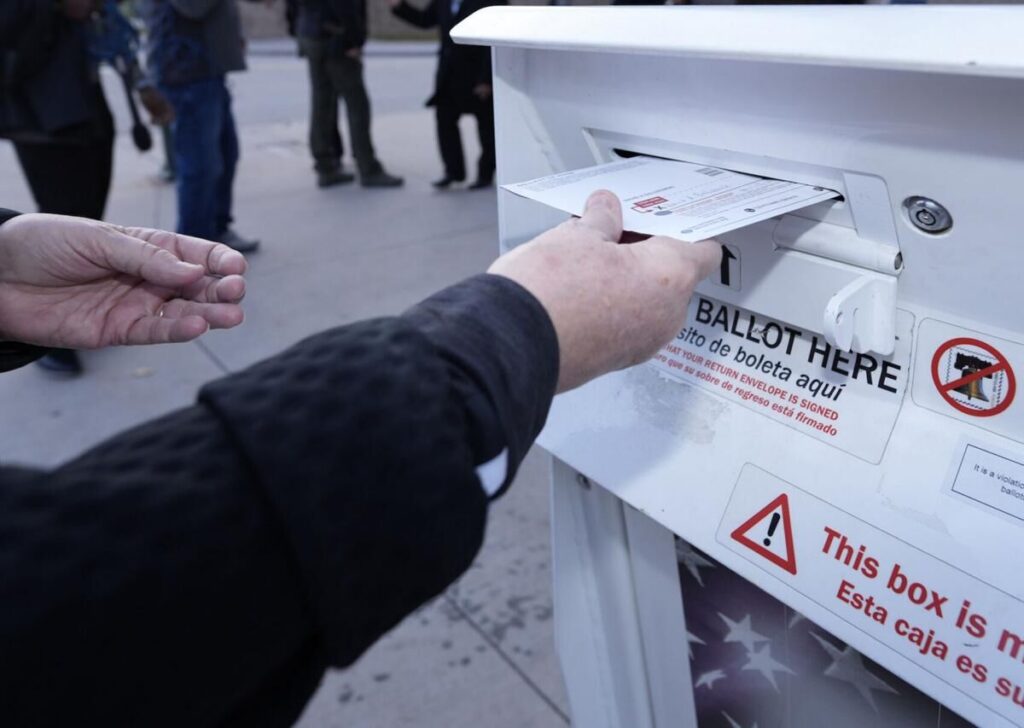
Colorado measure adding ID checks to mail-in voting qualifies for ballot
Marissa Ventrelli
marissa.ventrelli@coloradopolitics.com
Updated 40 minutes ago
A ballot initiative that would require voters to include additional information on mail-in ballots has qualified for the November election, according to the Secretary of State’s Office. Backed by El Paso County Treasurer Chuck Broerman and former Deputy Secretary of...
Colorado election website error exposes personal data of confidential voters
Marissa Ventrelli
marissa.ventrelli@coloradopolitics.com
Updated 2 hours ago
A system update accidentally lifted protections on confidential records in Colorado, exposing dozens of voters’ personal information, according to the Secretary of State’s Office. The limit that normally blocks access to confidential voter profiles was inadvertently disabled during an update...
PUC adds weekly comment after killing private talks
Scott Weiser
scott.weiser@gazette.com
Updated 2 hours ago
The Colorado Public Utilities Commission will take public comment at the start of every commissioner’s weekly meeting beginning Sept. 9 as part of its new transparency mandate, the commission announced, expanding a slot previously limited to the second Wednesday of...
10th Circuit overturns framework for sentencing probation violators by 11-1
Michael Karlik
michael.karlik@coloradopolitics.com
Updated 3 hours ago
In a rare decision by all 12 of its full-time judges, the Denver-based federal appeals court ruled in a lopsided vote on Friday that one of its members created a sentencing process for probation violators that was out of step...

Federal judge dismisses excessive force lawsuit against Colorado Springs, officer
Michael Karlik
michael.karlik@coloradopolitics.com
Updated 2 hours ago
A federal judge concluded last week that a Colorado Springs police officer could not be held liable for shooting a suspect three times after the man menaced two victims with a gun and fled the scene. Al’morion Germany was involved...

DeFlock started from one man’s curiosity — now Flock cameras are a midterm issue
Claire Carter
claire.carter@washingtonexaminer.com
Updated 6 hours ago
Will Freeman wasn’t looking to start a national movement when he launched DeFlock after noticing Flock Safety’s automatic license plate readers along the side of the road. The software engineer was driving across the country in 2024 when the cameras...

Aurora student journalist cleared of disciplinary charges after ignoring ‘gag order’
Kyla Pearce
kyla.pearce@gazette.com
Updated 3 hours ago
A Community College of Aurora student who accused the college of putting an “unconstitutional gag order” on his student-run publication was cleared of disciplinary charges against him. CCA student Andrew Green tried to register his independent student publication, called “FoxTalk,”...
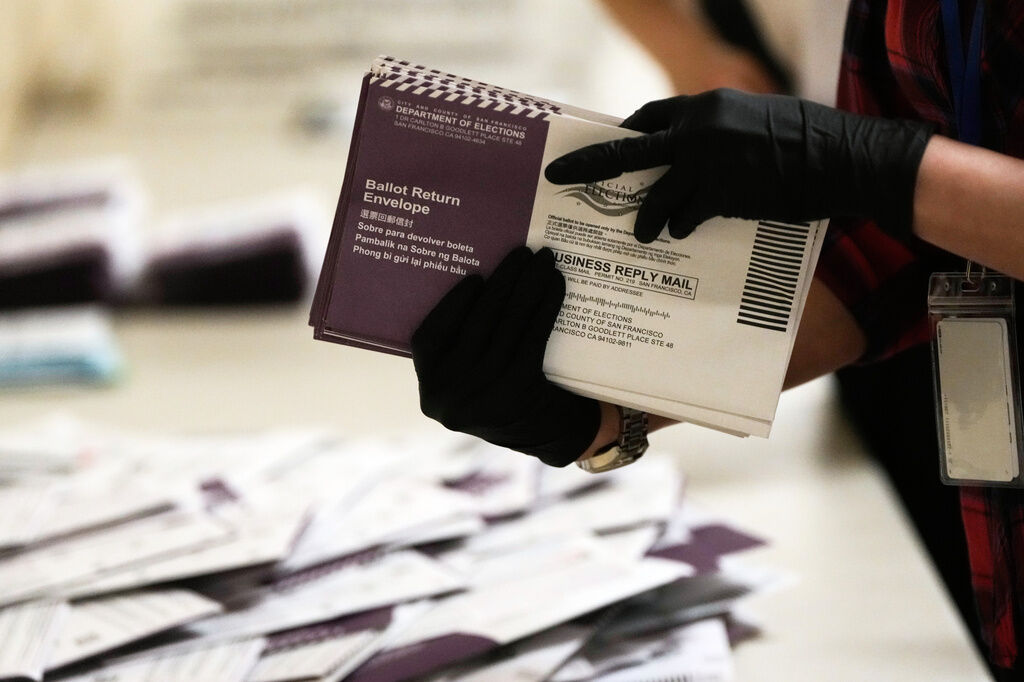
Colorado leaders cheer court decision to block Trump’s mail ballot order in a ruling that’s likely to be swiftly appealed
Thelma Grimes
thelma.grimes@coloradopolitics.com
Updated 3 hours ago
A federal judge on Thursday halted — at least for now — attempts to implement President Donald Trump’s executive order that seeks to restrict the mailing of ballots to American citizens on an eligible voters list. The move stalled the...

Healthcare Freefall: AI arms race hits rural healthcare as hospitals fight to keep up
Thelma Grimes
thelma.grimes@coloradopolitics.com
Updated 7 hours ago
Editor’s Note: Colorado’s healthcare system is entering a period of accelerating instability — a “tsunami,” as multiple leaders describe it — driven by collapsing hospital finances, shrinking Medicaid reimbursements, disappearing services and a political fight over who is responsible for...

House will vote to denounce socialism
Lauren Green
lauren-green@coloradopolitics.com
Updated 10 hours ago
The House of Representatives is set to vote next week when lawmakers return to condemn and denounce “socialism in all its forms,” specifically pointing to the growing Democratic Socialists of America organization. The House voted to condemn socialism last year,...