

At odds over union law, Colorado business and labor groups sharpen arguments ahead of Capitol fight
As the fight over proposed changes to an 80-year-old labor law takes shape, unions and businesses have begun sharpening their arguments, with both sides notably claiming their approach is best for Colorado’s economy.
Indeed, the two sides are pointing to economic reports and studies in an effort to strengthen their position among lawmakers ahead of next year’s legislative session. At least one legislative leader said she wants both sides to have a say in any effort to change the labor law.
Established in 1943, the law, called the Labor Peace Act, governs unionization and collective bargaining agreements. While the other 49 states are either “right to work” states — meaning employees aren’t required to union be members or to pay a “representation” fee as a condition of employment — or not, Colorado’s law is uniquely somewhere in the middle.
At issue in the upcoming battle at the Colorado General Assembly is whether to upend the law and eliminate the provision requiring a higher election threshold — 75% yes vote from workers in a unionized company — in order to impose this “representation” fee.
Business leaders said Colorado’s current law has achieved that difficult balance of permitting a union to charge representation fees but only if a supermajority of workers and not a simple majority agreed, and that environment has allowed the state to not only compete but surpass the competition.
Labor groups, meanwhile, argue that Colorado’s law is effectively anti-union and that eliminating that required second election to impose union dues on non-union members means law workers have more freedom to negotiate for safety and better pay.
Denver Chamber: The Colorado model is working
J.J. Ament, president and CEO of the Denver Metro Chamber of Commerce, said Colorado has thrived under the Labor Peace Act.
“This model is working,” he told Colorado Politics. “There’s no reason whatsoever to disrupt the peace.”
It’s a “particularly bad idea to open up this fight,” Ament said, given where Colorado’s economy is relative to the COVID-19 pandemic, and at a time when costs are high and state competitiveness is declining.
“The chamber’s No. 1 priority is to kill this bill,” he said.
Ament cited reports saying Colorado has outperformed both right-to-work and non right-to-work states when it comes to unemployment growth over a 20-year span.
The data from the Bureau of Labor and Statistics shows Colorado’s average annual growth rate between 2003 and 2023 at 1.6%, higher than right-to-work states’ average of 1.3%, as well as non right-to-work states’ 0.7%.
The chamber official also noted that seven of CNBC’s Top 10 states for business are right-to-work states, many of which are Colorado’s biggest competitors.
He pointed to the Metro Denver Economic Council’s report, “Toward a More Competitive Colorado,” which that, of Colorado’s competitors, right-to-work states ranked in the top 25 for employment growth, while non-right-to-work states can be found in the bottom 25.
The report added that, among Colorado’s top competitors, nine of the top 10 are right-to-work states. The report ranked Colorado fourth on the list.
“I think what we’ve seen in the past few years is a decline in our competitiveness, and I think from that perspective, when we look at doing away with the Labor Peace Act, there’s just no way that that doesn’t further impact our competitiveness and further limit the opportunities that we have to bring great jobs and businesses to Colorado,” Carly West, the metro chamber’s vice president for government affairs, earlier said.
Labor coalition: More unionization is good for the economy
The coalition of unions pushing to eliminate the second election pointed to Colorado Fiscal Institute’s research, which suggested that unionization benefits a state’s economy — due to their effects on workers.
Union workers earn an average of 10% more than non-union workers, according to CFI’s “Strong Unions Mean Strong Economic Outcomes for All Coloradans.”
The report also said wages in right-to-work states are on average 3% lower than those in non-right-to-work states.
The way that Sophie Mariam, CFI’s fiscal policy analyst, sees it, when workers are paid more, they spend more, which in turn is good for the economy.
She said she’s seen some “pretty strong evidence” from national studies that suggests unionization boosts economic activity. While right-to-work states may see economic growth in the short-term, states with strong unions can expect to see more financial stability in the long run, she added.
According to projections by CFI, wages in Colorado could increase by over $1.11 an hour if the proposed change to the union law passes. That comes out to nearly an extra $2,500 per year.
Union members are also 13% more likely to be homeowners, the report found.
Sen. Robert Rodriguez, D-Denver, one of the would-be sponsors of what proponents have dubbed the “Worker Protection Act,” believes it prioritizes people over businesses without sacrificing economic growth.
“It’s time to show that we’re fighting for rights for workers and the middle class people that are getting squeezed out of everything,” he told Colorado Politics.


Colorado to participate in Great American State Fair in Washington
Marissa Ventrelli
marissa.ventrelli@coloradopolitics.com
Updated 18 hours ago
Visitors to Washington, D.C., for the country’s 250th anniversary will have the opportunity to learn about Colorado’s natural beauty and culture during the Great American State Fair, a World’s Fair-style event that opened Thursday at the National Mall. While all...

RTD to reconsider service priorities as cuts, budget deficit loom
Michael Braithwaite
michael.braithwaite@gazette.com
Updated 1 hour ago
Should the Regional Transportation District aim to maximize ridership or system coverage? That question sat at the heart of the RTD Board of Directors’ first Comprehensive Operations Analysis briefing on Thursday afternoon. With the Denver transit agency facing a budget...

Mobolade, city leaders say election date lawsuit is attack on local voters
Brennen Kauffman
brennen.kauffman@gazette.com
Updated 45 minutes ago
Mayor Yemi Mobolade and other city leaders will fight to keep Colorado Springs elections in April in the face of a new lawsuit. Mobolade, the mayor’s Chief of Staff Wayne Williams and City Councilmember Roland Rainey addressed the lawsuit in...
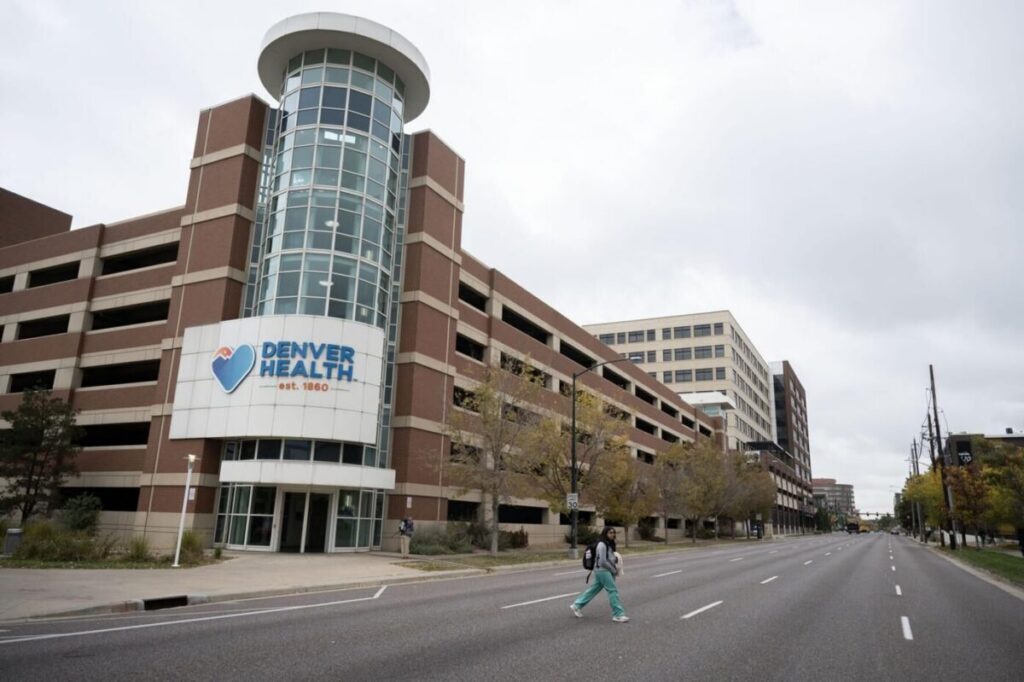
Colorado health officials say federal budget adds pressure to already stressed system
Marissa Ventrelli
marissa.ventrelli@coloradopolitics.com
Updated 19 hours ago
As the first anniversary of H.R. 1 approaches, Colorado Democrats and hospital executives say the law’s Medicaid reductions and eligibility rules are accelerating financial stress in a system where many facilities were already operating on the brink. Signed by President...

Phil Weiser leading Michael Bennet in Colorado’s Democratic gubernatorial primary, internal poll finds
Ernest Luning
ernest.luning@coloradopolitics.com
Updated 1 minute ago
Attorney General Phil Weiser holds a lead over U.S. Sen. Michael Bennet among likely voters less than a week before ballots are due in Colorado’s Democratic gubernatorial primary, according to a new poll released Thursday by a group backing Weiser....
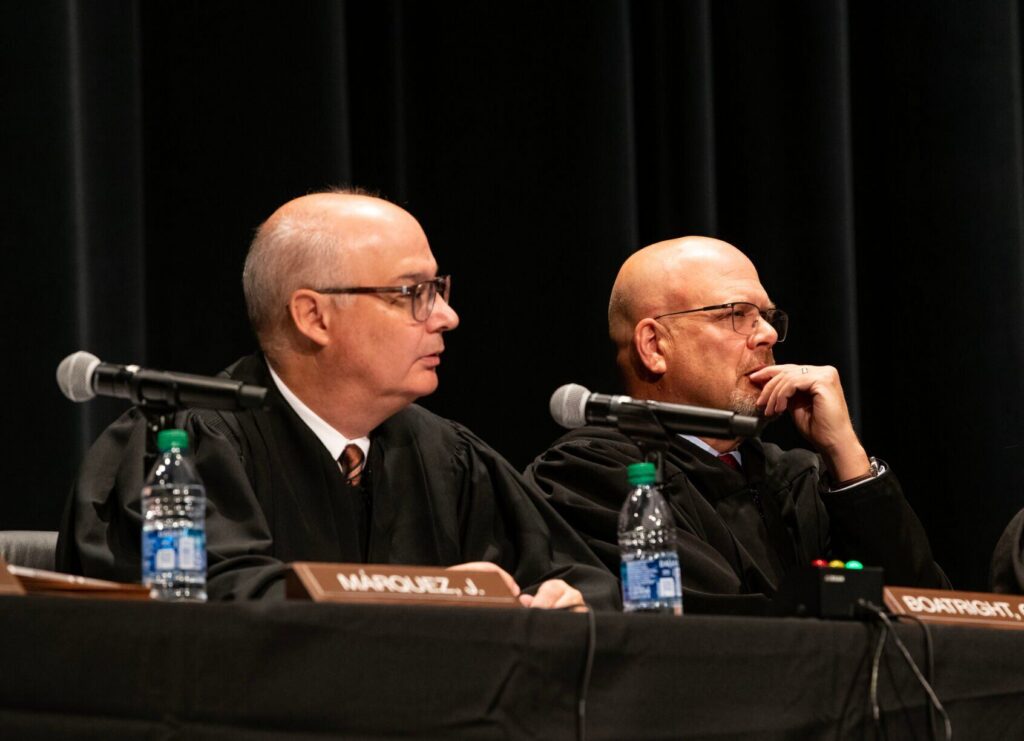
Colorado justices suggest father entitled to appeal of custody decision
Michael Karlik
michael.karlik@coloradopolitics.com
Updated 21 hours ago
Members of the Colorado Supreme Court signaled strongly on Tuesday that a father deserved some avenue for challenging a temporary child custody order that no lower court believed it could review due to the unusual circumstances of the case. Because...

Court snuffs out challenge to Denver’s flavored tobacco ban
Deborah Grigsby
deborah.smith@denvergazette.com
Updated 3 minutes ago
The smoke finally cleared in Denver’s battle over a citywide ban on flavored tobacco products when a Denver court dismissed a challenge from local vape shop owners seeking to declare the ordinance unconstitutional and block its enforcement. On Wednesday, Denver...
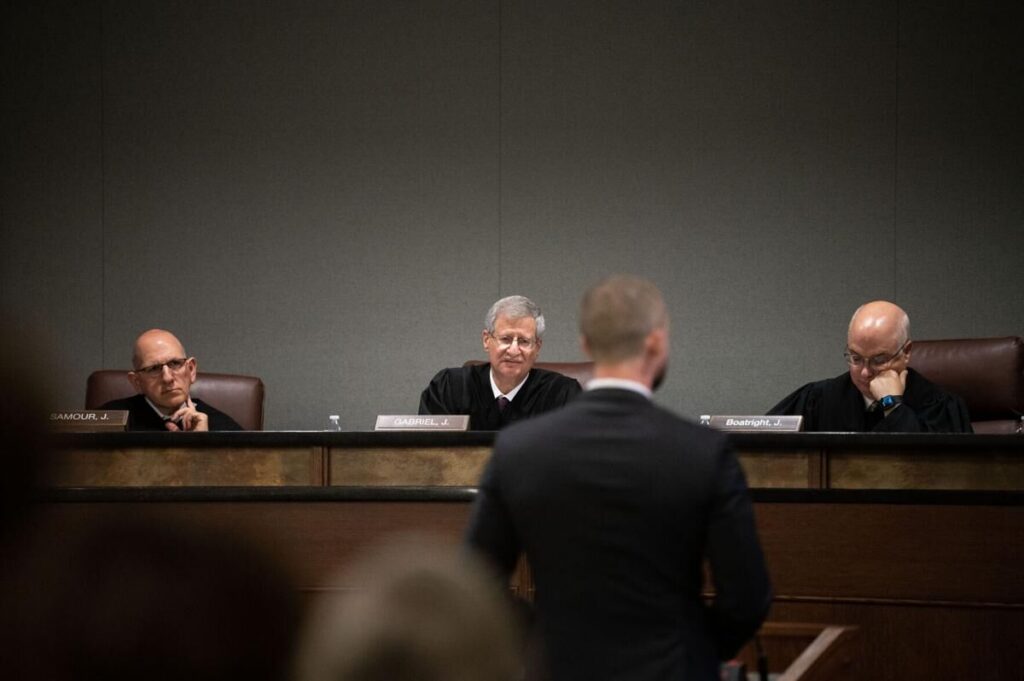
Colorado justices agree fraud claims belong in corporate dispute
Michael Karlik
michael.karlik@coloradopolitics.com
Updated 23 hours ago
The Colorado Supreme Court decided on Tuesday that a corporate plaintiff validly pursued fraud claims over conduct that was not covered by a contract or by a set of interrelated business agreements leading up to the contract. Previously, the Court...
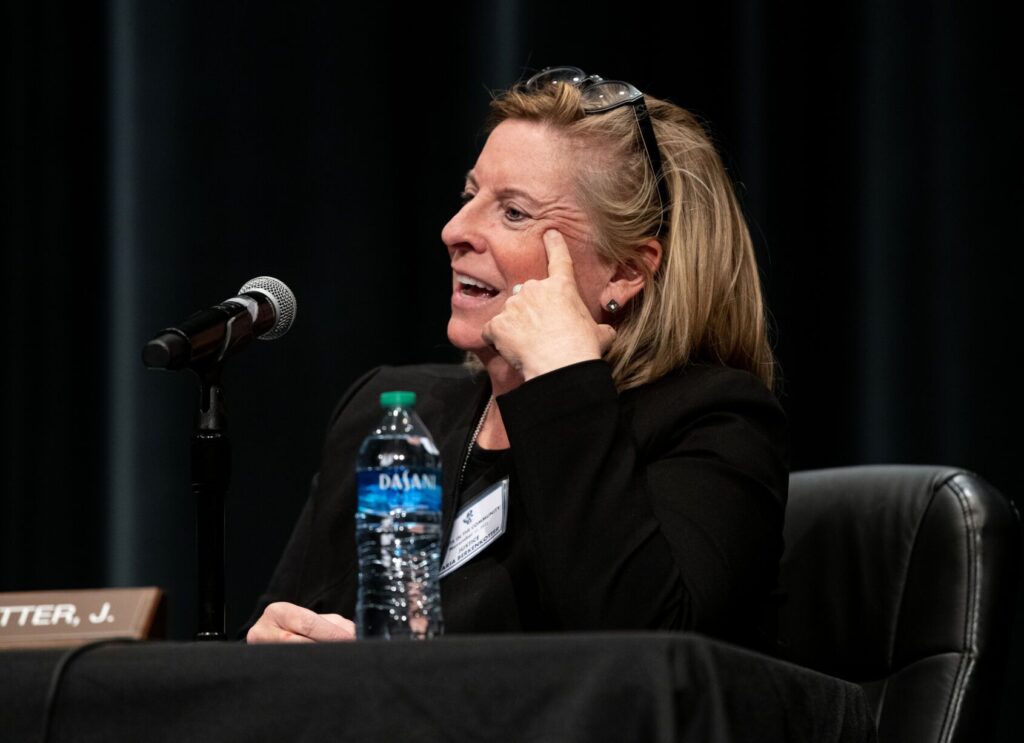
Colorado Supreme Court says intimate messages irrelevant to assault case
Michael Karlik
michael.karlik@coloradopolitics.com
Updated 1 day ago
The Colorado Supreme Court decided on Tuesday that a Douglas County judge acted reasonably by blocking evidence of a defendant’s BDSM-related conversations with the victim in his trial for assault and false imprisonment. While the Court of Appeals believed that...

Postmaster general spars with Senate Democrats over mail-in ballot restrictions
Molly Parks
molly.parks@washingtonexaminer.com
Updated 1 day ago
Senate Democrats sparred with Postmaster General David Steiner on Wednesday over the U.S. Postal Service’s move to stop delivering mail-in ballots in states that don’t hand over their voter rolls to the federal government. Steiner, who has stayed out of...