

Appeals court clarifies significance of pinpointing drug exposure for child neglect cases
Colorado’s second-highest court on Thursday clarified it does matter whether a child experienced drug exposure in her parents’ custody, rejecting a Montrose County judge’s conclusion that the location was irrelevant to determining whether the infant was neglected.
A child is neglected under Colorado law if, among other things, their “environment is injurious” to their welfare. The state Supreme Court has determined that a parent need not be at fault, just that the environment itself is harmful.
However, a three-judge panel concluded the question of a parent’s fault for a child’s drug exposure is distinct from the question of whether the exposure occurred before or after a child was removed to foster care. It is not the case, wrote Judge Karl L. Schock, that a finding of child neglect can ignore the possibility the foster home was actually the harmful environment.
“(W)e clarify that when a child has been removed from the child’s parents, the relevant environment is the one the child is in — or would be in — while in the custody of the parents,” he wrote in the Aug. 8 opinion.
In the underlying case, a jury decided in December 2022 that five children were not neglected as Montrose County Human Services had alleged. The county returned the children, who were temporarily in foster care, to the parents.
The children’s mother then allegedly hit the caseworker during the transfer of custody, leading to criminal charges. The county once again removed the children and filed a new child neglect case.
In mid-January 2023, the youngest child, D.H., tested positive for methamphetamine. The exposure occurred sometime in the prior 90 days — 36 of which she spent with her mother and the remaining time she spent at the foster home. The mother and the foster parents subsequently tested negative for meth. The mother’s partner previously tested positive, but he did not live with D.H.
Montrose County moved to declare all five children neglected, alleging D.H.’s positive drug test meant all siblings would be in an injurious environment if returned to their parents.
Based on the evidence submitted, Chief Judge D. Cory Jackson determined it was “more reasonable to infer” D.H.’s meth exposure happened in foster care. However, based on the Supreme Court’s recognition that a parent need not be the one responsible for the harmful environment, he deemed all five children neglected.
It “certainly appears a perverse outcome to enter a judgment of adjudication in the circumstance that a child’s injurious environment may have occurred while in … foster care,” Jackson acknowledged. But he concluded the location of the drug exposure was irrelevant.
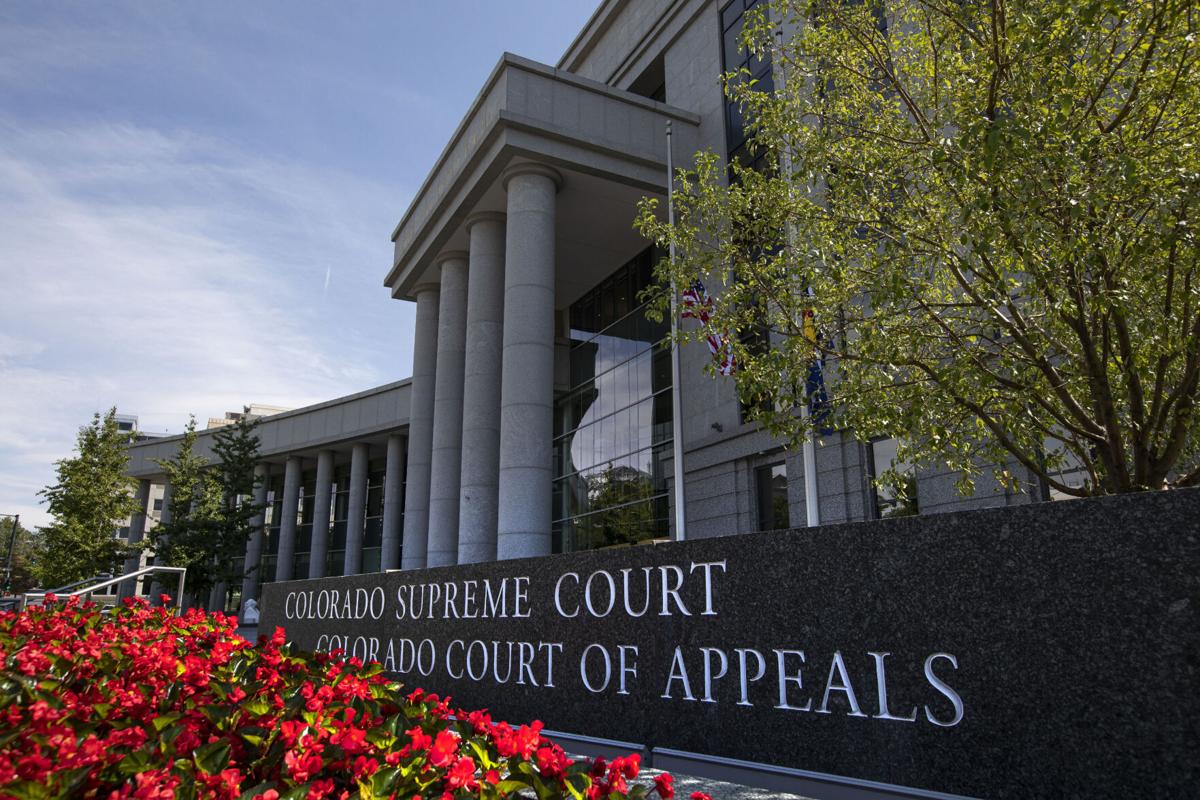
FILE PHOTO: The Ralph L. Carr Colorado Judicial Center, on Tuesday, Sept. 13, 2022, in Denver, Colo. (Timothy Hurst/The Denver Gazette)
Timothy Hurst/Denver Gazette

FILE PHOTO: The Ralph L. Carr Colorado Judicial Center, on Tuesday, Sept. 13, 2022, in Denver, Colo. (Timothy Hurst/The Denver Gazette)
The appellate panel agreed with Jackson that it was reasonable to believe D.H.’s meth exposure happened in foster care, but it was also possible the exposure occurred while in the mother’s custody. Therefore, a trial was necessary. Jackson’s reason for resolving the case without one — his belief that the location of the exposure was irrelevant — was incorrect, Schock explained.
“For example, imagine a scenario in which a child is removed from a healthy environment with a parent and placed in a harmful environment in the custody of the (county),” Schock wrote.
“In that case, far from protecting a child who is otherwise endangered, the state intervention would be the direct cause of the harm. Yet the injurious environment created by the (county) could then be used to justify continuing the harmful state intervention that was unnecessary in the first place,” he elaborated. “That is not how the Children’s Code is supposed to work.”
The Supreme Court’s prior determination that a parent need not be at fault for the harmful environment, the panel noted, was separate from the issue of which environment judges should look at in the first place. The panel concluded a child’s environment with the parents, not the foster home, is the proper one.
Because the panel reversed Jackson’s finding of neglect for D.H., it also overturned his finding for the remaining children.
The case is People in the Interest of C.M. et al.

Colorado board permits state to appeal injunction against arthritis drug price cap
Marissa Ventrelli
marissa.ventrelli@coloradopolitics.com
Updated 3 hours ago
A Colorado board voted Friday to allow the Attorney General’s Office to fight an injunction against a price cap on a drug that treats arthritis. A U.S. district court judge had granted the company Amgen a preliminary injunction, temporarily blocking...

Federal judge rejects constitutional claims, ‘expressions of hatred’ by Club Q defendant
Michael Karlik
michael.karlik@coloradopolitics.com
Updated 3 hours ago
A federal judge rejected a defendant’s claims that he received constitutionally ineffective assistance of counsel while facing federal hate crime and firearms charges for murdering five people at a Colorado Springs LGBTQ nightclub in 2022. Anderson Lee Aldrich is serving...

Divided 10th Circuit upholds Colorado congestion fee on car rentals
Michael Karlik
michael.karlik@coloradopolitics.com
Updated 3 hours ago
The Denver-based federal appeals court concluded on Monday that a 2024 “congestion impact fee” that lawmakers imposed on short-term vehicle rentals did not conflict with a federal prohibition on certain airport-related charges. Beginning in the 1970s, Congress began limiting the...
10th Circuit dismisses woman’s lawsuit following 10-year attempt to undo restraining order
Michael Karlik
michael.karlik@coloradopolitics.com
Updated 3 days ago
The Denver-based federal appeals court rejected a woman’s challenge on Friday to a restraining order imposed on her more than a decade ago, finding that she cannot credibly claim she will be prosecuted for violating the restraining order through her...
10th Circuit dismisses woman’s lawsuit following 10-year attempt to undo restraining order
Michael Karlik
michael.karlik@coloradopolitics.com
Updated 3 days ago
The Denver-based federal appeals court rejected a woman’s challenge on Friday to a restraining order imposed on her more than a decade ago, finding that she cannot credibly claim she will be prosecuted for violating the restraining order through her...
Colorado equal pay law does not require plaintiffs to allege gender-based retaliation, appeals court finds
Michael Karlik
michael.karlik@coloradopolitics.com
Updated 2 days ago
The 2019 Colorado law aimed at rooting out pay discrimination on the basis of sex does not require a plaintiff to allege their employer retaliated against them for sex- or gender-related reasons, the state’s second-highest court decided on Thursday. Lawmakers...

Hudson faces lawsuit over ICE detention facility
Nicole C. Brambila
nicole-c-brambila@coloradopolitics.com
Updated 3 days ago
A nonprofit organization filed a lawsuit against the Town of Hudson Wednesday, challenging plans to reopen a former federal prison in the town as a U.S. Immigration and Customs Enforcement detention facility. Together Colorado, along with Janet E. Carlson, filed...
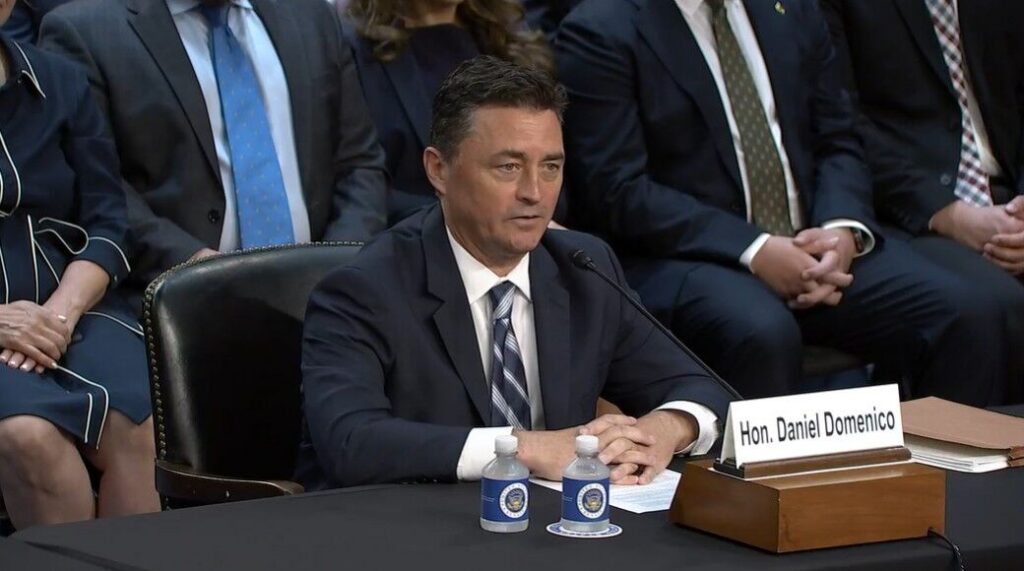
Senate committee advances Trump’s 10th Circuit nominee, as Domenico responds to questions about delays
Michael Karlik
michael.karlik@coloradopolitics.com
Updated 3 days ago
The U.S. Senate Judiciary Committee advanced President Donald Trump’s nominee to the Denver-based federal appeals court on Thursday by a party-line vote of 12-10. U.S. District Court Judge Daniel D. Domenico, who was Trump’s first-term appointee to Colorado’s federal trial...
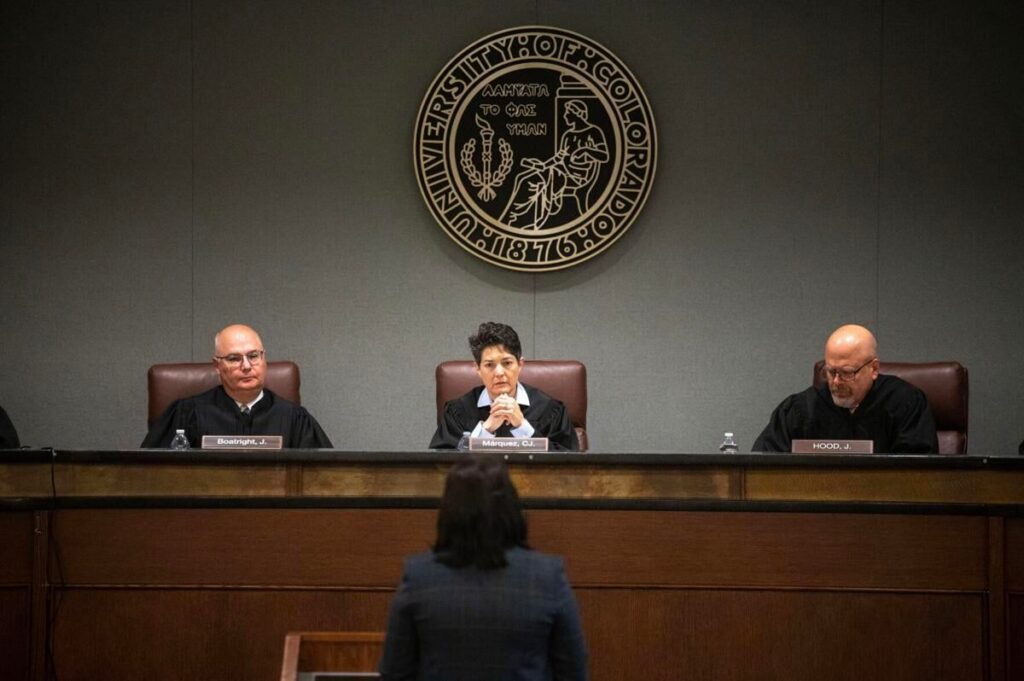
Colorado justices to hear embryonic donation dispute
Michael Karlik
michael.karlik@coloradopolitics.com
Updated 4 days ago
The Colorado Supreme Court announced on Monday that it will decide whether lower court judges properly applied its framework for adjudicating disputes over the fate of pre-embryos, in which one person wants to use them to become a parent and...
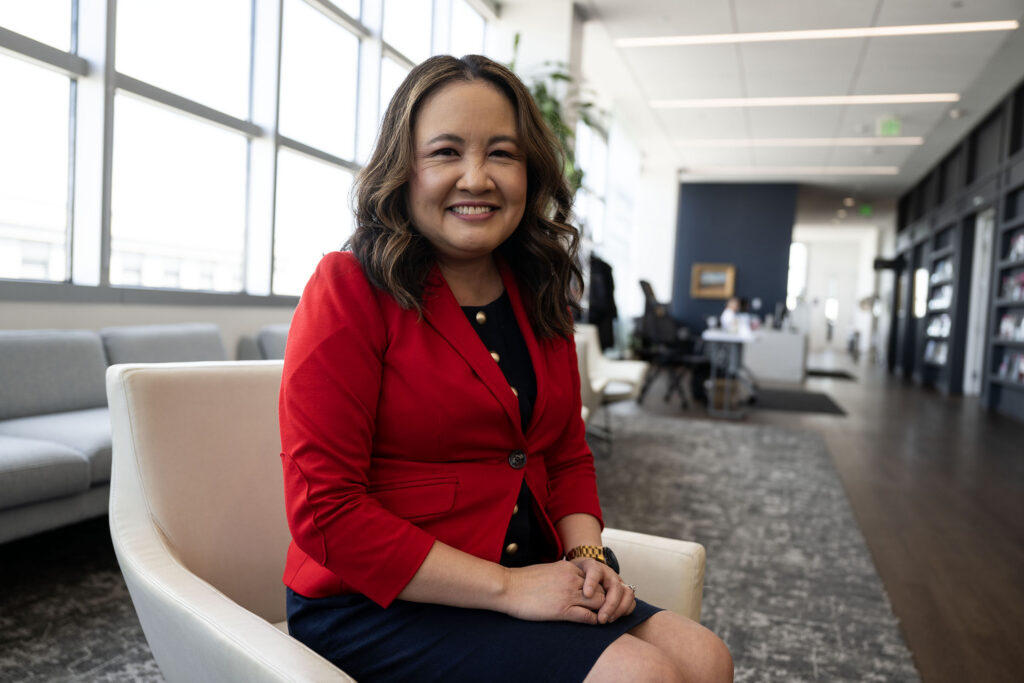
Isolation, emotion, persona: Colorado judicial programming prepares people for life on the bench
Michael Karlik
michael.karlik@coloradopolitics.com
Updated 4 days ago
As a trial judge and now as a member of the Colorado Supreme Court, Justice Carlos A. Samour Jr. has heard the view that being a judge is isolating. “In neither court have I felt isolated. I’ve always interacted a...