

Tapped: Douglas County looks to diversify water supply as population grows

Editor’s Note: The Denver metro region sits at the center of one of the American West’s most complex and consequential water challenges. This series examines the interconnected systems that determine how the region secures, stores, and conserves its water — while navigating the competing demands of fast‑growing urban communities and the increasingly unpredictable mountain snowpack that underpins the entire system.

Douglas County’s rapid growth has reshaped its landscape over the last two decades, transforming once-rural stretches south of the Denver metro into one of the state’s most sought-after communities.
With a population approaching 400,000 and tens of thousands more residents expected in the coming decades, the county faces a key question — how to diversify its water supply in an increasingly water-constrained future.
Douglas County is served by 31 water providers, each providing a unique population constrained by location, weather and infrastructure. The three largest — Highlands Ranch Water, Parker Water & Sanitation District and Castle Rock Water — account for approximately 67% of the county’s municipal water demand, according to a preliminary Douglas County water plan.
While many water providers are dealing with the effects of low precipitation and snowpack, Douglas County’s growth has historically been fueled by the Denver Aquifer, a nonrenewable groundwater source largely insulated from drought conditions.
This provides a consistent source of water for many providers, but the aquifer recharges slowly, threatening long-term sustainability if systems remain heavily reliant on it.
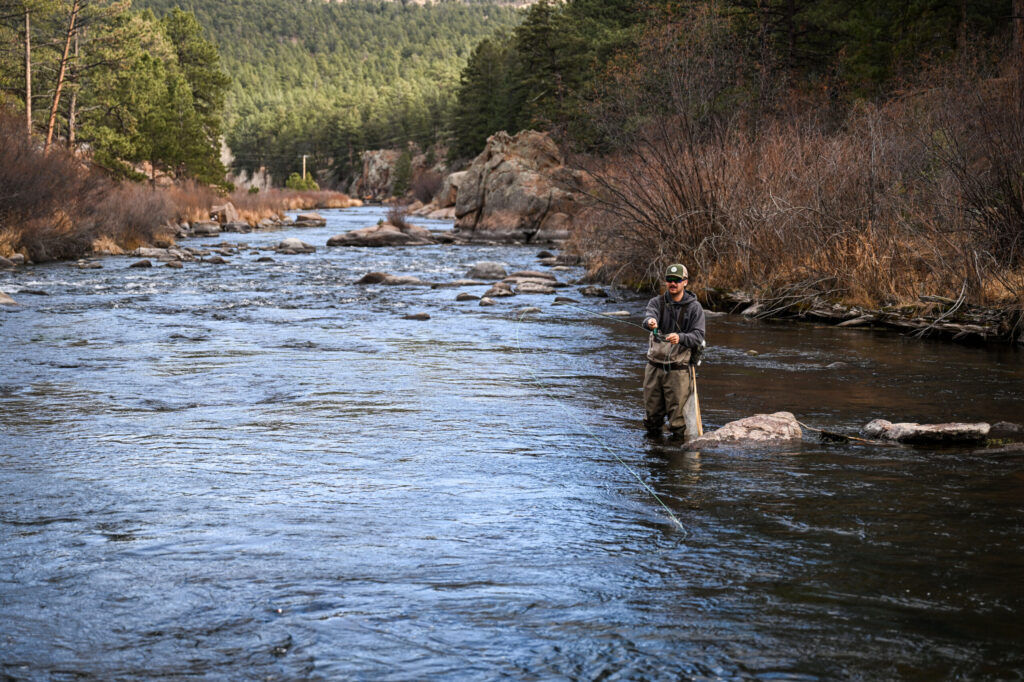
“We have a lot of Denver Basin groundwater, which in the short term is good because it is easily accessible and not impacted very much by droughts, but it is a nonrenewable source — that’s the downside,” Parker Water District Manager Ron Redd said. “So, we have to replace it as our main water source.”
To manage future growth and long-term sustainability, providers are pairing conservation programs with investments in renewable surface water infrastructure to reduce reliance on nonrenewable sources and create more resilient systems, officials said.
Parker Water, which serves roughly 78,000 residents, has already seen a reduction in its reliance on nonrenewable groundwater using a mix of renewable surface water from Cherry Creek, imported water and water reuse programs
In the early 2000s, about 90% of Parker’s supply came from nonrenewable groundwater, according to officials.
“About 60% of our water is groundwater, so we’ve made a lot of strides towards renewable sources,” Redd said.
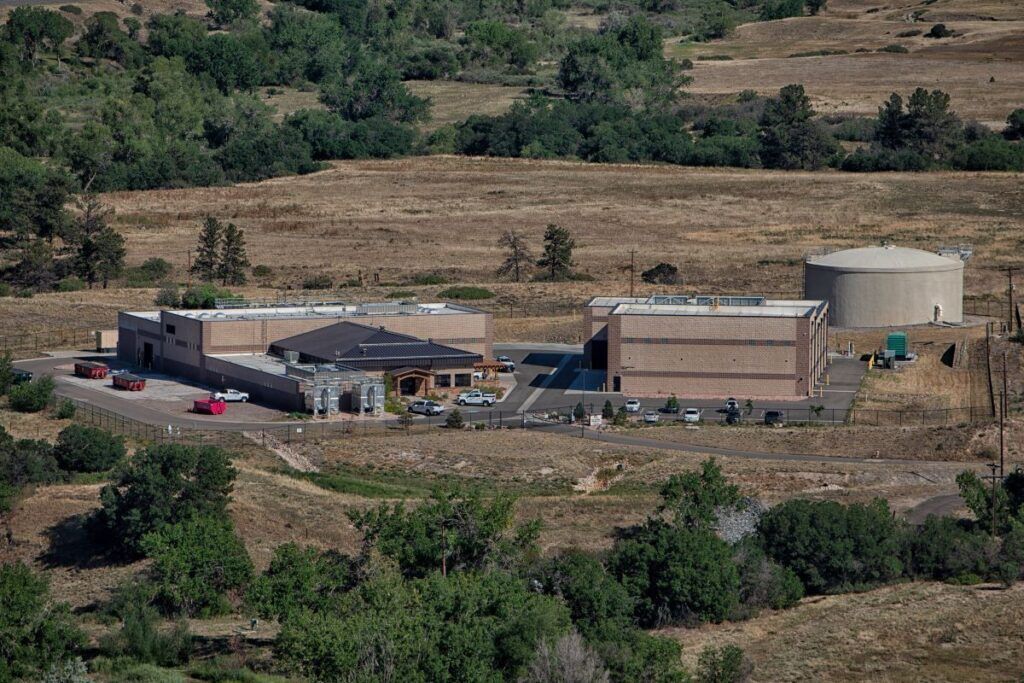
To reduce their reliance on nonrenewable groundwater, Douglas County water managers said their long-term plans aim to expand access to renewable surface water by investing in infrastructure that increases their ability to collect and store water for drier years and rely on Denver Aquifer water as a backup supply when needed.
“We’re moving towards more renewable sources in an average year, with groundwater as a backstop for tougher years with extended drought,” Redd said.
In 2024, Parker Water partnered with Castle Rock Water on the $780 million Platte Valley Water Partnership, which aims to connect Parker’s cornerstone facility, the 75,000 acre‑foot Rueter-Hess Reservoir, to the South Platte River in Morgan County through 125 miles of pipeline.
Redd said expanding storage, capture and treatment capacity is essential as Colorado’s water supply cycles between wet and dry years. Additional water rights and treatment capacity will allow districts to store excess water in wet years and reduce strain on nonrenewable sources in dry years.
“The only way to make that viable is to capture excess water in the spring and store it,” Redd said. “Storage is absolutely key to our long-term plan.”
Castle Rock Water, which serves approximately 90,000 residents, is also making investments in long-term sustainability, officials said. The water district currently sources about one-third of its water from renewable sources, including Plum Creek and imported water.
The water district aims to reach 100% renewable supplies by 2065 and is expanding its Plum Creek Water Purification Facility, doubling production from 6 million to 12 million gallons per day. The district has also completed two new reservoirs to store water collected during wetter periods.
Additionally, the provider is seeking water rights beyond their boundaries. Since 2021, Castle Rock has invested about $29 million in land and water rights in Weld County along the South Platte River Basin.
Between now and 2050, population growth could double in Castle Rock and Parker, according to district projections, making water supply an even more pressing challenge to meet demand.
“All of the renewable water supplies require large investments in infrastructure,” said Castle Rock Water Director Mark Marlowe. “But we need to develop renewable supplies to complement nonrenewable groundwater and protect that resource.”
Highlands Ranch, a largely built-out residential community, sources about 85% of its annual energy from renewable sources, mostly from the South Platte River.
Highlands Ranch Water Manager Sam Calkins said the district is also investing in infrastructure by increasing the capacity of its surface water treatment plant, which will be able to meet total demand by 2030 when water is available.
Calkins said that given current conditions, water districts will need to pursue multiple strategies to balance future supply and demand, including conservation, which he said is key to Colorado’s future.
“If you look at the hydrological cycle in Colorado, we expect one in every three years to be a very dry year,” Calkins said. “It’s going to get hotter and drier, and we’ll have conditions where the water supply is not great. So, we have to be ready.”
According to Calkins, 40% to 50% of municipal water use typically goes toward outdoor irrigation. All three major providers offer incentives such as turf replacement, smart irrigation controllers, landscaping rebates and seasonal watering restrictions.
Highlands Ranch has already seen conservation success. After the 2002 drought, it implemented water budgets that reduced usage by about 20%. Even as the population doubled, total water use rose by only about 50%, officials said.
“Through conservation, I’m confident we can make our supplies last longer and meet future needs,” Calkins said. “In the worst case, we could exist on half the water we have in Highlands Ranch, if no one watered grass.”
In Castle Rock, Marlowe said conservation can significantly extend existing supplies.
“We’re looking to reduce per capita use by about 20% between now and 2050,” he said.
To further reduce the strain on groundwater, municipalities are taking new approaches toward sustainability, officials said.
Castle Rock and Highlands Ranch use aquifer storage and recovery, injecting treated surface water into deep aquifers to reduce net groundwater withdrawals and evaporation that occurs in above ground reservoirs. Highlands Ranch has injected more than 15,000 acre-feet into 25 wells.
“The important thing is to make sure when we do get a lot of rain and snow that we’re capturing that water and eventually putting some of that excess supply back to that Denver Basin groundwater,” Marlowe said.
Providers also participate in reuse programs. Colorado allows districts to reuse treated water, making it an important long-term strategy.
Highlands Ranch captures roughly half of its surface water supply for reuse.
“When we release water into the South Platte, we can pull it back through alluvial wells or exchange it in Chatfield Reservoir,” Calkins said. “That reuse is critical.”
Marlowe also said reuse will play a growing role in Castle Rock’s future supply.
“Reuse is a huge part of our system. Roughly 33% of our long-term supplies will be reusable,” he said.
Looking ahead, officials expressed confidence in the county’s long-term supply, saying investment, conservation and regional partnerships are key to meeting future demand.
“You know, it took 25 years to build the Rueter-Hess Reservoir, which still shocks me, but that’s what it takes,” Redd said. “All these things take a generation.”
Read more from the Tapped series here:
Tapped: As fire risk climbs, Colorado faces threat to drinking water
Tapped: Denver residents face hotter, costlier summer under new drought rules
Tapped: Is water a problem for data centers in Colorado?
Tapped: Aurora cracks down on water use as reservoirs fall, runoff shrinks
Tapped: Douglas County looks to diversify water supply as population grows
Tapped: Colorado River overallocation collides with record drought conditions
Tapped: Golden tightens water rules as Clear Creek snowpack falters
Tapped: As snowpack levels shrink, Jefferson County cities take divergent paths on water
Tapped: Colorado River overallocation collides with record drought conditions


Democratic-aligned poll shows big majority of swing-seat voters support routine childhood vaccines
Ernest Luning
ernest.luning@coloradopolitics.com
Updated 2 hours ago
A new poll conducted by Democratic-aligned groups found that voters in competitive U.S. House districts — including a battleground seat in Colorado — support routine childhood vaccinations by a wide margin and oppose a recent order by President Donald Trump...

Colorado gubernatorial candidates Phil Weiser, Greg Lopez to face off Thursday in televised debate
Ernest Luning
ernest.luning@coloradopolitics.com
Updated 4 hours ago
Two of the candidates for governor of Colorado are set to square off in a televised debate for the first time Thursday night, when Attorney General Phil Weiser, the Democratic nominee, and former U.S. Rep. Greg Lopez, an unaffiliated candidate,...

Republican US Rep. Jeff Crank, Democratic challenger Jessica Killin set to debate in Colorado’s 5th CD
Ernest Luning
ernest.luning@coloradopolitics.com
Updated 5 hours ago
Republican U.S. Rep. Jeff Crank and Jessica Killin, his Democratic challenger, are scheduled to meet for a televised debate in the race to represent Colorado’s 5th Congressional District on Thursday night. The candidates are set to take the stage at...

Wrongfully deported man to be returned to U.S., Colorado federal judge orders
Michael Karlik
michael.karlik@coloradopolitics.com
Updated 6 hours ago
Colorado’s chief federal judge took the extraordinary step of directing the government on Tuesday to do everything it can to return a man it deported in violation of his order. At the same time, Colorado’s chief magistrate judge has set...

Colorado to get $615M from Meta child safety settlement
Thelma Grimes
thelma.grimes@coloradopolitics.com
Updated 4 hours ago
The parent company of Facebook and Instagram will pay hundreds of millions of dollars to Colorado, part of an $18 billion multistate deal, in which the company also agreed to adopt extensive child-safety changes to its operations. The settlement ended...

Aurora police warn businesses of 5 shoplifters involved in 139 crimes
Kyla Pearce
kyla.pearce@gazette.com
Updated 5 hours ago
Aurora police are warning business owners to look out for five shoplifters involved in 139 crimes with some $60,000 in stolen merchandise. Four of the five shoplifters are wanted on active Aurora Police Department warrants, according to a news release...

Counties warn CPW that new comment limits sideline local governments
Marianne Goodland
marianne.goodland@coloradopolitics.com
Updated 20 hours ago
The September meeting of the Colorado Parks and Wildlife Commission will feature newly revised public‑comment rules — changes introduced by chair Jay Tutchton of Bent County, who announced them without first discussing the revisions publicly with the rest of the...

Controversial two-bag furbearer limit heads to CPW meeting under legal threat
Marianne Goodland
marianne.goodland@coloradopolitics.com
Updated 20 hours ago
Next week’s Colorado Parks and Wildlife Commission meeting in La Junta is likely to open under the cloud of threatened legal action. Safari Club International and the Sportsmen’s Alliance Foundation warned the commission this month that its July vote imposing...

Federal science agency gives CU Boulder $37.5M to supercharge its quantum studies
Bernadette Berdychowski
bernadette.berdychowski@denvergazette.com
Updated 5 hours ago
The University of Colorado Boulder was awarded $37.5 million from a federal research agency to propel its quantum research, the U.S. National Science Foundation announced Tuesday. The school was one of eight academic institutions to receive a total of $290...

Golden to pay $155,000 to fired city manager
Matt Kyle
matt.kyle@denvergazette.com
Updated 22 hours ago
The Golden City Council on Tuesday approved a roughly $155,000 severance payout to former city manager Scott Vargo, who was fired earlier this month following a “racist incident” at a city fire station. The payout is part of a separation...
PREV
PREVIOUS
Tapped: Built to stand alone, Westminster's water system confronts historic dryness
Editor’s note: The Denver metro region sits at the center of one of the American West’s most complex and consequential water challenges. This series examines the interconnected systems that determine how the region secures, stores, and conserves its water — while navigating the competing demands of fast‑growing urban communities and the increasingly unpredictable mountain snowpack […]

Aurora communication policy changes raise concerns for public safety, press freedom
Proponents argue arestees have a right to privacy until adjudicated An Aurora City Council decision to alter social media policies for the police department has raised concerns from press freedom and public safety advocates, who worry that limiting what police can release to the public will impact safety and limit media professionals’ ability to access […]