

Rate reductions force Jefferson Center to close key recovery program as Colorado reimbursement rates change

A second Front Range community mental health center is eliminating services due to new reimbursement rates set by the Colorado Department of Health Care Policy and Financing that will go into effect on Oct. 1.
The Jefferson Center for Mental Health announced Tuesday it is closing its adult residential recovery program, which annually serves about 150 people struggling with addiction, as well as individuals with both substance abuse and mental health problems.
The Jefferson center’s decision followed one made by Aurora Mental Health in May that resulted in the loss of more than 100 jobs, although most were administrative, and in the closure of several behavioral programs.
Jefferson’s announcement said about 50 staff members in the adult residential program will lose their jobs. They will be compensated and provided with resources and mental health support.
“Jefferson Center has taken this painful but necessary step as a last resort,” Sarah Alquist, Jefferson’s president and CEO, said in a statement. “Over the last year, knowing the state’s budget constraints and the likelihood of reduced rates, we have implemented numerous cost-saving measures, including vendor negotiations, real estate consolidating, hiring pauses and cross-training staff to support multiple teams.”
Alquist also noted that the center has worked closely with the Department of Health Care Policy and Financing and the payers that administer behavioral health benefits.
“They have been helpful and understanding partners with us; unfortunately, the combination of our own cost reductions and the state’s best efforts were not sufficient to eliminate the need for this program closure,” she said.
She added, “Jefferson Center is not alone in its financial challenges, as the state struggles to align its vision for safety net behavioral health and its ability to finance the structure it has created.”
A state financing official pointed to changes in the payment model, known as the prospective payment system (PPS), that requires Colorado to cover a shorter list of services more directly tied to behavioral health care. Inpatient care is not on the list.
Those services, eight in all, are limited by statute, according to Cristen Bates, HCPF’s deputy Medicaid director.
Previously, the comprehensive safety-net providers, formerly the community mental health centers, could bill for services that were not directly related to behavioral health care, according to Bates.
HCPF chose its own state-determined model, rather than a federal payment model. Bates said the two models are similar, and some community safety net providers would do better under the state model; others would fare better with the federal model.
The PPS model was put in place two years ago, but the rate reduction portion won’t take effect until October. It’s based on the actual cost of care, Bates explained, but with the changes to what’s allowable under the PPS model.
“It used to be, anyone could put anything in their cost report that was behavioral health care,” she said.
She said it’s now focused just on the eight statutorily dictated services: emergency and crisis behavioral health services; mental health and substance use outpatient services; behavioral health high-intensity outpatient services; care management; outreach, education and engagement services; mental health and substance use recovery supports; outpatient competency restoration; and screening, assessment and diagnosis, including risk assessment, crisis planning and monitoring to key health indicators.
Additionally, state law says HCPF “shall establish an appropriate cost accounting methodology annually with the behavioral health administration in the Department of Human Services in order to support sustainable access” to the eight identified behavioral health services.
Notably, those eight services are limited to outpatient care and do not include inpatient substance-abuse recovery, the program the Jefferson Center is eliminating.
Bates said the PPS model does not allow money paid for outpatient services to be used for inpatient care, although the Behavioral Health Administration covers the costs separately for room and board, which is a nonclinical cost of care.
Those services are expensive — Bates estimated the per-person cost at $2,800 per day, at a time when the cost of behavioral health services has doubled in the last five years.
It’s not sustainable, she said.
“There are going to be examples when the need does not meet the service availability,” she said, adding that will require providers to make these business decisions.
One of the issues for Jefferson, according to Bates, is volume. There just isn’t enough demand to justify the costs.
Bates said the challenge is to ensure people have timely access to care. The PPS model provides sustainable, reliable funding, though she acknowledged that major changes in how it’s provided will have an impact.
The state is still covering 100% of the PPS based on the actual cost of care, she said.
Clients already enrolled in the Jefferson Center program will be able to complete their 30-day stints, according to Alquist.
She told Colorado Politics this week that the program is losing about $2 million in Medicaid payments from the rate change. Medicaid pays for behavioral health services for about 65% of those served by the center, she explained.
For the entire organization, the changes in the PPS model will cost about $8 million in 2026-27, she said.
In the meantime, the organization is restructuring to safeguard the rest of the center’s programs.
“The way we’ve handled the rate reduction is through program closure and restructuring, instead of closing additional programs,” she said.
The center will still be able to offer the services mandated by the state. Just like Aurora, Jefferson must provide services to anyone who seeks them, regardless of ability to pay.
Frank Cornelia of the Colorado Behavioral Healthcare Council said the behavioral healthcare model has undergone years of changes under the Polis administration, which redefined how the system is organized and what providers are required to do.
However, Cornelia said, the impact of the PPS model isn’t aligning with what the legislature asked for or with how reforms reorganized the system. The organization is looking at how the rates are constructed to ensure it supports what’s required of providers under the statute.
In an issue brief prepared for the interim legislative committee studying Medicaid, the council noted that Medicaid is the primary source of funding for these services, which makes “stable and predictable financing critical to maintaining access to care.”
The behavioral council asked the Medicaid committee to consider five key principles as policymakers look for ways to reduce state costs of the government-funded program: predictable financing, transparent policy development, sustainable payment methodologies, meaningful stakeholder engagement and accountability for quality and outcome.
That includes a hope for a better process when HCPF changes rates.
The council said the committee ought to consider how much advance notice should accompany significant payment reforms, as well as an implementation timeline that “best supports successful transition to new payment models.”


WATCH: Colorado gubernatorial candidates Phil Weiser, Greg Lopez face off Thursday in televised debate
Ernest Luning
ernest.luning@coloradopolitics.com
Updated 3 hours ago
Two of the candidates for governor of Colorado are set to square off in a televised debate for the first time Thursday night, when Attorney General Phil Weiser, the Democratic nominee, and former U.S. Rep. Greg Lopez, an unaffiliated candidate,...
WATCH: Republican US Rep. Jeff Crank, Democratic challenger Jessica Killin debate in Colorado’s 5th CD
Ernest Luning
ernest.luning@coloradopolitics.com
Updated 4 hours ago
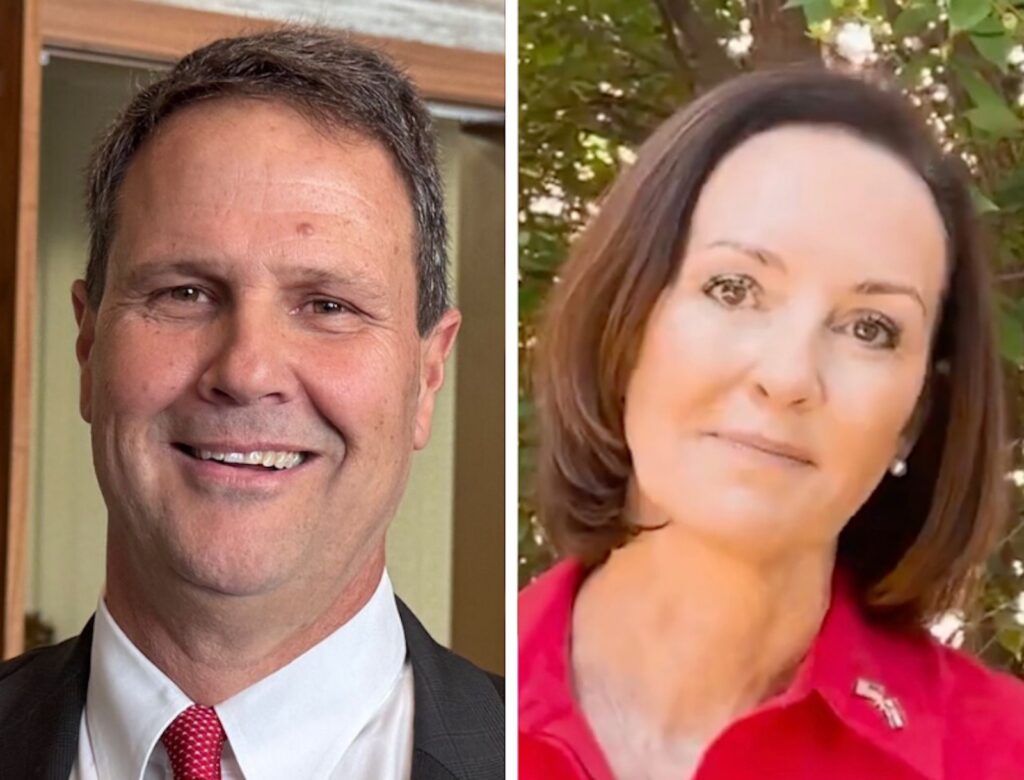
Republican U.S. Rep. Jeff Crank and Jessica Killin, his Democratic challenger, are scheduled to meet for a televised debate in the race to represent Colorado’s 5th Congressional District on Thursday night. The candidates are set to take the stage at...

Colorado State Fair youth golf tournament celebrates 11 years
Marianne Goodland
marianne.goodland@coloradopolitics.com
Updated 6 hours ago
Twenty-eight teams tee off Friday at Walking Stick Golf Course in Pueblo for a tournament supporting 4-H, Future Farmers of America and capital improvements at the Colorado State Fair. Now in its 11th year, the Partners of Youth in Ag...

Controversial two-bag furbearer limit heads to CPW meeting under legal threat
Marianne Goodland
marianne.goodland@coloradopolitics.com
Updated 6 hours ago
Next week’s Colorado Parks and Wildlife Commission meeting in La Junta is likely to open under the cloud of threatened legal action. Safari Club International and the Sportsmen’s Alliance Foundation warned the commission this month that its July vote imposing...

Democratic-aligned poll shows big majority of swing-seat voters support routine childhood vaccines
Ernest Luning
ernest.luning@coloradopolitics.com
Updated 9 hours ago
A new poll conducted by Democratic-aligned groups found that voters in competitive U.S. House districts — including a battleground seat in Colorado — support routine childhood vaccinations by a wide margin and oppose a recent order by President Donald Trump...

Wrongfully deported man to be returned to U.S., Colorado federal judge orders
Michael Karlik
michael.karlik@coloradopolitics.com
Updated 13 hours ago
Colorado’s chief federal judge took the extraordinary step of directing the government on Tuesday to do everything it can to return a man it deported in violation of his order. At the same time, Colorado’s chief magistrate judge has set...

Colorado to get $615M from Meta child safety settlement
Thelma Grimes
thelma.grimes@coloradopolitics.com
Updated 12 hours ago
The parent company of Facebook and Instagram will pay hundreds of millions of dollars to Colorado, part of an $18 billion multistate deal, in which the company also agreed to adopt extensive child-safety changes to its operations. The settlement ended...

Aurora police warn businesses of 5 shoplifters involved in 139 crimes
Kyla Pearce
kyla.pearce@gazette.com
Updated 13 hours ago
Aurora police are warning business owners to look out for five shoplifters involved in 139 crimes with some $60,000 in stolen merchandise. Four of the five shoplifters are wanted on active Aurora Police Department warrants, according to a news release...

Counties warn CPW that new comment limits sideline local governments
Marianne Goodland
marianne.goodland@coloradopolitics.com
Updated 1 day ago
The September meeting of the Colorado Parks and Wildlife Commission will feature newly revised public‑comment rules — changes introduced by chair Jay Tutchton of Bent County, who announced them without first discussing the revisions publicly with the rest of the...

Federal science agency gives CU Boulder $37.5M to supercharge its quantum studies
Bernadette Berdychowski
bernadette.berdychowski@denvergazette.com
Updated 13 hours ago
The University of Colorado Boulder was awarded $37.5 million from a federal research agency to propel its quantum research, the U.S. National Science Foundation announced Tuesday. The school was one of eight academic institutions to receive a total of $290...
PREV
PREVIOUS

Colorado Supreme Court intervenes in 3 ongoing cases
The Colorado Supreme Court recently intervened in the prosecution of a juvenile defendant and will decide whether he is entitled to have prosecutors demonstrate probable cause at a hearing after a grand jury already determined probable cause existed. The justices also will determine whether a judge correctly ordered a defendant back into jail until he […]

Victor Marx defeats Barb Kirkmeyer as Colorado’s Republican gubernatorial primary crosses finish line
Republican Victor Marx won Colorado’s Republican gubernatorial nomination on Thursday after maintaining a razor-thin lead over state Sen. Barb Kirkmeyer for more than a week as county clerks finished reporting final, unofficial vote totals. Marx, a missionary leader and first-time candidate, will face Democratic nominee Attorney General Phil Weiser in November for the office held […]