

Colorado Supreme Court signals possible intervention in lawsuit over climate change impacts
The Colorado Supreme Court signaled on Monday it may intervene in a lawsuit out of Boulder County seeking to make ExxonMobil liable for damages resulting from climate change, one of many ongoing attempts across the country to hold oil and gas producers accountable for the impacts of greenhouse gas emissions.
Boulder County and the city of Boulder originally filed suit in 2018 against ExxonMobil and Suncor Energy on the theory that the fossil fuel industry knew since the 1960s the release of carbon dioxide would lead to negative effects on the planet, but concealed that knowledge from the public.
“People, property (including County-owned property), and infrastructure within Boulder County have been and will continue to be damaged on account of climate change caused and contributed to by Defendants’ actions,” wrote the plaintiffs, specifically mentioning increased risk of drought, wildfire, and property loss from extreme weather.

FILE PHOTO - The Colorado Air Pollution Control Division is updating an inventory of greenhouse gas emissions as part of its statutory responsibility to keep track of sources and levels of greenhouse gasses during the state’s clean energy transition.
PublicDomainPictures/ Pixabay

FILE PHOTO – The Colorado Air Pollution Control Division is updating an inventory of greenhouse gas emissions as part of its statutory responsibility to keep track of sources and levels of greenhouse gasses during the state’s clean energy transition.
The governments lodged claims under state law for public nuisance, trespass and civil conspiracy, among others. Although they did not seek to force ExxonMobil and Suncor to alter their oil and gas operations, they chose to pursue monetary damages for the past and future costs of climate change, including wildfire response, flood control and resiliency efforts.
Over the past six years, however, the litigation largely stalled. The defendants transferred the case to federal court, where it made its way up to the appellate and Supreme Court levels. Eventually, the U.S. Court of Appeals for the 10th Circuit agreed in 2022 that none of the reasons the oil and gas companies cited for being in federal court had merit, as Boulder County and the city were not trying to regulate interstate activity or undermine federal energy policy.
“The Municipalities can prevail on their claims without proving any issue of federal law because the success of those claims is grounded in traditional state-law causes of action and does not depend on any federal policy or regulation,” wrote Judge Carolyn B. McHugh.
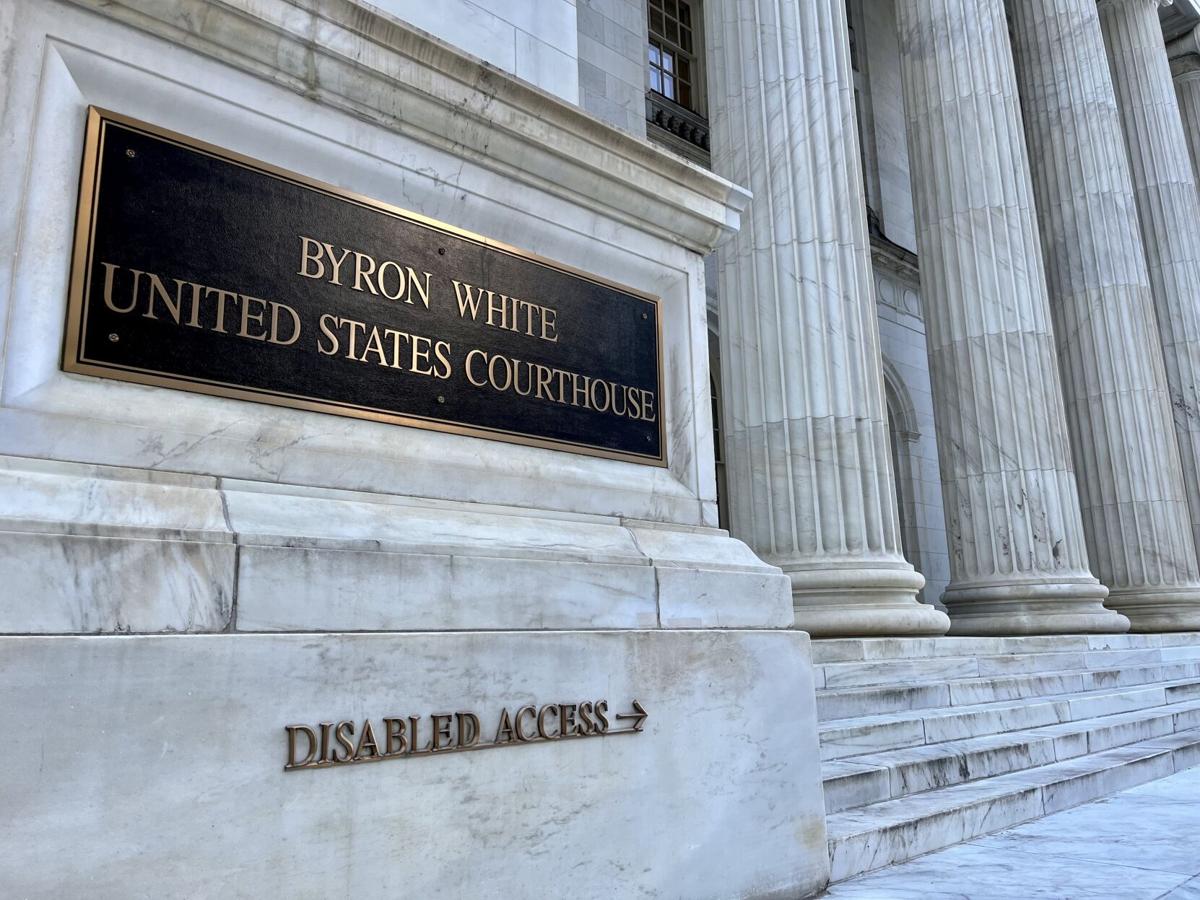
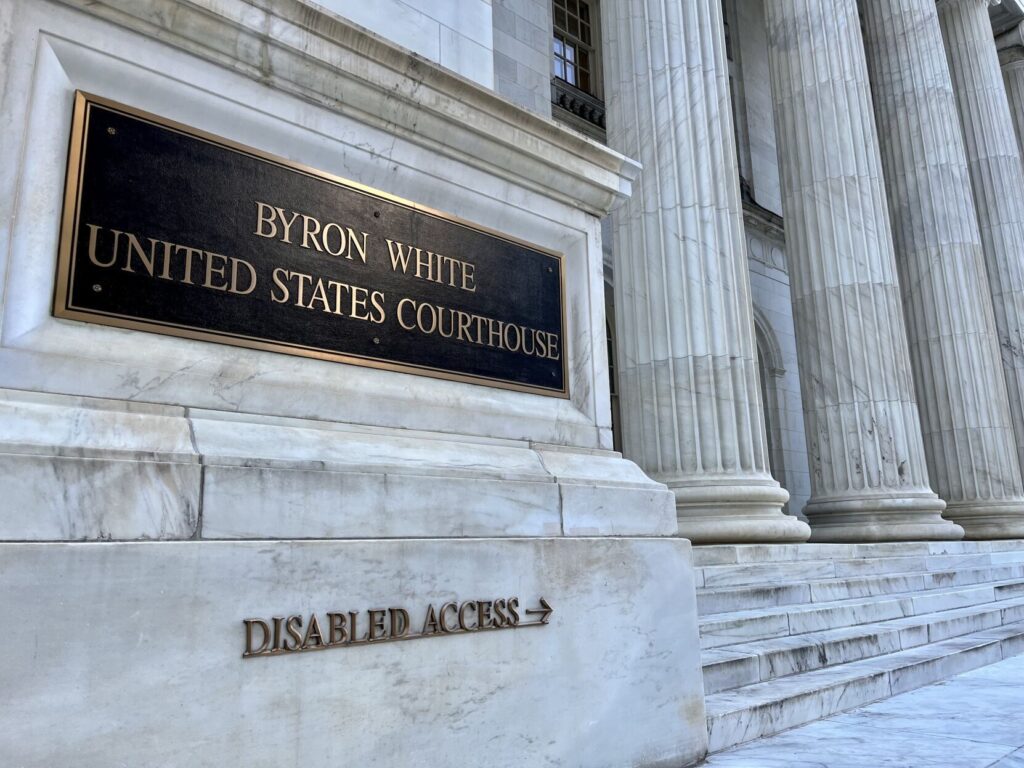
The Byron White U.S. Courthouse in downtown Denver, which houses the 10th U.S. Circuit Court of Appeals.
colorado politics file

The Byron White U.S. Courthouse in downtown Denver, which houses the 10th U.S. Circuit Court of Appeals.
Back in state court, District Court Judge Robert R. Gunning issued an order in June partly allowing the lawsuit to move forward. He concluded he did not have jurisdiction over Suncor, which is based in Canada, but did have jurisdiction over ExxonMobil.
Gunning reiterated what the federal courts had observed: Boulder County and the city were not trying to force a change to national climate policy, but rather were seeking compensation for local harms the oil and gas industry allegedly caused.
“This Court joins the vast majority of courts who have considered this issue” and allowed the claims to proceed, Gunning wrote, citing the Hawaii Supreme Court’s October decision in a similar case. He dismissed the plaintiffs’ consumer protection claim but otherwise green-lit the lawsuit.
ExxonMobil appealed directly to the state Supreme Court, maintaining the plaintiffs sought to hold the company liable for a “worldwide phenomenon.” Resurrecting the argument already rejected by federal courts, ExxonMobil reiterated state law could not be the vehicle for the plaintiffs’ case.
In a July 29 order, the Supreme Court ordered Gunning and the plaintiffs to respond to the company’s petition.
To date, the lawsuit out of Boulder County is one of roughly three dozen similar cases alleging consumer protection violations or climate-related damages by the fossil fuel industry. The Washington, D.C.-based Center for Climate Integrity notes Boulder County’s lawsuit was the first to be filed by landlocked jurisdictions.
San Miguel County was originally part of the litigation, but is now pursuing a separate case in Denver District Court. At the request of both sides, the trial judge paused the proceedings this month in anticipation of the Supreme Court’s intervention in the Boulder County case.
The case is ExxonMobil Corp. v. Board of County Commissioners et al.

Parole, appeals deadlines and restitution: Colorado justices accept cases
Michael Karlik
michael.karlik@coloradopolitics.com
Updated 1 hour ago
The Colorado Supreme Court announced on Monday that it will determine how a defendant’s parole-eligibility date should be calculated in instances where a new trial results in a sentence being imposed retroactively to the date of the original, since-overturned sentence....

Federal judge rejects DOJ bid to force Colorado to hand over voter information
Marissa Ventrelli
marissa.ventrelli@coloradopolitics.com
Updated 5 hours ago
A U.S. district court judge has dismissed a lawsuit filed by the U.S. Department of Justice against Colorado Secretary of State Jena Griswold for refusing to provide the agency with personal voter information. Last December, the DOJ’s Civil Rights Division asked...
3 Colorado judges receive unfavorable retention recommendation as one performance commission violates rules
Michael Karlik
michael.karlik@coloradopolitics.com
Updated 9 hours ago
Of the 123 Colorado judges standing for retention on the November ballot, citizen-led performance commissions found that three did not meet the required performance standards. However, in an unprecedented move, the commission charged with evaluating Supreme Court and Court of...
10th Circuit weighs Gross Reservoir expansion, judge’s ‘punishment’ of Denver Water
Michael Karlik
michael.karlik@coloradopolitics.com
Updated 1 day ago
Members of the Denver-based federal appeals court considered on Friday whether they could intervene in an ongoing infrastructure project to enlarge a Boulder County dam after a trial judge deemed the underlying permit unlawful nearly two years ago. Denver Water...

10th Circuit upholds federal prohibition on juvenile handgun possession
Michael Karlik
michael.karlik@coloradopolitics.com
Updated 4 hours ago
The Denver-based federal appeals court concluded on Monday that Congress acted within its constitutional powers to make it a crime for juveniles to possess handguns in most instances. The decision from the U.S. Court of Appeals for the 10th Circuit...

Senate advances judicial nominee, Montezuma County judge agrees to discipline | COURT CRAWL
Michael Karlik
michael.karlik@coloradopolitics.com
Updated 1 day ago
Welcome to Court Crawl, Colorado Politics’ roundup of news from the third branch of government. A U.S. Senate committee advanced a judicial nominee from Colorado, plus a Montezuma County judge agreed to receive discipline for his misconduct that stops short...
Judge denies Calderon injunction case against Denver, Johnston
Deborah Grigsby
deborah.smith@denvergazette.com
Updated 2 days ago
A U.S. District Court judge has denied a preliminary injunction in the case of Jessica Calderon, the Denver city employee who won a temporary restraining order preventing the City and County of Denver from terminating her amid the 2025 citywide...

10th Circuit partially revives lawsuit over 2020 Denver protest injuries
Michael Karlik
michael.karlik@coloradopolitics.com
Updated 2 days ago
The Colorado-based federal appeals court revived a man’s claims against Denver on Friday after concluding a trial judge resolved the case in the city’s favor without analyzing two of the three instances of alleged excessive force and other constitutional violations....
Federal judges find Colorado immigration judge violated several orders
Michael Karlik
michael.karlik@coloradopolitics.com
Updated 3 days ago
Multiple federal judges in Colorado have freed people from immigration custody after determining that one immigration judge violated their directives for properly conducting bond hearings. For nearly a year, Colorado’s U.S. District Court has faced a flood of habeas corpus petitions...
Misconduct complaints from ex-Colorado judicial discipline director dismissed against federal judges
Michael Karlik
michael.karlik@coloradopolitics.com
Updated 5 days ago
The administrative body for the Denver-based federal appeals court upheld a finding last week that misconduct complaints against Colorado’s chief federal trial judge and the chief appeals judge warranted dismissal and appeared to be a “litigation tactic” by the complaining...