

Two cities blaze a trail on homelessness; Denver hits a dead end | Denver Gazette
Evidence continues to mount on the failure of Denver’s open-door policy toward the homeless — while Colorado’s No. 2 and No. 3 cities appear to be getting it right in reaching out to people on their streets.
Colorado Springs and Aurora are using innovative thinking and political pluck to turn the tide. Denver, by contrast keeps throwing cash at the problem, only to see its homeless population grow. The goal — to house people temporarily without addressing their underlying addictions or other pathologies — is all carrot and no stick. Not surprisingly, the homeless keep coming.
An eyeopening, in-depth report by The Gazette’s news staff last week shed new light on the scale of Denver’s woes. As the front-page story summed it up after diving deep into national data, “Metro Denver’s homeless crisis has worsened and become among the most acute in the nation despite the city of Denver contracting for at least $274 million from 2021 through 2024 to keep people off the streets.” Indeed, the Denver area has grown its homeless ranks more than any other major metro area since 2018, The Gazette report found.
Stay up to speed: Sign up for daily opinion in your inbox Monday-Friday
It doesn’t bode well for Denver’s freshman Mayor Mike Johnston. Tackling homelessness was a top campaign theme for him and has been his chief preoccupation since taking office last July. His administration spent $45 million in tax dollars by the end of last year, followed by millions more to date, to acquire hotels, buy “tiny” shelters and set up “micro-communities” to accommodate the city’s urban “campers.”
Yet, his effort is failing. That also was the case for his predecessors in office, who employed similar policies though not on as grand a scale. Longer-term data reflects how it all backfired.
Denver saw a big increase in the number of homeless people — 5,818 as of January last year, up from 4,794 a year earlier, according to the latest annual “point-in-time” survey of homelessness.
On the other hand, Colorado Springs and surrounding El Paso County saw a 17% drop in the homeless population — from a high of 1,562 in 2019 to 1,302 — in the same period in which Denver’s homelessness surged. Aurora’s homeless population was 572 in the same survey, down from 612 the year before.
What explains the two cities’ relative success compared with Denver?
One recent analysis credits a successful strategy advanced by Mayor Yemi Mobolade and other leaders in Colorado Springs to partner with local nonprofits and homeless shelters. Notably, the city’s Springs Rescue Mission and its comprehensive “treatment first” approach includes addiction recovery programs, health services, meals, showers, laundry services, facilitating job placements, emergency shelter, permanent housing, and transitional housing.
In Aurora, meanwhile, Mayor Mike Coffman and the City Council are developing an approach that combines a hand up and “tough love” to rein in, then help, the city’s homeless. Plans include a “one-stop shop” for homeless services — a campus to house, feed, employ, heal and ultimately uplift. The city also is implementing stiffer penalties for violations of the camping ban along I-225 and will create a new court for low-level offenses by homeless lawbreakers.
The approach contrasts starkly with Denver’s “housing first” dogma, which moves the chronically homeless indoors but makes little attempt up front to get them to change the behavior that landed them on the streets to begin with.
Surely, Johnston doesn’t want to be regarded as the mayor who loved the homeless so much, he drew them all to Denver. He should watch what works in Colorado Springs and Aurora and take notes.
Denver Gazette Editorial Board


Colorado Democrats, your time is coming | Jon Caldara
Jon Caldara
jon-caldara@coloradopolitics.com
Updated 1 day ago
Hey, Colorado Democrats! All the fun you’ve had watching Republican dysfunction in Colorado for the last 20 years was just a preview of what is about to happen to you. The Colorado Republican Party no longer exists as a competitive...
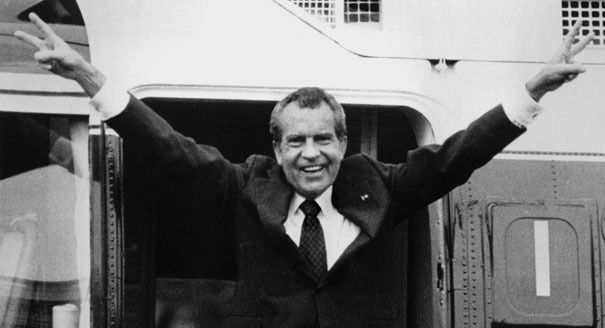
The relevance of Watergate more than a half-century later | SONDERMANN
By Eric Sondermann
by-eric-sondermann@coloradopolitics.com
Updated 4 days ago
It was the scandal for which all other scandals are now named. In June 1972, a small group of Cuban burglars with high-level connections broke into the headquarters of the Democratic National Committee. Those headquarters were located in the Watergate...
Colorado must continue finding common ground on wildfire policy | GUEST COLUMN
Colorado Politics
colorado-politics@coloradopolitics.com
Updated 3 days ago
By John Herrick Colorado has never lacked for opinions about wildfire policy. We debate forest management, climate change, prescribed burns, land use, air quality and budgets. Those debates are familiar territory, but a new discussion is beginning to happen around...

Proposition NN is the best investment for Colorado’s students and schools | GUEST COLUMN
Colorado Politics
colorado-politics@coloradopolitics.com
Updated 3 days ago
By Justin Ogden Colorado families know what it means to make difficult budget decisions. Inflation has driven up the cost of groceries, housing, utilities and just about everything else. Families like mine work hard to stretch every dollar while still...

Were the primaries a preview for consequential general election? | Paula Noonan
Paula Noonan
paula-noonan@coloradopolitics.com
Updated 4 days ago
Colorado’s political future will go the way of this election. Historically, the state has not had both chambers controlled by a supermajority. This election may change that. The primaries suggest how the general election may play out. Democrats had solid...
Disagreement doesn’t have to mean disrespect | GUEST COLUMN
Colorado Politics
colorado-politics@coloradopolitics.com
Updated 4 days ago
By Vincent Atchity These days, it doesn’t take long to feel overwhelmed by politics. Turn on the news, scroll through social media or read the comments on almost any political post and you’ll find anger, outrage and personal attacks. For...

Keeping Colorado’s kids’ trust online | PODIUM
Colorado Politics
colorado-politics@coloradopolitics.com
Updated 5 days ago
By Stuart Jenkins Almost every day, the kids and teens we serve across Colorado are introduced to new generative artificial intelligence and other emerging technology, including conversational AI systems designed to simulate human conversation. These tools are no longer a...

Marx’s ‘through line’ predates Trump, connects to Maes | FEEDBACK
Colorado Politics
colorado-politics@coloradopolitics.com
Updated 5 days ago
Eric Sondermann is of course correct Victor Marx is an unserious, unelectable, embarrassing Republican nominee for governor of Colorado. But I respectfully submit that the “through line,” as Mr. Sondermann describes it, is not from Trump to Marx, despite their...

Cedric Pride’s blueprint for opportunity through the trades | The OpEdge Podcast
Tony Olivero
tony.olivero@gazette.com
Updated 5 days ago
Cedric Pride, CEO of the nonprofit Pride Initiative in Denver, joins The OpEdge with a blueprint for workforce development, skilled trades, and economic opportunity. Pride tells host and investigative columnist Jimmy Sengenberger why he believes the trades offer a path...
Colorado’s No. 1 education ranking should raise our ambition | GUEST COLUMN
Colorado Politics
colorado-politics@coloradopolitics.com
Updated 5 days ago
By Scott Laband Colorado has earned the right to celebrate its new No. 1 ranking in education from U.S. News & World Report. Gov. Jared Polis called it “one of the proudest moments” of his time in office and shared the...