

Colorado lawmakers to introduce long-awaited property tax relief bill
The long-awaited major property tax bill will likely be introduced sometime early next week, giving it about a week to work through the General Assembly before its May 8 adjournment.
This bill, however, will have had an advantage that previous bills, most notably the 2023 legislation, didn’t have: a public airing of its concepts.
That’s because the bill will be largely based on the recommendations of the property tax commission, which has been meeting since last December.
Lawmakers have been scrambling to deal with skyrocketing property taxes since 2020 when voters approved repealing the Gallagher Amendment, which set specific assessment rates for residential and non-residential properties. The ballot measure was referred to voters by the General Assembly, with the expectation that lawmakers would come up with a replacement.
Since then, however, property taxes have increased in some counties by 40%, payable in 2024. However, Gallagher’s replacement in 2023 was a ballot measure that voters overwhelmingly rejected last November.
Sen. Chris Hansen, D-Denver, who co-chairs the commission, will sponsor the property tax bill expected. “It’s the most difficult math problem” he’s ever tried to solve, he said Tuesday.
He sent the bill’s first draft to the commission Tuesday. The commission will review it at its meeting on Friday.
The property tax bill’s primary issue is backfilling lost revenue for schools and special districts. Hansen differentiates between his bill and the proposition on the November ballot submitted by Advance Colorado by doing this.
“How we handle the backfill, and how we target property tax relief, are the major elements of the bill. We’re looking to create a backfill mechanism to draw from several sources,” he told Colorado Politics Tuesday.
The bill will tap four pots of money to cover the property tax revenue normally paid to the counties, but that must be backfilled by the state: the state education fund, the state reserve, the TABOR surplus, and a “partial” backfill funded in the 2023 session that never got spent when voters rejected Proposition HH last November. That legislation would have covered 100% of the backfill for schools and fire districts and a smaller percentage for other special districts.
“We have to come up with a balanced package that will provide significant relief, which I think we’ve done, and with additional negotiations on how to balance those different pots of money,” Hansen said.
Hansen told Colorado Politics Tuesday that the bill will provide property tax relief to homeowners and renters. The relief to homeowners is to lower the assessment rate by about 10%, down from its current 7.05% to about 6.35%. That would result in a $75,000 reduction in valuation, upon which property taxes would be based.
Hansen explained that renters will be eligible for a tax credit, although that’s contained in a separate measure, Senate Bill 146.
The bill “is targeted, significant tax relief, but we’re doing it in a way that doesn’t hurt the schools,” Hansen said.
Hansen didn’t have an estimate of how much the bill would cost but said the backfill to schools and special districts could be about $400 million.
He indicated that the backfill will use state education fund dollars to cover school districts, which is an appropriate use of those dollars.
The property tax bill expected early next week is based on some of the 10 recommendations from the property tax commission, which was formed out of last November’s special session. The commission has been meeting all year and reviewing various suggestions, such as a land value tax (an idea supported by Gov. Jared Polis), property tax caps, and ballot measures that could impact their recommendations.
What else is in the bill
One complaint about Senate Bill 23-303 was its exclusion of property tax relief for commercial properties. A draft of the 83-page bill shows that they aren’t being left out.
The bill draft says the assessment value for nonresidential property, except for mines and lands or oil and gas leases, is based on a 29% assessment rate on actual value.
Beginning in 2027, property tax valuations would be modified for lodging, renewable energy properties, “nonproducing severed” mineral interests and commercial real estate. The change is a “smoothing,” or averaging, over the previous three assessment cycles.
Commercial property also gets an assessment reduction; beginning in 2026, the valuation will be 28.5% of the smoothed actual value, reduced by 0.5% every year through 2031, and 25.5% beginning in 2032.
Schools and local governments are subject to the same valuation through mill levies. The bill separates those valuations for residential property and nonresidential property to maintain equal valuation for schools and local governments, given the bill’s proposals for nonresidential property.
Initiative #50
Hansen believes the system will be sustainable, unlike the Advance Colorado ballot measure, which he said will result in a new billion-dollar debt to K-12 just as the state has finally paid that debt off after 14 years. Initiative #50 has no backfill and is unsustainable, he said.
“Ours won’t hurt the schools,” Hansen said. “Why would we vote for something that will result in a billion dollars” in debt to K-12? he said. “There’s no way to escape it.”
Hansen pointed out that California has tried a similar approach to Initiative #50 for the past 30 years, one that he called a failure. “It’s led to massive problems with their education funding,” he said.
In a statement Tuesday, Michael Fields of Advance Colorado criticized the bill, although Hansen said Fields hadn’t seen it, given that the first bill draft had just been finished Tuesday afternoon.
Fields’ statement acknowledged that initiative #50 won’t cover the backfill, stating instead that other measures were “under consideration” to address that issue. However, those other measures won’t be on the November ballot; the deadline for submitting ballot measures was March 22.
Despite the fact that the property tax bill components have been under public discussion since December and were included in a final report publicly released last month, Fields called the proposed bill “an 11th-hour attempt to rush through a wholly inadequate measure that is more about political talking points than providing significant and lasting property tax relief for Coloradans.”
The Advance Colorado measure puts a 4% revenue cap on property tax increases.
Other property tax measures
Another measure in the General Assembly intends to address the property tax issue. House Concurrent Resolution 1006 won a 6-5 vote from the House Finance Committee and now heads to the House Appropriations Committee.
Rep. Bob Marshall, D-Highlands Ranch, sponsors the resolution. The measure would create a new annual property tax revenue growth limit.
According to the fiscal analysis, the new limit would allow revenue to grow by state population growth plus inflation, plus 2 percentage points, plus an amount allowable for newly taxed property such as new construction, annexations, and previously exempt property.
However, the measure may encounter problems due to its lack of backfill for K-12. The fiscal analysis estimates it could decrease the state education fund by $1.9 million, but the measure does not address how that cost would be covered.


10th Circuit partially revives lawsuit over 2020 Denver protest injuries
Michael Karlik
michael.karlik@coloradopolitics.com
Updated 6 hours ago
The Colorado-based federal appeals court revived a man’s claims against Denver on Friday after concluding a trial judge resolved the case in the city’s favor without analyzing two of the three instances of alleged excessive force and other constitutional violations....
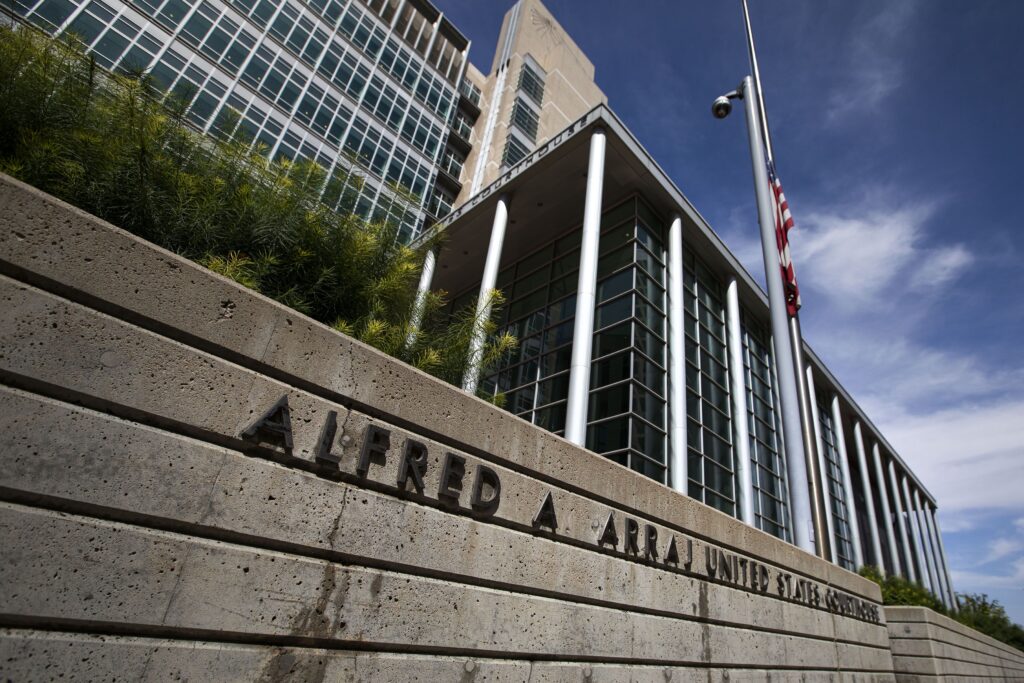
Federal judges find Colorado immigration judge violated several orders
Michael Karlik
michael.karlik@coloradopolitics.com
Updated 7 hours ago
Multiple federal judges in Colorado have freed people from immigration custody after determining that one immigration judge violated their directives for properly conducting bond hearings. For nearly a year, Colorado’s U.S. District Court has faced a flood of “habeas corpus” petitions...
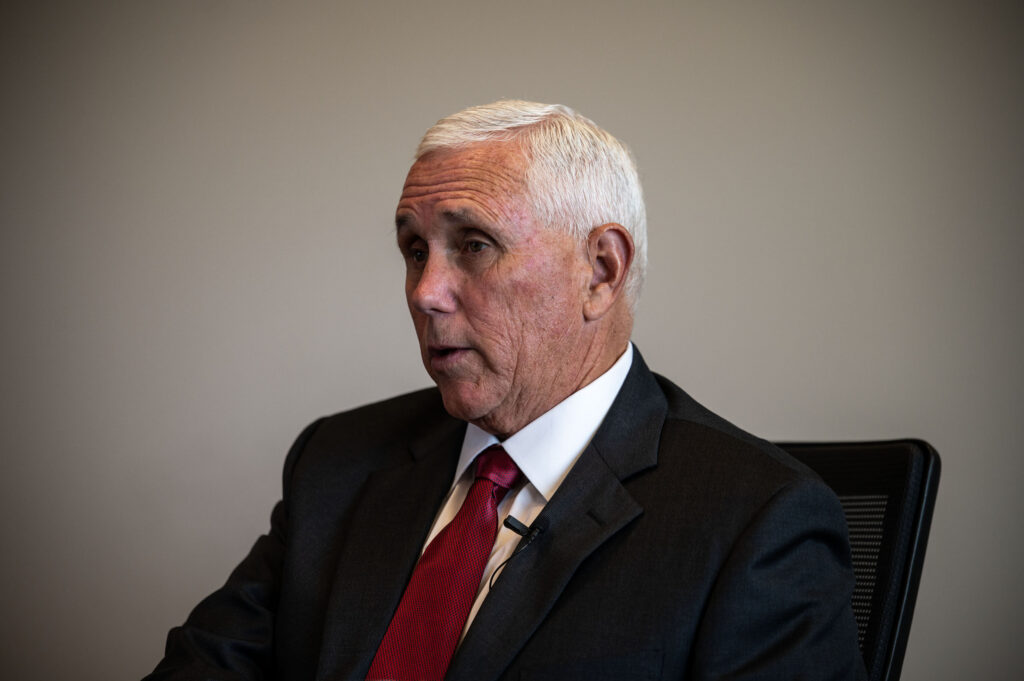
Q&A with Mike Pence | Former vice president says GOP’s populist turn from conservatism isn’t permanent
Ernest Luning
ernest.luning@coloradopolitics.com
Updated 7 hours ago
Former Vice President Mike Pence says he’s concerned that the Republican Party has taken a populist turn away from bedrock conservative principles during President Donald Trump’s second term, but he believes the party will return to its roots when Trump...
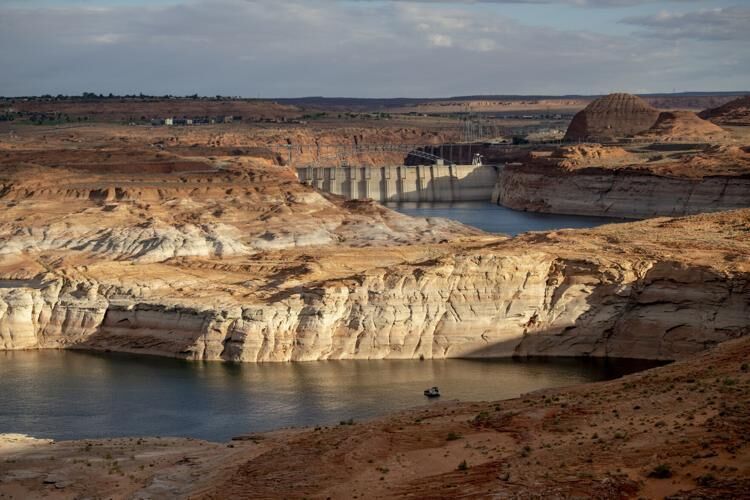
New federal plan sets short-term rules for Colorado River management
Marianne Goodland
marianne.goodland@coloradopolitics.com
Updated 6 hours ago
Interior Department’s plan spares Colorado from mandatory cuts for now After years of stalled negotiations among the seven states that rely on the Colorado River, the federal government on Friday released its own plan for managing the drought-strained system. Calling...
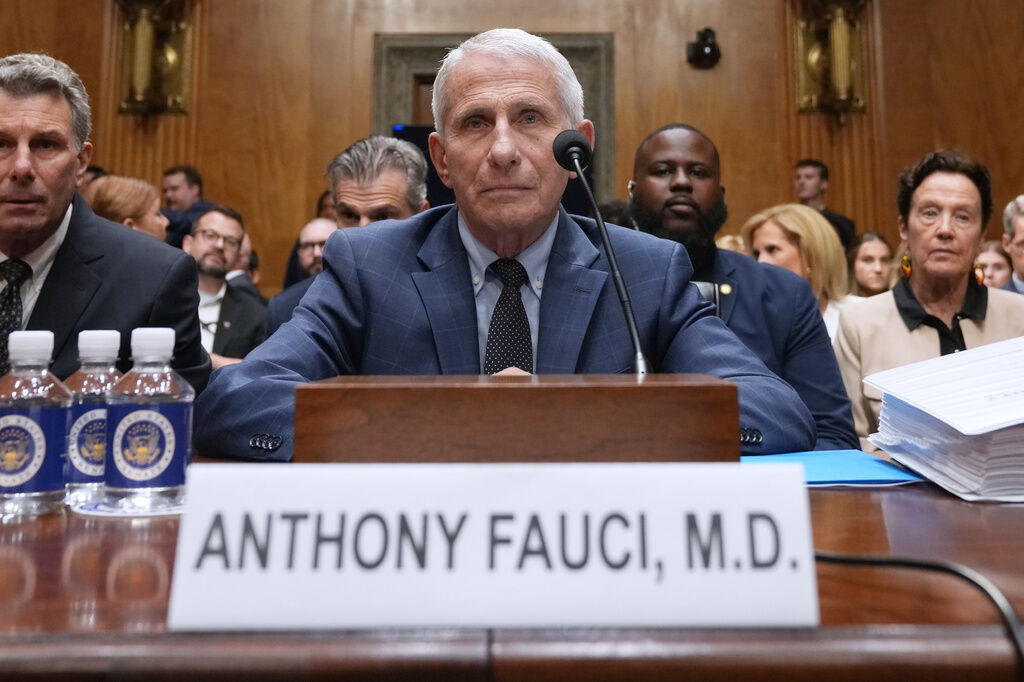
Fauci’s diary details blooming outrage toward ‘far right,’ softness toward Biden and China
Hudson Crozier
hudson.crozier@washingtonexaminer.com
Updated 11 hours ago
Dr. Anthony Fauci increasingly railed against “far right” critics of his approach to COVID-19 issues while describing strong support from the Biden White House in his pandemic-era diary, which was recently released by Congress. The former National Institute of Allergy...

Colorado is spared mandatory cuts under federal Colorado River proposal
The Associated Press
the-associated-press@coloradopolitics.com
Updated 12 hours ago
California, Arizona and Nevada to take less water under plan While Colorado has been spared from mandatory reductions, Arizona, California and Nevada would take less water from the Colorado River under a proposal announced Friday by the federal government to...

Republican Victor Marx taps George Markert as his lieutenant governor pick in Colorado’s gubernatorial race
Ernest Luning
ernest.luning@coloradopolitics.com
Updated 4 hours ago
Colorado Republican gubernatorial nominee Victor Marx named George Markert, a retired Marine colonel, as his running mate for lieutenant governor Friday morning, saying the former U.S. Senate candidate will bring “exceptional character, proven leadership and a lifetime of serving others”...

Misconduct complaints from ex-Colorado judicial discipline director dismissed against federal judges
Michael Karlik
michael.karlik@coloradopolitics.com
Updated 1 day ago
The administrative body for the Denver-based federal appeals court upheld a finding last week that misconduct complaints against Colorado’s chief federal trial judge and the chief appeals judge warranted dismissal and appeared to be a “litigation tactic” by the complaining...

Boulder County coroner IDs body found over 50 years ago
Matt Kyle
matt.kyle@denvergazette.com
Updated 12 hours ago
After nearly 55 years, a body found in Boulder County has been identified. The Boulder County Coroner’s office on Thursday announced it has identified a set of remains found in Bluebell Canyon in August 1971 as Douglas Sumner, 22. The...

First-ever Red Rocks naturalization ceremony draws most diverse group of new citizens
Michael Karlik
michael.karlik@coloradopolitics.com
Updated 7 hours ago
Colorado’s federal trial court held its first-ever naturalization ceremony for nearly 300 new citizens on Thursday at Red Rocks Park and Amphitheatre. “We’re doing it to commemorate the 250th anniversary of the Declaration of Independence and the United States. Red...