

Colorado lawmakers begin work on ‘construction defects’ in efforts to jumpstart condo development
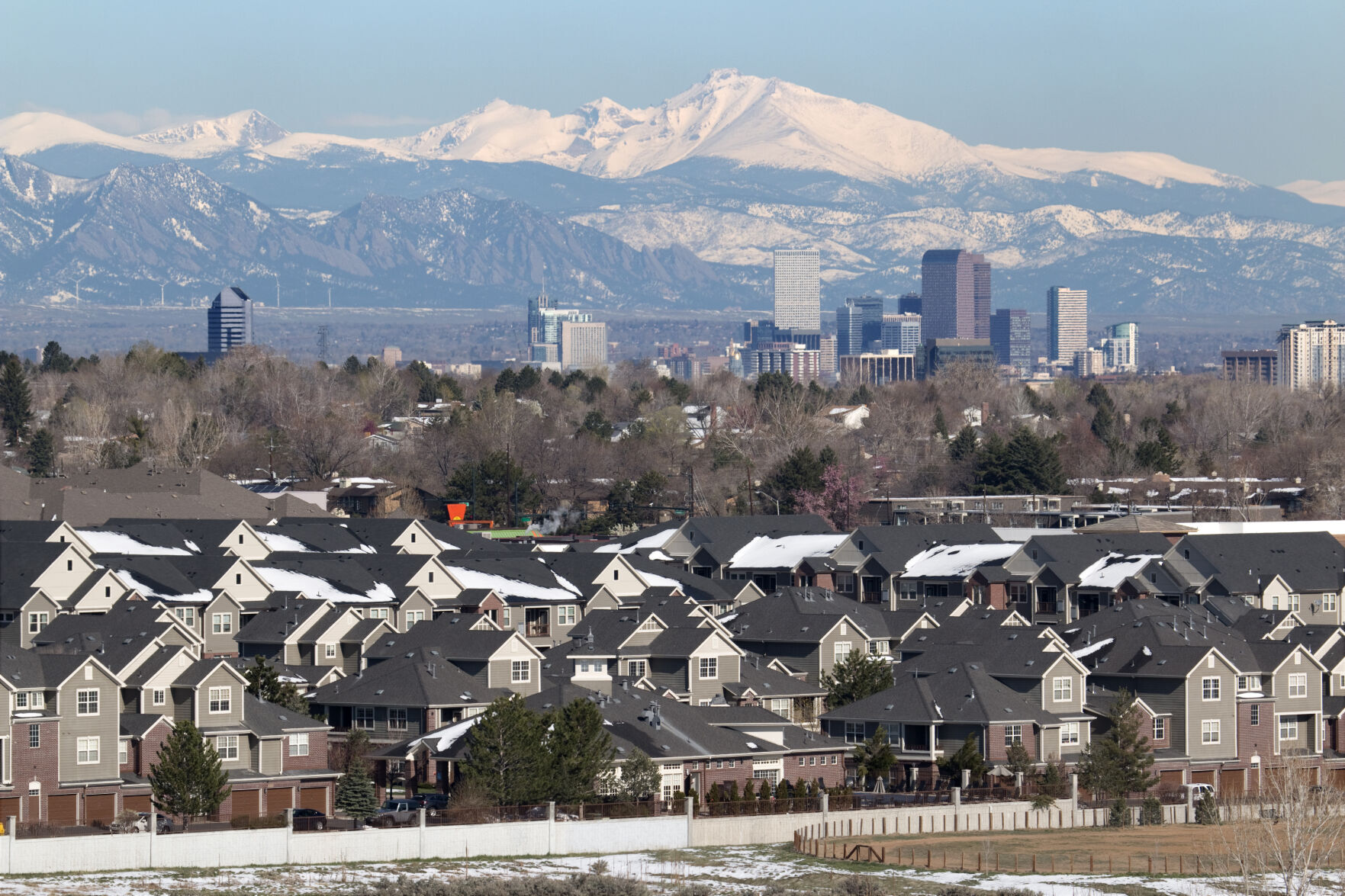
During the 2023 legislative session, every idea about how to solve the state’s affordable housing crisis was on the table.
Except for one — condos, traditionally viewed as the pathway to home ownership for young families looking for their first homes or seniors wanting to downsize.
But last year, the legislature showed no signs of being ready to tackle the lengthy and bitter fights over how to jumpstart condo development, which has waned in Colorado over the last 15 years. Indeed, lawmakers have proposed at least eight measures in the past eight years to address the “construction defects” issue, with only one that made it to the governor’s desk — in 2017.
That changed on Tuesday, with the first of at least three bills intended to find a path forward for affordable condo construction moving through the Senate Local Government & Housing Committee. The panel decided to give the sponsors additional time to work out amendments and bring the measure back for a vote in a week.
Senate Bill 106, which has 12 bipartisan sponsors in the Senate, isn’t a “silver bullet,” said supporters.
Instead, they said, it’s a tool that will help the construction industry with what they believe is the biggest barrier to building condos — the cost of liability for dealing with “construction defects.” Developers also point to the cost of “wrap-up insurance,” which has added onto the individual cost of a condo from $9,000 in the early 2000s to more than $41,000 in 2023.
A report last September from the free-market think tank Common Sense Institute said that “insurance costs for condominiums surged to 5.5% of a project’s hard costs, more than 233% higher than multifamily rental home projects, which had insurance costs as low as 1.1% to 1.65% of project hard costs.” That insurance costs is tied to lawsuits over construction defects, according to supporters of SB 106.
As introduced, SB 106 would modify the state’s 2001 Construction Defect Action Reform Act. That law set up a process for homeowners to sue builders when they find defects, which can range from serious issues, such as cracks in the foundation or HVAC problems, to smaller problems, such as defective cabinetry and leaks.
Colorado's 'construction defects' law explained
As it applies to condos, which are governed by homeowners’ associations, the law requires a majority of homeowners to consent before the HOA can pursue lawsuits.
The 2001 law also includes a statute of limitations and a “statute of repose.” In the former, the clock starts ticking when the defect is discovered, and that’s two years. The statute of repose is a clock that begins when the condo is substantially completed, and that’s six years, although it can be extended to eight years when the defect shows up in years five or six.
Under SB 106, construction professionals would have a “right to repair” a construction defect claim, as well as alternatives to litigation. The bill would increase the threshold to two-thirds for consent by homeowners in an HOA to pursue a construction defects claim.
The bill’s sponsors insist it will not take away the right of a homeowner to sue when there’s a defect.
“You can still sue if you decide that the ‘right to remedy’ is just not the proper place for you,” said co-sponsor Sen. Rachel Zenzinger, D-Arvada.
Instead, SB 106 allow consumers to seek another pathway to resolve defect issues and avoid costly and protracted litigation, she said.
She also said if the repair is “non-performing,” the homeowner can still pursue a claim against that work. This bill gives homeowners the right to determine how to proceed with the contractor responsible for the repair work. Zenzinger said an amendment to the bill will make this an option.
This bill provides additional transparency for homeowners into the claims process, Zenzinger added. That includes notifying homeowners that they cannot refinance, sell or do certain kinds of improvements while they are involved in a lawsuit, she said.
Local governments back bill
Mayors of cities and towns across the state lined up to support the measure, including the Metro Mayor’s Caucus, which represents 38 cities and towns, including the state’s 12 largest.
Golden Mayor Laura Weinberg, who also spoke on behalf of the caucus, said Tuesday the average price of a home in Golden exceeds $1 million, twice what it was in 2015.
There have been five recent apartment construction projects in her community, generating 648 rental units. There were only two condo developments, with 33 units, she said. There was no difference in building codes between rental developments and condo developments, she said. Builders are choosing to construct rental units, not for-sale, she said.
Mayor Yemi Mobolade of Colorado Springs also spoke in favor of SB 106, citing housing as the top issue in his community for members of the military, seniors, young professionals, and “workforce pillars of the city,” including nurses, teachers, and firefighters.
Jackie Millet, the mayor of Lone Tree, cited her profession as a civil engineer, saying she knows “there is no perfect construction project, and listening to the disturbing stories and negligence presented earlier today is infuriating.”
But there’s a huge difference between outright negligence and unintentional errors that must be corrected, she said.
SB 106 allows for those distinctions; it allows homeowners to hold builders accountable and have issues fixed promptly without lengthy, expensive court battles, she added.
The committee also heard from builders.
The single biggest issue his company faces as a home builder is the current litigation climate created under the 2001 law, according to Robert Riva, general counsel and vice president of Dream Finders Homes. Founded 10 years ago, the company entered the Colorado market eight years ago, with an emphasis on first-time and “step-up” buyers, those looking for the next home.
Riva acknowledged homeowners have legitimate claims on construction defects, but the 2001 law and its successors have created a “lose-lose” situation for both homebuilders and homeowners. The only winners are the lawyers, he said.
The company’s Colorado division has 7.5% of its total townhouse closings across the 10 states it operates in, but litigation costs in Colorado are just under 90% of the company’s total legal costs.
“It cannot stand to reason that Colorado is the only state that we operate where we seemingly cannot properly construct a townhome,” Riva said.
It’s also the only state the company operates in where subcontractors and vendors cannot obtain insurance coverage to work on townhomes or condos, he added.
“When we offer to make a repair under (the 2001 law), the vast majority of time, opposing counsel refused to allow us and our vendors to make repairs” because Dream Finder subcontracts the repair work. “To be clear, we want the right to fix legitimate issues. We do not want to litigate.”
Ted Leighty of the Colorado Association of Home Builders said there are 44,548 apartments under construction in the Denver metro area. The industry ratio is one condo for every 1.25 apartments, so almost 18,000 of those units should have been condos, “but, obviously, that is not occurring because of the legal dysfunction” created by current law, he said.
Critics: No tie between construction defects litigation and condo development
Opponents cited a study from Pacey Nehls Economic Consulting that said there is no tie between construction defects litigation and the decline in condo development, claiming it’s a market issue.
Jeff Nehls, who authored the study, said there is no correlation between construction defect laws and the availability of for-sale housing.
“I’m passionate about the societal importance of home ownership and affordability of housing, but this bill in my view is not the answer,” Nehls said. “If passed, it would shift repair costs from builders who are recording billions of dollars in profits and indicate in their financial statements that they have low concerns about construction defect litigation.”
The committee also heard from homeowners who are struggling with construction defects.
Jonathan Harris, who chairs Build Our Homes Right, said he spent 10 years trying to get repairs on his condo, and even then the settlement fell short. The builder didn’t grade the decking properly, used subpar materials and when it rained, water streamed down the walls and into his living room. The builder “dragged their feet” with inadequate caulk and walk repairs in an effort to run out the clock. Eventually, they sued because the building was disintegrating.
As to the requirement for two-thirds of homeowners in an HOA to approve a lawsuit, Harris and others said that isn’t practical.
“Homeowners in affordable housing developments need to be able to hold builders accountable for major construction problems,” Harris said.
Attorney Heidi Storz, who has 20 years’ experience in construction defects litigation, told the committee the 67% requirement isn’t doable, and that requiring homeowners to sign off on a claim might not recognize that some homes may have different defects.
SB 106 will take away a homeowner’s option to decline repairs that may not actually solve the problem, she said.
Denver City Councilwoman Sarah Parady told the committee builders have put their development investments toward more profitable rental units and away from less profitable for sale housing, particularly given Denver’s high rental income market. SB 106 would create a windfall for already highly profitable players in the real estate industry and would do that at the expense of consumer protections, Parady said.
House Bill 1230, which modified consumer protections for homeowners involved in construction defects claims, will be heard in House Judiciary on Wednesday.


Immigration reporting measure fuels debate over Colorado’s role with ICE
Marissa Ventrelli
marissa.ventrelli@coloradopolitics.com
Updated 2 hours ago
A coalition of advocacy groups and several district attorneys rallied outside the Colorado Capitol on Thursday to oppose a ballot measure that, if approved by voters in November, would require state and local law enforcement to cooperate with federal immigration...

Colorado Politics Calendar Sept. 14-20
Rachael Wright, Special to Colorado Politics
rachael.wright@coloradopolitics.com
Updated 3 days ago
CoPo’s weekly political calendar will help you find political and public-policy events throughout Colorado. It includes candidate and issue campaign events, public policy meetings, court hearings, state and local party conventions, assemblies, debates, rallies, parades, speaking engagements, traveling dignitary appearances,...
The African roots of three Colorado leaders | SONDERMANN
Eric Sondermann
eric-sondermann@coloradopolitics.com
Updated 2 days ago
Colorado’s political transformation is measured in many ways. A once reliably red state (with asterisks) became purple and is now a rather deep blue. For better or worse, probably the latter, power is ever more consolidated along the Front Range...
Federal judge green-lights civil trial against ex-Fort Collins DUI officer
Michael Karlik
michael.karlik@coloradopolitics.com
Updated 1 day ago
A federal judge ruled on Thursday that Fort Collins’ former “DUI officer” will face a civil trial for allegedly investigating a motorist for impaired driving without any reasonable suspicion to do so. In recent years, several people arrested by Officer...

Denver police reopen 13 sex assault cases after retesting Missy Woods’ CBI work
Jenny Deam
jenny.deam@gazette.com
Updated 1 day ago
Thirteen previously closed Denver sexual assault cases have been reopened after the city’s crime lab retested DNA evidence once analyzed by former Colorado Bureau of Investigation forensic analyst Yvonne Woods. A police spokesperson told The Denver Gazette the once-closed cases...

Ballot measure aims to shift Colorado sporting goods tax revenue to land, water and wildfire projects
Marissa Ventrelli
marissa.ventrelli@coloradopolitics.com
Updated 2 hours ago
Colorado voters this November will decide whether to direct a share of sales tax revenue from sporting goods — including bicycles and skiing equipment — toward land and water conservation, wildfire prevention and expanding outdoor recreation. Supporters say the measure...

Colorado Supreme Court suspends Mesa County judge pending misconduct investigation
Michael Karlik
michael.karlik@coloradopolitics.com
Updated 4 hours ago
The Colorado Supreme Court suspended Mesa County Court Judge Michael J. Grattan on Thursday amid a misconduct investigation. The court’s Sept. 10 order gave Grattan 21 days to explain why his paid suspension should not continue through the end of...

Trump honors the fallen of the 9/11 terrorist attacks during Pentagon speech
Mabinty Quarshie
mabinty-quarshie@coloradopolitics.com
Updated 1 day ago
President Donald Trump and first lady Melania Trump honored the roughly 3,000 Americans killed during the Sept. 11, 2001, terrorist attacks during a ceremony at the Pentagon. The event marking the 25th anniversary of the deadliest attack on American soil...
Colorado Supreme Court changes course, dismisses case about special district bonds
Michael Karlik
michael.karlik@coloradopolitics.com
Updated 4 hours ago
The Colorado Supreme Court declined on Friday to decide a dispute between a large-scale Commerce City development and the various districts financing it, after initially showing interest in the ongoing case. Colorado has roughly 2,800 special districts, which are local...

Colorado leaders express outrage and pain following 9/11 attacks | A LOOK BACK
Rachael Wright, Special to Colorado Politics
rachael.wright@coloradopolitics.com
Updated 1 day ago
Twenty-Five Years Ago This Week: “Responding to the 9/11 terrorist attacks, Colorado Gov. Bill Owens told reporters in a statement, “I join all Coloradans in expressing outrage and horror at the senseless terrorist bombings in New York and Washington D.C....
PREV
PREVIOUS
After dominating Super Tuesday, Biden and Trump turn attention to November rematch
After President Joe Biden and Donald Trump romped through more than a dozen states on Super Tuesday, the frontrunners immediately turned their attention to what is very likely a November rematch. Biden urged Nikki Haley’s supporters to get behind his reelection bid, signaling his team’s belief that attracting disaffected voters who oppose Donald Trump is key […]

'I wish we could all get along': Colorado voters cast ballots on Super Tuesday
Too old. Too chaotic. Too phony. And … who’s running? Almost everyone had an opinion on Super Tuesday, as Denver metro area voting centers saw a steady stream of residents either dropping off ballots or casting votes in-person. Democrats, Republicans, independent — and even non-voters — didn’t mind talking about the state of politics in America hours […]