

No constitutional right to plead guilty, appeals court says in upholding El Paso County convictions
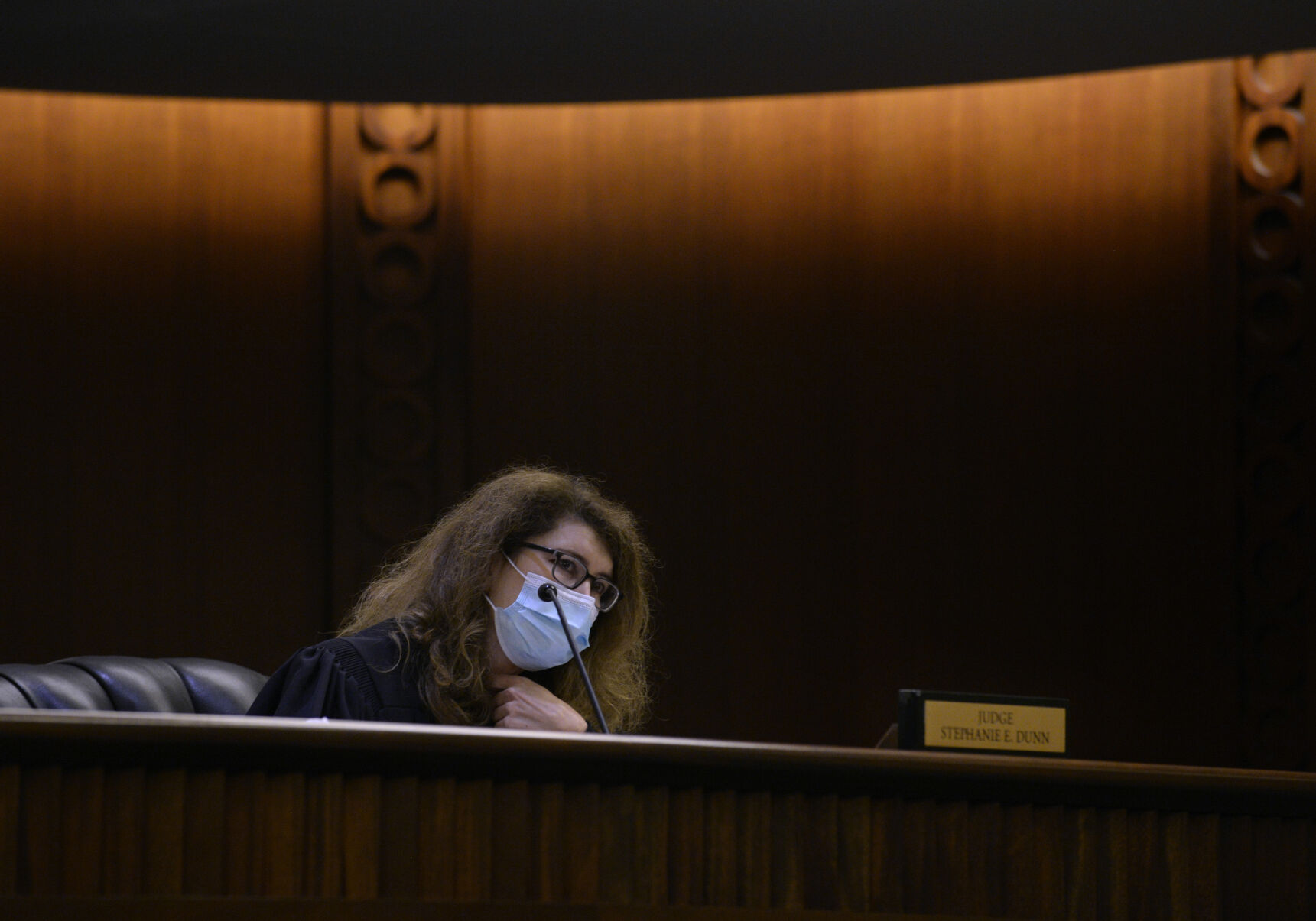
An El Paso County judge was not constitutionally obligated to accept a defendant’s guilty plea, Colorado’s second-highest court concluded last week.
Appealing his convictions, Timothy Ray Scott Jr. argued his trial judge violated his constitutional right to “autonomy” by not letting him plead guilty. The U.S. Supreme Court has previously interpreted the Sixth Amendment’s guarantee of assistance of counsel to include a defendant’s right to decide the “objective of the defense.”
Prosecutors charged Scott in two cases: a domestic violence dispute in February 2020 and, one month later, for killing his wife and her mother. The cases were tried jointly and jurors convicted Scott on most charges, including murder. He is serving life in prison.
Prior to trial, Scott attempted to enter a guilty plea in the domestic violence case and prevent it from being combined with the murder case. Then-District Court Judge G. David Miller said it was up to the prosecution to decide whether to agree to a guilty plea, and warned he did not not have to accept it.
Scott reiterated his desire to plead guilty on the first day of trial, but District Court Judge Diana May, who inherited the case from Miller, refused to accept the plea and proceeded to try the combined case.
A three-judge panel for the Court of Appeals agreed May was not obligated to accept a guilty plea under Colorado’s procedural rules, and the Sixth Amendment’s right to autonomy did not require her to, either.
“While there’s no federal constitutional right to plead guilty, we recognize that some federal courts have concluded that a trial court has no discretion to reject an unconditional plea,” wrote Judge Stephanie Dunn in the Feb. 22 opinion. Still, she added, the Supreme Court has not recognized a “broad, unfettered Sixth Amendment right to plead guilty.”
Timothy R. Bussey, a criminal defense attorney in Colorado Springs, said Scott’s case was unusual because there was seemingly no plea agreement between the prosecution and defense. Instead, Scott apparently wanted to plead guilty to one set of charges for “tactical reasons,” by taking the allegations off the table for jurors.
“One understands the theory that the accused should be able to make an unconditional guilty plea whenever he wants,” Bussey said. “The courts commonly approve plea agreements, but they have always exercised discretion in both directions to be sure that neither the people of Colorado nor the accused are being manifestly screwed.”
In arguing that his right to autonomy was violated with the rejection of his guilty plea, Scott leaned on a 2018 Supreme Court decision, McCoy v. Louisiana. A defense attorney told jurors, over his client’s objection, that the defendant killed the victims. The lawyer did so in an attempt to save his client from receiving the death penalty.
The Supreme Court ordered a new trial, finding the decision to admit guilt or maintain one’s innocence is the defendant’s alone to make.
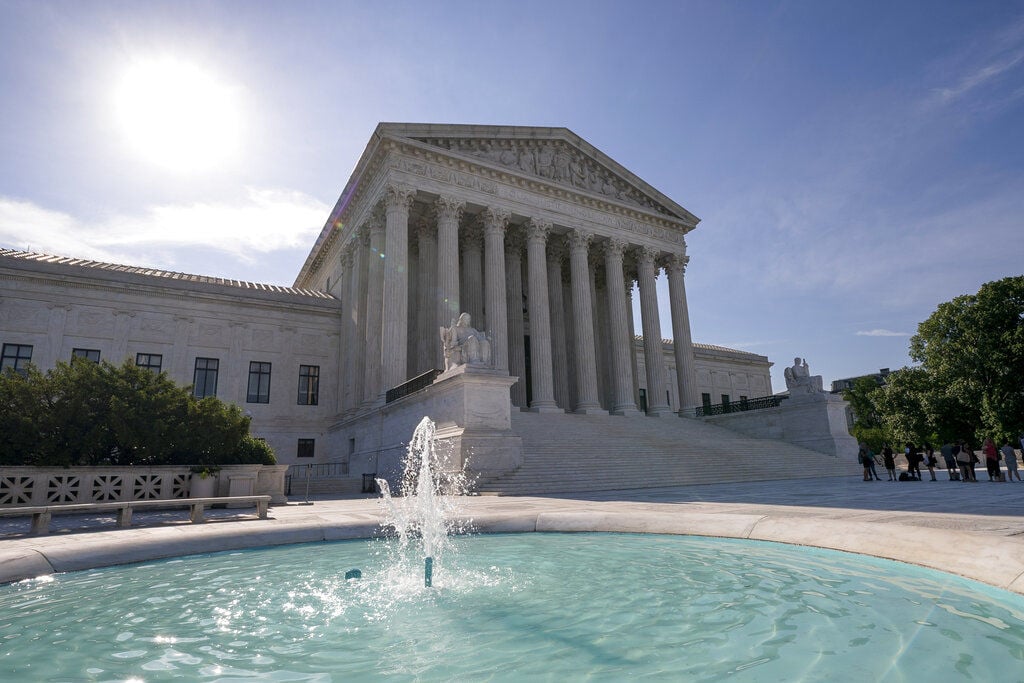
The Supreme Court is seen in Washington as the justices prepare to hand down decisions, Monday, June 17, 2019.
(AP Photo/J. Scott Applewhite)

Similarly, Scott argued the trial judge’s refusal to accept his decision to plead guilty infringed on his Sixth Amendment right to autonomy.
Dunn, in the appellate panel’s opinion, conceded courts “have struggled” to understand the scope of McCoy. However, she noted McCoy most clearly addressed whether a decision to plead guilty belongs to a lawyer or to the accused person — with no mention of a trial judge’s obligation when faced with a guilty plea.
“All this said, we’re unpersuaded that the Sixth Amendment autonomy right includes the right to force a trial court to accept an unconditional plea,” Dunn wrote.
Aya Gruber, a professor at the USC Gould School of Law, said there are multiple reasons judges may decline to accept guilty pleas. They might find the defendant did not make the plea voluntarily and with an understanding of the consequences, or the underlying details are problematic — as when a federal judge rejected a plea deal reached with President Joe Biden’s son last summer.
“What makes me queasy about this case is that the judge denied the plea just so the government could (combine) a case that, in my mind, was pretty prejudicial,” Gruber said of Scott’s prosecution.
Bussey, the defense attorney, said judges’ discretion is lessened when the prosecution and defense reach a plea deal.
However, “since the judiciary has ultimate say on whether to enter judgment on a charge, or even to dismiss a charge,” he continued, “we’ve long known that the judge has power over whether to accept a plea agreement and judicially enforce it.”
The case is People v. Scott.

10th Circuit dismisses woman’s lawsuit following 10-year attempt to undo restraining order
Michael Karlik
michael.karlik@coloradopolitics.com
Updated 3 days ago
The Denver-based federal appeals court rejected a woman’s challenge on Friday to a restraining order imposed on her more than a decade ago, finding that she cannot credibly claim she will be prosecuted for violating the restraining order through her...
10th Circuit dismisses woman’s lawsuit following 10-year attempt to undo restraining order
Michael Karlik
michael.karlik@coloradopolitics.com
Updated 3 days ago
The Denver-based federal appeals court rejected a woman’s challenge on Friday to a restraining order imposed on her more than a decade ago, finding that she cannot credibly claim she will be prosecuted for violating the restraining order through her...
Colorado equal pay law does not require plaintiffs to allege gender-based retaliation, appeals court finds
Michael Karlik
michael.karlik@coloradopolitics.com
Updated 2 days ago
The 2019 Colorado law aimed at rooting out pay discrimination on the basis of sex does not require a plaintiff to allege their employer retaliated against them for sex- or gender-related reasons, the state’s second-highest court decided on Thursday. Lawmakers...
Hudson faces lawsuit over ICE detention facility
Nicole C. Brambila
nicole-c-brambila@coloradopolitics.com
Updated 3 days ago
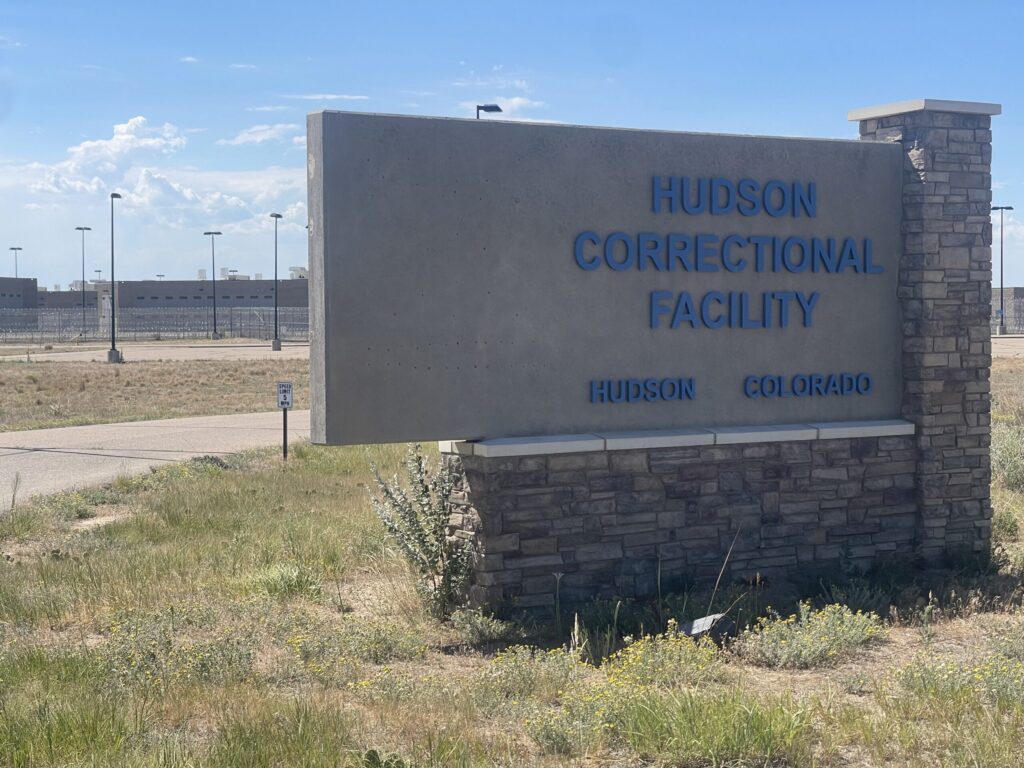
A nonprofit organization filed a lawsuit against the Town of Hudson Wednesday, challenging plans to reopen a former federal prison in the town as a U.S. Immigration and Customs Enforcement detention facility. Together Colorado, along with Janet E. Carlson, filed...
Senate committee advances Trump’s 10th Circuit nominee, as Domenico responds to questions about delays
Michael Karlik
michael.karlik@coloradopolitics.com
Updated 3 days ago
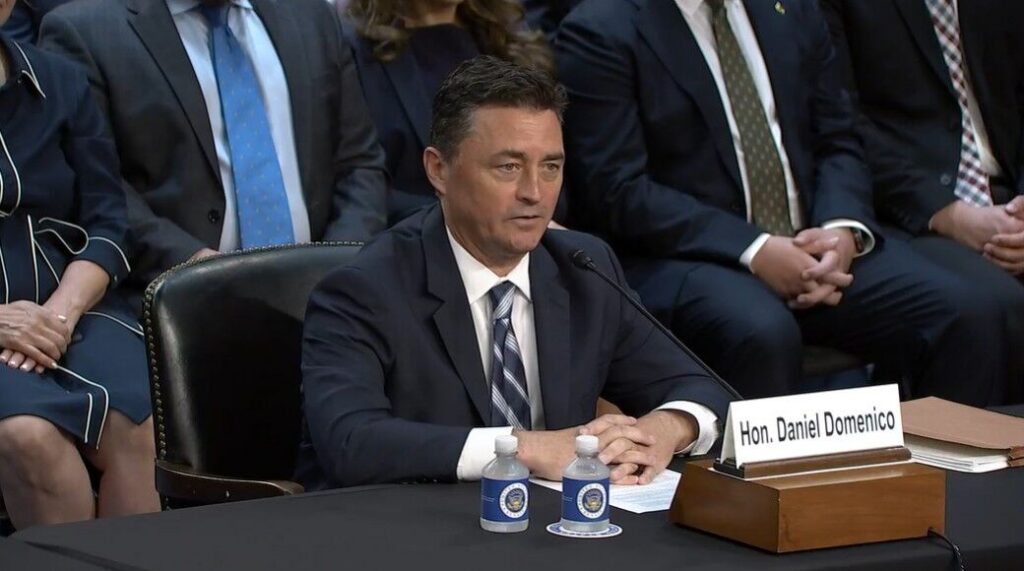
The U.S. Senate Judiciary Committee advanced President Donald Trump’s nominee to the Denver-based federal appeals court on Thursday by a party-line vote of 12-10. U.S. District Court Judge Daniel D. Domenico, who was Trump’s first-term appointee to Colorado’s federal trial...
Colorado justices to hear embryonic donation dispute
Michael Karlik
michael.karlik@coloradopolitics.com
Updated 3 days ago
The Colorado Supreme Court announced on Monday that it will decide whether lower court judges properly applied its framework for adjudicating disputes over the fate of pre-embryos, in which one person wants to use them to become a parent and...
Isolation, emotion, persona: Colorado judicial programming prepares people for life on the bench
Michael Karlik
michael.karlik@coloradopolitics.com
Updated 4 days ago
As a trial judge and now as a member of the Colorado Supreme Court, Justice Carlos A. Samour Jr. has heard the view that being a judge is isolating. “In neither court have I felt isolated. I’ve always interacted a...

Federal judge dismisses Colorado county sheriff’s challenge to law limiting immigration cooperation
Michael Karlik
michael.karlik@coloradopolitics.com
Updated 2 days ago
A federal judge dismissed a challenge from Mesa County Sheriff’s Office leaders last week to a Colorado law limiting public employees’ cooperation with immigration authorities, concluding that the plaintiffs did not allege they engage in any conduct that the law...
10th Circuit raises bar for fraud victims to sue debt collectors over inaccurate information
Michael Karlik
michael.karlik@coloradopolitics.com
Updated 2 days ago
The Denver-based federal appeals court wiped away a jury’s $500,000 award to a fraud victim on Monday and made it more difficult for consumers to hold companies liable for disseminating inaccurate credit information. The Fair Credit Reporting Act regulates credit...
Montezuma County judge’s censure, suspension approved by discipline panel
Michael Karlik
michael.karlik@coloradopolitics.com
Updated 5 days ago
A three-member disciplinary panel accepted, on Monday, an agreement between a Montezuma County judge and the Colorado Commission on Judicial Discipline that specifies he will receive a censure, a suspension, and additional education for his admitted instances of misconduct. Under...
PREV
PREVIOUS

Divided appeals court upholds Denver child sex assault conviction
Colorado’s second-highest court upheld a man’s sex assault conviction earlier this month, although there was disagreement between appellate judges about whether jurors properly evaluated damaging evidence of the defendant’s conduct in light of his unusual defense at trial. A Denver jury convicted Mohammed Diawarra in 2021 for sexual assault on a child after he impregnated an […]

Colorado Supreme Court tells Delta County judge to revisit alternate suspect order in light of recent decision
The Colorado Supreme Court directed a Delta County judge on Thursday to revisit his order requiring a defendant accused of murder to disclose evidence to the prosecution about an alleged alternate suspect. In a brief Feb. 29 order, the justices told District Court Judge Steven L. Schultz to follow the guidance the Supreme Court issued […]