

Aurora council debates stance on home occupancy bill

Aurora City Council members debated Monday whether or not to take a stance on a house bill regarding housing occupancy limits, finally deciding to move the conversation to a later study session.
The bill, House Bill 1007, approved by the Colorado House Friday, would restrict local governments from adopting ordinances that limit occupancy for unrelated individuals unless the case can be made for health, safety, fire codes or other similar restrictions.
Aurora City Council bounced around arguments over whether to take a stance or not on the bill at Monday night’s study session, with some councilmembers wanting to take a strong opposing stance and others saying that isn’t necessary.
The Federal, State, and Intergovernmental Relations Committee (FSIR) presented the item to the council Monday, recommending the city take a “monitor” position on the bill.
Originally, FSIR voted to amend the legislation, wanting to ensure that the provision of square footage for health and safety could be maintained and determined at the local level.
The bill was amended to address those concerns, ensuring that local government retains authority to make codes based on health and safety.
While the bill would change how the city can use familial relationships to determine how many people can reside in one place, they would still have the flexibility to make changes based on other factors, Liz Rogers, the intergovernmental relations manager for the FSIR said.
Councilmember Francoise Bergan said the council should take an opposing stance on the bill because the city knows its housing situation better than the state does.
“We should be making those decisions as our own jurisdiction not mandated by the state that doesn’t know our particulars in our different neighborhoods,” Bergan said.
Mayor Mike Coffman agreed, saying it’s not just about the one rule change, but rather about the overall chipping away at the city’s ability to determine its own housing restrictions.
“It’s not so much about whether or not we can live with the decision, but that we’re giving up the decision-making ability on a specific area,” Coffman said.
Councilmember Curtis Gardner said he didn’t feel a need to change the city’s position on the bill.
If the city opposes the bill simply because it slowly chips away at the city’s ability to make decisions, they should oppose every bill, because in some way or another, most of the bills at the state level impact Aurora, Gardner said.
Councilmember Alison Coombs agreed, saying the small change in the bill is “not a hill I would die on.”
Jessica Prosser, Aurora’s director of housing and community services, said the bill wouldn’t effect the city’s ability generally to restrict household size, still allowing them to make restrictions based on health and safety including parking availability, bedroom number, plumbing and other factors.
“Sometimes having a lot of extended family living together or multiple families living together creates more people then you would have if you had six unrelated people living together,” Prosser said.
Currently, Aurora City Code reads that “it is unlawful for more than one family or family group, as defined in Article 146-6, to live in a dwelling unit.”
Article 146-6 defined a “family or family group” as any of the following:
- A group of persons related by blood, marriage, or adoption, living together as a single housekeeping unit; or
- Persons living together in the relationship and for the purpose of guardian, ward, or foster family or receiving home care who may not necessarily be related by blood or marriage to the head of the household, but live together as a single housekeeping unit, but not including correctional homes; or
- A group of not more than four unrelated persons living together in a dwelling unit as a single housekeeping unit; or
- Living arrangements in which one person is providing care to another occupant who is not related by blood or marriage, provided they neither maintain separate cooking facilities nor advertise the premises for rent; or
- A single individual living as a single housekeeping unit; or
- A group of individuals whose right to live together in a group home setting is protected by the federal Fair Housing Act Amendments of 1988, as interpreted by the courts, or by similar legislation of the State of Colorado.
Under the measure, a local government could only enforce residential occupancy limits when they are tied to a minimum square footage per person requirement that is necessary to regulate safety, health, and welfare. The bill was amended to add in fire codes, international building code standards or standards imposed for water quality purposes by the Colorado Department of Public Health and Environment.
Supporters said the measure would encourage denser living arrangements, with some calling occupancy limits “discriminatory policies,” while some expressed worries that it would undo what local governments have already accomplished.
Aurora City Council decided to discuss the topic at a future study session when Mayor Pro Tem Dustin Zvonek is present.
Colorado Politics legislative reporter Marianne Goodland contributed to this report.


Colorado must continue finding common ground on wildfire policy | GUEST COLUMN
Colorado Politics
colorado-politics@coloradopolitics.com
Updated 14 hours ago
By John Herrick Colorado has never lacked for opinions about wildfire policy. We debate forest management, climate change, prescribed burns, land use, air quality and budgets. Those debates are familiar territory, but a new discussion is beginning to happen around...

Proposition NN is the best investment for Colorado’s students and schools | GUEST COLUMN
Colorado Politics
colorado-politics@coloradopolitics.com
Updated 14 hours ago
By Justin Ogden Colorado families know what it means to make difficult budget decisions. Inflation has driven up the cost of groceries, housing, utilities and just about everything else. Families like mine work hard to stretch every dollar while still...

Colorado Springs mother Deborah Nicholls’ murder conviction overturned
Nick Smith
nick-smith@coloradopolitics.com
Updated 11 hours ago
A Colorado Springs mother convicted in 2008 of murdering her three children in a house fire might get a new trial after a judge ruled that prosecutors withheld key evidence that could have impacted the jury’s verdict. Deborah Nicholls, whose...
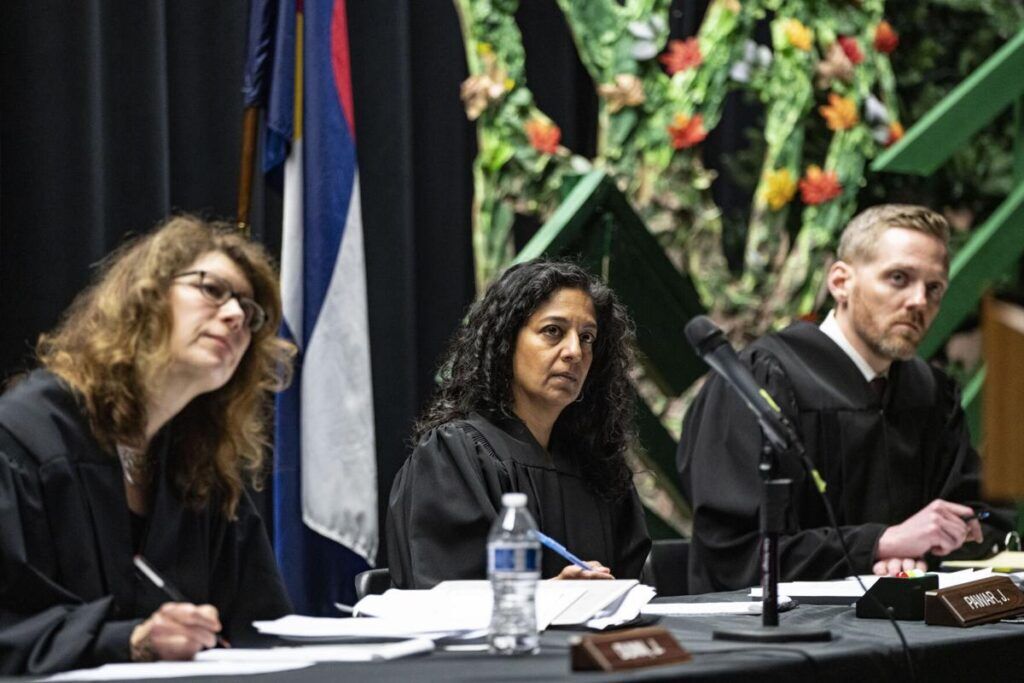
Colorado court overturns illegal $7,000 restitution order
Michael Karlik
michael.karlik@coloradopolitics.com
Updated 11 hours ago
Colorado’s second-highest court overturned a Weld County defendant’s obligation to pay more than $7,000 in crime victim restitution on Thursday because a trial judge failed to issue a legally compliant restitution order at the time of sentencing. In Colorado, as...
Appeals court orders second look at Denver Water’s immunity for cyclist’s injury
Michael Karlik
michael.karlik@coloradopolitics.com
Updated 11 hours ago
Colorado’s second-highest court ordered another look at a bicyclist’s negligence lawsuit against Denver Water on Thursday, concluding that a trial judge needed to evaluate the utility’s potential immunity using the state Supreme Court’s new guidance. Joseph A. “Joey” Scott alleged...

Right-to-natural-gas proposal in Colorado qualifies for ballot
Marissa Ventrelli
marissa.ventrelli@coloradopolitics.com
Updated 13 hours ago
A citizen initiative that seeks to enshrine the right to natural gas has qualified for the November ballot, Colorado’s election office confirmed on Thursday. Petitions containing signatures for Initiative No. 177 were turned in to the Secretary of State’s Office for review...
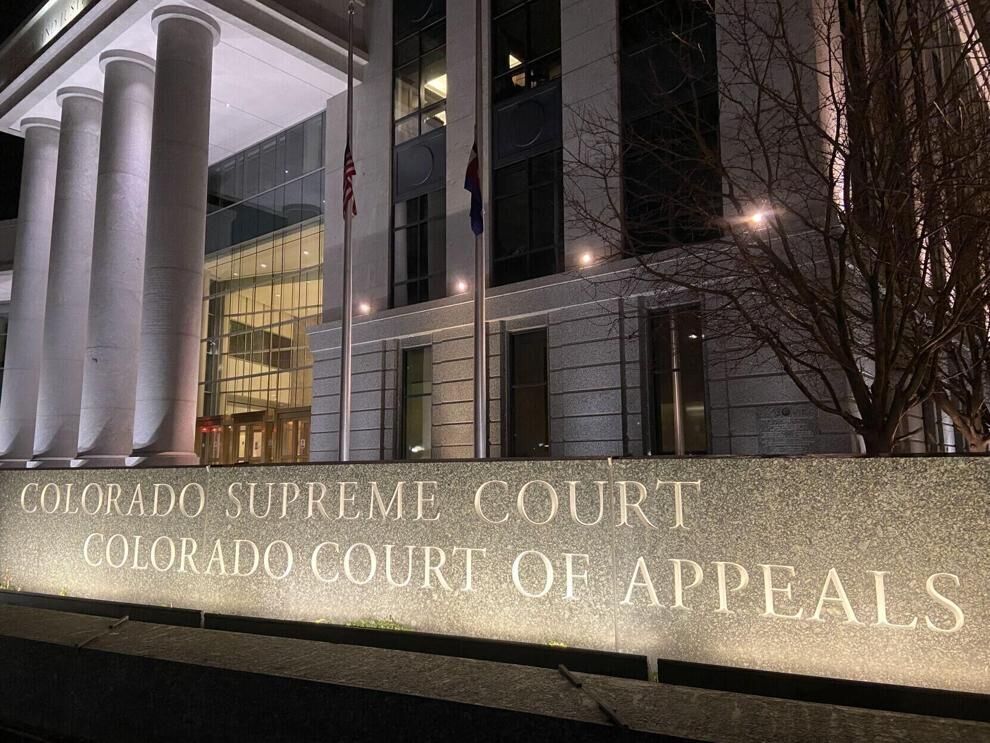
Labels, duration not definitive proof of ‘intimate relationship,’ Colorado court rules in domestic violence case
Michael Karlik
michael.karlik@coloradopolitics.com
Updated 11 hours ago
Colorado’s second-highest court clarified on Thursday that the length of a couple’s relationship and the labels they attach to it are not conclusive evidence of whether it is an “intimate relationship” that can give rise to a domestic violence prosecution....
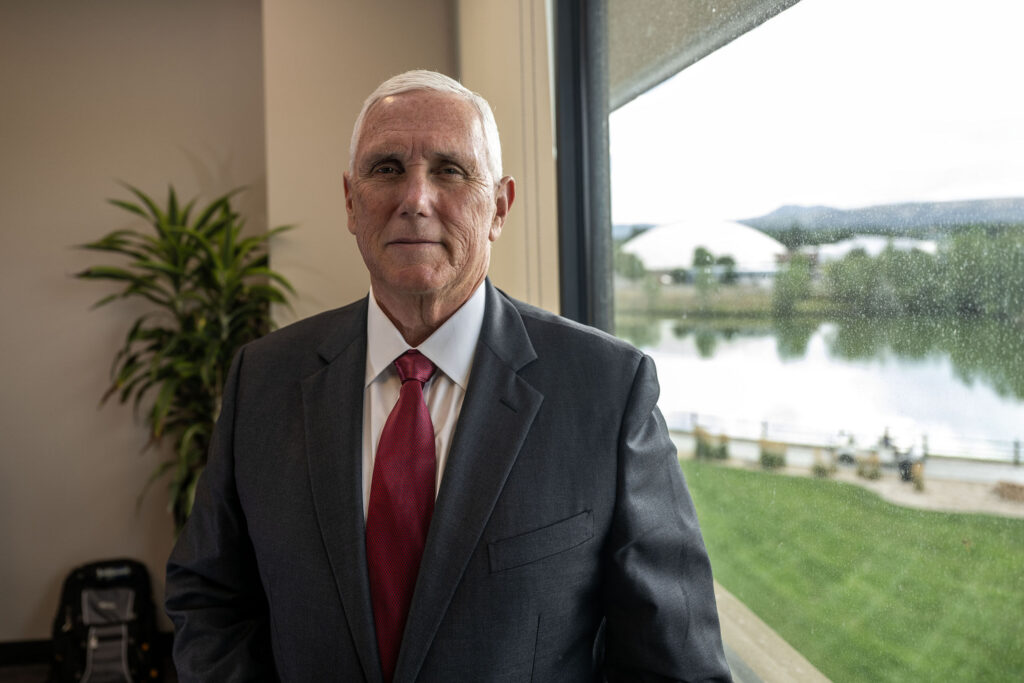
Former VP Mike Pence joining Colorado Christian University faculty
Marissa Ventrelli
marissa.ventrelli@coloradopolitics.com
Updated 13 hours ago
Former Vice President Mike Pence has been hired as a visiting faculty member at Colorado Christian University, the Lakewood-based private evangelical university announced Tuesday. Pence will be on campus about once a month during the 2026-2027 school year to give...
White House launches Fraud.gov to track fraud cases
Adisa Hargett-Robinson
adisa.hargett-robinson@washingtonexaminer.com
Updated 21 hours ago
The White House launched Fraud.gov on Thursday, a website tracking the administration’s crackdown on fraud across federal agencies. According to the White House, the website serves as a public dashboard that highlights investigations, criminal charges, funding suspensions, recoveries, and enforcement...

Democrats from opposite sides of the party all rally behind a ‘big tent’
Rena Rowe
rena.rowe@washingtonexaminer.com
Updated 21 hours ago
Since their losses in the 2024 election, Democrats have struggled to settle on a clear message ahead of the 2026 midterm elections. As the party fights to reclaim control of Congress, primaries in New York, Michigan, and Colorado have exposed...