

10th Circuit finds no constitutional violation from warrantless arrest in man’s front yard
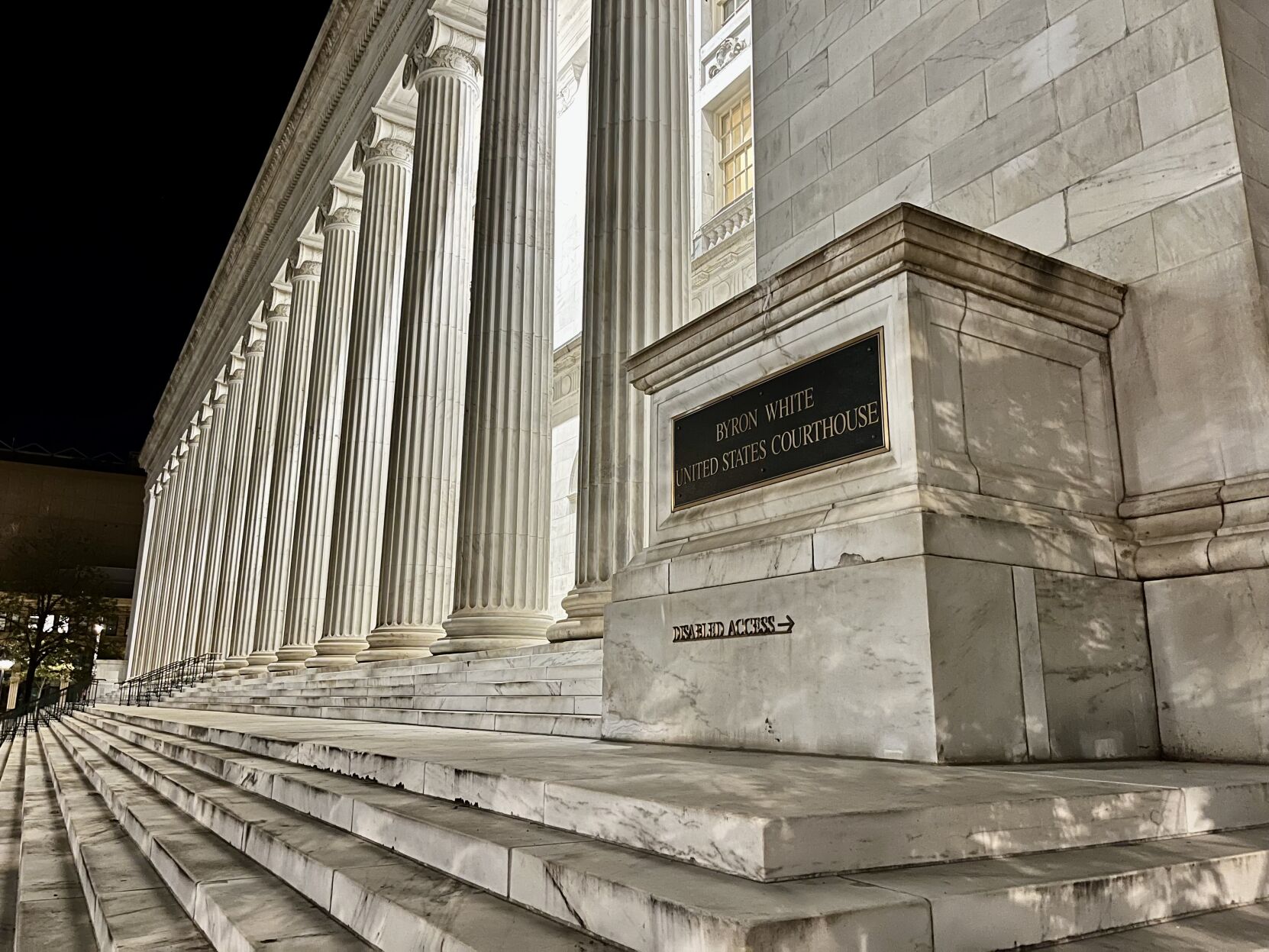
The federal appeals court based in Denver agreed on Wednesday that Greeley police did not violate the U.S. Constitution by walking onto a man’s front yard and pulling him out of his vehicle for a traffic infraction without a warrant.
The Fourth Amendment generally requires law enforcement to obtain a warrant before conducting searches and seizures, although courts have developed exceptions to that requirement. The protection applies to homes, as well as “curtilage,” meaning the area immediately surrounding and “intimately linked to” the home.
The question for the U.S. Court of Appeals for the 10th Circuit was whether the space directly in front of a house’s window, where a detective stood when he grabbed Orlando Vasquez and ordered him out of his car, was curtilage that fell under the Fourth Amendment’s protection.
No, it was not, a three-judge panel decided.
Case: United States v. Vasquez
Decided: January 3, 2024
Jurisdiction: U.S. District Court for Colorado
Ruling: 3-0
Judges: Paul J. Kelly Jr. (author)
Stephanie K. Seymour
Allison H. Eid
Background: Florida v. Jardines (2013)
The U.S. Supreme Court has recognized the Fourth Amendment must protect curtilage in order to prevent police from standing “in a home’s porch or side garden and trawl for evidence with impunity.” As a result, the court considers curtilage as “part of the home itself.”
Relatedly, the court has also noted that the “core” of the Fourth Amendment gives people the right to retreat into their homes to escape “unreasonable governmental intrusion.”
Vasquez contended that in the dense, urban environment of Greeley, the officers’ presence just outside his front window fell under the curtilage. Therefore, evidence they found when they searched him could not be used to convict him of a crime.
Just after midnight on May 23, 2020, two officers activated their lights upon noticing Vasquez make a right turn on red without fully stopping in a car that had recently expired tags. Vasquez drove approximately two blocks through a residential neighborhood before turning into his home, where he parked in a driveway shared with another house.
Detective John Dietrick walked up the front lawn and stood at Vasquez’s rolled-down window. Vasquez handed over his vehicle registration and provided his name and birthdate. Dietrick reportedly knew Vasquez was a gang member and ordered him out of the car to get patted down for weapons. When Vasquez balked, Dietrick grabbed Vasquez and a brief struggle ensued.
Once on the ground and in handcuffs, Vasquez admitted he had a gun on him. Federal prosecutors charged him with being a felon in possession of a firearm. Vasquez pleaded guilty and received nearly five years in prison.

Vasquez initially sought to suppress evidence of the gun based on an alleged Fourth Amendment violation. Dietrick did not have a warrant when he entered the yard, nor did Vasquez’s alleged traffic violation give officers license to enter in the absence of a warrant, the defense argued. Because Dietrick stood right outside the home’s window, he invaded the curtilage at the time he seized Vasquez.
A trial judge declined to suppress the gun, finding the shared driveway was not curtilage – but making no mention of the yard.
On appeal, the 10th Circuit panel wondered what police should have done differently to avoid an unconstitutional intrusion into the home’s curtilage.
“Maybe they should have just let it go? Is that what you’re suggesting?” asked Judge Allison H. Eid at oral arguments.
Public defender Dean Sanderford responded Dietrick either needed to get a warrant to arrest Vasquez for a traffic violation or else let it go. He added that it did not matter if Vasquez pulled into the home’s curtilage specifically to evade arrest.
“We may not like that, but the Supreme Court has told us in that situation that officers can’t follow a fleeing suspect into their house or their curtilage as a matter of right,” Sanderford argued. Vasquez “had a temporary tag that was expired and he didn’t come to a complete stop at a stoplight. … There was certainly no emergency to justify the officers intruding into this constitutionally protected area.”
The appellate panel’s Jan. 3 order acknowledged the yard was close to Vasquez’s home. But it found the shared driveway could not be curtilage and no evidence suggested either the driveway or the yard were used for “intimate activity” associated with a home.
Addressing Vasquez’s suggestion that the scope of curtilage is different in a dense city, Senior Judge Paul J. Kelly Jr. clarified that the Supreme Court’s criteria for evaluating intimacy apply “regardless of whether the area was urban or rural.”
The case is United States v. Vasquez.
michael.karlik@coloradopolitics.com

Colorado board permits state to appeal injunction against arthritis drug price cap
Marissa Ventrelli
marissa.ventrelli@coloradopolitics.com
Updated 4 hours ago
A Colorado board voted Friday to allow the Attorney General’s Office to fight an injunction against a price cap on a drug that treats arthritis. A U.S. district court judge had granted the company Amgen a preliminary injunction, temporarily blocking...
Federal judge rejects constitutional claims, ‘expressions of hatred’ by Club Q defendant
Michael Karlik
michael.karlik@coloradopolitics.com
Updated 4 hours ago
A federal judge rejected a defendant’s claims that he received constitutionally ineffective assistance of counsel while facing federal hate crime and firearms charges for murdering five people at a Colorado Springs LGBTQ nightclub in 2022. Anderson Lee Aldrich is serving...
Divided 10th Circuit upholds Colorado congestion fee on car rentals
Michael Karlik
michael.karlik@coloradopolitics.com
Updated 53 seconds ago
The Denver-based federal appeals court concluded on Monday that a 2024 “congestion impact fee” that lawmakers imposed on short-term vehicle rentals did not conflict with a federal prohibition on certain airport-related charges. Beginning in the 1970s, Congress began limiting the...
10th Circuit dismisses woman’s lawsuit following 10-year attempt to undo restraining order
Michael Karlik
michael.karlik@coloradopolitics.com
Updated 3 days ago
The Denver-based federal appeals court rejected a woman’s challenge on Friday to a restraining order imposed on her more than a decade ago, finding that she cannot credibly claim she will be prosecuted for violating the restraining order through her...
10th Circuit dismisses woman’s lawsuit following 10-year attempt to undo restraining order
Michael Karlik
michael.karlik@coloradopolitics.com
Updated 3 days ago
The Denver-based federal appeals court rejected a woman’s challenge on Friday to a restraining order imposed on her more than a decade ago, finding that she cannot credibly claim she will be prosecuted for violating the restraining order through her...
Colorado equal pay law does not require plaintiffs to allege gender-based retaliation, appeals court finds
Michael Karlik
michael.karlik@coloradopolitics.com
Updated 2 days ago
The 2019 Colorado law aimed at rooting out pay discrimination on the basis of sex does not require a plaintiff to allege their employer retaliated against them for sex- or gender-related reasons, the state’s second-highest court decided on Thursday. Lawmakers...
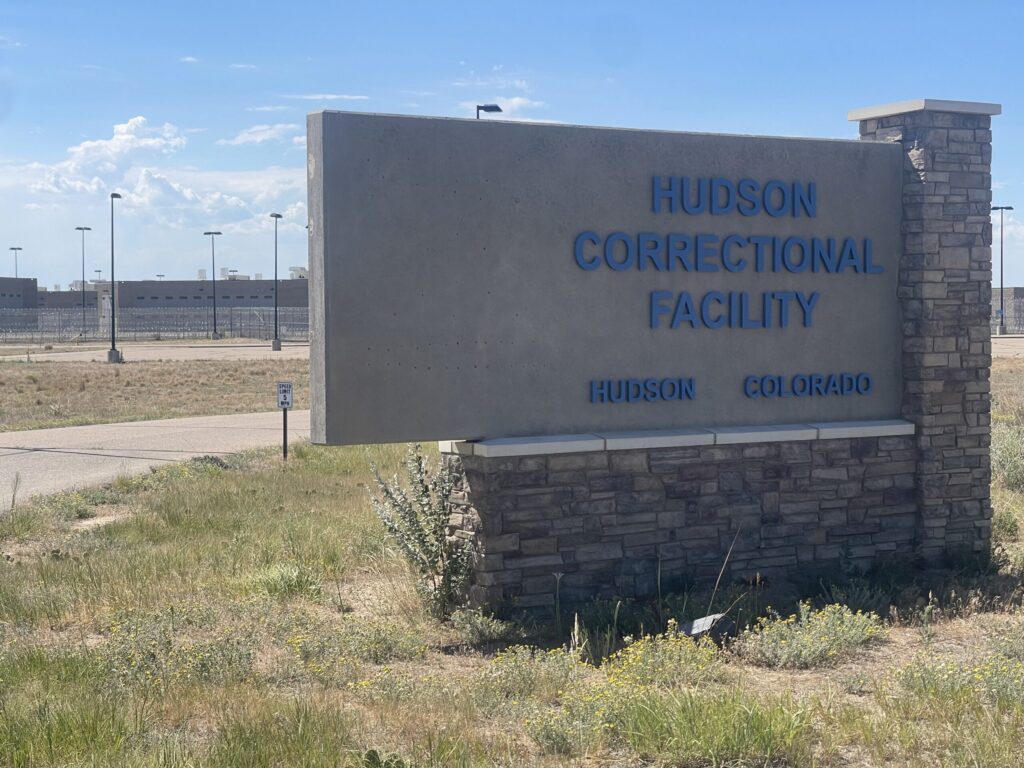
Hudson faces lawsuit over ICE detention facility
Nicole C. Brambila
nicole-c-brambila@coloradopolitics.com
Updated 4 days ago
A nonprofit organization filed a lawsuit against the Town of Hudson Wednesday, challenging plans to reopen a former federal prison in the town as a U.S. Immigration and Customs Enforcement detention facility. Together Colorado, along with Janet E. Carlson, filed...
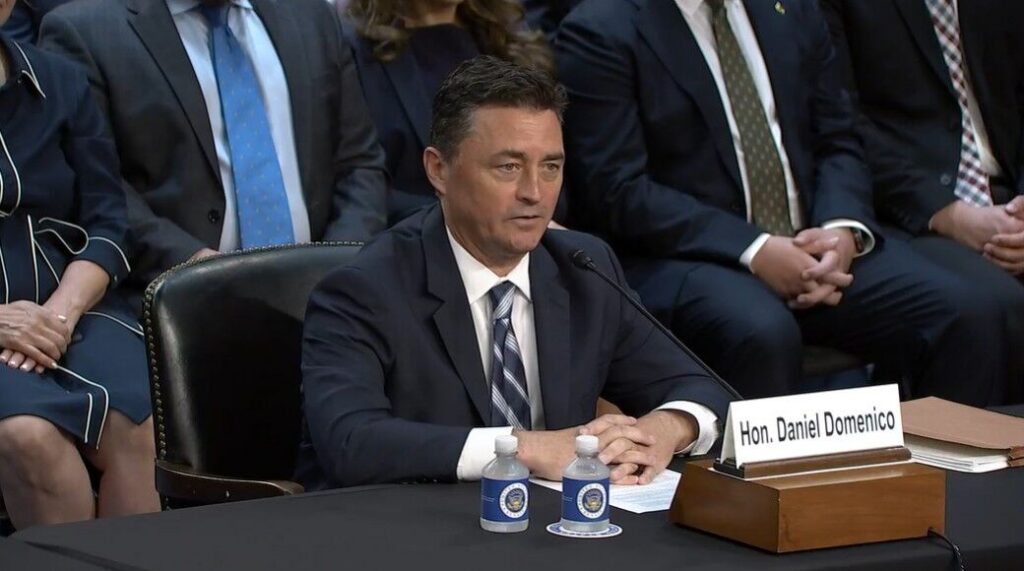
Senate committee advances Trump’s 10th Circuit nominee, as Domenico responds to questions about delays
Michael Karlik
michael.karlik@coloradopolitics.com
Updated 3 days ago
The U.S. Senate Judiciary Committee advanced President Donald Trump’s nominee to the Denver-based federal appeals court on Thursday by a party-line vote of 12-10. U.S. District Court Judge Daniel D. Domenico, who was Trump’s first-term appointee to Colorado’s federal trial...
Colorado justices to hear embryonic donation dispute
Michael Karlik
michael.karlik@coloradopolitics.com
Updated 4 days ago
The Colorado Supreme Court announced on Monday that it will decide whether lower court judges properly applied its framework for adjudicating disputes over the fate of pre-embryos, in which one person wants to use them to become a parent and...

Isolation, emotion, persona: Colorado judicial programming prepares people for life on the bench
Michael Karlik
michael.karlik@coloradopolitics.com
Updated 4 days ago
As a trial judge and now as a member of the Colorado Supreme Court, Justice Carlos A. Samour Jr. has heard the view that being a judge is isolating. “In neither court have I felt isolated. I’ve always interacted a...
PREV
PREVIOUS
Judge hears from psychologists, pre-K director in Catholic schools' challenge to Colorado program
The director of Colorado’s universal prekindergarten program and a pair of experts in child psychology testified on Wednesday about the importance of LGBTQ inclusion as a trial continued in federal court over a constitutional challenge to the pre-K program’s non-discrimination requirements. Two Catholic institutions, St. Mary Catholic Parish in Littleton and St. Bernadette Catholic Parish in Lakewood, […]

COVID-19 pandemic justified police not offering DUI breath tests, appeals court rules
Colorado’s second-highest court on Thursday agreed that a police department’s decision not to offer suspected drunk drivers the choice of a breath test at the outset of the COVID-19 pandemic did not violate state law. Although it was not the first Court of Appeals ruling to address the issue, it was the first to set […]